
Last updated September 24, 2026
Seasonal Insulation Care for Palmdale: Year-Round Homeowner’s Guide
Palmdale recorded 27 nights below freezing in the 2023-2024 heating season, and the same attics that baked at 155°F the previous July were working as hard in the opposite direction by January. That’s a thermal cycling range of more than 180 degrees, and it does something specific to your insulation system: it stresses air-sealing materials, displaces loose-fill blown insulation, and turns small ventilation problems into expensive energy losses. Most Palmdale homeowners treat insulation as a one-and-done upgrade. In our experience inspecting thousands of local attics since 2016, the homes that perform best year after year follow a month-by-month maintenance rhythm tuned to our desert climate’s four distinct stress phases. This guide maps that rhythm.
Quick Answer
Seasonal insulation care in Palmdale means four distinct maintenance windows: pre-summer ventilation checks in April-May, monsoon moisture monitoring in July-September, Santa Ana wind air-sealing verification in October-November, and pre-heating hatch and weatherstrip inspection before the first freeze. Homes that follow this calendar typically maintain 15-25% lower heating and cooling loads than identical tract homes that skip the cycle.
Table of Contents
- Why Palmdale’s Climate Demands a Different Insulation Calendar
- April-May: Pre-Summer Ventilation and Radiant Barrier Protocol
- June-July: The Thermal Stress Window
- August-September: Monsoon Moisture Monitoring
- October-November: Santa Ana Wind Air-Sealing Verification
- December-January: Pre-Heating and Freeze Protection
- February-March: Post-Season Assessment and Planning
- Common Mistakes to Avoid
- When to Call a Professional
- Frequently Asked Questions
- The Bottom Line
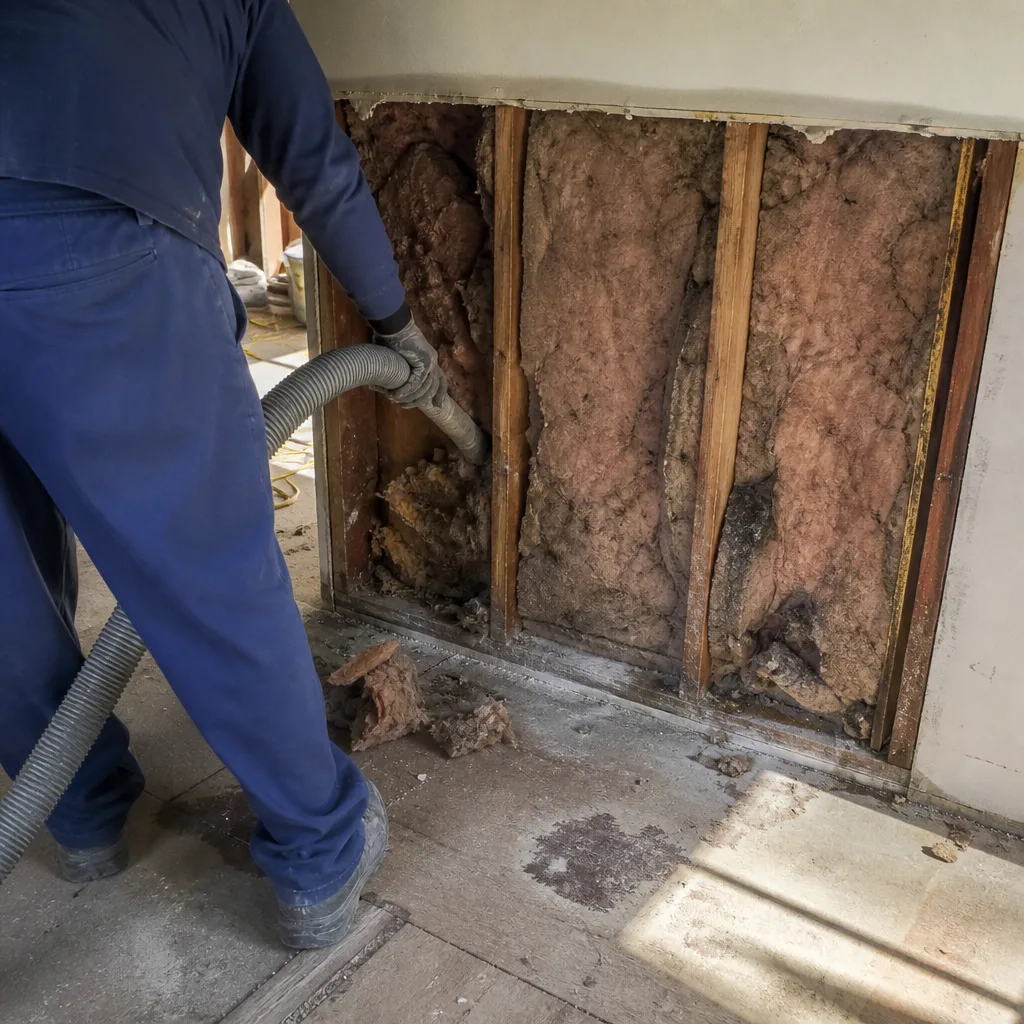 Before
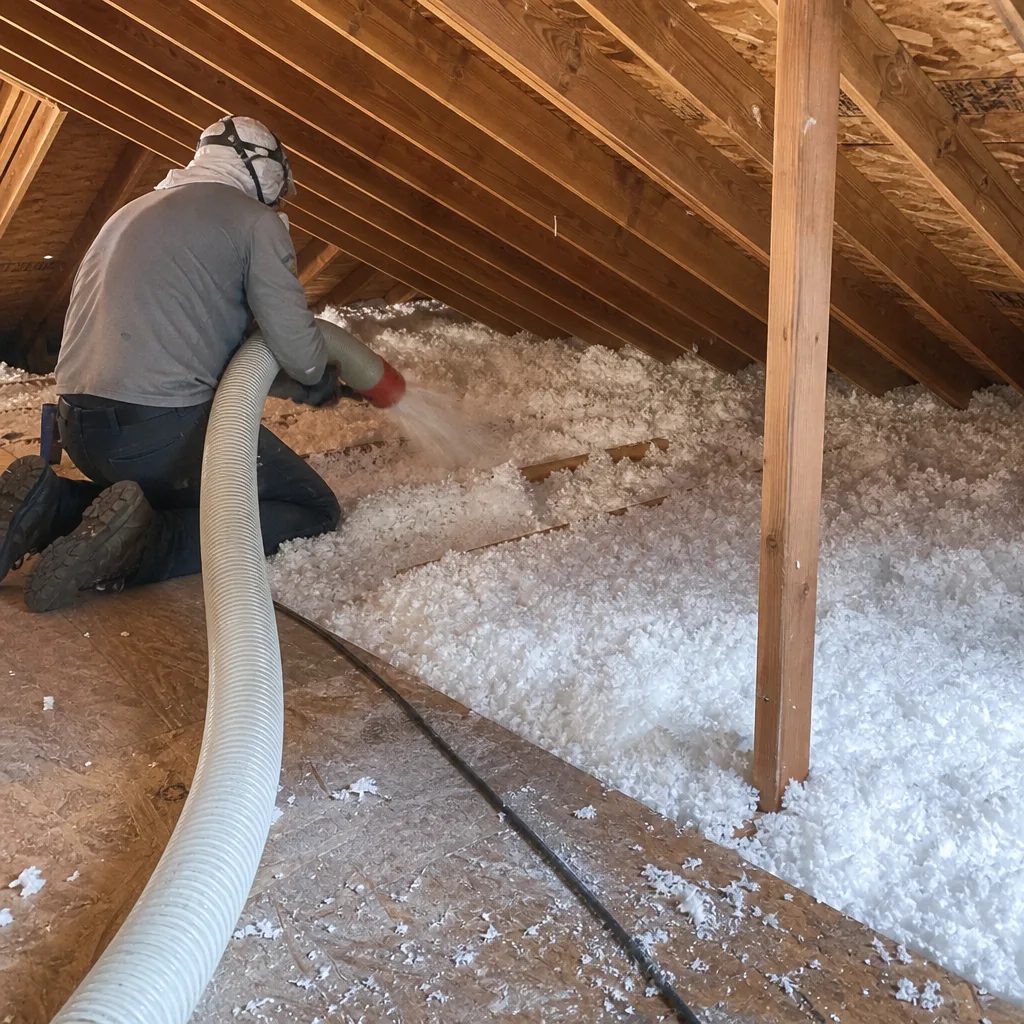 After
AfterWhy Palmdale’s Climate Demands a Different Insulation Calendar
Coastal California insulation guides are useless here. Palmdale sits at 2,655 feet in the Mojave Desert’s western edge, and that elevation plus our basin geography creates a climate with four genuine seasonal stressors, not the mild two-season pattern of Los Angeles or Santa Monica.
Summer brings extreme radiant heat. Attic temperatures in Palmdale’s Rancho Vista, Anaverde, and West Palmdale neighborhoods regularly reach 150-160°F in July. That radiant load doesn’t just make your air conditioner work harder; it degrades insulation facing materials, dries out weatherstripping compounds, and can warp attic access hatches made of fiberboard.
Fall delivers the Santa Ana wind events. These aren’t gentle breezes. Sustained 40-60 mph winds with gusts to 80 pressurize attic spaces, force unconditioned air through gaps that were never properly sealed, and deposit fine desert dust that compromises the thermal boundary. We’ve found dust infiltration layers half an inch thick on top of insulation in homes near the Antelope Valley Freeway corridor after major Santa Ana events.
Winter brings hard freezes. Those 27 nights below freezing in 2023-2024 weren’t unusual. Palmdale averages 20-25 freeze nights annually, and the temperature swings - 65°F daytime highs dropping to 22°F overnight - create expansion-contraction cycles in air-sealing caulk and foam that coastal climates never see.
Late summer adds monsoon humidity. July through September moisture intrusion accounts for more attic mold calls in Palmdale than any other three-month period. The moisture isn’t constant like coastal fog; it arrives in concentrated bursts, finds any penetration point, and sits in 100°F attic spaces where it can’t evaporate quickly.
This isn’t a generic four-season template. Each phase requires specific homeowner action, and the timing matters. Seal your attic in March and you miss the Santa Ana verification window. Inspect in August without knowing what monsoon damage looks like, and you’ll miss early moisture signs that become $4,000-$8,000 remediation jobs by November.
April-May: Pre-Summer Ventilation and Radiant Barrier Protocol
This is the highest-leverage maintenance window most Palmdale homeowners skip entirely. By late April, attic temperatures are climbing toward 120°F, but the brutal 155°F peaks of July haven’t arrived yet. You have roughly six weeks to verify three systems before they get stress-tested.
Step 1: Verify attic ventilation is unobstructed.
Palmdale’s code-compliant attics need a balanced ventilation ratio - typically soffit intake and ridge or gable exhaust calculated to the square footage of the attic floor. But “code-compliant at installation” and “functional in year seven” are different things.
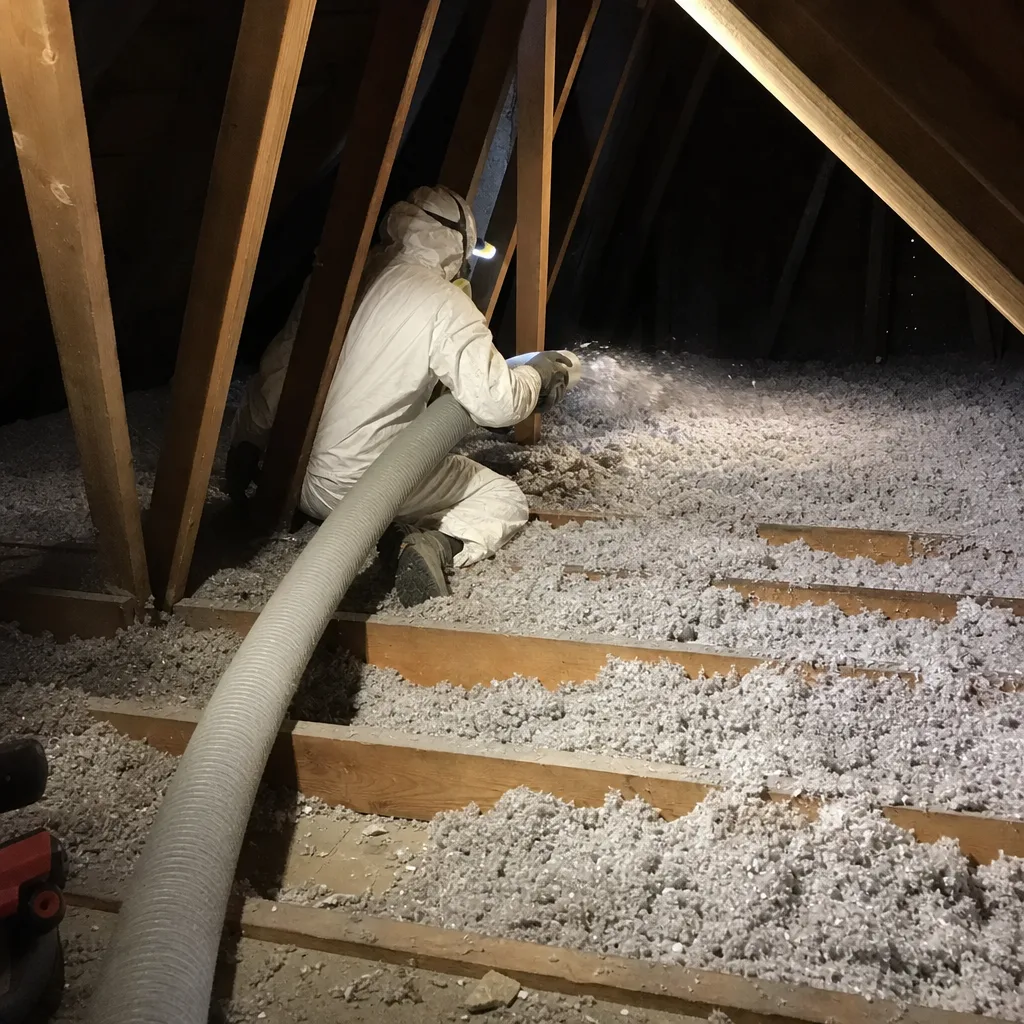
We inspect attics across Palmdale where blown-in insulation - often Knauf Jet Stream or GreenFiber loose-fill - has been blown directly against soffit vents, choking intake. Sometimes it’s original installation error. More often, it’s displacement from HVAC service work, rodent activity, or the vibration from nearby Edwards Air Force Base overflight corridors. The 2019-2023 period saw particularly aggressive rodent pressure in the Pearblossom Highway and Sierra Highway corridors after drought conditions pushed wildlife toward irrigated subdivisions.
Check your soffit vents from the exterior. You should see daylight through every vent. If you see insulation packed against the backside, or if airflow is visibly reduced, that’s a pre-summer fix that pays for itself in the first July heat wave.
Step 2: Confirm radiant barrier integrity if installed.
Many Palmdale homes built 2005-2015 have radiant barrier sheathing or stapled foil in the attic. Radiant barriers work by reflecting infrared radiation, and they lose effectiveness when dust-coated or torn. The Santa Ana season deposits alkaline desert dust that degrades reflectivity. A radiant barrier that read 95% reflectivity at installation may read 70% after five years of dust accumulation without cleaning.
Inspect for tears, gaps at seams, and dust coating. If you have stapled foil, check that staples haven’t pulled through due to thermal cycling. We replace or supplement radiant barriers in roughly 15% of Palmdale attic inspections we perform in this window.
Step 3: Check that blown insulation hasn’t been displaced.
HVAC technicians, cable installers, and solar panel crews walk in attics. Every footstep displaces loose-fill. In Palmdale’s typical 1,400-2,200 square foot tract homes, we’ve measured R-value reductions of 30-40% in trafficked areas where insulation was compressed or pushed aside. The fix is simple: rake it level, or call for a top-off if significant volume is missing.
Attic Insulation in Palmdale covers our full assessment and upgrade process for homes that need more than redistribution.
June-July: The Thermal Stress Window
By mid-June, Palmdale attics are operating at sustained temperatures above 130°F. This is when latent problems become visible failures.
The critical observation period is the first two weeks of sustained 100°F+ outdoor temperatures. Your home’s cooling system will be running 14-18 hours daily. This is your opportunity to detect insulation failures through indirect signals, because you cannot safely enter an attic at these temperatures without protective equipment and hydration protocols.
Watch for these four indicators:
- Hot ceiling patches in late afternoon. Walk through your home at 4-6 PM and place your palm on ceilings, especially in south- and west-facing rooms. Any location that feels distinctly warmer than adjacent ceiling areas indicates missing, displaced, or compressed insulation above. In Palmdale’s Sierra Sands and Desert-Christian-area homes with tile roofs, we’ve found that broken tile debris in gutters sometimes signals roof damage that has allowed insulation displacement from wind or water.
- HVAC runtime extending past 10 PM without recovery. A properly insulated Palmdale home should reach thermostat setpoint within 2-3 hours of sunset, even after a 110°F day. If your system runs past midnight regularly, the building envelope is leaking conditioned air or the insulation barrier is compromised.
- Attic access hatch heat radiating into conditioned space. The hatch is the most commonly uninsulated surface in Palmdale homes. A hatch with no rigid foam cap or with degraded weatherstripping radiates heat like a small radiator into your hallway or closet. We’ve measured hatch surface temperatures of 118°F in July; the conditioned air you paid to cool literally escapes around it while heat radiates in.
- Ductwork sweating in the attic. This indicates that cool conditioned air is leaking into a superheated attic faster than the insulation can protect the duct surface. The condensation damages insulation below and can trigger mold in August’s humidity spikes.
If you observe two or more of these indicators, your attic needs professional assessment before the monsoon season adds moisture to the thermal stress. Topside Attic Insulation Palmdale home page has our full service scope for thermal stress diagnostics.
August-September: Monsoon Moisture Monitoring
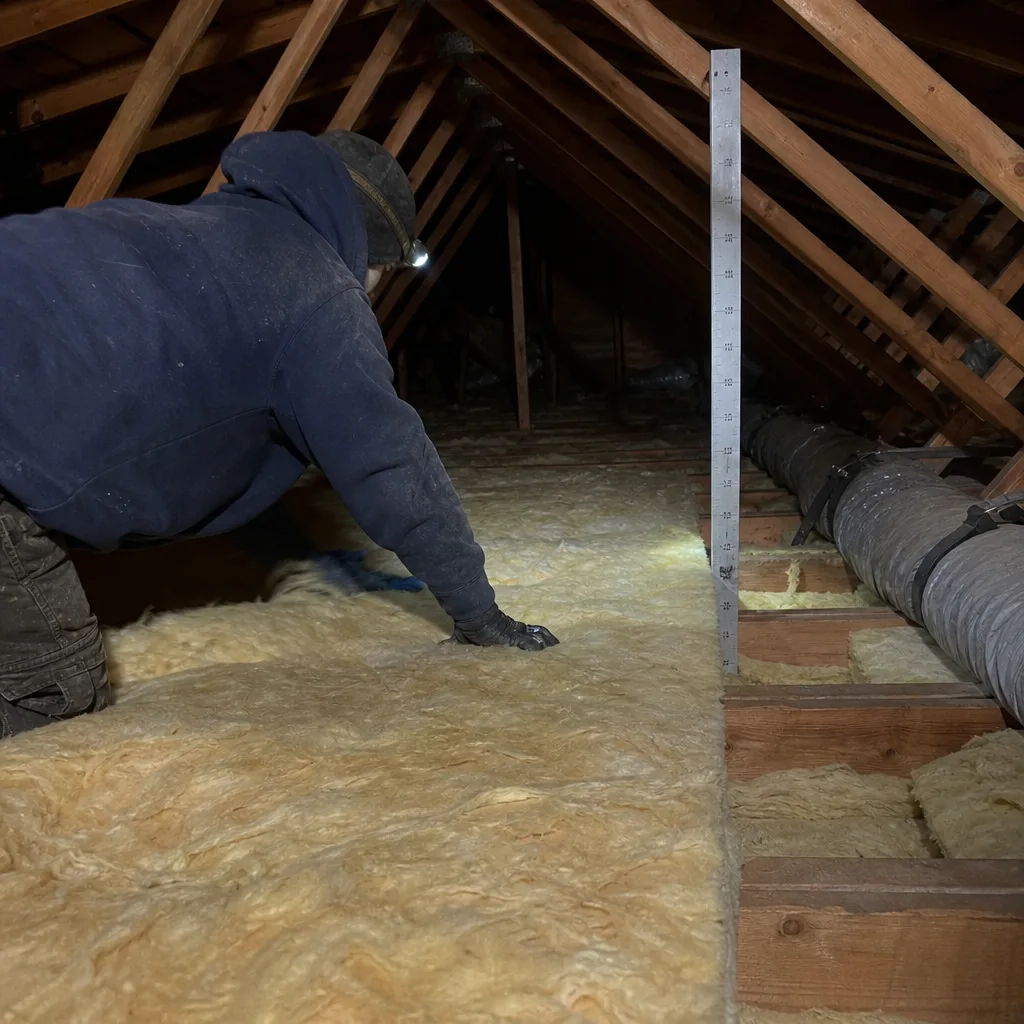
Palmdale’s monsoon window runs roughly July 15 through September 15, with peak activity in August. This isn’t coastal humidity; it’s convective moisture delivered in intense, localized bursts. A single August thunderstorm can drop 0.5-1.5 inches in an hour, and the dry desert surface doesn’t absorb it evenly.
The insulation-specific risk is roof penetration leakage that doesn’t show in living spaces for weeks or months. By the time you see a ceiling stain, the insulation above has been wet-dry cycling, compressing, and potentially growing mold for multiple cycles.
What to look for on the attic deck after the first significant rainfall:
- Wait 48-72 hours after the storm, then inspect. Moisture needs time to migrate through roofing materials and show on the attic side. Inspecting too early misses slow leaks; inspecting too late lets initial damage progress.
- Examine the attic deck (the roof sheathing visible from inside) with a bright flashlight. Look for darkening, water stains, or sheathing delamination. Pay special attention to valleys, chimney penetrations, vent pipe boots, and any area where solar panel mounts or satellite dishes penetrate the roof. In Palmdale’s 1990s-2000s tract construction, we’ve found that builder-grade pipe boot flashing fails predictably at 15-20 years.
- Check insulation directly below any deck staining. Fiberglass batts or loose-fill that has been wet will show compression, discoloration, or a slight musty odor. Rockwool handles moisture better than fiberglass without degrading, but even Rockwool can’t prevent mold growth on the organic dust that accumulates in any attic.
- Document with dated photos. If you find staining but no active dripping, photograph the location and recheck after the next rainfall. Progressive staining means active leakage. Static staining may be historical, but still indicates compromised insulation that needs replacement in that zone.
When to call versus when to monitor:
Call immediately for active dripping, any visible mold growth (fuzzy or discored patches on sheathing or insulation), or sheathing delamination (the plywood layers separating). These conditions worsen rapidly in 100°F+ attic temperatures.
Monitor with documentation for static staining smaller than a dinner plate, isolated to one location, with no insulation compression below. Recheck after next rain. If it grows, call. If stable for 30 days, schedule non-urgent assessment.
The moisture that doesn’t show immediately is often more dangerous. We’ve removed insulation in Palmdale’s East Avenue K corridor homes where slow leaks created compressed, mold-affected fiberglass that the homeowner never saw from below. The first symptom was respiratory irritation in family members with allergies - not a visible stain.
October-November: Santa Ana Wind Air-Sealing Verification
This is the single highest-value inspection window of the Palmdale year, and almost no homeowner knows it.
The Santa Ana winds arrive typically in October, peak in November, and can extend into December. They’re hot, dry, and fast - sustained 40-60 mph with gusts to 80 in the Antelope Valley. For your attic, they do something specific: they pressurize the space.
An unsealed attic in Palmdale during Santa Ana conditions becomes a wind tunnel. Air forces through soffit vents, gable vents, ridge gaps, and every penetration. That air is 5-15% humidity, carrying alkaline desert dust that settles on insulation and degrades its performance. More critically, pressure differentials between attic and conditioned space force air through ceiling penetrations - can lights, electrical boxes, top plates - that were never sealed.
The difference between an air-sealed assembly and an unsealed one during Santa Ana events is dramatic. We’ve measured blower-door results in Palmdale homes before and after proper air sealing: a typical 1980s-2000s tract home reads 3,500-4,500 CFM50 before sealing and 1,800-2,400 after. That reduction isn’t abstract - it’s the difference between dust infiltration you can write your name in and a attic that stays clean year-round, between rooms that never balance thermally and rooms that hold temperature within 2 degrees.
The October-November verification protocol:
- Inspect attic floor penetrations. Every pipe, wire, duct, and chimney chase that passes through the ceiling plane needs a visible seal. Great Stuff foam, acoustical sealant, or fire-rated caulk - the material matters less than completeness. Gaps you can slide a pencil through are leaks you can measure in dollars.
- Verify top plate sealing. The top plate is the horizontal framing member where wall studs meet ceiling joists. In platform-framed Palmdale homes, this is a continuous gap around the perimeter of every room. Unsealed, it’s a highway for pressure-driven air. We seal top plates with foam or caulk before any insulation work; if your attic was insulated without this step, the Santa Ana season exposes the omission.
- Check can light enclosures. Recessed can lights are the most common large leak in Palmdale ceilings. IC-rated airtight enclosures exist; most homes don’t have them. If you can see house dust on top of your insulation in geometric patterns matching your ceiling layout, your can lights are leaking conditioned air.
- Examine gable and ridge vent closures. Some Santa Ana events carry enough velocity to dislodge loose baffles or damage vent screens. Verify physical integrity after the first major wind event each season.
Spray Foam Insulation in Palmdale addresses homes where air sealing and insulation upgrade need to happen together - spray foam creates both the air barrier and thermal barrier in one application.
December-January: Pre-Heating and Freeze Protection
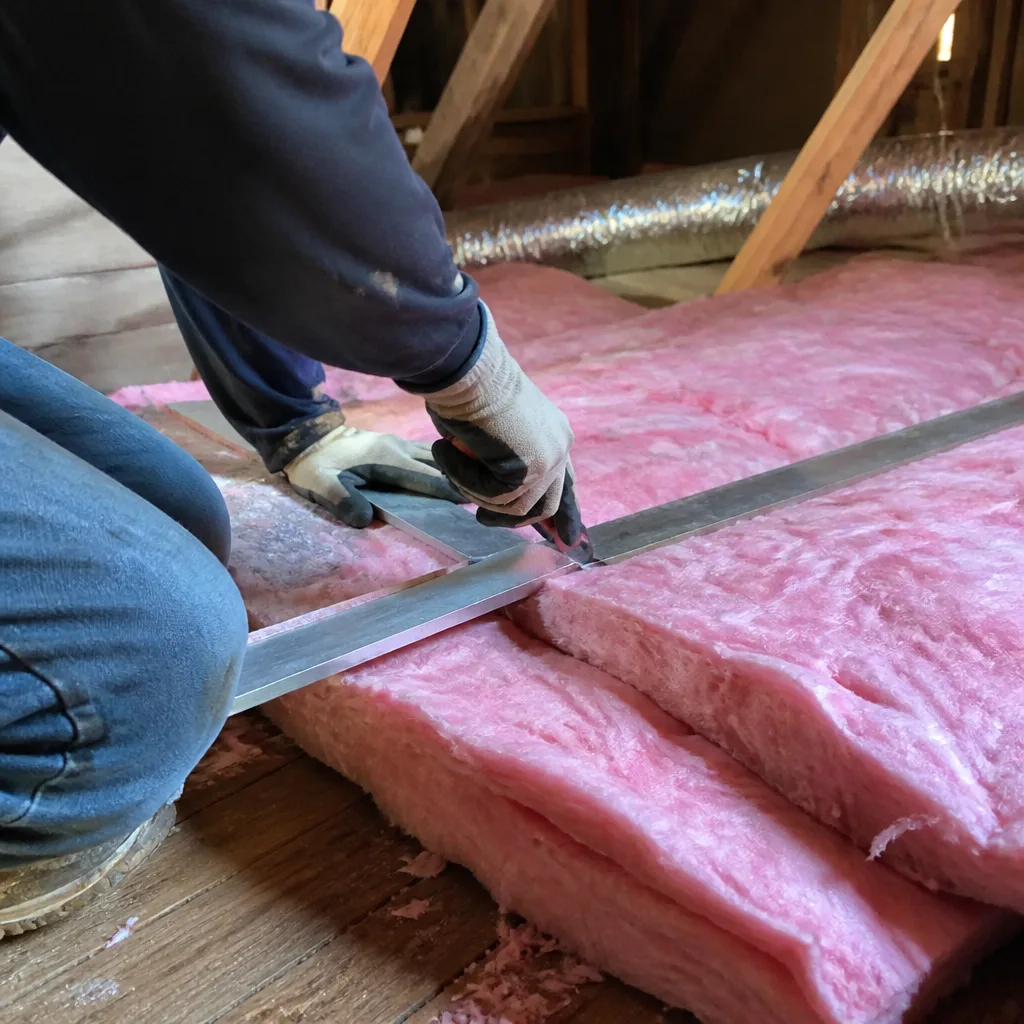
Palmdale’s heating season is shorter than cold-climate regions but more intense within its window. Those 20-25 freeze nights concentrate demand, and the daily temperature swing - 65°F high to 22°F low - creates expansion-contraction stress on materials that coastal climates don’t impose.
The single most overlooked inspection point: attic hatch weatherstrip compression.
We’ve blower-door tested hundreds of Palmdale homes. The attic hatch is consistently in the top three leakage sites, often number one. A 24×30 inch hatch with failed or missing weatherstripping leaks as much conditioned air as a four-inch hole in your wall. In winter, that’s heated air you paid for escaping directly to 25°F attic space.
The November pre-heating check (before first predicted freeze):
- Close the hatch on a piece of paper. Pull the paper. If it slides freely with no resistance, the weatherstrip is too compressed or missing. Proper compression holds the paper firmly; you should feel drag.
- Inspect weatherstrip material. Closed-cell foam tape degrades in 3-5 years in Palmdale’s thermal cycling. If it’s cracked, flattened, or crumbling, replace it. Use 3/8″ or 1/2″ closed-cell foam with adhesive backing, rated for the temperature range.
- Verify hatch insulation. The hatch itself needs R-value matching surrounding ceiling insulation, typically R-30 to R-38 in Palmdale. Rigid foam board cut to fit, foil-faced or faced with housewrap tape at seams, is the standard solution. A hatch with no insulation is a thermal bridge that costs you money every night the attic drops below 40°F.
- Check for light leaks around hatch perimeter. With attic lights off and hatch closed, look for visible gaps from the conditioned side. Any light visible is air leaking. Seal with weatherstrip or backer rod plus caulk.
Beyond the hatch, verify that insulation covers all ceiling areas, especially at exterior wall top plates where blown insulation may have settled or been disturbed. Palmdale’s 1980s-1990s construction often has shallow insulation at eaves due to truss design; these are the first places frost forms on interior drywall during hard freezes, creating the “ghosting” patterns homeowners mistake for mold.
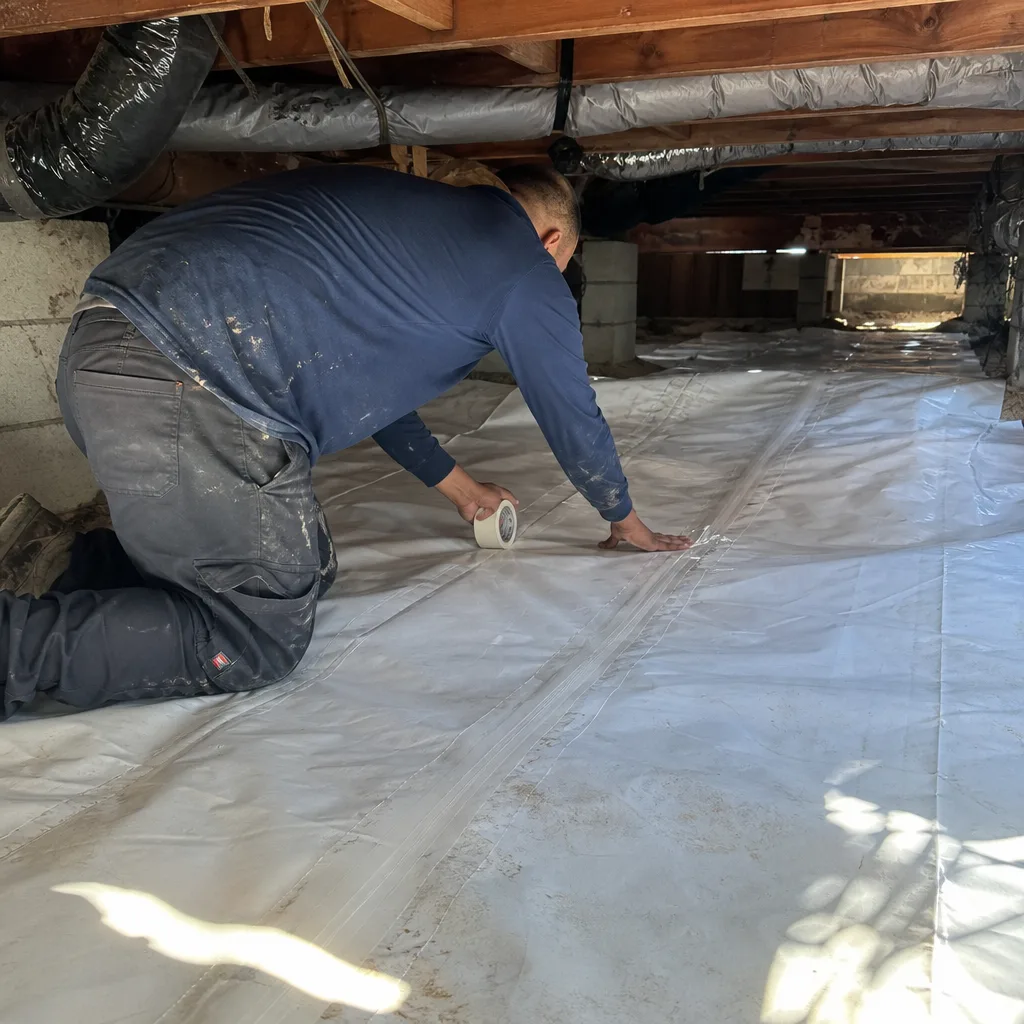
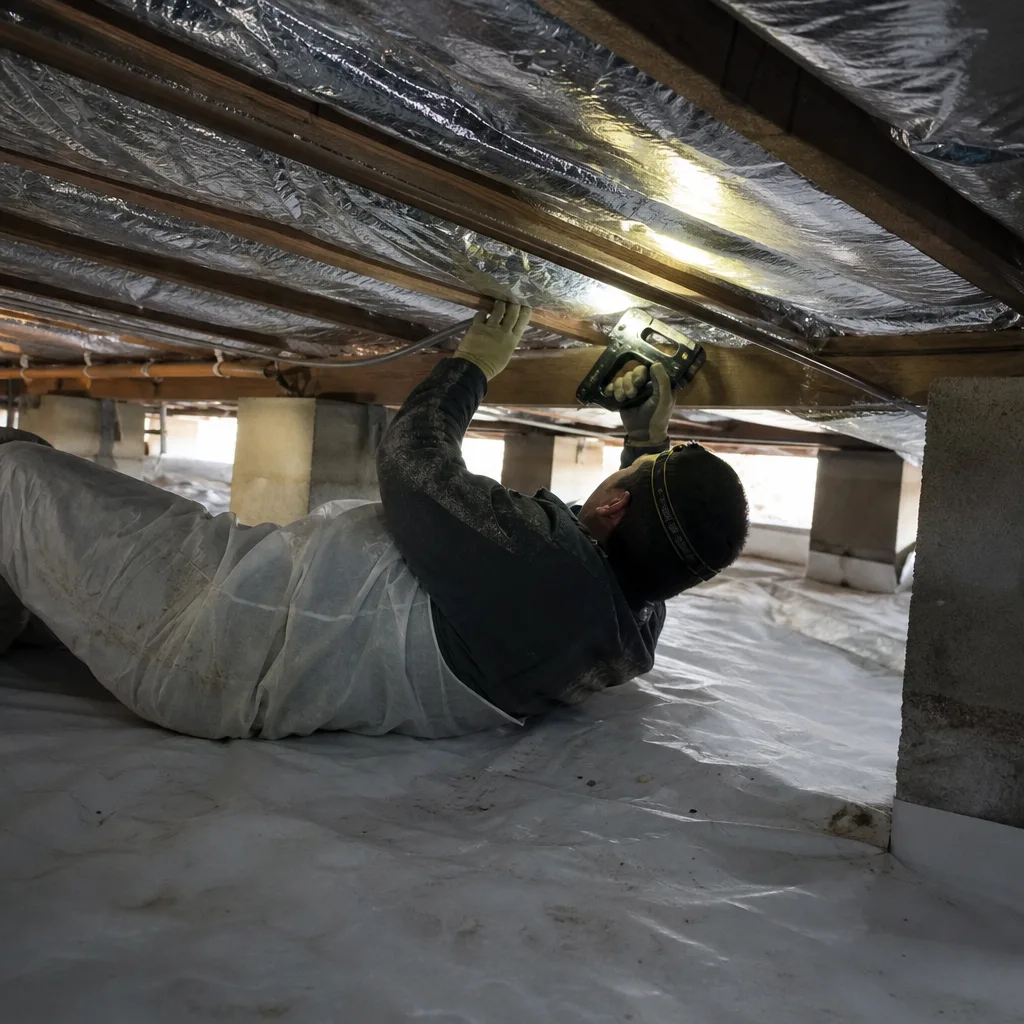
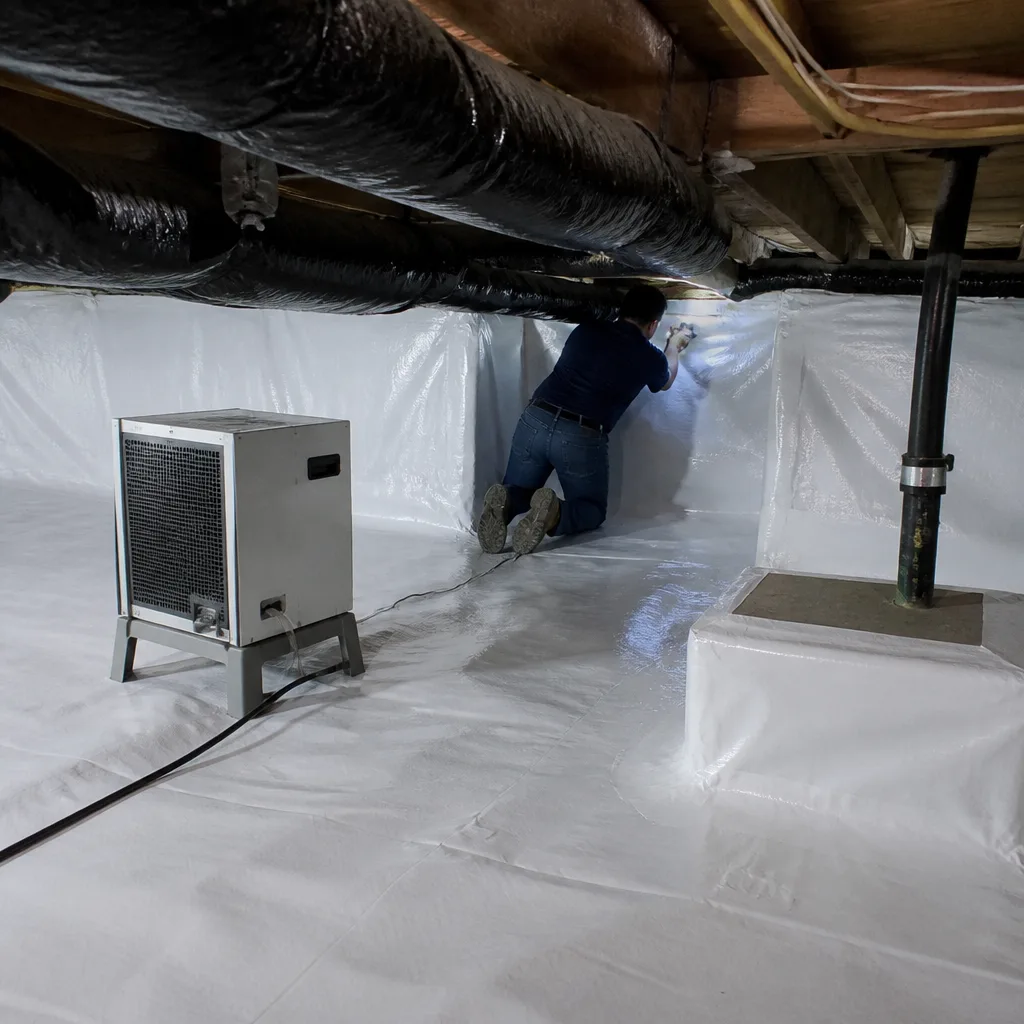
Crawl Space Encapsulation & Vapor Barrier in Palmdale addresses the other major thermal bridge in homes with raised floors - the crawl space interface that many Palmdale homeowners ignore until January pipe freeze events.
February-March: Post-Season Assessment and Planning
By late February, Palmdale’s freeze risk drops below 10% probability. This is your documentation and planning window before the April pre-summer cycle begins.
Compile your season’s observations:
- Which rooms were consistently hard to heat? Mark them for insulation inspection.
- Did any ceiling stains appear or grow? Photograph and schedule roof repair if progressive.
- Did the HVAC filter load faster than usual? Excessive dust indicates envelope leakage, likely at attic penetrations.
- Any rodent signs in the attic - droppings, disturbed insulation trails, nesting material? Palmdale’s winter rodent pressure peaks in January-February as desert temperatures drop.
This is also the optimal window for professional assessment if you’re considering upgrades. Attic temperatures are moderate, crews can work safely, and you can schedule work before the April-May rush. Blower-door testing - the pressurization measurement that shows, in one number, how much air your building envelope is losing - produces the most representative results in mild weather, not during extreme heat or cold when stack effect skews readings.
For homes built 1970-2005 in Palmdale’s original subdivisions - the areas north of Avenue S, east of 25th Street East, and the older sections of Quartz Hill - this assessment window often reveals that insulation has settled 20-30% below original installed depth. Blown cellulose and early fiberglass products compress over decades. A top-off with modern material, preceded by air sealing, typically pays back in 3-5 years at current SCE rates.
We publish before-and-after blower-door numbers on every applicable job so homeowners can verify the air-sealing result they paid for. Under Haven Standard Clause 1, every job begins with a written price - flat price, written scope, written warranty before anyone lifts a tool.
Common Mistakes to Avoid
- Adding insulation without air sealing first. This is the most expensive error we correct in Palmdale attics. Blown insulation over an unsealed attic floor simply filters the air leaking through; it doesn’t stop it. The insulation becomes a dirty sponge of dust and loses R-value. We never blow insulation over an unsealed surface - sealed first, then insulated, in that order.
- Inspecting the attic at midday in July. Attic temperatures exceed 150°F and present genuine heat-stroke risk. Schedule attic work for early morning, or hire professionals with heat-safety protocols. We’ve treated crew members for heat exhaustion; homeowners without hydration and egress plans face real danger.
- Ignoring monsoon staining because “it dried out.” Moisture-damaged insulation doesn’t recover. Compressed fiberglass or cellulose stays compressed; mold spores remain viable. The “it dried” rationale delays remediation until the problem requires removal and replacement, not just spot treatment.
- Using interior caulk for attic air sealing. Standard painter’s caulk shrinks and fails in the temperature extremes of a Palmdale attic. Air sealing requires acoustical sealant, fire-rated caulk, or expanding foam rated for the application. We’ve re-worked countless “DIY sealed” attics where the homeowner used the wrong material and created a false sense of security.
- Neglecting the crawl space in winter planning. Palmdale homes with raised floors - common in 1950s-1970s construction and some 1980s tracts - lose disproportionate heat through uninsulated crawl spaces. The living floor feels cold even when attic insulation is adequate. Crawl space vapor barrier and perimeter insulation are part of the complete envelope.
- Assuming new construction has proper air sealing. Palmdale’s 2005-2015 building boom produced homes with code-minimum insulation and minimal air sealing. We’ve blower-door tested 2010-built homes that leaked worse than 1980s construction. Age doesn’t determine performance; installation quality does.
When to Call a Professional
Call for assessment when you observe active moisture, visible mold, or insulation displacement you cannot safely correct. Call when your HVAC runtime is inexplicably extended, when rooms won’t balance thermally, or when you’re considering any insulation upgrade and want to understand your home’s actual leakage rate - measured, not estimated.
Topside Attic Insulation Palmdale offers free estimates in Palmdale. We’ll read any competing written estimate with you as part of our Free Second Opinion - Haven Standard practice. Every visit includes a Documented Photo Record, and applicable jobs receive before-and-after blower-door readings so you can verify the result. Call (661) 403-4467 to schedule.
Frequently Asked Questions
Most attic insulation jobs in Palmdale homes of 1,400-2,400 square feet run between $2,800 and $6,500, depending on existing insulation condition, air-sealing requirements, and material choice - blown fiberglass, Rockwool, or spray foam like Icynene. We provide a written price before any work starts, always, with no range that widens after inspection. Call (661) 403-4467 for an exact quote - estimates are free.
Sustained attic temperatures above 150°F degrade facing materials on fiberglass batts and can accelerate binder breakdown in some cellulose products over decades, but the insulation itself remains functional. The greater risk is thermal cycling - the 180-degree annual range - which stresses air-sealing materials and can displace loose-fill. We inspect for these specific Palmdale conditions, not generic wear.
Look at the attic floor with a flashlight. If you see gaps around electrical boxes, pipe penetrations, or top plates with no visible sealant - just insulation pushed against them - it wasn’t properly sealed. A blower-door test confirms this with a single number: most unsealed Palmdale homes read 3,500-4,500 CFM50; properly sealed homes typically read under 2,500.
Wait 48-72 hours, then inspect your attic deck with a bright flashlight for new staining on roof sheathing, especially at valleys and penetrations. Check insulation below any stains for compression or discoloration. Document with dated photos. Progressive staining after subsequent rains means active leakage requiring professional repair. Static, isolated staining can be monitored but still indicates compromised insulation needing replacement in that zone.
Spot repair of displaced or thin insulation costs $400-$900 in typical Palmdale attics. Full removal and replacement runs $3,500-$8,000 depending on square footage and material. Repair makes sense for isolated issues in otherwise adequate insulation. Replacement is justified when insulation is uniformly below current code depth, moisture-damaged, or contaminated. We assess and provide a written price for either scope - no upsell to replacement when repair suffices.
Follow the month-by-month calendar in this guide: ventilation and radiant barrier in April-May, thermal stress observation in June-July, moisture monitoring in August-September, air-sealing verification in October-November, hatch inspection in November, and post-season assessment in February-March. This rhythm catches Palmdale’s four distinct stress phases. A professional blower-door assessment every 3-5 years verifies that your air sealing remains effective as materials age.
The Bottom Line
Palmdale’s insulation doesn’t face one climate challenge - it faces four, each with distinct timing and specific homeowner actions. The homes that perform best year after year treat April-May ventilation verification, August-September moisture monitoring, October-November air-sealing checks, and November hatch inspection as non-negotiable maintenance, not optional upgrades. Thermal cycling from 155°F attic peaks to 22°F freeze nights degrades materials faster than steady-state climates, and the Santa Ana wind season exposes every gap that was missed during installation. Document what you find, act on progressive problems, and measure rather than guess. The cost of scheduled attention is minor compared to the cost of moisture remediation, energy waste, or emergency heating repairs in January.
Written by Wes Okafor, Owner at Topside Attic Insulation Palmdale, serving Palmdale since 2016.