
Last updated September 24, 2026
DIY vs Professional Insulation: The Palmdale Homeowner’s Decision Guide
A Palmdale homeowner who rents a blow-in machine from a big-box store and adds six inches of blown fiberglass to an existing attic floor will spend approximately $400 and get a real R-value improvement. But if that attic has recessed lights below it, they will have added insulation on top of air leaks that now run warmer and faster, and their utility bill will tell them so within one billing cycle. In this guide and our step-by-step guide on hiring an insulation contractor in Palmdale, we’ll draw the precise technical line between what you can handle yourself and what requires a professional in Palmdale’s specific regulatory and climate environment. You’ll learn the exact permit triggers under California Title 24, what a rented machine actually delivers versus a contractor’s calibrated equipment, and why insulating over unsealed air leaks can erase your investment. This isn’t a sales pitch dressed as advice. It’s a decision framework based on building science, local code, and what we’ve documented across thousands of envelope jobs.
Quick Answer
DIY insulation in Palmdale is reasonable only when the work stays entirely within a single unconditioned attic, involves no air-sealing of penetrations, and requires no HERS compliance documentation. Every other scenario, including spray foam, wall cavities, crawl spaces, and any job where California Title 24 mandates inspection, requires a licensed professional with proper equipment and permitting.
Table of Contents
- Where DIY Ends: The Precise Technical Boundary
- California Title 24: The Permit Triggers DIYers Miss
- The Air Leakage Problem: Real ACH50 Data from Palmdale Attics
- Equipment Reality: Rented Machine vs. Calibrated Truck-Mounted Blower
- Three Job Types With No DIY Alternative
- Honest Cost Breakdown: DIY vs. Professional in Palmdale
- Common Mistakes to Avoid
- When to Call a Professional
- Frequently Asked Questions
- The Bottom Line
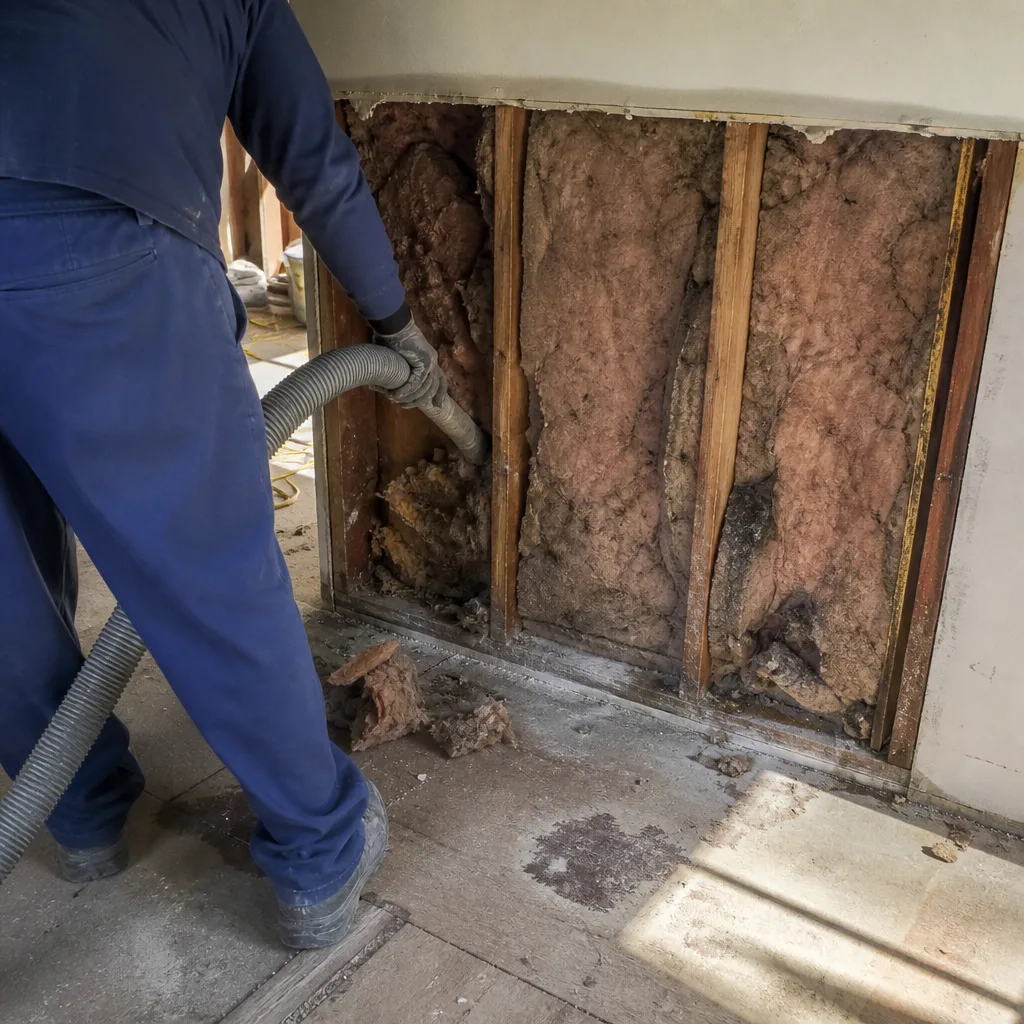 Before
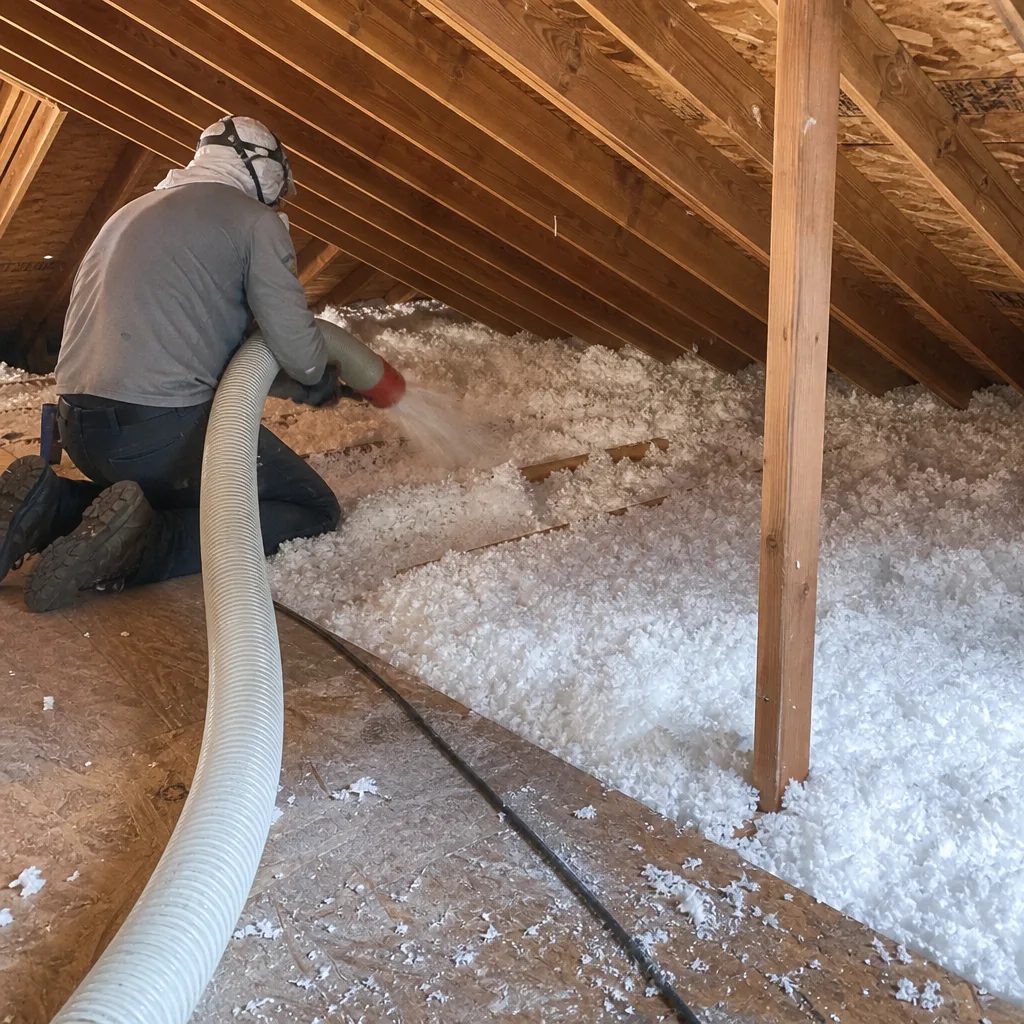 After
AfterWhere DIY Ends: The Precise Technical Boundary
We can define the DIY-safe scope in a single sentence: adding loose-fill fiberglass or cellulose to an existing attic floor that already contains insulation, where no electrical penetrations, plumbing stacks, chimney chases, or top plates need sealing, and where no conditioned space is being created or modified.
That’s a narrow window. Let’s unpack why.
The physics of insulation performance depend on two variables: thermal resistance (R-value) and air barrier continuity. R-value measures how well a material resists heat flow. Air barrier continuity measures whether conditioned air stays inside and unconditioned air stays out. In Palmdale’s high-desert climate, summer attic temperatures regularly exceed 140°F. Without a continuous air barrier, that superheated air migrates into living spaces through every available path. Adding R-value to a leaky attic is like wearing a thick sweater in a windstorm. The sweater helps, but the wind cuts right through.
For a DIY project to make technical sense, all of these conditions must be true:
- The attic is vented, unconditioned, and accessible via a permanent staircase or pull-down ladder rated for the load.
- No recessed can lights, electrical junction boxes, or plumbing vents penetrate the attic floor.
- The existing insulation is dry, uncontaminated, and uniformly distributed, no compression or water staining.
- No HVAC ducts run through the attic, or any ducts present are already sealed and insulated to R-8 minimum.
- The project does not alter, cover, or obstruct any combustion appliance venting or combustion air supply.
- No permit is triggered under local or state code (see next section).
We’ve inspected hundreds of Palmdale attics in neighborhoods from Rancho Vista to Quartz Hill-adjacent areas, and the attics that meet all six conditions are rare. Most have at least some can lights, a plumbing stack, or a top plate gap that leaks like a sieve. The homeowner who proceeds without addressing these elements gets partial credit for effort and full billing from Southern California Edison.
The specific neighborhoods around Palmdale matter here too. Homes built during the 1980s and 1990s boom in West Palmdale and East Palmdale often have minimal original insulation, R-11 or R-19 fiberglass batts, and no air sealing whatsoever. The DIY temptation is strong because the improvement potential is obvious. But these same homes typically have numerous top plate gaps where the wall framing meets the ceiling drywall, plus original recessed lights that aren’t rated for insulation contact. Addressing those conditions requires knowledge of fire-blocking, IC-rated fixture identification, and proper sealant selection. Cross the line into any of that, and you’re in professional territory.
California Title 24: The Permit Triggers DIYers Miss
California’s Title 24, Part 6, the Building Energy Efficiency Standards, creates a hard boundary - detailed in our guide to insulation permits, codes & inspections in CA - that many Palmdale homeowners don’t discover until they sell their house or file an insurance claim. Here’s how it works in plain terms.
Title 24 requires a HERS (Home Energy Rating System) rater to verify certain energy efficiency measures. In the insulation world, this typically triggers when:
- You remove and replace more than 10% of the insulation in a building envelope component (attic, wall, or floor).
- You add insulation to a previously uninsulated space that now requires compliance documentation for a permit.
- The work is part of a larger remodel or addition that requires a building permit.
- You install spray foam insulation of any type, which requires density and thickness verification.
The consequence of completing HERS-triggered work without proper inspection is specific and serious. The work doesn’t legally exist. If you sell the home, a competent buyer’s inspector or title search will flag unpermitted energy work. Your insurance carrier may deny a claim related to the modified area. And if a fire or moisture issue traces to the insulation work, your homeowner’s policy may not cover it.
Palmdale falls under Los Angeles County’s building department jurisdiction for unincorporated areas and the City of Palmdale’s own building division for incorporated areas. Both enforce Title 24 compliance. The city of Palmdale requires permits for attic insulation removal and replacement when the project exceeds the 10% threshold, and they require HERS verification for spray foam installations regardless of project size. We’ve had homeowners call us after their DIY spray foam job failed inspection and they faced the choice of tearing it out or hiring a HERS rater to attempt retrospective verification, which often costs more than the original work.
The permit process itself isn’t onerous if you know it exists. Submit plans, pay the fee, schedule inspection. But the HERS component requires a certified rater, and certified raters won’t sign off on work they didn’t witness or that lacks proper documentation. This is the trap: you can do the work yourself, but you cannot self-certify it. The certification requirement is what makes certain jobs definitively professional.
There’s also a practical Palmdale-specific factor. Our high-desert climate zone, Climate Zone 15 under Title 24, has specific R-value requirements that differ from coastal California. Attic insulation in new construction must achieve R-38 minimum, and retrofit work that triggers compliance must meet or exceed existing conditions in a measurable way. A DIYer who adds R-19 over existing R-11 may not meet the threshold that triggers HERS, but if they’re also replacing the HVAC system or adding square footage, the combined project almost certainly does. The interaction between trades is where permits get complicated, and where professional coordination pays for itself.
The Air Leakage Problem: Real ACH50 Data from Palmdale Attics
We publish before-and-after blower-door numbers on every applicable job. A blower-door test is a pressurization reading that shows, in one number, how much air your building envelope is losing, measured in cubic feet per minute at 50 pascals of pressure difference, or CFM50. We also convert this to ACH50, air changes per hour at 50 pascals, which normalizes for house size and gives a comparable metric.
Here’s what we’ve documented across Palmdale homes built from 1975 to 2010, which represents the bulk of our local housing stock:
| Condition | Typical ACH50 Range | Condition Description |
|---|---|---|
| Unsealed attic, original insulation | 12-18 ACH50 | Typical Palmdale home with no air sealing, R-19 or less in attic |
| After DIY insulation addition only | 10-15 ACH50 | Added blown fiberglass or cellulose, no penetration sealing |
| After professional air sealing + insulation | 5-8 ACH50 | Top plates, can lights, plumbing stacks sealed; then insulated |
| Target for Climate Zone 15 | 5-7 ACH50 | Recommended maximum for our heating/cooling loads |
The gap between row two and row three is the story most DIY guides don’t tell. Adding insulation without air sealing reduces your ACH50 by maybe 15-25%. Air sealing plus insulation cuts it by 50-60%. In a 2,000 square foot Palmdale home with 8-foot ceilings, the difference between 15 ACH50 and 7 ACH50 is approximately 1,600 cubic feet of conditioned air per hour that you’re no longer heating and cooling. At our local utility rates, that’s $30-$50 per month in summer cooling alone.
The mechanism is straightforward. Warm air rises. In summer, your attic becomes a solar oven. Every penetration in the ceiling, every gap around a light fixture, every unsealed top plate becomes a chimney for that hot air to push into your living space. Adding insulation over these leaks doesn’t stop the airflow. It just warms the insulation from below, reducing its effective R-value through thermal bridging and convective looping. We’ve removed DIY insulation jobs where the top layer was cool to the touch and the bottom layer, against the ceiling, was 20 degrees warmer. That’s not insulation working. That’s insulation failing.
In neighborhoods like Anaverde and the older sections of Palmdale around Avenue S, we’ve seen particularly egregious cases. These homes often have original recessed lights with no housing, just a trim ring against drywall. The homeowner blows cellulose around them, not knowing that the fixture isn’t rated for insulation contact. The insulation gets hot, potentially very hot, and the air leak continues unabated. In one case on 25th Street East, our blower-door test showed 8.2 ACH50 before any work. The homeowner had added 10 inches of GreenFiber cellulose himself two years prior. His summer bills had dropped barely $15 monthly. After we removed and reinstalled properly, with full air sealing of 14 can lights and top plate gaps, his ACH50 dropped to 6.1. His next summer bill dropped $47.
The data doesn’t lie. The insulation he installed was fine material. The installation sequence was wrong.
Equipment Reality: Rented Machine vs. Calibrated Truck-Mounted Blower
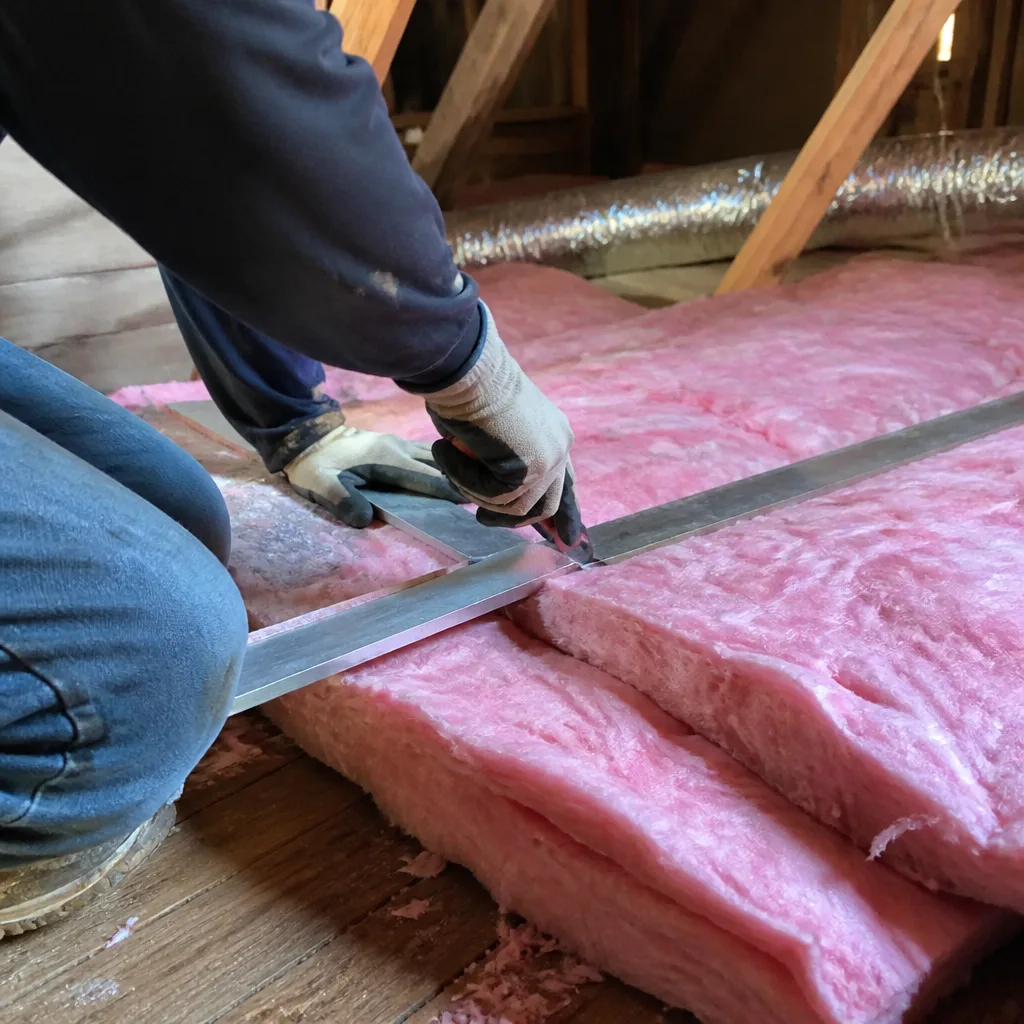
Let’s talk about what actually happens when you rent insulation equipment versus what a professional crew brings to your driveway.
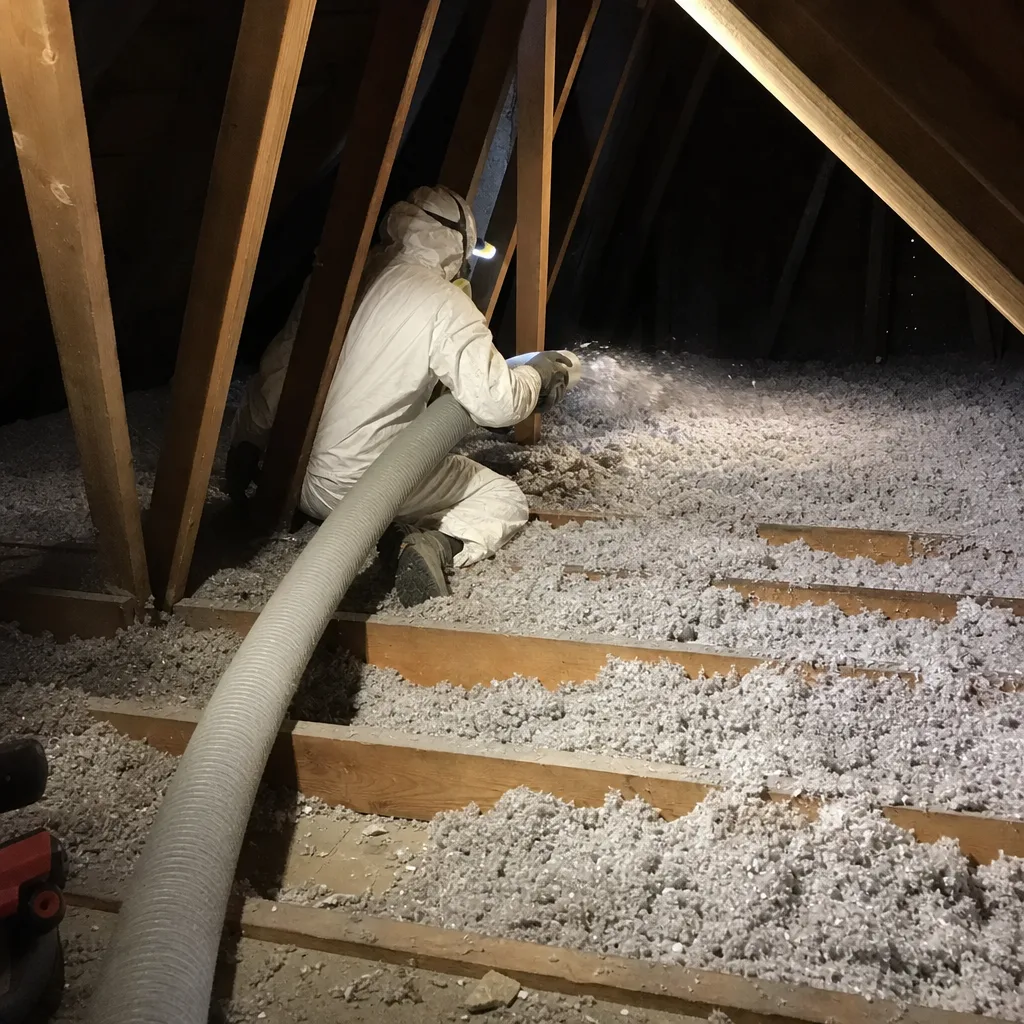
The typical big-box rental is a portable electric blower, often a single-stage unit with a 1.5 to 2 horsepower motor, fed by 50-pound bags of loose-fill material. The machine breaks up compressed insulation and blows it through a hose. Simple enough. But three variables determine whether the installed insulation performs to its rated R-value: settled density, uniform coverage, and minimal voids.
Settled density matters because insulation achieves its R-value per inch at a specific density. Blow it too loose, and the fibers don’t interlock properly; heat moves through the gaps. Blow it too dense, and you compress the material, reducing its loft and effective R-value. The rental machines have basic feed-rate controls, usually a sliding gate or a simple rheostat. They don’t have calibrated agitators, variable-speed blowers, or real-time density feedback.
Our truck-mounted blowers, by contrast, are two-stage machines with 10+ horsepower, calibrated agitators that break up compressed material without shredding fibers, and adjustable air velocity that lets us dial in the exact density specified by the manufacturer for the target R-value. Owens Corning’s AttiCat system, for example, specifies 0.5 to 0.6 pounds per square foot at R-38 in a standard attic. Our equipment hits that spec. Rental equipment, in our experience measuring competitor DIY jobs, typically achieves 0.35 to 0.45 pounds per square foot. The homeowner thinks they’ve installed R-38. They’ve actually installed R-28 to R-32 equivalent.
Uniform coverage is the second issue. A rental machine’s hose is 3 to 4 inches in diameter, heavy, and awkward in a hot attic. Homeowners tend to blow from the access point outward, creating a thick pile near the hatch and thinning coverage toward the eaves. They also avoid the edges and corners where roof framing complicates access. The result is a lumpy, irregular surface with thin spots that thermally bypass the main insulation field. Our crews use extension hoses, remote-controlled directional nozzles, and systematic patterns that ensure even distribution to within 1/2 inch of target depth everywhere.
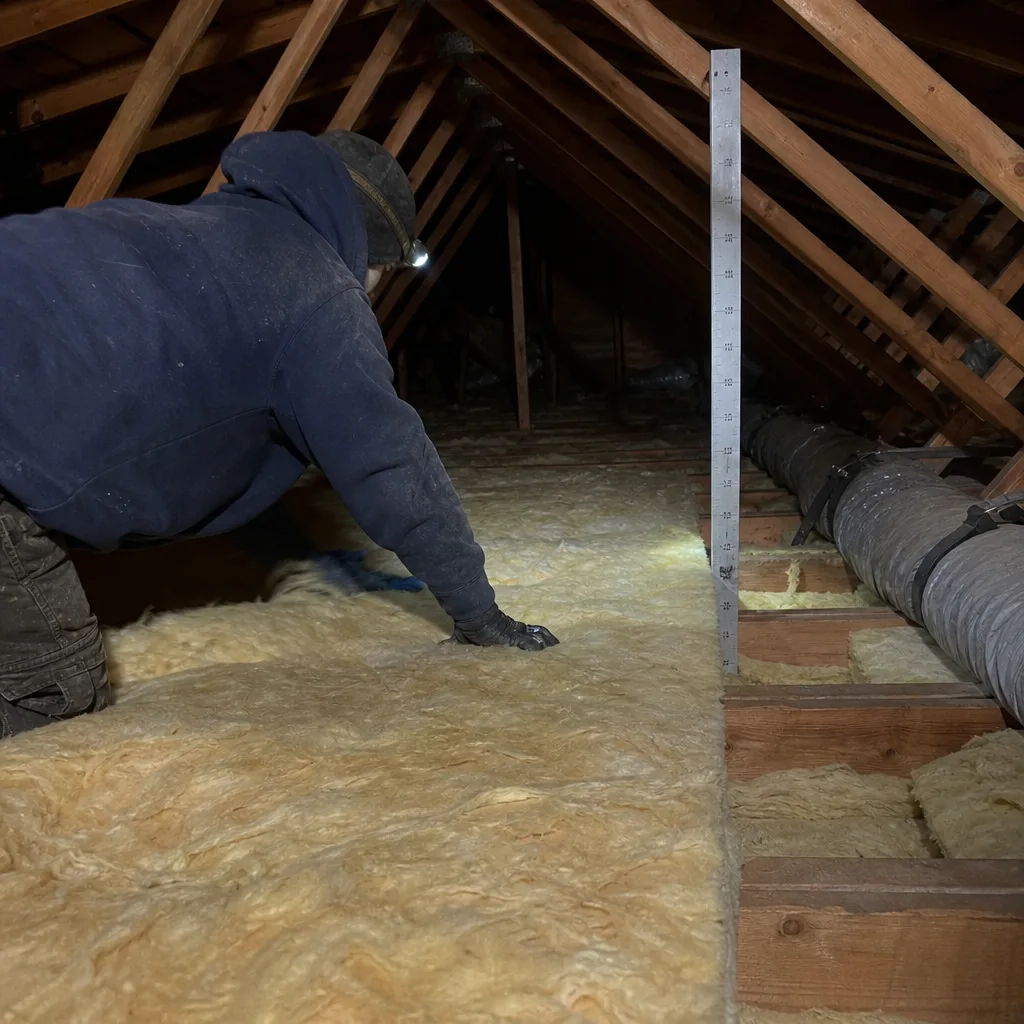
Minimal voids is the third variable, and it’s where experience shows most clearly. Around obstructions, baffles, and framing members, air gaps form naturally. A professional knows to blow from multiple angles, to use hand tools to work material into corners, and to verify coverage with depth markers placed before installation begins. We’ve never seen a DIY job with proper depth markers.
The cost difference is real but narrower than it appears. Rental machine: $75-$125 per day. Material: $250-$400 for a typical 1,000 square foot attic. Protective gear, access equipment, disposal: $50-$100. Total DIY outlay: $375-$625. Our typical blown-in attic insulation job in Palmdale, for a home that meets the narrow DIY criteria above, runs $1,800-$2,400. The gap is $1,200-$2,000. But that professional job includes air sealing of all accessible penetrations, calibrated density installation, depth verification with photo documentation, and a before-and-after blower-door test that proves the result. If your attic has any leaks, and most do, the DIY savings evaporate in under two years of inflated utility bills.
Three Job Types With No DIY Alternative
There are three categories of insulation work where we tell every homeowner the same thing: don’t attempt this yourself. Not because we want the job. Because the failure modes are dangerous, illegal, or both.
1. Spray Foam Insulation
Spray polyurethane foam, whether open-cell (Icynene, Demilec) or closed-cell, involves two-component chemical systems that react at the nozzle. The A-side isocyanate and B-side polyol blend must mix in precise ratio, typically 1:1 by volume, at specific temperature and pressure. Off-ratio foam fails to cure properly, leaving sticky, toxic residue that off-gasses indefinitely. We’ve been called to remediate DIY spray foam jobs where the homeowner bought a “frost-free” kit online and applied it in a 95°F Palmdale attic. The foam never reached full rise, trapped moisture against the roof deck, and created a mold condition that required $8,000 in remediation plus complete removal.
Beyond the chemistry, spray foam requires respiratory protection beyond what homeowners typically own. Full-face supplied-air respirators, not dust masks. Tyvek suits, not old clothes. And the HERS verification requirement means even perfect DIY application can’t be legally documented.
2. HERS-Documented Work
Any project that triggers HERS verification requires a certified rater to witness or verify key installation details. This includes insulation grade (how well it fills cavities), proper contact with air barriers, and absence of compression or gaps. The rater issues a Certificate of Verification that’s filed with the building department. No homeowner can self-issue this certificate. Attempting to do the work yourself and then calling a rater for retrospective inspection rarely succeeds. Raters need to see installation in progress or have photo documentation that meets specific standards. Most won’t take the liability of signing off on work they didn’t witness.
In Palmdale’s Climate Zone 15, HERS verification triggers for:
- All spray foam installations
- Insulation replacement exceeding 10% of envelope area when part of permitted work
- Any work tied to a Title 24 compliance package for new construction or major remodel
- Duct sealing and insulation in new or replacement HVAC systems
3. Building Envelope Work Requiring Blower-Door Verification
This is our specialty and our standard. Any job where the goal is reducing air leakage, not just adding R-value, requires a blower-door test to measure baseline, guide the sealing work, and verify the result. The equipment costs $3,000-$5,000 for a calibrated system. The training to interpret results and identify leakage paths takes months of supervised practice. A homeowner can rent a blower door in some markets, but operating it without understanding building pressure dynamics, zonal pressure diagnostics, and the difference between CFM50 and ACH50 natural is like buying a stethoscope and calling yourself a cardiologist.
More importantly, the value of the work is in the number. “We reduced your leakage from 14.2 to 6.8 ACH50” is a documented, transferable, verifiable claim. “We sealed everything we could find” is a feeling. Our customers pay for the number, and they get it in writing, with photos, before anyone leaves.
Honest Cost Breakdown: DIY vs. Professional in Palmdale
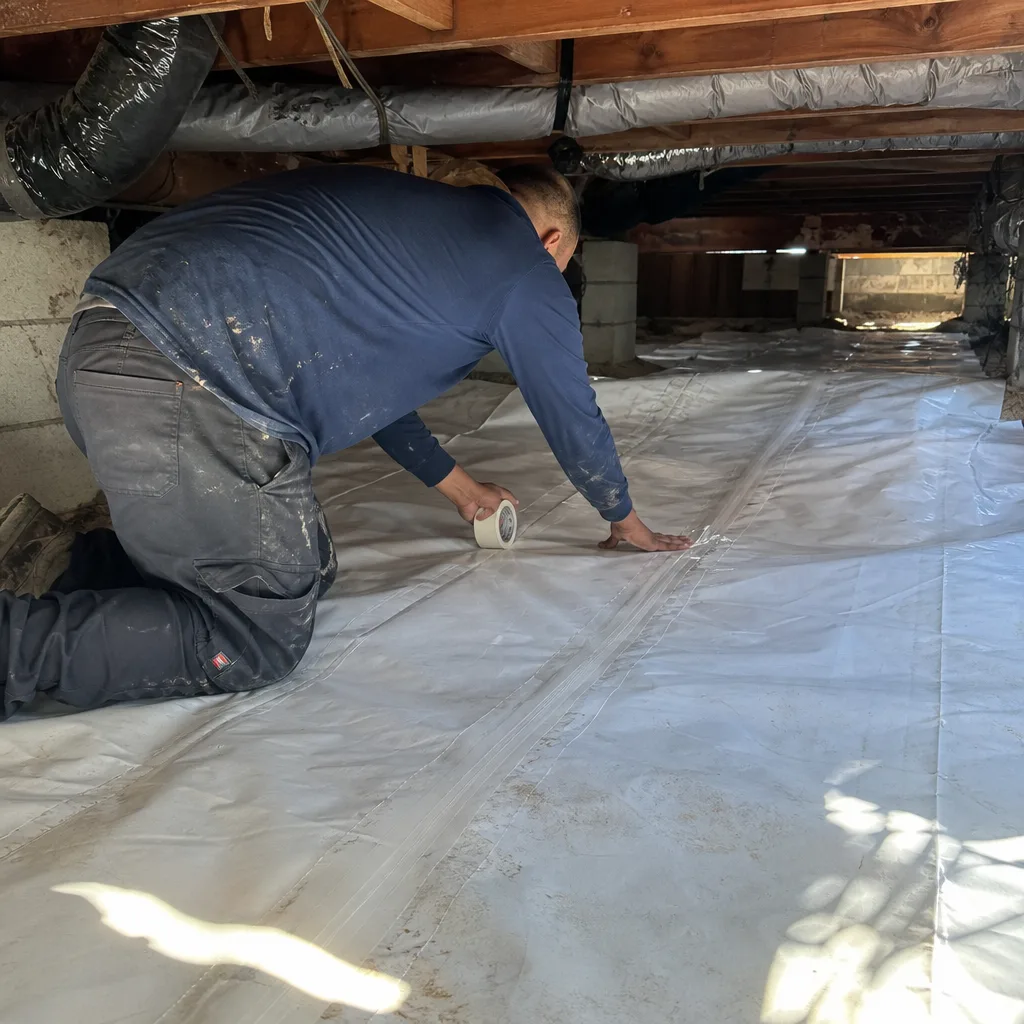
Here’s what the two paths actually cost - figures we break down further in our Palmdale insulation cost breakdown for 2026 - for a typical 1,500 square foot home with accessible attic and existing R-19 insulation. We’re assuming the homeowner’s goal is R-38 total, which is Title 24 minimum for our climate zone.
| Item | DIY Path | Professional Path (Topside Attic Insulation Palmdale) |
|---|---|---|
| Equipment rental | $100 | Included |
| Material (blown fiberglass) | $350 | Included |
| Air sealing materials | $75 (caulk, foam, tape) | Included |
| Protective gear, access equipment | $75 | Included |
| Air sealing labor | 8-12 hours homeowner time | Included |
| Installation labor | 4-6 hours homeowner time | Included |
| Blower-door test (before/after) | Not available | Included on applicable jobs |
| Photo documentation | Self-generated | Documented Photo Record included |
| Written warranty | None | 365-Day Done Right Promise |
| HERS compliance (if triggered) | Not achievable | Coordinated, included in scope |
| Total out-of-pocket | $600 + 12-18 hours labor | $2,000-$2,800 (most jobs in this scope) |
The payback calculation depends on your starting condition. A home at 15 ACH50 with R-19 insulation, typical for 1990s Palmdale construction, will see $40-$60 monthly summer cooling reduction from proper air sealing plus insulation upgrade to R-38. The DIY path, adding insulation only, might yield $15-$25. The professional premium pays back in 24-36 months on energy savings alone, faster if you factor in the avoided cost of fixing DIY errors.
There’s also a financing consideration. Professional insulation work may qualify for federal energy efficiency tax credits and Southern California Edison rebate programs that require contractor documentation. DIY work generally does not. The 2025-2032 federal credit covers 30% of insulation costs up to $1,200 annually, but requires itemized receipts and often a manufacturer certification statement that contractors routinely provide and homeowners struggle to obtain.
Common Mistakes to Avoid
- Insulating over recessed lights that aren’t IC-rated. In Palmdale’s older neighborhoods, original can lights often lack insulation-contact housings. Covering them with cellulose or fiberglass creates a fire hazard and doesn’t stop the air leak. The correct fix is replacing the fixture or building a sealed box around it, both beyond typical DIY scope.
- Blowing insulation against the roof deck without proper ventilation. Palmdale’s intense solar exposure can drive roof deck temperatures above 160°F. Insulation against the deck without a ventilated air space traps moisture and voids shingle warranties. This is a particular risk in homes with limited eave ventilation, common in 1970s and 1980s construction.
- Skipping the baffles at eaves. Wind washing, where attic ventilation air moves through loose-fill insulation near the eaves, can reduce effective R-value by 20% in exposed areas. Proper baffles maintain a clear ventilation channel. Most DIYers either omit them or install them incorrectly.
- Compressing existing insulation. Walking on or laying boards over fiberglass batts crushes the fibers and reduces their R-value permanently. Professional crews use walkboards supported by joists and work from plywood platforms to distribute weight.
- Ignoring the garage attic or bonus room kneewalls. In Palmdale’s many homes with attached garage bonus rooms, these transition areas are often uninsulated or poorly sealed. They’re also the most common source of comfort complaints. A DIYer focused on the main attic misses the actual problem.
- Failing to verify combustion appliance safety. Adding insulation and air sealing without checking furnace or water heater venting can create backdrafting conditions that spill carbon monoxide into living spaces. This is a life-safety issue that requires combustion safety testing with a calibrated analyzer.
- Assuming more insulation is always better. Beyond optimal density, additional insulation yields diminishing returns and can cause moisture problems in our dry climate by altering the dew point location within the assembly. R-60 in a Palmdale attic is rarely cost-effective versus R-38 with excellent air sealing.
When to Call a Professional
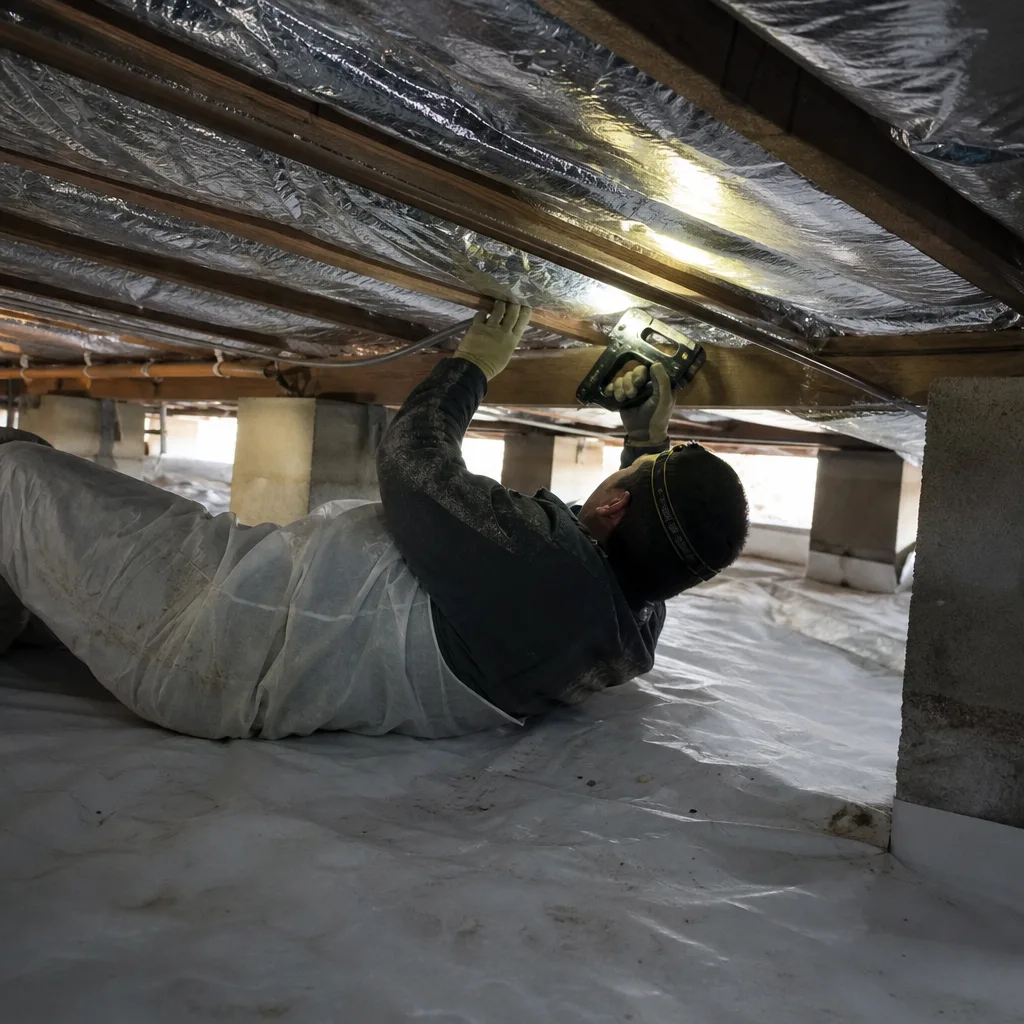
Call a professional when your project involves any of these: spray foam of any type; work requiring a permit or HERS verification; air sealing of penetrations, top plates, or ductwork; crawl space encapsulation or spray foam insulation in Palmdale; or any condition where you want documented proof of performance rather than hope. Attic insulation in Palmdale that includes proper air sealing and blower-door verification is what we deliver, with a Written Price Before Any Work Starts and a Documented Photo Record when we leave. Topside Attic Insulation Palmdale offers free estimates in Palmdale - call (661) 403-4467. We’ll read your existing estimates with you as part of our Free Second Opinion, no obligation.
Frequently Asked Questions
Most complete attic insulation jobs in Palmdale, including air sealing and blown fiberglass or cellulose to R-38, run between $2,000 and $3,500 for a typical 1,500-2,000 square foot home. Spray foam runs higher, typically $4,500-$7,000 for the same footprint. Call (661) 403-4467 for a written price specific to your home - estimates are free.
You can add insulation to an existing attic floor without a permit if the work doesn’t exceed 10% of the total envelope insulation, doesn’t involve spray foam, and isn’t part of a larger permitted project. But “can” and “should” are different questions. Most Palmdale attics need air sealing to make added insulation effective, and effective air sealing often triggers inspection requirements. We can assess your specific conditions and tell you exactly where your project stands.
If your existing insulation is dry, uncontaminated, and not compressed below half its original thickness, adding new material on top is cost-effective. If there’s water damage, rodent contamination, or significant compression, removal and replacement is the only proper path. In Palmdale’s dry climate, rodent damage is more common than moisture damage. We see it frequently in older neighborhoods near the foothills. Call us for an assessment - we’ll show you photos of what we find and give you a written price for either option.
A typical blown-in attic insulation job with air sealing takes one day for a crew of two. Spray foam requires two days: one for prep and application, one for curing and trim. We arrive on schedule, send a text when we’re en route, and leave you with a Documented Photo Record and blower-door numbers before we go.
Yes, but the savings depend on what else is wrong. In our experience across Palmdale homes, a properly air-sealed and insulated attic reduces summer cooling costs by 20-35%. A home at 15 ACH50 that we take to 7 ACH50 typically sees $40-$70 monthly reduction in peak summer months. The key is the air sealing. Insulation alone delivers maybe a third of that.
We source materials from Owens Corning, Johns Manville, Knauf, Rockwool, CertainTeed, Icynene, Demilec, and GreenFiber depending on the application and your preferences. We don’t lock you into proprietary products. Every material is specified in your written scope before work starts.
The Bottom Line
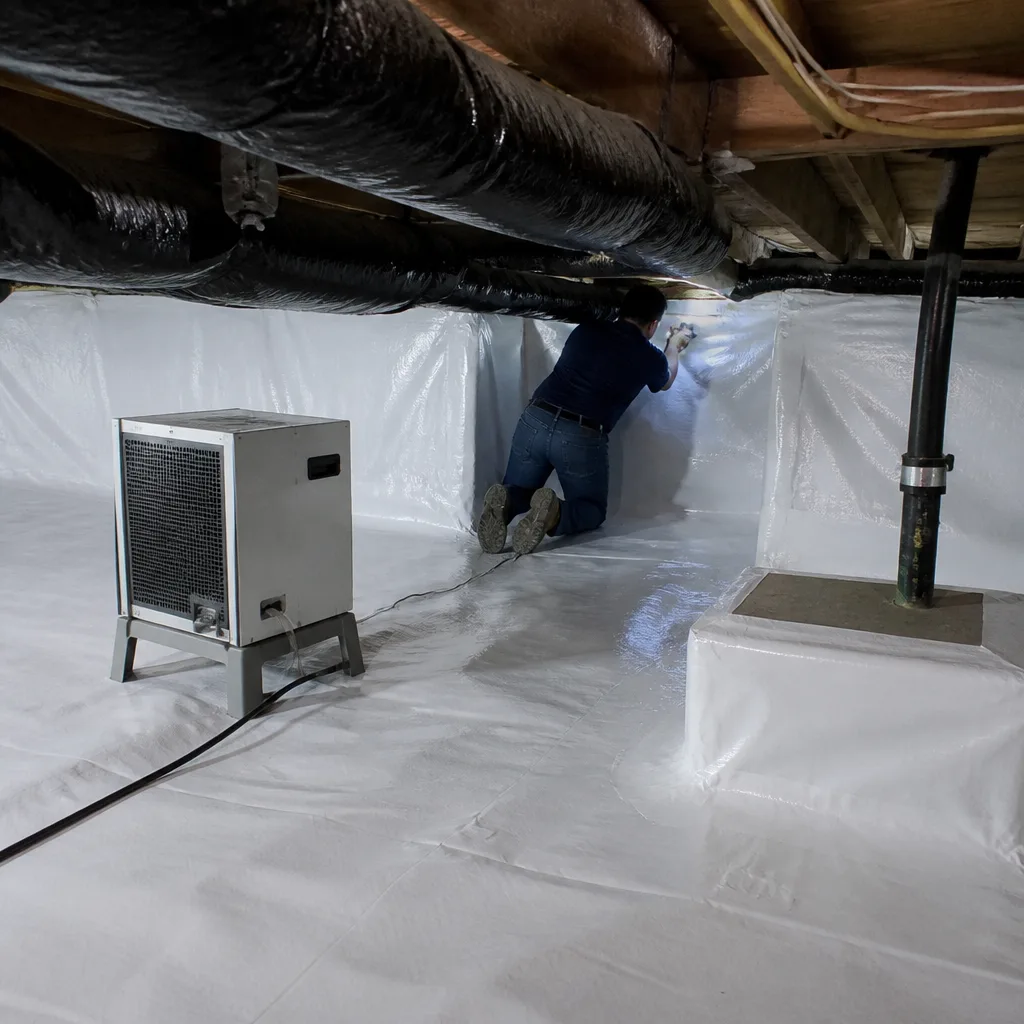
The DIY versus professional insulation decision in Palmdale comes down to a single technical threshold: can your project succeed with added R-value alone, in an attic with no air leaks, no permit triggers, and no verification requirements? If yes, and you’re comfortable with the equipment limitations, DIY is a reasonable choice. If no, and for the vast majority of Palmdale homes the answer is no, professional installation with documented air sealing and blower-door verification is the only path to the performance you’re paying for. We’ve sealed and insulated over 9,000 homes since 2016, every one with a written price before work started and a documented record when the crew left. The Haven Standard means you know what leaving looks like before we arrive.
Written by Wes Okafor, Owner at Topside Attic Insulation Palmdale, serving Palmdale since 2016.