
Last updated September 24, 2026
Insulation Permits, Codes & Inspections in CA: What You Need to Know
In California, insulation work over a certain scope triggers a mandatory HERS (Home Energy Rating System) rater inspection - a third-party verification step that is not the same as the city building inspection - and contractors who skip it are leaving the homeowner holding an undocumented, non-compliant installation. We’ve been called to fix jobs in Palmdale where the previous contractor never pulled a permit, never scheduled a HERS rater, and the homeowner only discovered the problem when their buyer’s inspector asked for the CF3R compliance form at closing. This guide maps the actual permit and inspection sequence, document by document, so you know what compliant insulation work looks like from start to finish, and you can explore more guides & resources for related projects.
Quick Answer
Most attic insulation projects in Palmdale require a building permit through LA County and a separate HERS rater inspection under California’s Title 24 energy code. The building inspector checks structural and safety compliance, while the HERS rater verifies insulation installation quality, air sealing performance, and duct leakage using standardized forms (CF2R and CF3R) that become the legal record of compliance. Homeowners should retain these documents permanently; they transfer with the home and protect manufacturer warranties.
Table of Contents
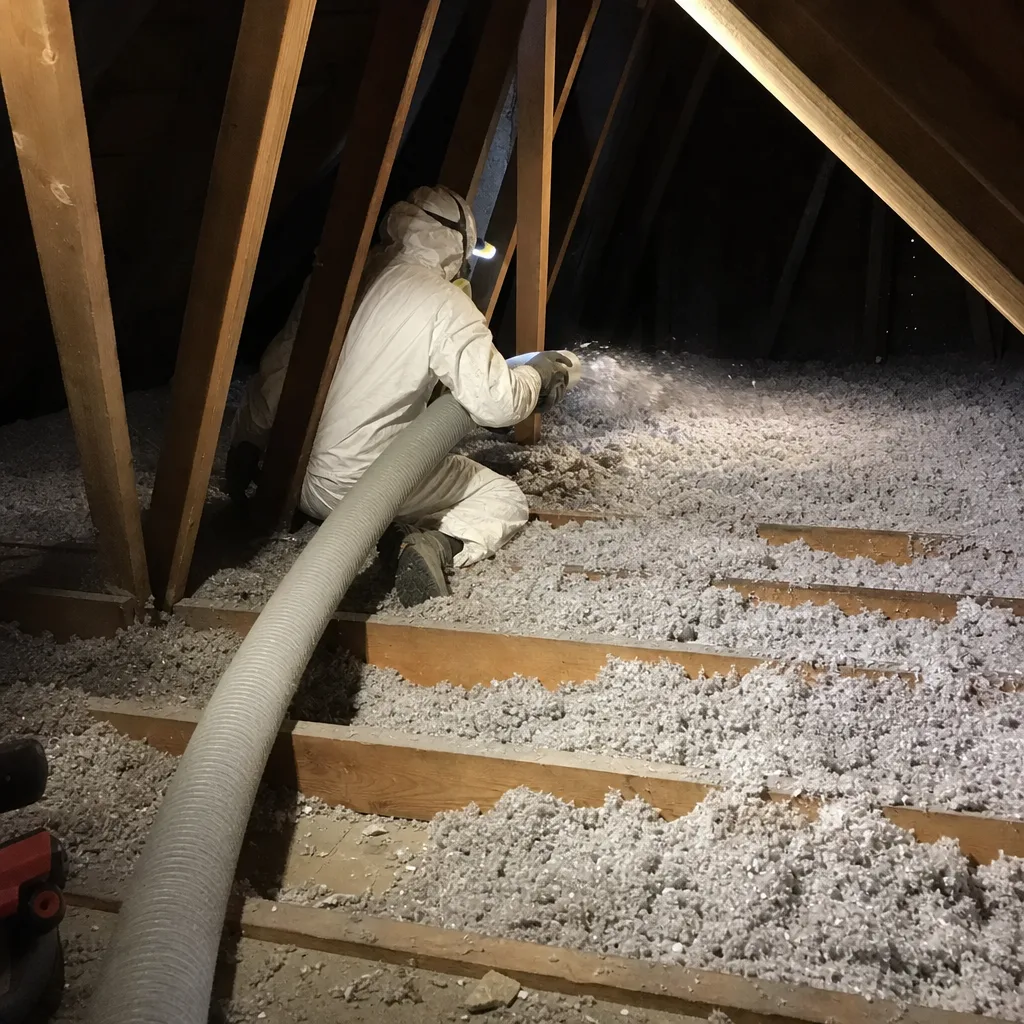
- Title 24 Part 6 Explained: California’s Energy Code for Insulation
- Which Insulation Projects in Palmdale Require a Permit?
- The HERS Rater: What They Actually Do and Why It Matters
- The LA County Building Permit Process Step by Step
- Installed Insulation Quality Grades: Why Grade III Fails
- What Documents to Keep and How They Transfer at Sale
- Common Mistakes to Avoid
- When to Call a Professional
- Frequently Asked Questions
- The Bottom Line
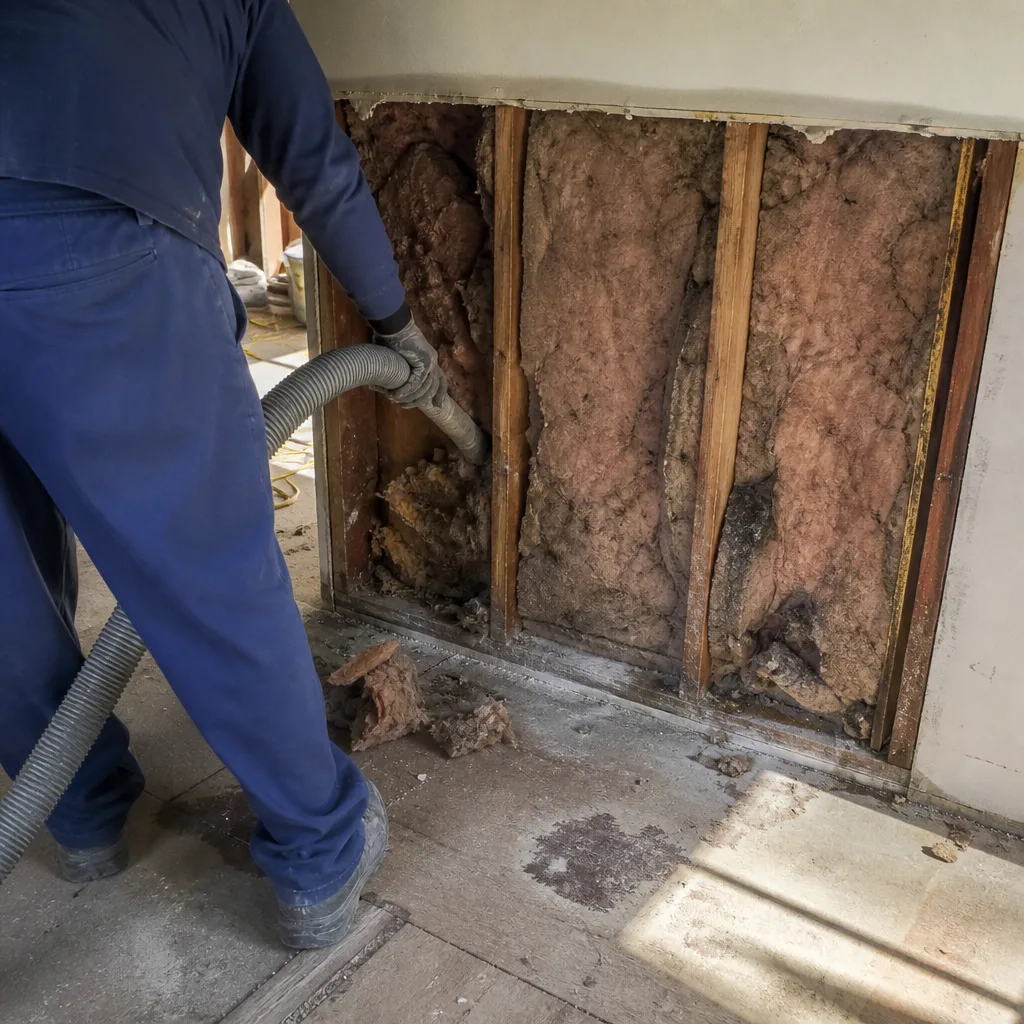 Before
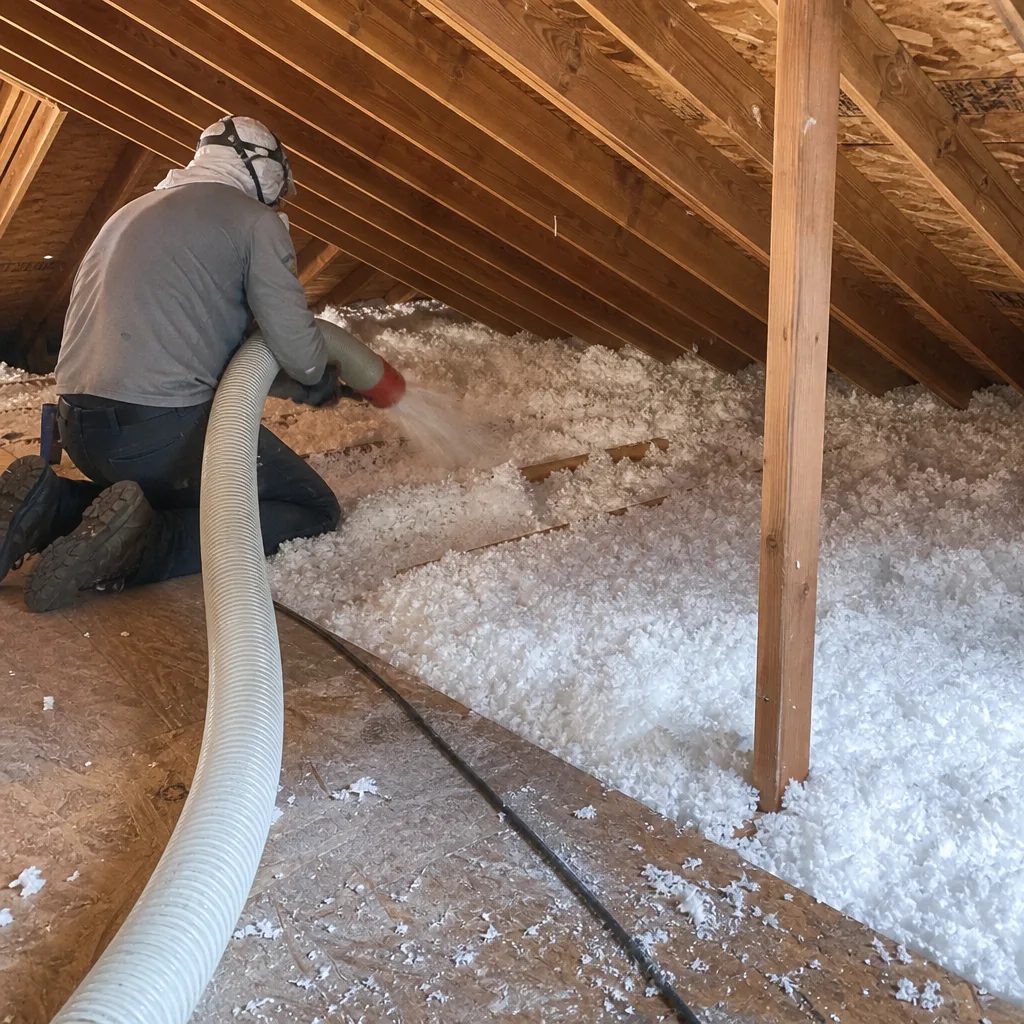 After
AfterTitle 24 Part 6 Explained: California’s Energy Code for Insulation
Title 24, Part 6 of the California Code of Regulations is the state’s energy efficiency standard for residential and nonresidential buildings. Think of it as the rulebook that determines how much insulation a home needs, where it goes, and how well it must perform. The code is updated on a three-year cycle; the current standards took effect January 1, 2023, with the next update scheduled for 2026.
For homeowners in Palmdale, Title 24 matters because it directly affects any project that alters the thermal envelope - the boundary between conditioned and unconditioned space. Add insulation to an attic that previously had none, and you’ve altered the envelope. Replace existing insulation with a higher R-value, and you’ve altered the envelope. Even some in-kind replacements can trigger compliance documentation if the original installation predates current standards.
The code specifies minimum R-values by climate zone. Palmdale sits in California Climate Zone 15, which requires attic insulation at R-38 minimum for new construction and most alterations. Wall cavities in new construction must meet R-19. These numbers aren’t suggestions; they’re enforced through the permit and inspection process, and they’re verified by the HERS rater, not just the building inspector.
Title 24 also mandates air sealing as part of envelope alterations. This is where many contractors stumble. Blowing new Attic Insulation in Palmdale over an unsealed attic floor - with gaps around top plates, can lights, and plumbing penetrations still leaking conditioned air - produces a Grade III installation that can fail HERS verification. We’ve measured blower-door results in Palmdale homes where the new insulation actually performed worse than the old because air leakage overwhelmed the thermal improvement.
The code recognizes three compliance paths: prescriptive, performance, and HERS-verified. Most residential insulation jobs in Palmdale follow the prescriptive path - meeting specific R-values and installation quality standards - with HERS verification as the enforcement mechanism. Performance path uses energy modeling to demonstrate equivalent efficiency, but it’s complex and rarely cost-effective for single-family retrofits.
Which Insulation Projects in Palmdale Require a Permit?
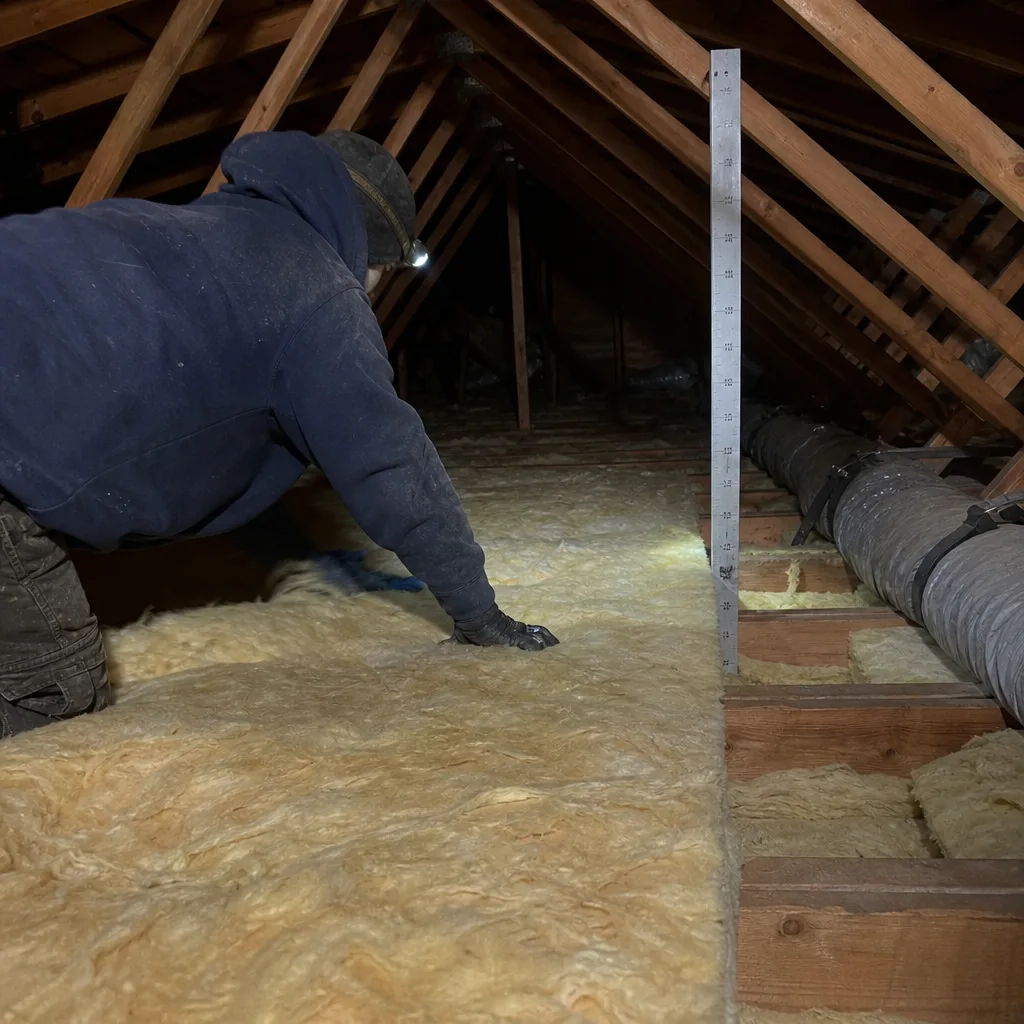
Not every insulation project needs a building permit, but the exemptions are narrower than most homeowners assume. LA County’s building department, which serves Palmdale and the surrounding Antelope Valley, follows the California Building Code’s definition of “alteration” to determine when permits trigger.
Projects that typically REQUIRE a permit:
- New insulation installation where none existed before (unfinished attic, new addition, garage conversion)
- Insulation replacement that increases R-value beyond the existing installation
- Any project involving spray foam insulation, which changes the vapor profile of the assembly
- Crawl space encapsulation with vapor barrier installation that alters moisture management
- Removal and replacement of insulation contaminated by rodent activity, if the scope exceeds 10% of the envelope area
- Insulation work performed as part of a larger permitted project (HVAC replacement, roof tear-off, room addition)
Projects that may be EXEMPT:
- In-kind replacement of damaged insulation with identical R-value and material type in a limited area (typically under 10% of total envelope)
- Adding insulation to accessible floor cavities in existing conditioned basements, provided no vapor barrier is modified
- Weatherstripping and minor air sealing not involving structural penetration
The replacement-in-kind exemption trips people up. If your Palmdale home was built in 1987 with R-19 batts and you’re replacing them with R-19 batts after a roof leak, that’s exempt. But if you’re upgrading to R-38 blown-in cellulose - which most homeowners should, given Palmdale’s summer heat - that’s an alteration requiring permits and HERS verification. Before starting, review our Insulation Warning Signs: A Palmdale Homeowner’s Reference Guide to confirm your attic needs attention.
Climate matters here. Palmdale’s high desert location means 100+ degree days are routine from June through September, and winter nights regularly drop below freezing. The thermal stress on envelope assemblies is severe. LA County inspectors know this; they’re not sympathetic to arguments that R-19 is “good enough” when the code specifies R-38 for Zone 15.
We’ve also seen confusion around Crawl Space Encapsulation & Vapor Barrier in Palmdale. Homeowners assume it’s “just plastic sheeting” and skip permitting. But encapsulation alters the moisture dynamics of the foundation assembly, and unpermitted work can create mold liability that surfaces during sale. LA County requires permits for any crawl space work that installs or replaces vapor barriers over 100 square feet.
The HERS Rater: What They Actually Do and Why It Matters
The HERS rater is not a city employee. They’re a third-party certified professional accredited by RESNET (Residential Energy Services Network) and registered with the California Energy Commission. Their job is to verify that the installed work meets Title 24’s energy performance requirements - something the building inspector doesn’t do.
Here’s the critical distinction: the building inspector checks that the work is safe and structurally sound. The HERS rater checks that it actually performs as designed. Both must sign off before the project is legally complete.
What a HERS rater measures on a typical Palmdale attic job:
- Insulation installation quality grade - visual inspection against RESNET standards for gaps, compression, and complete coverage
- Air sealing effectiveness - verified by blower-door test measuring CFM50 (cubic feet per minute at 50 Pascals pressure differential)
- Duct leakage - if HVAC ducts run through the conditioned space or are modified during the project
- Refrigerant charge and airflow - if HVAC equipment is part of the scope
The rater documents findings on standardized forms. The CF2R (Certificate of Field Verification and Diagnostic Testing) records the diagnostic tests - blower-door results, duct leakage numbers. The CF3R (Certificate of Field Verification and Diagnostic Testing for Insulation and Air Sealing) records the visual quality inspection and confirms the installation grade. These forms are filed with the California Energy Commission’s HERS registry and become part of the home’s permanent compliance record.
We’ve worked with HERS raters across LA County, and the good ones are meticulous. In Palmdale’s older neighborhoods - the 1980s and 1990s tract homes near Avenue S and 25th Street East - raters regularly find top plates that were never sealed, can lights that leak like open windows, and attic hatches with no weatherstripping. These defects don’t just hurt efficiency; they can drop an installation from Grade I to Grade III.
The rater’s visit typically happens after insulation installation is complete but before the building inspector’s final. Some raters do a preliminary visit to verify air sealing before insulation goes in, which we prefer - it catches problems while they’re still accessible. Under Haven Standard: Documented Photo Record, we photograph every air sealing detail before it’s covered, so the rater and the homeowner can verify what was done.
Skipping the HERS rater doesn’t make the problem disappear. It makes it the homeowner’s problem. Unpermitted, unverified insulation work must be disclosed on California’s Transfer Disclosure Statement. Buyers’ lenders and insurers increasingly require HERS documentation for homes built or altered after 2010. And manufacturers like Owens Corning and Johns Manville can void product warranties if installation doesn’t comply with applicable codes.
The LA County Building Permit Process Step by Step
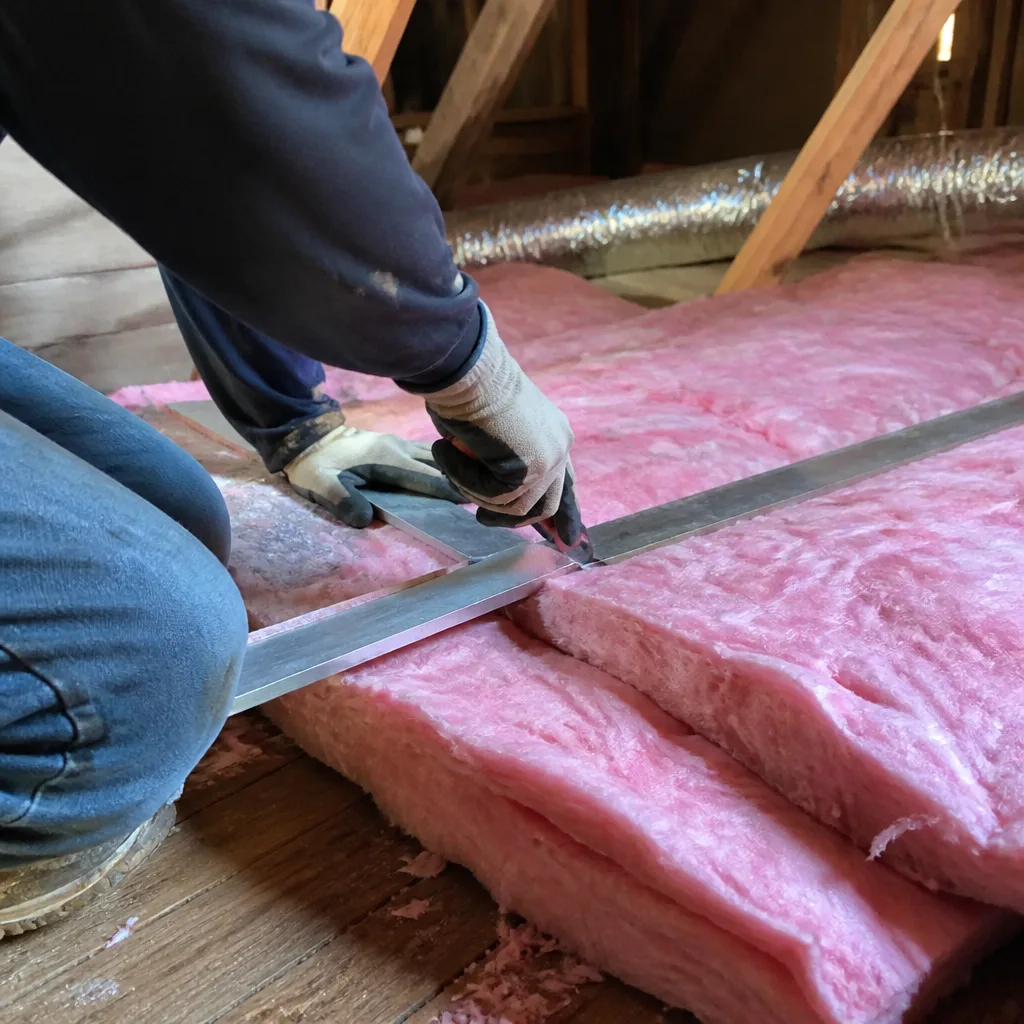
For a typical attic re-insulation job in Palmdale, here’s the actual sequence, with realistic timelines based on our 2025-2026 experience with LA County’s Antelope Valley office. We also recommend our Attic Insulation Maintenance Checklist for Palmdale Homeowners for ongoing care after installation.
Step 1: Determine permit scope and tier
LA County uses a tiered fee schedule for residential alterations. Most attic insulation jobs fall under Tier 2 (alterations between $5,000 and $50,000 in valuation) or Tier 3 ($50,000 to $250,000) if spray foam or extensive air sealing is involved. The valuation includes materials and labor. As of early 2026, Tier 2 permit fees run approximately $485-$620, with plan check fees adding $280-$350 if the project requires engineered drawings. Simple blown-in attic jobs often qualify for over-the-counter permits without full plan check.
Step 2: Submit application and supporting documents
Required for most attic insulation projects:
- Completed building permit application (LA County Form B-01)
- Property owner’s authorization (if applicant is not the owner)
- Scope of work description specifying insulation type, R-value, and coverage area
- Manufacturer cut sheets for proposed insulation materials
- HERS rater registration confirmation (required at permit issuance for projects triggering HERS)
LA County now accepts online submission through the Antelope Valley Building and Safety portal, though in-person submission at the Palmdale office on East Avenue Q still moves faster for straightforward residential jobs.
Step 3: Plan check (if required)
Over-the-counter permits skip this step. Projects requiring plan check - typically those involving spray foam, structural modifications, or complex air sealing - face a 10-15 business day review period. LA County’s Antelope Valley office has improved turnaround since 2023, but peak season (March-June) still runs longer.
Step 4: Permit issuance and fee payment
Once approved, the permit card is issued with inspection scheduling instructions. The permit must be posted on-site before work begins. We photograph the posted permit as part of our Documented Photo Record on Every Visit.
Step 5: Rough inspection (if applicable)
For jobs involving new electrical work (attic fans, powered vents), a rough electrical inspection precedes insulation installation. For standard attic re-insulation, there’s typically no rough inspection - work proceeds directly to completion.
Step 6: Insulation installation and HERS verification
The contractor completes air sealing and insulation installation, then schedules the HERS rater. The rater performs visual inspection and diagnostic testing, files CF2R and CF3R forms, and provides the homeowner with copies. This step cannot be skipped or self-performed.
Step 7: Final building inspection
The LA County inspector verifies that the work matches the approved scope, checks safety items (clearance to combustibles, attic access requirements), and confirms HERS documentation is complete. The inspector signs the permit card, and the project receives final approval.
Realistic timeline for a standard Palmdale attic job: 2-3 weeks from application to final, assuming no plan check requirement and prompt HERS rater scheduling. We’ve seen simple jobs close in 10 days and complex spray foam jobs stretch to 6 weeks when plan check backlog hits.
Spray Foam Insulation in Palmdale adds complexity because closed-cell foam acts as both insulation and vapor barrier, requiring careful dew point analysis. LA County may require a licensed engineer to certify the assembly won’t create condensation problems in Palmdale’s dry-but-variable climate. This adds $400-$800 in engineering fees and 1-2 weeks to the timeline.
Installed Insulation Quality Grades: Why Grade III Fails
RESNET defines three installation quality grades for cavity insulation. These grades aren’t abstract ratings; they’re pass/fail criteria for HERS verification, and they depend entirely on workmanship during installation.
Grade I - Insulation completely fills the cavity with no gaps, voids, or compression. Required surfaces (exterior walls, top plates) are fully covered. This is the standard for new construction and should be the target for any retrofit.
Grade II - Minor imperfections allowed: gaps under 2% of insulated area, slight compression that doesn’t reduce thickness more than 10%. Acceptable for some retrofit applications but increasingly flagged by strict raters.
Grade III - Substantial gaps, voids, or compression exceeding Grade II limits. Common in DIY installations and rushed contractor jobs. Grade III fails HERS verification for most Title 24 compliance paths.
The grade is determined by visual inspection, not R-value measurement. You can install R-38 batts and still get Grade III if they’re compressed to R-30 thickness, or if gaps around obstructions leave 15% of the cavity uninsulated. We’ve seen this exact scenario in Palmdale’s Rancho Vista neighborhood, where a homeowner’s “R-38 upgrade” failed HERS because the installer stuffed batts around trusses without cutting and fitting, creating compression gaps.
Blown-in materials - cellulose from GreenFiber, fiberglass from Johns Manville or Knauf - achieve Grade I more reliably in attics because they fill irregular cavities completely. But they still require proper preparation. Recessed can lights, chimney chases, and dropped soffits must be dammed and air-sealed before blowing, or the insulation will cascade into voids and create hidden Grade III conditions.
Palmdale’s wind exposure matters too. The Antelope Valley’s Santa Ana events can pressurize attic assemblies and drive air through gaps that would be minor in calmer climates. For proactive upkeep through these conditions, see our Seasonal Insulation Care for Palmdale: Year-Round Homeowner’s Guide. A Grade II installation that might pass in coastal LA County can fail here because the effective leakage area is larger under pressure. We size our air sealing details for local conditions, not generic standards.
The blower-door test reveals what visual inspection cannot. A Grade I visual installation with poor air sealing can still leak excessively. Our standard is both: Grade I visual and documented blower-door improvement. Under Haven Standard: Have it in writing, we provide the before-and-after CFM50 numbers on every applicable job so the homeowner sees the actual performance change.
What Documents to Keep and How They Transfer at Sale
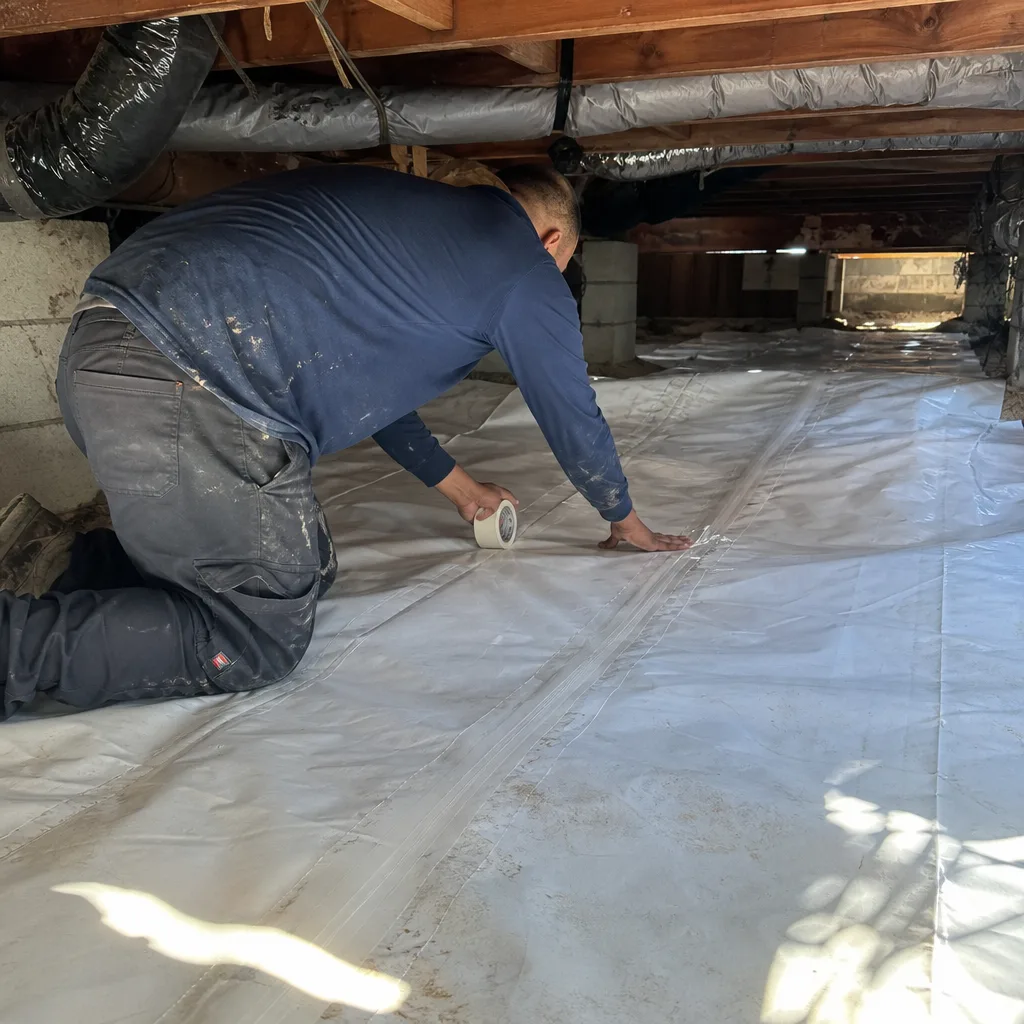
Compliant insulation work generates a paper trail that protects the homeowner long after the crew leaves. Here’s what to retain permanently, and why each document matters at sale.
1. Building permit card with final inspection sign-off
This proves the work was inspected and approved by the authority having jurisdiction. In California, unpermitted work must be disclosed on the Transfer Disclosure Statement (TDS), and failure to disclose can create post-sale liability. A clean permit record eliminates this risk. Keep the original; copies are acceptable for most transactions, but originals carry more weight with cautious buyers.
2. HERS CF3R compliance form
The CF3R is the legal record that the insulation installation meets Title 24’s quality and performance requirements. It’s filed in the California Energy Commission’s HERS registry and can be retrieved by address, but homeowners should keep their own copy. Lenders for energy-efficient mortgages (EEMs) and some conventional loans now require CF3R documentation for homes altered after 2010. In Palmdale’s competitive market, having this ready speeds buyer qualification.
3. HERS CF2R diagnostic testing form (if applicable)
Records blower-door results, duct leakage measurements, and any HVAC diagnostic data. This is the performance evidence that separates documented efficiency from claimed efficiency. We’ve had Palmdale homeowners use their CF2R to negotiate lower homeowner’s insurance rates with carriers offering efficiency discounts.
4. Blower-door test report with before-and-after readings
While the CF2R records the final number, a detailed blower-door report shows the improvement trajectory. Our reports include the baseline CFM50, the post-air-sealing CFM50, the post-insulation CFM50, and the calculated air changes per hour at natural pressure (ACHn). This is the documentation that proves the investment performed.
5. Written scope of work, written warranty, and final invoice
Under Haven Standard: Have it in writing, these are baseline deliverables, not extras. The scope defines what was done; the warranty defines remedy if it fails; the invoice establishes date and value for tax purposes. California’s energy efficiency tax credits and rebates increasingly require installation date verification.
6. Manufacturer product data sheets and warranty cards
Owens Corning, Johns Manville, and other major manufacturers offer limited lifetime warranties on insulation products, but they require proof of proper installation per manufacturer specifications. Code compliance - demonstrated through permits and HERS - satisfies this requirement. Product-only warranties don’t cover installation labor, but they do protect against material defects.
At sale, these documents transfer with the property. We recommend creating a digital folder and a physical file. The digital copy goes to your real estate agent for disclosure package assembly; the physical copy stays with the home for the buyer’s inspection. In Palmdale’s market, where homes from the 1980s and 1990s dominate inventory, documented energy improvements are a genuine differentiator.
Common Mistakes to Avoid
- Assuming replacement-in-kind doesn’t need permits. Many Palmdale homeowners upgrade R-value during replacement without realizing they’ve triggered an alteration requiring full compliance. Check the scope before starting; the exemption is narrower than it appears.
- Treating the building inspector’s approval as final. The building inspector doesn’t verify energy performance. Without HERS sign-off, the job isn’t Title 24 compliant, and the permit won’t technically close.
- Hiring a contractor who “handles permits internally.” We’ve seen this language used to obscure that no permit was pulled at all. Verify the permit number with LA County directly; it’s public record.
- Ignoring air sealing before insulation. Blowing GreenFiber cellulose over an unsealed attic floor is like pouring water into a cracked bucket. The insulation performs; the assembly doesn’t. Always seal first, then insulate.
- Accepting Grade III installation to save money. The upfront savings disappear when the HERS rater fails the job and remediation requires removing and reinstalling. Grade I costs more to do right once; Grade III costs more to fix.
- Discarding documents after “final” inspection. We’ve had Palmdale sellers scramble to find five-year-old permit records when buyer’s agents requested them. These documents have a 20+ year useful life; treat them accordingly.
- Assuming all HERS raters are equal. Raters have scheduling availability, thoroughness, and communication differences. A good contractor maintains relationships with reliable raters and coordinates scheduling as part of project management.
When to Call a Professional
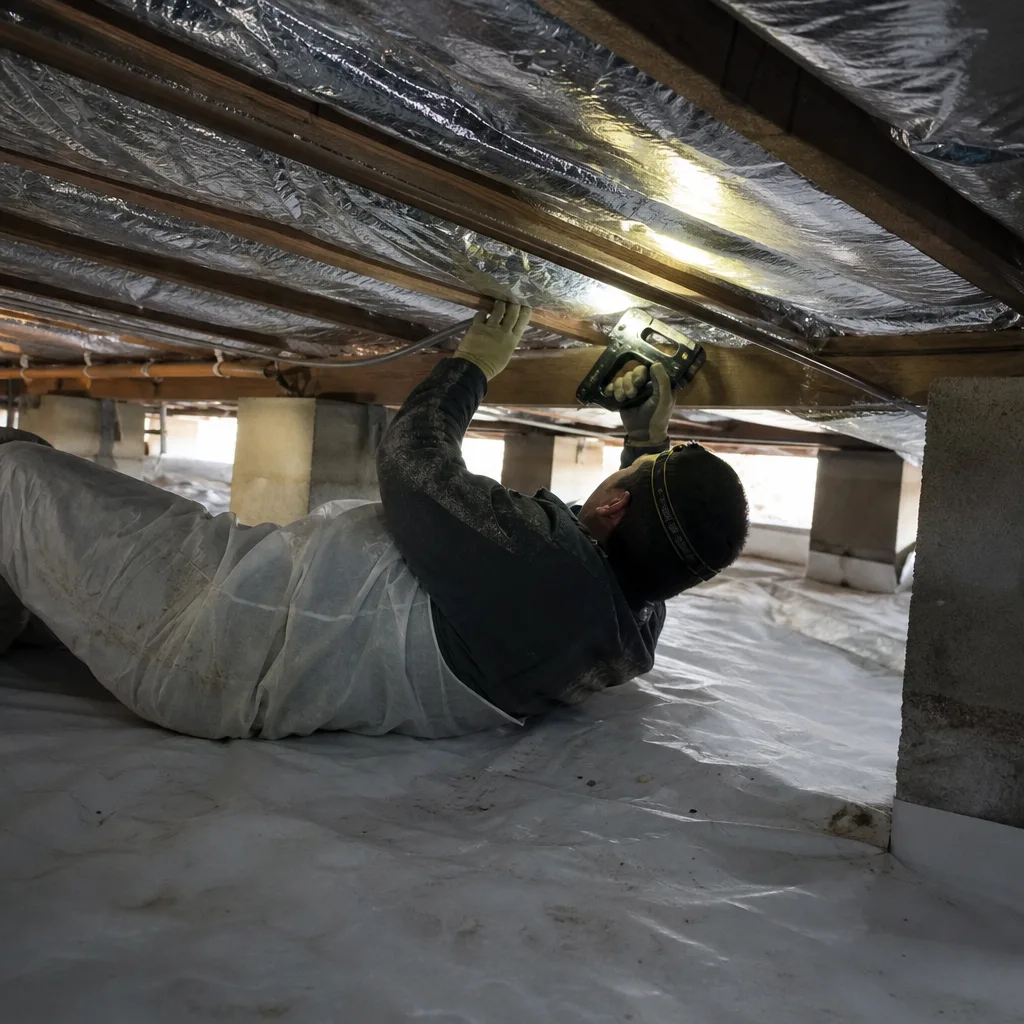
Call a professional when the project scope exceeds simple in-kind replacement, when spray foam or crawl space encapsulation is involved, or when you need documented compliance for a pending sale or refinance. The permit and HERS sequence has multiple failure points that experienced contractors navigate routinely and homeowners encounter once, if ever.
Topside Attic Insulation Palmdale offers free estimates in Palmdale - call (661) 403-4467. Every estimate includes a written scope, written price, and clear explanation of which permits and inspections apply to your specific project. Under Haven Standard: Written Price Before Any Work Starts, always. We also offer a Free Second Opinion on any written estimate; bring us a competing quote and we’ll read it with you, line by line, so you understand what’s included and what’s not.
Frequently Asked Questions
Most attic insulation permits through LA County’s Antelope Valley office fall in the $485-$620 range for Tier 2 residential alterations, plus $280-$350 for plan check if required. Spray foam jobs or projects over $50,000 valuation move to Tier 3 with higher fees. Call (661) 403-4467 for a free estimate that includes permit costs specific to your scope - we itemize them so you know exactly what you’re paying for.
A straightforward blown-in attic re-insulation with no plan check requirement typically takes 2-3 weeks from application to final inspection. Jobs requiring plan review, engineering certification, or complex HERS scheduling can extend to 4-6 weeks. The HERS rater scheduling is usually the variable; we maintain relationships with certified raters across LA County to keep this moving.
The building inspector works for LA County and verifies safety, structural compliance, and code adherence to the building code. The HERS rater is an independent third-party certified by RESNET who verifies energy performance - insulation quality, air sealing effectiveness, and duct leakage - under Title 24. Both must sign off for legal compliance; neither substitutes for the other.
Technically yes, but practically it’s difficult. HERS raters typically work through contractor relationships and may charge significantly more for homeowner-direct engagements. More importantly, DIY installations rarely achieve Grade I quality, and the cost of HERS failure and remediation usually exceeds any labor savings. We offer Free Second Opinions on any written estimate, including DIY material lists, so you understand the full cost before committing.
California requires disclosure of unpermitted alterations on the Transfer Disclosure Statement. Buyers can demand permit retroactive compliance, negotiate price reductions, or walk entirely. Lenders and insurers increasingly flag missing HERS documentation for post-2010 alterations. The cost of retroactive permitting - often requiring exposed inspection of covered work - far exceeds doing it right the first time.
No. Title 24 specifies performance requirements - R-values, installation quality, air sealing standards - not products. We source materials from Owens Corning, Johns Manville, Knauf, and other major manufacturers based on what’s right for each application, with no proprietary lock-in. The code cares about verified performance, not brand loyalty.
Palmdale’s high desert location in Climate Zone 15 means greater daily temperature swings and more severe summer heat than coastal or Central Valley cities. The R-38 attic minimum reflects this; lower R-values create greater HVAC load and higher energy bills. Local wind exposure also amplifies air leakage impacts, making thorough air sealing more critical here than in calmer climates. Our blower-door targets are calibrated for Antelope Valley conditions, not generic statewide assumptions.
The Bottom Line
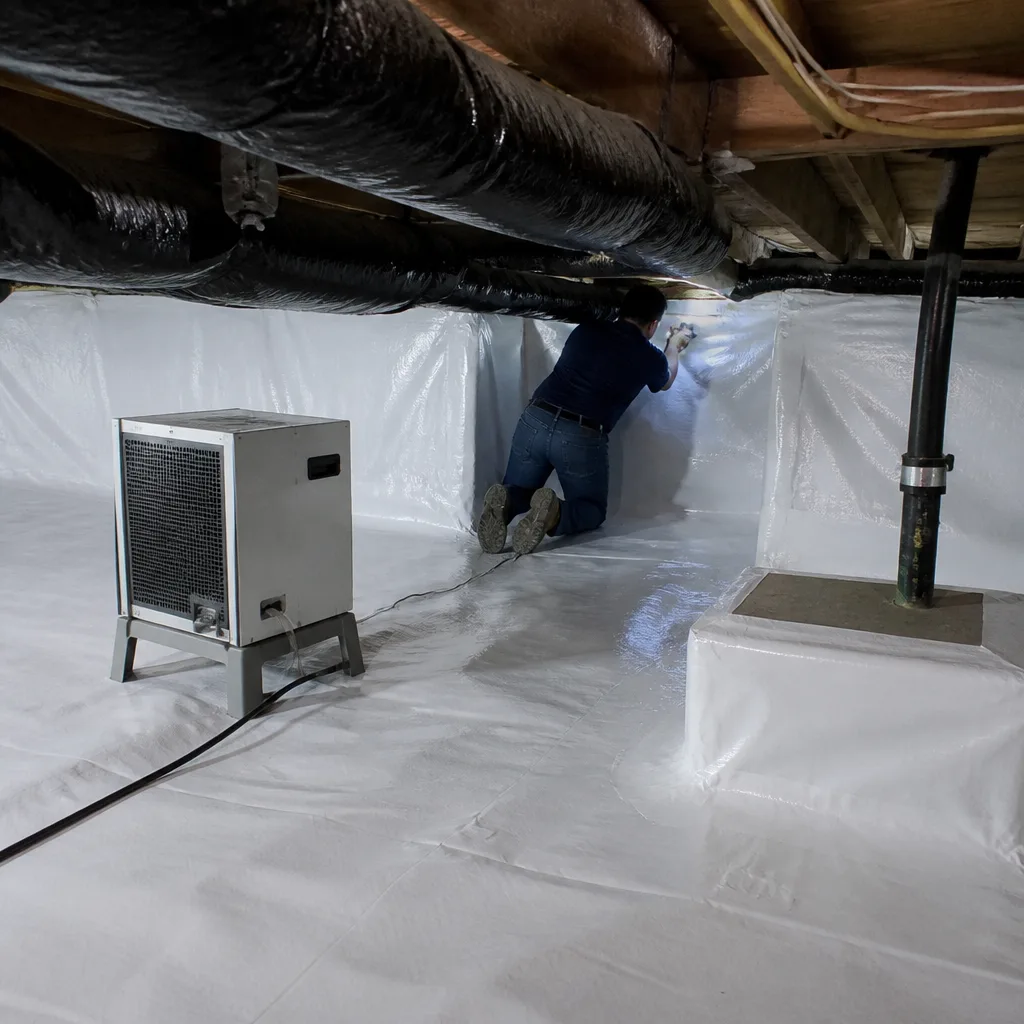
California’s insulation compliance system has two gates - building permit and HERS verification - and passing one doesn’t mean passing both. Homeowners in Palmdale need to understand which projects trigger permits, what the HERS rater actually measures, and which documents become part of the home’s permanent record. The contractors who skip this sequence don’t save you money; they transfer risk to you, documented or not. Get the permit, get the HERS sign-off, keep the paperwork, and verify the work with before-and-after performance numbers you can read yourself.
Written by Wes Okafor, Owner at Topside Attic Insulation Palmdale, serving Palmdale since 2016.