
Blown-In Attic Insulation in Palmdale, CA
Blown-in attic insulation in Palmdale typically costs between $1,400 and $3,200 for a standard single-story home, installed in one day, with R-38 to R-60 depth depending on your existing coverage. It’s one of the fastest ways to cut cooling loads in a Palmdale home - but only if the attic floor is air-sealed before the first bag gets loaded into the machine.
At Topside Attic Insulation Palmdale, we don’t blow insulation over an unsealed attic floor. That’s not a policy statement; it’s the reason our before-and-after blower-door numbers hold up. Air sealing of top plates, can lights, and penetrations happens first. The blown-in material goes in second. In that order, every time. If you have a written estimate from another contractor and want a second set of eyes on it, we’ll read it with you at no charge - that offer is standing, no strings attached.
You can reach us directly at (661) 403-4467 - a live person picks up, no voicemail loop. Or keep reading; there’s pricing, process detail, and specific local information below that should answer most of what you’re trying to figure out.
This page covers the blown-in sub-service specifically. For a full picture of material options, removal, and replacement work in this area, visit our Attic Insulation in Palmdale page.
When You Need Blown-In Attic Insulation
Blown-in insulation isn’t the right answer for every attic situation, but in Palmdale it covers the most common ones. Here are the scenarios where it makes the most sense:
- Your existing insulation is below R-30. California’s Title 24 energy code targets R-38 minimum for attics in Climate Zone 5, which covers most of Palmdale. Homes built before the mid-1990s frequently come in well below that. A quick depth measurement tells you exactly where you stand.
- You’re seeing energy bills that don’t match the size of your house. In the Antelope Valley, summer cooling loads are severe - 100-degree days from June through September put serious pressure on any home with underinsulated ceilings. If your utility bills are consistently higher than your neighbors in a comparable home in neighborhoods like Rancho Vista or Shadow Hills, attic depth is almost always part of the reason.
- You have an older home with batt insulation that’s settled or been disturbed. Fiberglass batts compress over time and lose R-value. They also get moved around during pest control visits or HVAC work, leaving cold spots that don’t show up until you do a thermal scan. Blown-in cellulose or fiberglass fills those voids without requiring a full tear-out.
- You’re adding insulation to an occupied home without wanting a major disruption. Blown-in work is largely contained to the attic access point and takes a fraction of the time that a full batt installation would. Most Palmdale jobs are done and cleaned up in four to six hours.
- You’ve had rodent activity and the existing insulation needs to be replaced. After attic cleaning and rodent-proofing, blown-in cellulose or fiberglass is the standard replacement material because it installs evenly over the treated attic floor without disturbing borate treatments or newly sealed penetrations.
- You’re preparing for a home sale or energy audit. Palmdale’s resale market increasingly flags low attic R-values in inspection reports. Getting to Title 24 compliance before listing is a straightforward fix that removes a negotiating point from the buyer’s side.
Our Blown-In Attic Insulation Process
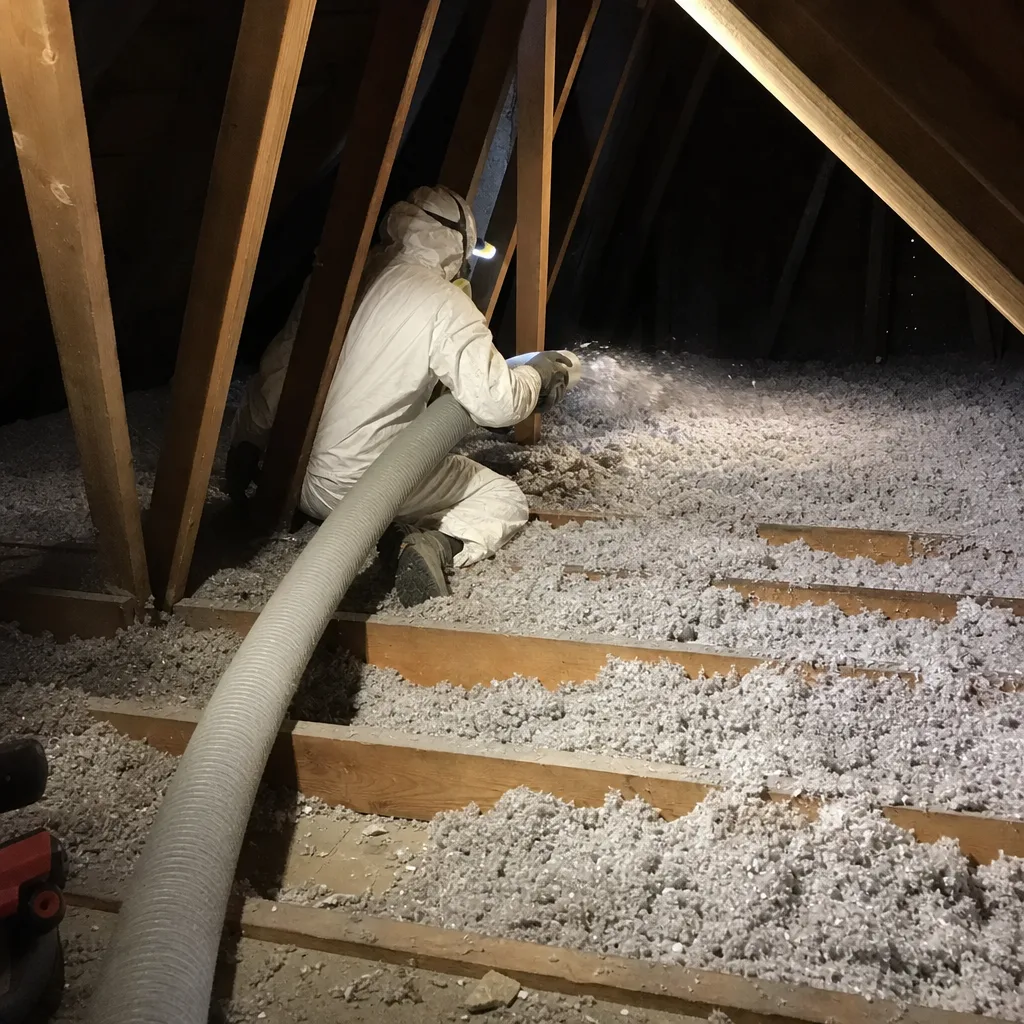
This is the actual sequence we follow on every blown-in job in Palmdale. Nothing gets skipped to save time, and you’ll have a photo record showing each stage when we’re done.
- Pre-job blower-door test. Before anyone goes into the attic, we run a blower-door test – a pressurization measurement that gives us a single CFM50 number showing how much conditioned air your building envelope is losing. This is the baseline. It’s what we compare against when the job is finished. You get both numbers in writing.
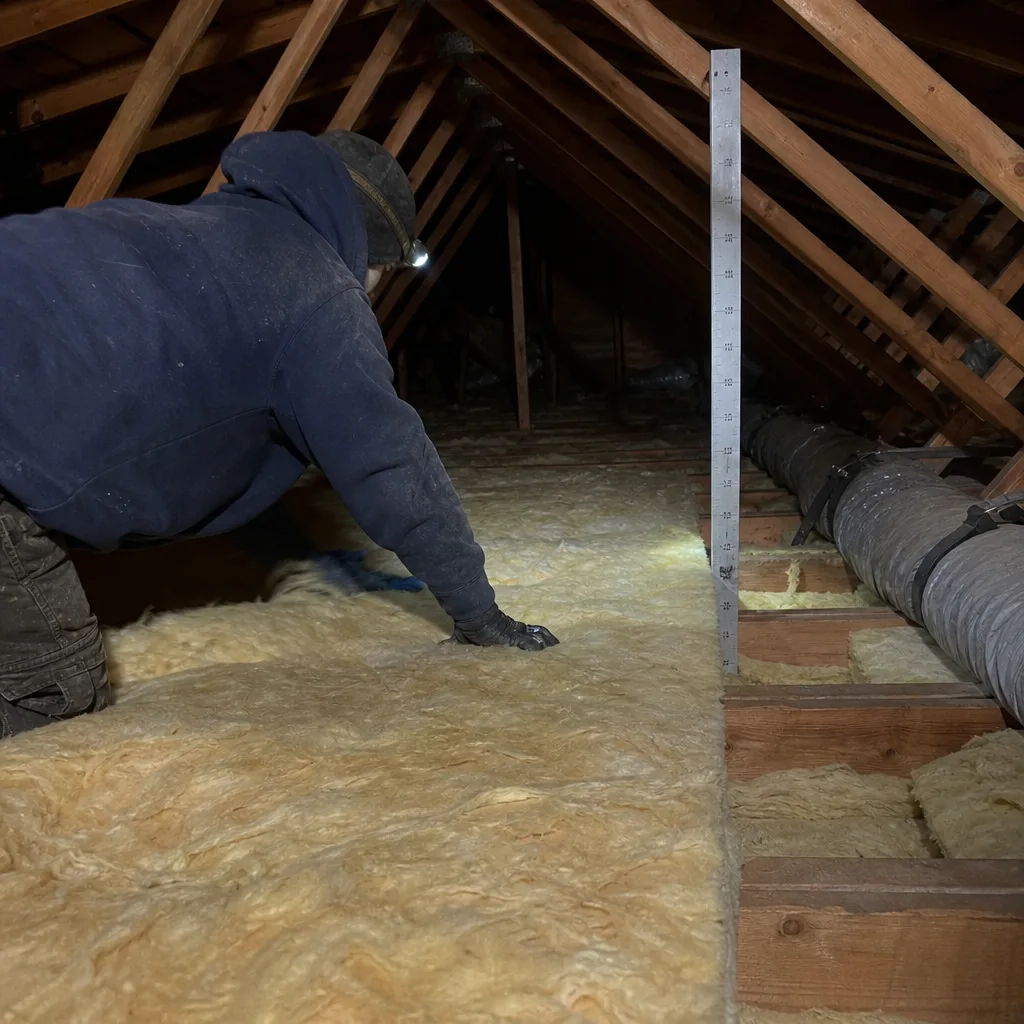
- Attic inspection and depth measurement. We document existing insulation depth at multiple points across the attic floor, check for any obvious moisture damage or pest sign, and identify every penetration that needs to be sealed before insulation goes in. We photograph all of it. Under the Haven Standard, you get a written price before any work starts – flat price, written scope, written warranty – so this inspection informs the quote, not the invoice.
- Air sealing – first, before any insulation is added. Top plates, can lights, plumbing penetrations, electrical chases, and attic hatch edges get sealed with spray foam or caulk depending on gap size and location. This is the step that actually changes your blower-door number. In West Palmdale homes built in the 1980s, we routinely find top-plate gaps running the full length of interior walls – not unusual to seal 40 or 50 linear feet on a single job. Blown-in insulation installed over unsealed penetrations adds R-value on paper but doesn’t fix the air leakage that’s running up your bill.
- Blown-in insulation installation. We use cellulose (GreenFiber) or fiberglass (Knauf or CertainTeed, depending on the project) installed to the depth specified in your written scope. Depth guides are set before the machine runs so the installer hits target R-value consistently across the full attic floor, not just at the access hatch where it’s easy to check.
- Post-job blower-door test. Same test, same conditions. We record the post-sealing CFM50 number and put it next to the pre-job number so you can see exactly what changed. If the air-sealing step delivered what it should have, the number drops. On applicable jobs – meaning any home where we completed air sealing – these before-and-after readings are included in your job documentation, not offered as an optional add-on.
- Photo record and written closeout. Every penetration sealed, every depth-gauge photo, and the blower-door readings go into a documented photo record that’s yours to keep. This is part of every job under the Haven Standard – the documentation exists whether or not you ever need to reference it.
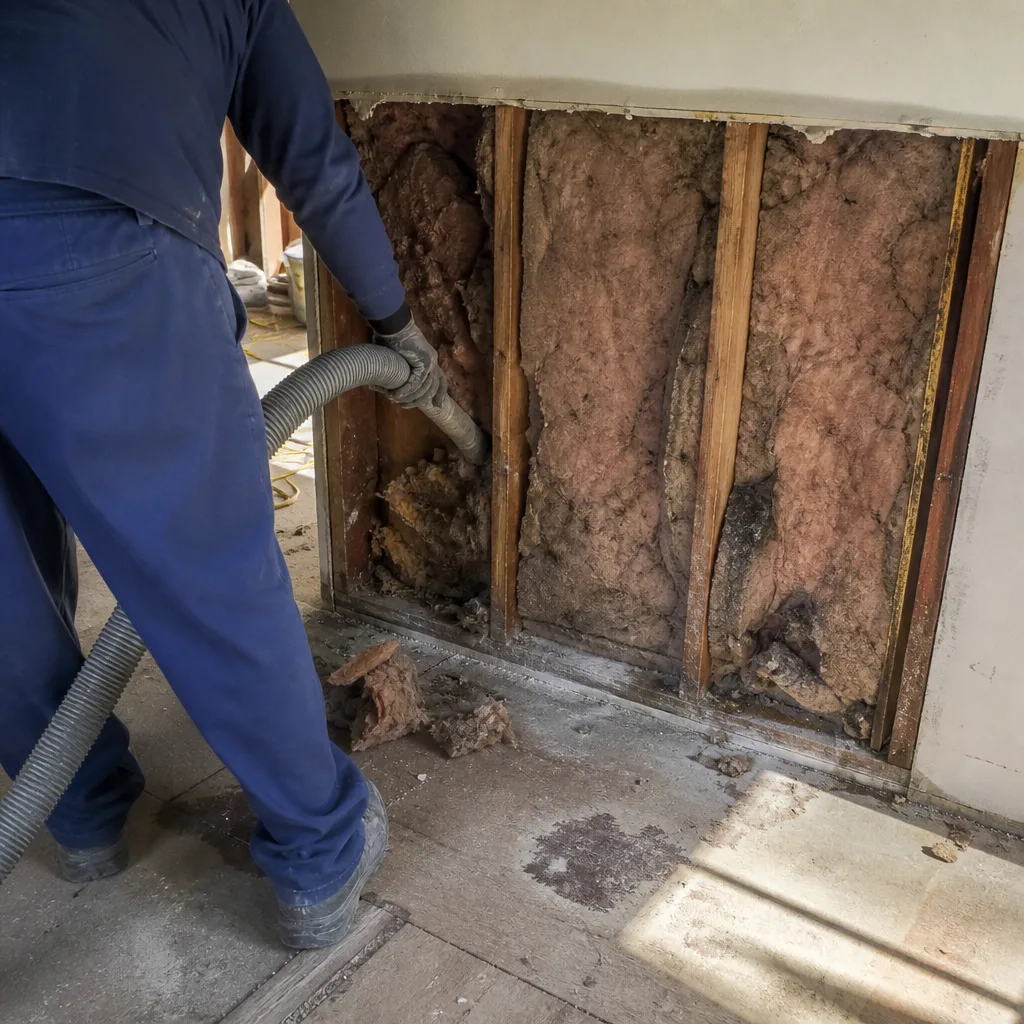 Before
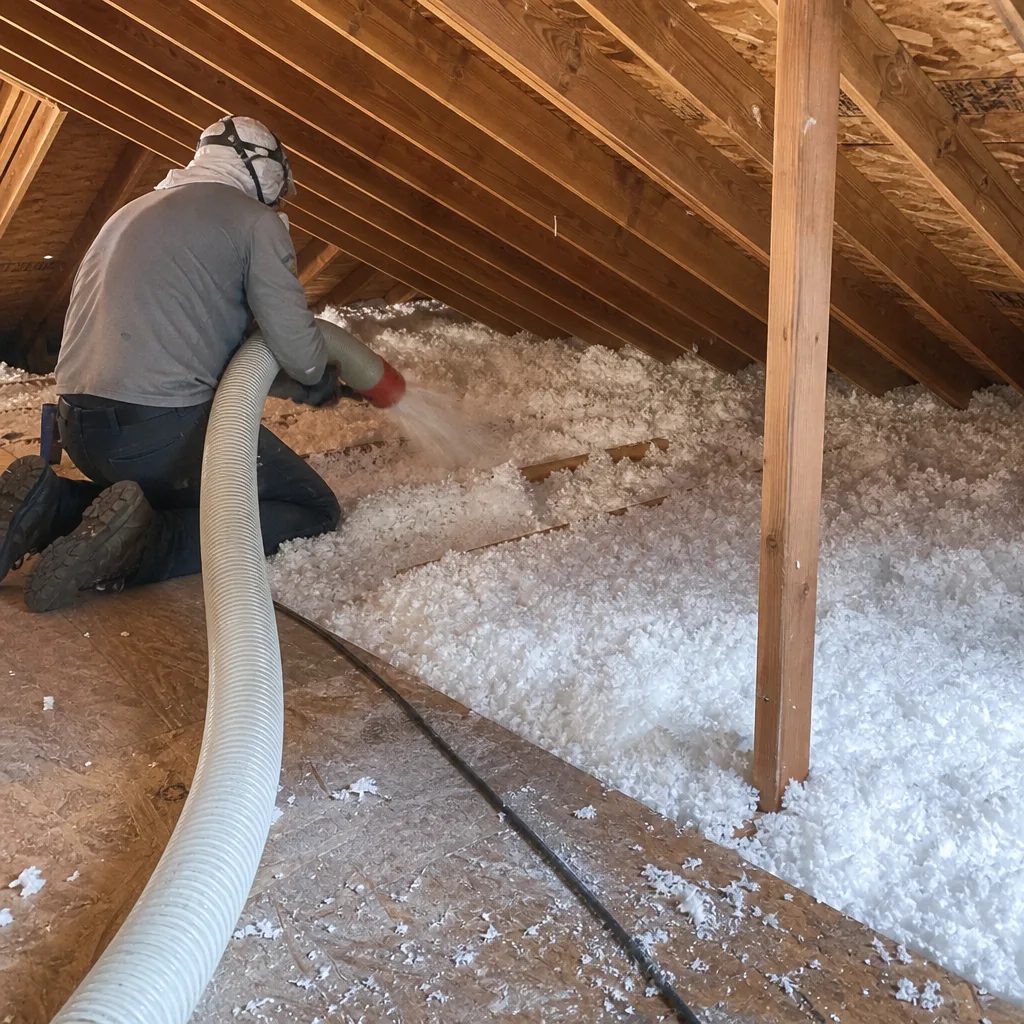 After
AfterBlown-In Attic Insulation Pricing in Palmdale
Most blown-in attic insulation jobs in Palmdale run between $1,400 and $3,200 for the insulation work itself. If air sealing is included – and on our jobs it always is, because we won’t skip it – add roughly $300 to $700 depending on how many penetrations the attic has. The table below gives you a working range by square footage and target R-value.
| Attic Square Footage | Target R-Value | Estimated Range (insulation only) |
|---|---|---|
| 800 – 1,200 sq ft | R-38 | $1,400 – $1,800 |
| 800 – 1,200 sq ft | R-49 to R-60 | $1,700 – $2,200 |
| 1,200 – 1,800 sq ft | R-38 | $1,800 – $2,400 |
| 1,200 – 1,800 sq ft | R-49 to R-60 | $2,100 – $2,900 |
| 1,800 – 2,500 sq ft | R-38 | $2,200 – $2,800 |
| 1,800 – 2,500 sq ft | R-49 to R-60 | $2,600 – $3,200 |
These are real market ranges for Palmdale in 2025 and 2026, not adjusted downward to get you on the phone. Your actual written price will depend on a few variables:
- Existing insulation depth. If you’re starting from near-zero, you need more material than a top-up job. Both require the same air-sealing step.
- Number of can lights and penetrations. Homes in neighborhoods like Tierra Bonita or Anaverde with recessed lighting throughout have significantly more sealing points than a simpler 1980s tract home. More penetrations means more labor in the air-sealing phase.
- Attic access and clearance. A low-pitch attic with limited headroom takes longer to work in. If your access hatch is undersized or in an awkward location, that affects labor time.
- Material choice. Cellulose and fiberglass blown-in products price similarly at most R-value targets, but specific project needs can shift the number slightly. We don’t have a proprietary product we push – we use Knauf, CertainTeed, and GreenFiber depending on what the project calls for.
- Removal of existing insulation. If the old material is contaminated, damaged, or below a level where topping up makes sense, removal adds cost. That work is scoped and priced separately and in writing before it starts.
Under Haven Standard Clause 1, you get a flat written price and written scope before anyone starts. No surprises on the invoice. If you’ve already received a written estimate from another contractor, we’ll review it with you at no charge and tell you exactly what’s included, what isn’t, and where the numbers land in the Palmdale market.
To get your written price, call (661) 403-4467 – a live person will set up the estimate, usually within 24 to 48 hours.
FAQs – Blown-In Attic Insulation in Palmdale
How much R-value does my Palmdale attic need?
California Title 24 requires R-38 minimum for attic insulation in Palmdale’s climate zone, but R-49 to R-60 is the practical target for homes that run air conditioning heavily through the summer. Palmdale sits at roughly 2,700 feet elevation in the Antelope Valley desert, where summer attic temperatures regularly exceed 150 degrees Fahrenheit. At that thermal load, R-38 keeps you code-legal but R-49 or higher is where you actually feel the difference in cooling bills. Most of the homes we work on in Palmdale that were built before 2000 are sitting at R-11 to R-19 when we measure them – well below either threshold. Call (661) 403-4467 for a depth measurement and a written price to get where you need to be.
What’s the difference between blown-in cellulose and blown-in fiberglass for a Palmdale attic?
Both are effective in Palmdale’s climate, and both are installed with the same process. Cellulose (made from recycled paper fiber, treated with borate for fire and pest resistance) settles slightly over time – typically 15 to 20 percent – so installers account for this by blowing it in deeper than the finished target depth. Fiberglass blown-in, like Knauf’s blowing wool, is dimensionally more stable over time and is the better choice in attics where moisture intrusion is a concern, though Palmdale’s dry climate makes that less of a factor than in coastal markets. CertainTeed blown fiberglass is also a solid option for attics with limited clearance because it’s slightly lower density and easier to distribute in tight spots. We’ll tell you which material suits your specific attic after the inspection – and that recommendation comes with the written price, not after.
Do I need to remove my old insulation before adding blown-in?
Not always. If the existing insulation is dry, uncontaminated, and in place (not shifted or compressed), topping up with blown-in material over it is standard practice and perfectly effective. We add material until the combined depth hits your target R-value. Where removal is necessary is when the existing insulation has rodent contamination, moisture damage, or heavy settling that has dropped the material below a level where topping it makes sense. We assess this during the inspection and tell you clearly what we found and why – not to upsell removal, but because blowing insulation over a contaminated attic floor defeats the point. If removal is recommended, it’s scoped and priced separately in writing before any work starts.
How long does blown-in attic insulation last in the Palmdale climate?
Blown-in fiberglass insulation doesn’t degrade in normal conditions and is essentially indefinite in a dry Palmdale attic. Cellulose has a similar lifespan when installed in a dry attic, though it can compress gradually over 20 to 30 years, which is why many homeowners in older Palmdale neighborhoods add a top-up layer at the 15 to 20 year mark. The Antelope Valley’s heat doesn’t degrade the insulation material itself – the issue in this climate is the repeated thermal cycling between extreme summer highs and cold winter nights, which stresses the house frame more than the insulation. What shortens insulation life here is moisture (uncommon in Palmdale but not impossible if there’s an HVAC condensate leak or roof intrusion) and pest activity. Our Documented Photo Record gives you a dated baseline so you know exactly what was installed, at what depth, and when – useful information if you’re evaluating the attic again in ten years.
Why Topside Attic Insulation Palmdale
Since 2016, Topside Attic Insulation Palmdale has operated as an independently owned and operated business under The Haven Standard – a set of operating commitments that exist in writing, not as marketing language. The short version: a written price before any work starts, a documented photo record when we leave, and a 365-Day Done Right Promise that means we come back if something isn’t right.
We’ve sealed and insulated more than 9,000 homes since 2016. Every one of them got a written price before we started and a documented record when we finished. On homes where air sealing was part of the scope – which is every blown-in job we do – the before-and-after blower-door readings go into the file. You can see the number that existed before we arrived and the number that existed after.
The Antelope Valley’s climate is specific: extreme heat, cold winter nights, and a dry environment that means moisture isn’t usually the enemy but air leakage and thermal bridging are. Our technicians work in this climate every week. They know what a 1988 tract home in the northwest part of Palmdale looks like from inside the attic, and they know where the top-plate gaps tend to run in the 2000s-era neighborhoods near the Palmdale Regional Airport. That familiarity with local construction patterns is part of what’s reflected in a written scope that actually covers what needs to be covered.
For a full overview of what we offer in this area, including material options and related services, visit our home page or go directly to Attic Insulation in Palmdale for the parent service detail.
To get your written estimate for blown-in attic insulation in Palmdale, call (661) 403-4467. A live person answers. We’ll schedule an inspection, give you a flat written price, and you decide from there – no pressure, no manufactured urgency, no follow-up calls if you don’t want them.
Written by Wes Okafor, Owner at Topside Attic Insulation Palmdale, serving Palmdale since 2016.