
Attic Baffles & Ventilation Prep in Palmdale, CA
Attic baffles – also called rafter vents or vent chutes – are cardboard, foam, or rigid channels that hold a clear airway from your soffit vents to the open attic space so outside air can sweep across the underside of your roof deck. In Palmdale’s climate, where summer attic temperatures regularly push past 150°F and winter nights drop below freezing in neighborhoods like Sun Village and Leona Valley, that airflow isn’t optional. Without it, insulation pressed against the soffits blocks the ventilation your roof needs, moisture accumulates against the sheathing, and heat builds up in a way that shortens shingle life and drives energy bills higher month after month. If you’re considering Attic Insulation services, proper baffle installation is the critical first step.
Ventilation prep is the phase of work that happens before any insulation goes in: baffle installation, intake-to-exhaust airflow verification, and a documented check that the net free area of your vents meets California Building Code minimums. At Topside Attic Insulation Palmdale – operating under Envelope Insulation Co. and The Haven Standard since 2016 – we treat this step as a hard requirement. We will not blow insulation over an attic floor that hasn’t been properly vented and air-sealed first. That’s not a policy we invented as a selling point; it’s the only sequence that produces a result that holds up over time. Our full Attic Insulation in Palmdale service is built on that sequence.
If you want to talk through what your attic needs before committing to anything, call us at (661) 403-4467. A live person answers every call – no voicemail loops, no callback windows.
When You Need Attic Baffles & Ventilation Prep
Not every attic in Palmdale needs new baffles, but the ones that do tend to show the same handful of symptoms. Here’s what typically sends homeowners to the phone:
- Your insulation is packed against the soffits. This is the most common finding in tract homes built in the 1980s and 1990s in west Palmdale. Blown insulation migrates toward the eaves over time, and without baffles already in place, it seals off the one intake path the ventilation system depends on.
- Staining or soft spots on your roof sheathing near the eaves. In higher-humidity pockets of the Antelope Valley – particularly properties with mature landscaping or near the Palmdale Reservoir area – condensation against a blocked soffit can wet the OSB or plywood sheathing from the inside. Baffles restore the drying airflow that prevents this.
- Your energy bills have climbed without an obvious explanation. When ridge or gable vents can’t draw air because the intake path is obstructed, attic temperatures spike. A baffle installation won’t replace insulation, but it removes the blockage that’s making your existing insulation work against the heat load instead of with it.
- A previous insulation job added material without addressing ventilation. We see this regularly in older Palmdale homes that received a top-up of blown fiberglass or cellulose over the years. Each addition pushed insulation closer to the eave line. If no baffles were set during those jobs, the ventilation channel may be completely gone by now.
- You’re preparing for a full insulation replacement. Insulation removal and replacement is the right moment to reset everything – baffle condition included. Doing baffle work at this stage costs less than scheduling it as a separate visit, and it means the new insulation goes in on a properly vented deck from day one.
- Your home inspector flagged inadequate attic ventilation. California’s building code requires a minimum net free ventilation area of 1/150 of the floor area being ventilated (or 1/300 with balanced intake and exhaust). If your report cites a deficiency, a ventilation prep service is the documented fix that satisfies the underwriter or buyer.
Our Attic Baffles & Ventilation Prep Process
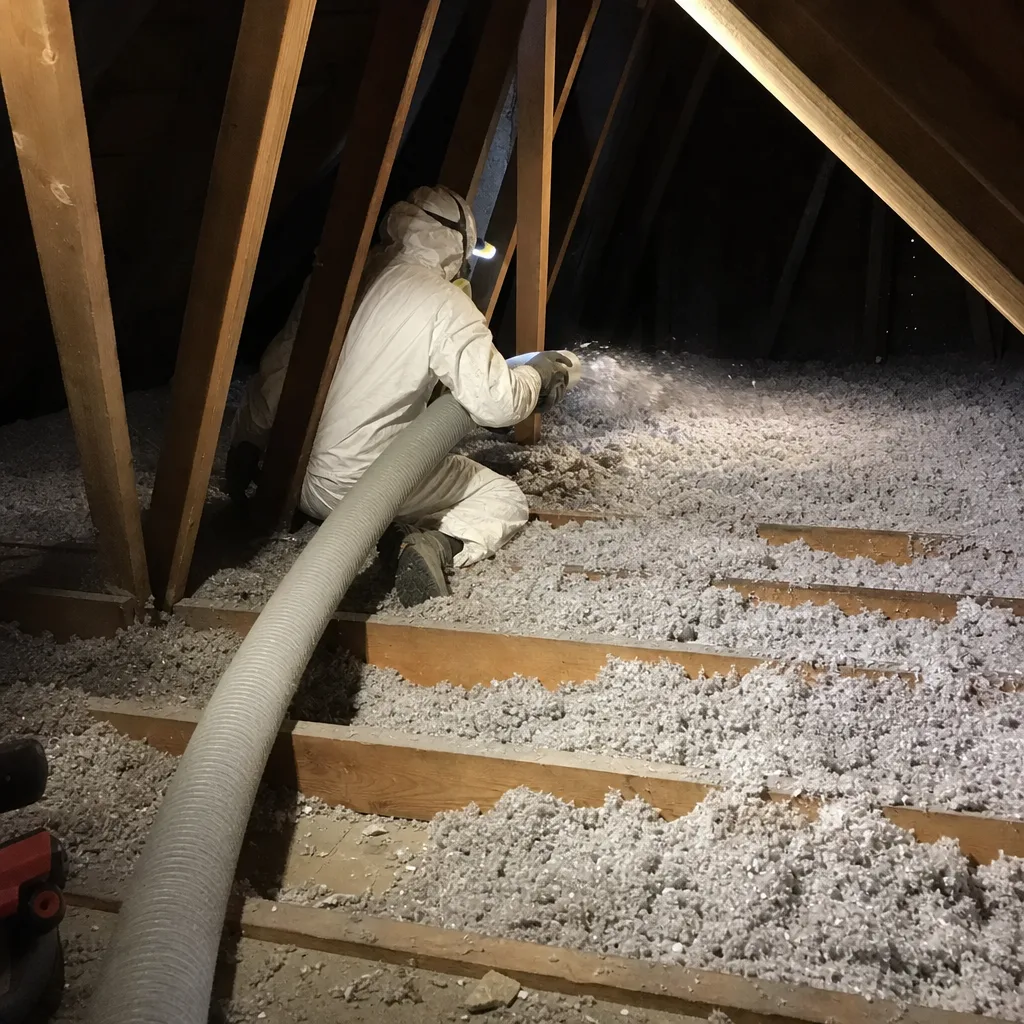
We document each step below so you know exactly what happens between the time our technician arrives and the time they hand you the completed job record.
- Initial attic assessment and blower-door baseline. Before anything is touched, we run a blower-door test – a pressurization measurement that captures, in one number (CFM50), how much conditioned air your home’s building envelope is currently losing. This reading gives us a before-number that we’ll compare against the post-work reading. We also photograph the existing soffit vent condition, the depth and distribution of any insulation already present, and the state of any baffles in place. Under Haven Standard Clause 1, you receive a written price and written scope before this step goes any further.
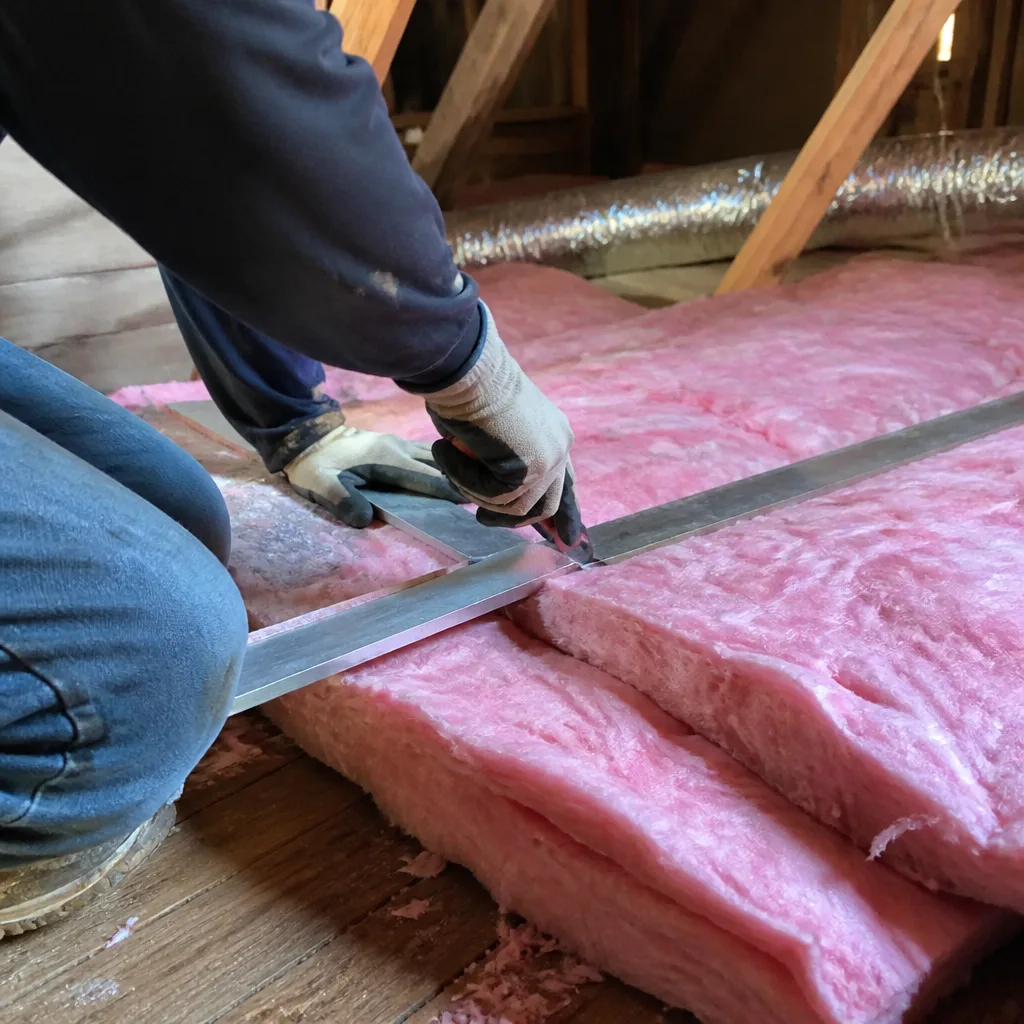
- Existing insulation pull-back at the eave line. To set baffles correctly, we clear the insulation from the rafter bays along the eave line – typically two to four feet back from the exterior wall – and bag it for re-use or disposal depending on its condition. In homes with vermiculite or visibly degraded fiberglass, we pause here and discuss material options with you before proceeding.
- Baffle installation in every rafter bay. We install a baffle channel in each rafter bay from the soffit vent opening to a point above the top plate, maintaining a minimum 1-inch clear airway above the top of the finished insulation depth. In Palmdale’s desert climate, where temperature swings between day and night are significant, we use rigid foam or cardboard baffles rated for the expected temperature range. Every bay gets one – partial installations leave gaps that defeat the purpose.
- Air sealing of top plates, penetrations, and can lights. With the eave line cleared, we have direct access to the top plates and any can light fixtures, electrical penetrations, or plumbing stacks in the affected zone. These are sealed with appropriate materials – typically fire-rated caulk or spray foam – before insulation goes back. This is the step most contractors skip because it adds time. We don’t skip it.
- Ventilation flow verification and net free area calculation. We calculate the net free area of your intake (soffit) and exhaust (ridge, gable, or power) vents against the square footage of the attic floor and confirm the ratio meets or exceeds California Building Code requirements. If exhaust capacity is insufficient relative to the intake we’ve just opened up, we document that finding so you have the information to make a decision about additional work.
- Post-work documentation and blower-door follow-up. On applicable jobs, we run a second blower-door reading after air sealing is complete. Both numbers – before and after – go into your job record. You also receive the full documented photo record, the written warranty, and any ventilation calculation notes. That’s the complete package you walk away with, and it exists whether you ever call us again or not.
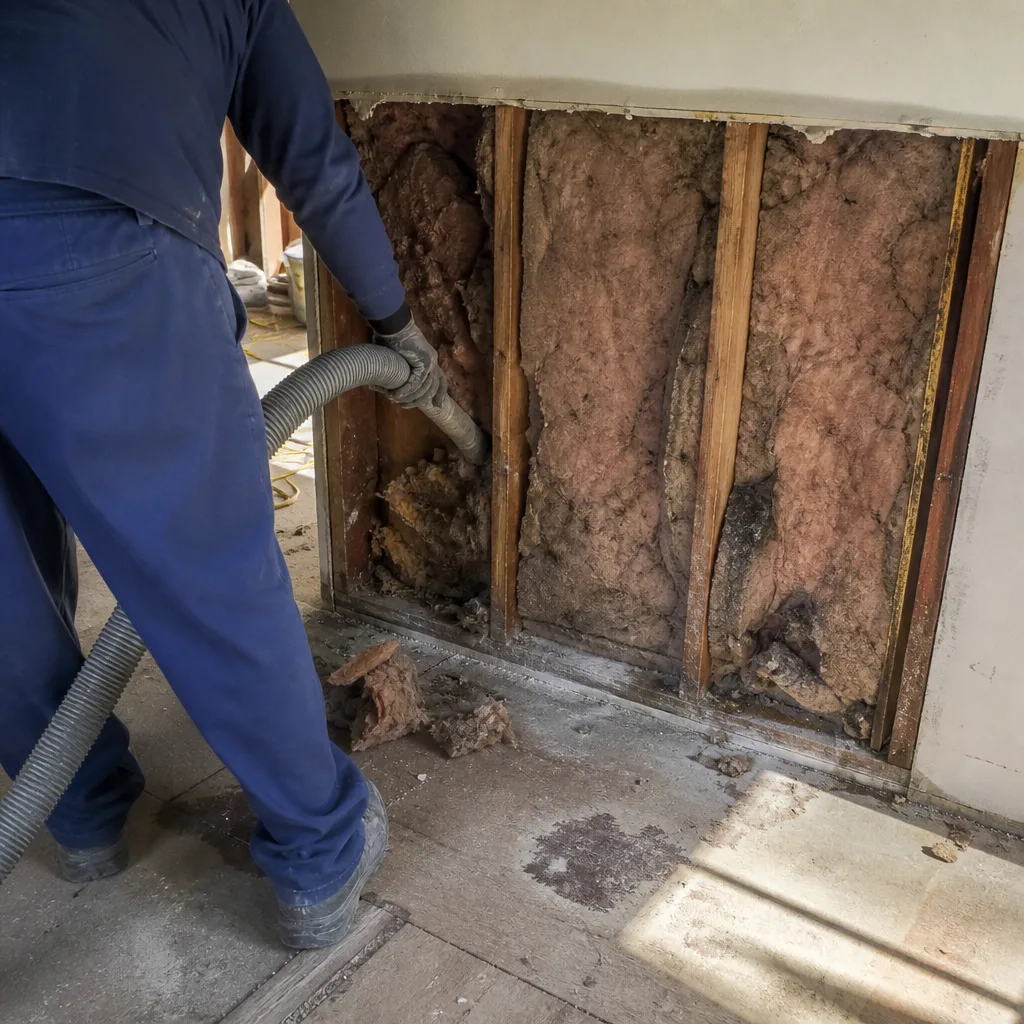 Before
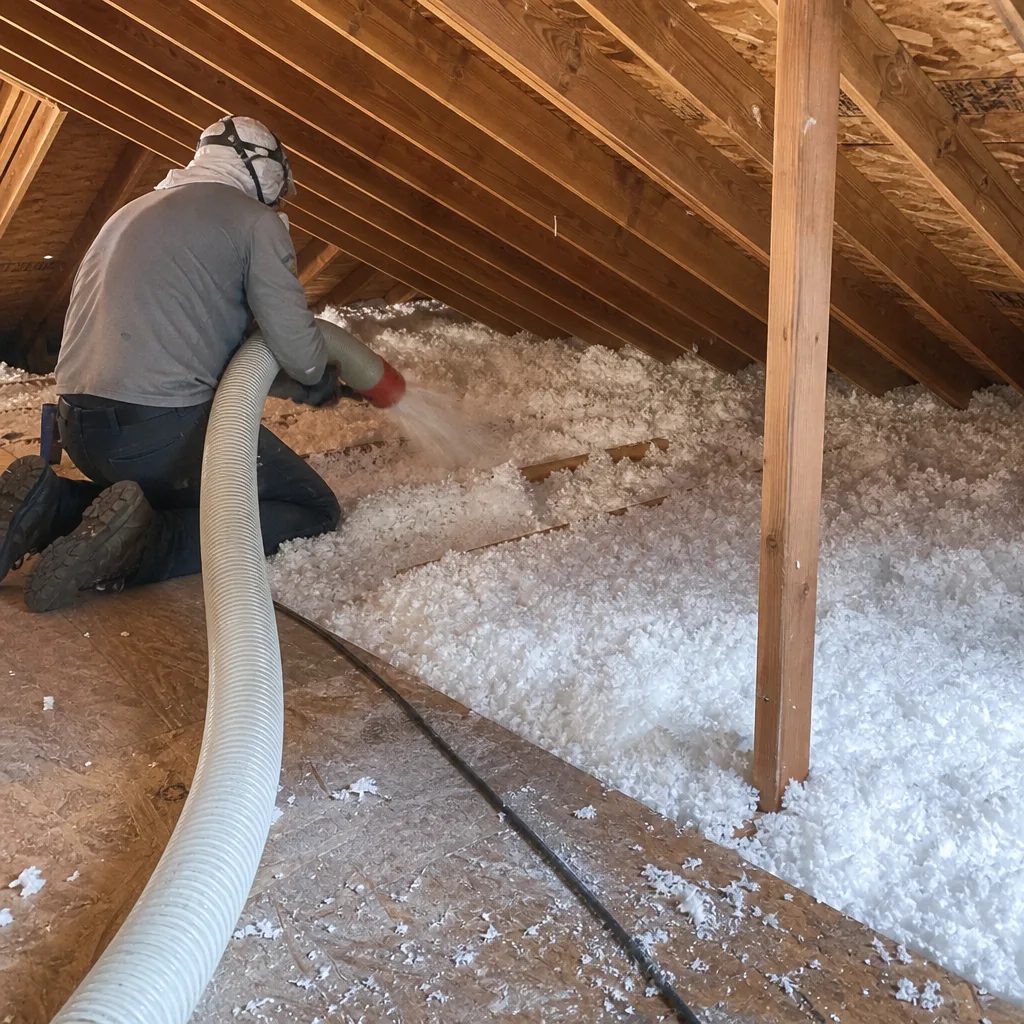 After
AfterAttic Baffles & Ventilation Prep Pricing in Palmdale
Baffle and ventilation prep pricing in Palmdale runs across a real range depending on the variables below. For a broader look at what attic work runs in this area, see our guide to How Much Does Attic Insulation Cost? (2026 Price Guide) - Palmdale, CA. The numbers here reflect what we actually charge in this market – not a national average pulled from somewhere else.
| Scope | Typical Range |
|---|---|
| Baffle installation only (average 1,200-1,600 sq ft attic, all bays) | $380 – $620 |
| Baffle install + air sealing of top plates and penetrations | $620 – $1,100 |
| Full ventilation prep package (baffles + air sealing + blower-door before/after) | $950 – $1,500 |
| Ventilation prep as part of full insulation replacement job | Bundled – typically $200-$400 less than standalone |
What moves the number up or down:
- Attic access. Low-pitch roofs common in 1970s-era ranch homes in the Rancho Vista area mean a technician is crawling, not walking. That’s slower work, and the pricing reflects it.
- Rafter bay count. A 1,200-square-foot footprint with 16-inch rafter spacing has more bays to baffle than the same footprint with 24-inch spacing. We count bays, not just square footage.
- Existing insulation condition. If the pull-back reveals insulation that can be reused, that saves material cost. If it’s badly degraded, contaminated, or rodent-affected, disposal adds to the total. We document what we find before quoting the next step.
- Air sealing scope. Homes in older Palmdale subdivisions near 10th Street West sometimes have a significant number of unsealed can lights and open top plates. Sealing 30 penetrations costs more than sealing 8.
Under Haven Standard Clause 1: a written price is in your hands before anyone lifts a tool. The number on that paper is the number on the invoice – no additions without a conversation and your sign-off first. If you have a written estimate from another contractor, bring it: we offer a free second opinion on any written quote and will read it with you line by line.
To get a written price for your specific attic, call (661) 403-4467. We’ll schedule an assessment at a time that works for you.
FAQs – Attic Baffles & Ventilation Prep
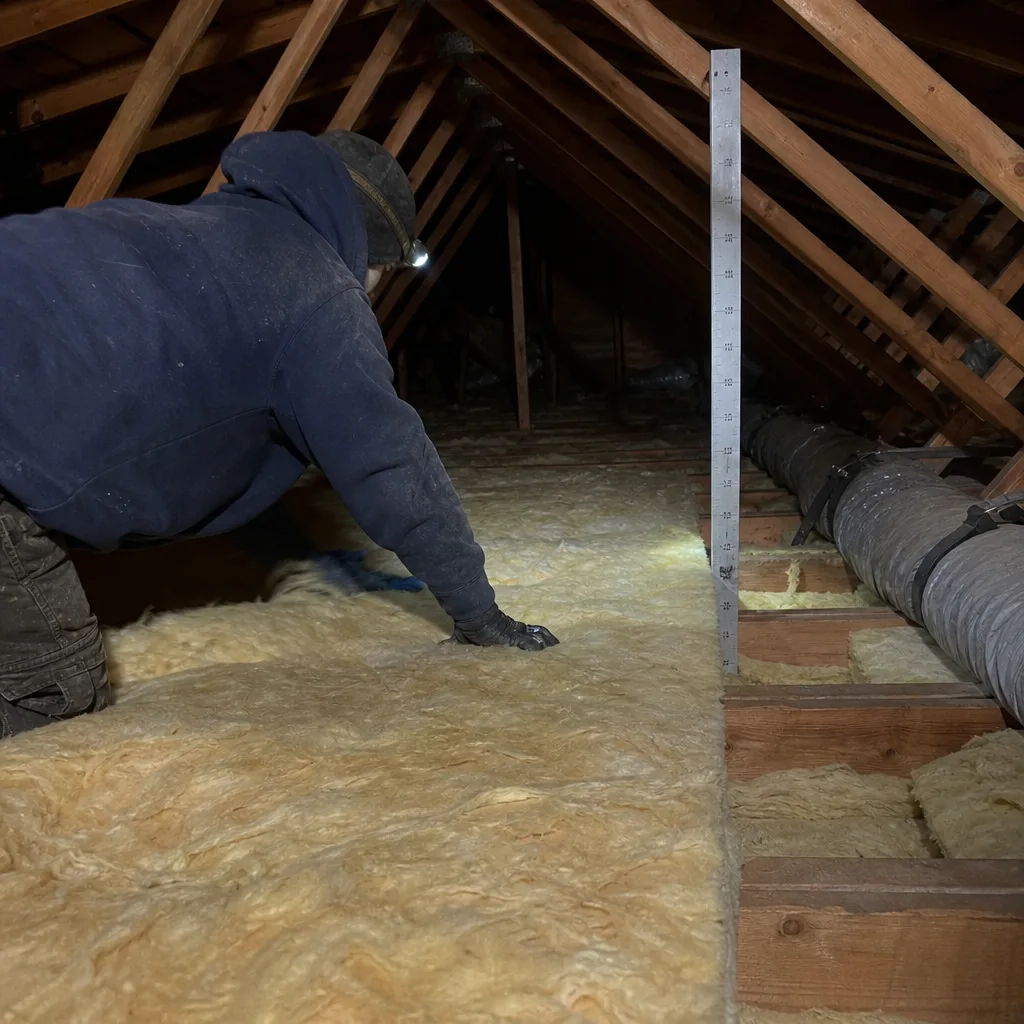
Do I need attic baffles if my attic already has ridge vents and soffit vents?
Yes – ridge vents and soffit vents are the intake and exhaust openings, but baffles are what keep the airway between them open. Without a baffle channel in each rafter bay, insulation can press directly against the soffit opening and block airflow even when the vent itself is unobstructed. In Palmdale homes with blown insulation, that blockage often develops gradually over years. The vent is there; the path isn’t. Baffles fix the path. Call (661) 403-4467 if you want us to check your current setup before assuming the ventilation is working.
Can baffles be installed without removing existing insulation?
Not correctly. To reach the rafter bay from the soffit vent to a point above the top plate, the technician has to clear the insulation from the eave line inward – typically two to four feet. Trying to tuck baffles over existing insulation leaves gaps at the critical bottom end where the airway needs to start, and it prevents proper air sealing of the top plates at the same time. We pull back, baffle, air-seal, and repack. That’s the sequence that produces a result you can verify.
How much does attic ventilation prep affect energy bills in Palmdale?
The honest answer is: it depends on what your starting condition is. In a Palmdale attic where insulation has been blocking the soffit vents for years, restoring proper airflow can drop peak attic temperatures by 20-30°F. That’s a meaningful load reduction on your air conditioning system during June through September, when daytime highs in Palmdale regularly exceed 100°F. We don’t quote a specific dollar savings figure because it varies with your HVAC equipment, thermostat settings, and how much of the blockage we clear. What we do provide is a before-and-after blower-door reading on applicable jobs so the air-sealing portion of the work produces a documented number, not a claim.
Is baffle installation code-required in Palmdale?
California Building Code requires a minimum ventilation ratio and – critically – requires that insulation not block the net free area of soffit vents. Title 24 and the California Residential Code both address this, and local Palmdale building permits for insulation work will be reviewed against these standards. Baffles are the standard method for maintaining that required clearance. If your home is going through a sale inspection, a refinance appraisal, or a Title 24 compliance review, the absence of baffles in a blown-insulation attic is a deficiency that shows up in writing. Call (661) 403-4467 for a written assessment that documents your current condition and what it would take to bring it into compliance.
Why Palmdale Attics Specifically Benefit From This Work
Palmdale sits at roughly 2,600 feet in the Antelope Valley – higher elevation than Los Angeles, drier, and subject to temperature swings that the coastal basin rarely sees. Summer afternoons at 105°F followed by nights in the mid-50s create a daily thermal cycling that puts constant stress on roof assemblies. That cycling drives moisture in and out of wood components even in a desert climate, and when soffit ventilation is blocked, there’s no airflow to equalize pressure and carry moisture out.
We’ve assessed attics in Palmdale’s Rancho Vista, Sun Village, and the neighborhoods east of Sierra Highway where 1980s and 1990s tract construction is dense. Searching for Attic Insulation Near Me in Palmdale, CA? We work throughout these neighborhoods regularly. A consistent pattern shows up: original blown insulation jobs that didn’t include baffles, followed by one or two top-up jobs over the years, leaving the eave line packed tight and the ventilation path gone entirely. The homeowner often has no idea because the problem is invisible from inside the house until something fails – a soft spot in the sheathing, an ice dam in an unusually cold winter, or an energy bill that stops making sense.
Restoring that ventilation path isn’t a dramatic intervention. It’s methodical work with a baffle gun, a can of fire-rated foam, and a blower-door machine. But it’s work that has to be sequenced correctly – ventilation prep before insulation, every time – and documented so you have a record of what was done and what the attic looks like now.
Wes Okafor has built Topside Attic Insulation Palmdale on that sequence since 2016. Across more than 9,000 homes sealed and insulated, the paperwork goes home with every customer: the written scope, the written warranty, the blower-door readings, and the photo record. That documentation exists because work that can’t be shown can’t be verified – and verified work is the only kind worth paying for.
Materials we work with include Knauf blown fiberglass, CertainTeed products, and Rockwool where appropriate for the application. For attics where Attic Batt Insulation makes more sense than blown-in, we’ll explain when and why. We don’t lock you into a proprietary product line, and we’ll explain the tradeoffs between materials for your specific attic configuration before we write the price.
Key Takeaways
- Attic baffles maintain the airway between soffit vents and the open attic, preventing insulation from blocking that intake path.
- In Palmdale’s high-heat, high-thermal-swing climate, proper soffit ventilation is a functional requirement, not a code formality.
- Ventilation prep – baffles, air sealing, and flow verification – must happen before insulation is added or replaced, not after.
- Pricing for a standard Palmdale attic runs from roughly $380 for baffles alone to $1,500 for a full ventilation prep package with blower-door documentation.
- Every job under The Haven Standard starts with a written price and closes with a documented photo record and applicable blower-door readings.
- The 365-Day Done Right Promise applies: if it’s not right, we make it right – in writing, before the job starts.
Get a Written Price for Your Palmdale Attic
If your Palmdale attic hasn’t had a baffle and ventilation assessment, or if a previous insulation job left the eave line packed without any vent channels in place, call (661) 403-4467 to schedule an assessment. We’ll come out, document what we find, and put a written price in your hands before any work begins. The estimate is free, the scope is written, and the 365-Day Done Right Promise covers the completed work. A live person picks up every call.
Written by Wes Okafor, Owner at Topside Attic Insulation Palmdale, serving Palmdale.