
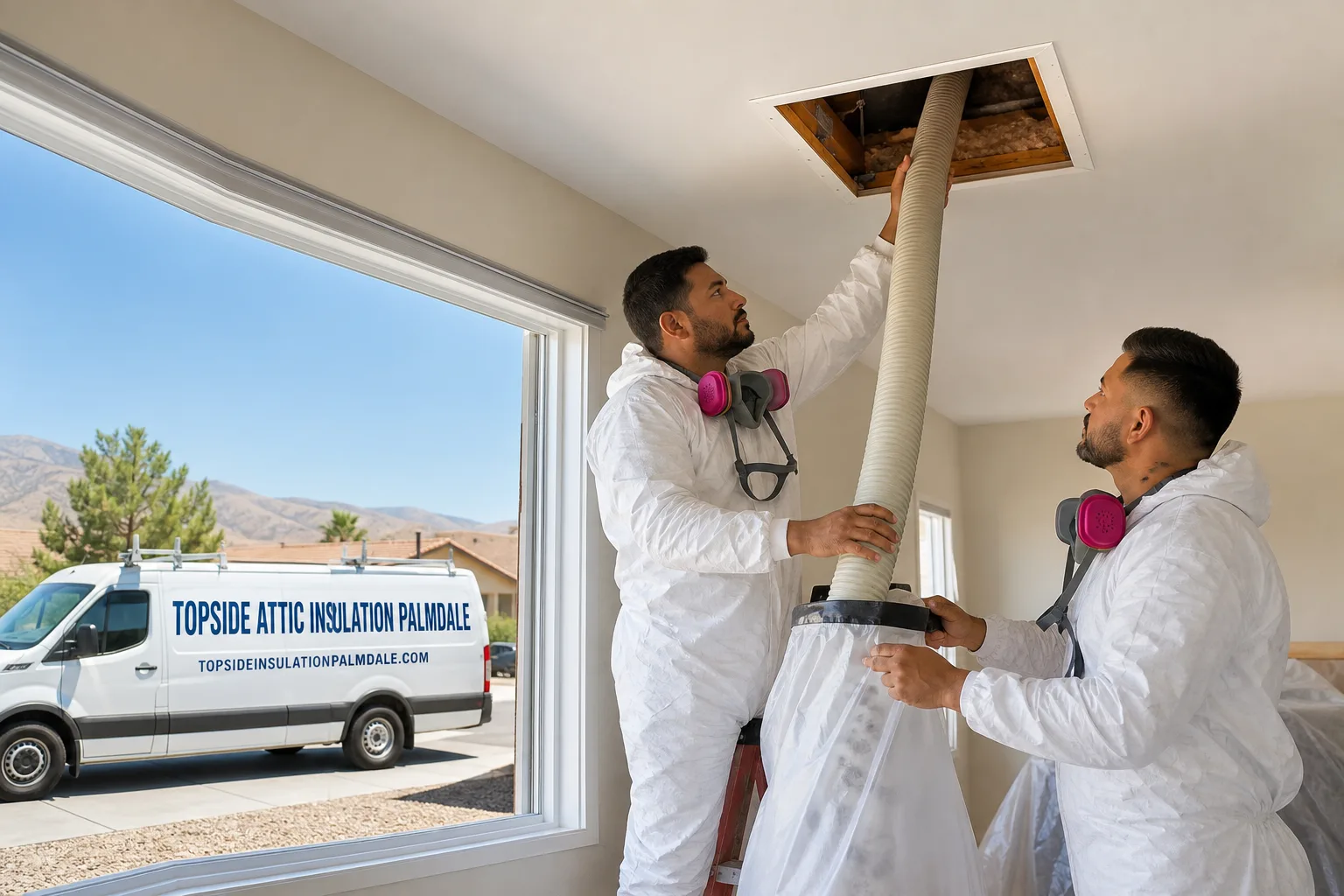
Fast, Reliable Spray Foam Insulation Across Lake Los Angeles
Spray foam insulation in Lake Los Angeles typically runs $2.80-$5.40 per board foot for open-cell and $4.50-$8.20 for closed-cell, with most whole-home retrofits falling between $3,800 and $9,500 depending on the cavity size and whether the structure needs air sealing first. We’re Envelope Insulation Co., and our crews are in Lake Los Angeles regularly - not passing through from the coast, but dispatched from our Los Angeles office with trucks stocked for the high desert’s specific conditions. Call (661) 403-4467 and a live person picks up, 24/7.
Why Topside Attic Insulation Palmdale Is Lake Los Angeles’s Preferred Spray Foam Insulation Company
We’ve sealed and insulated over 9,000 homes since 2016, and a growing share of them are in the Antelope Valley’s eastern reaches. Lake Los Angeles homeowners find us because their neighbor posted the blower-door numbers we left behind - 4,200 CFM50 before, 2,100 after - and word spreads fast in a community this size.
Our reviews from Lake Los Angeles customers consistently mention the same things: the crew showed up with a written price already in hand, the technician was the same person named in the text alert, and the photo record documented every cavity before it was covered. No voicemail loops. No callback windows measured in business days.
Response time to Lake Los Angeles is typically same-day or next-morning, depending on whether we’re already east of the San Gabriels on another job. The drive from our dispatch point is straightforward - up the 14, across the valley floor - and we don’t charge travel fees for Lake Los Angeles calls.
What builds trust here is local knowledge, not local slogans. We know that a 1972 manufactured home on Avenue J faces different infiltration paths than a 2005 stick-built off 170th Street East. We know the wind comes from the west-northwest, and we know where the skirting fails first.
Our Spray Foam Insulation Services in Lake Los Angeles
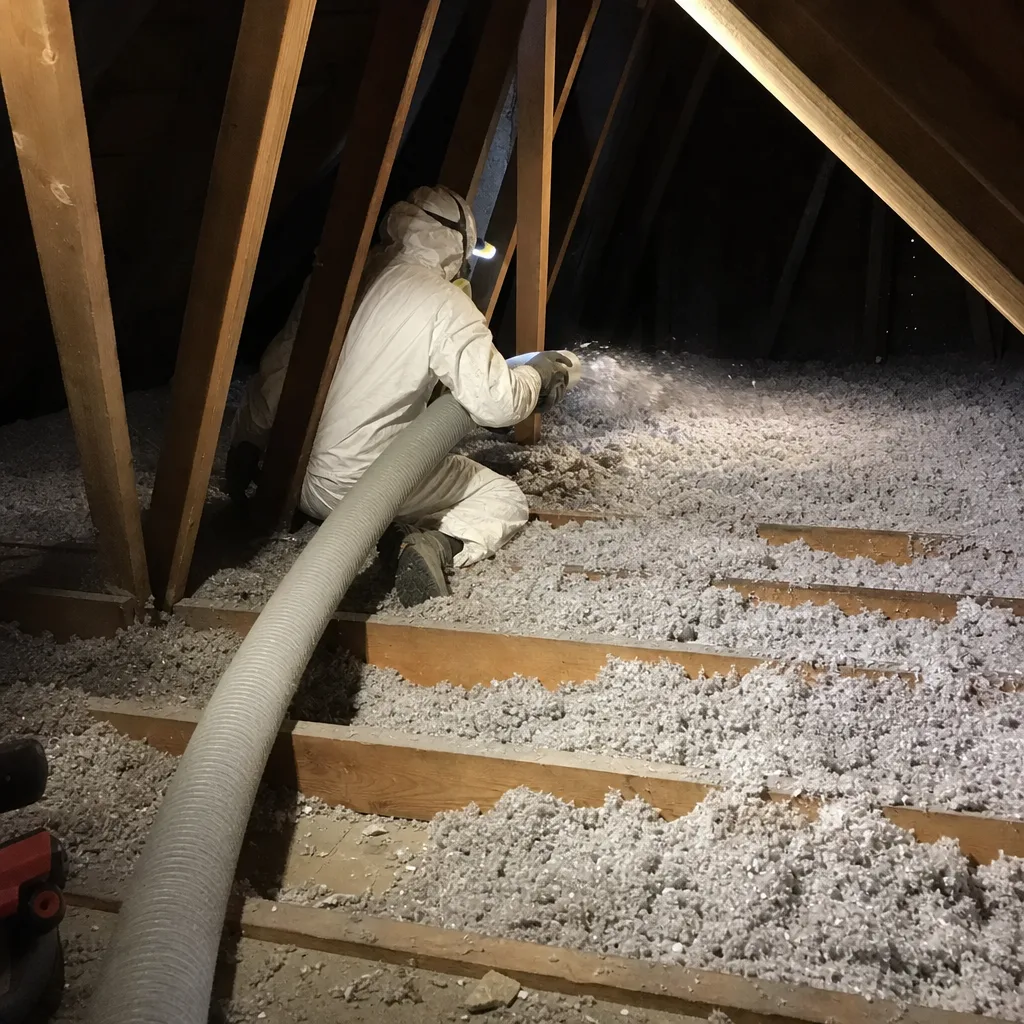
Closed-Cell Spray Foam
Closed-cell spray foam is our default recommendation for most Lake Los Angeles jobs - it’s a 2.0 lb density foam that cures rigid, delivers R-6.5 per inch, and acts as its own vapor barrier. In Lake Los Angeles’s dual-extreme climate, that matters. A 100°F August day can drop below freezing that same night, and the rigid structure of closed-cell resists the thermal cycling that cracks softer foams at the substrate seam. We use it on rim joists, garage ceilings, and any roof deck where the attic is conditioned. Our crews source Icynene and CertainTeed products for this application, and we stock both locally for fast turnaround on Lake Los Angeles jobs.
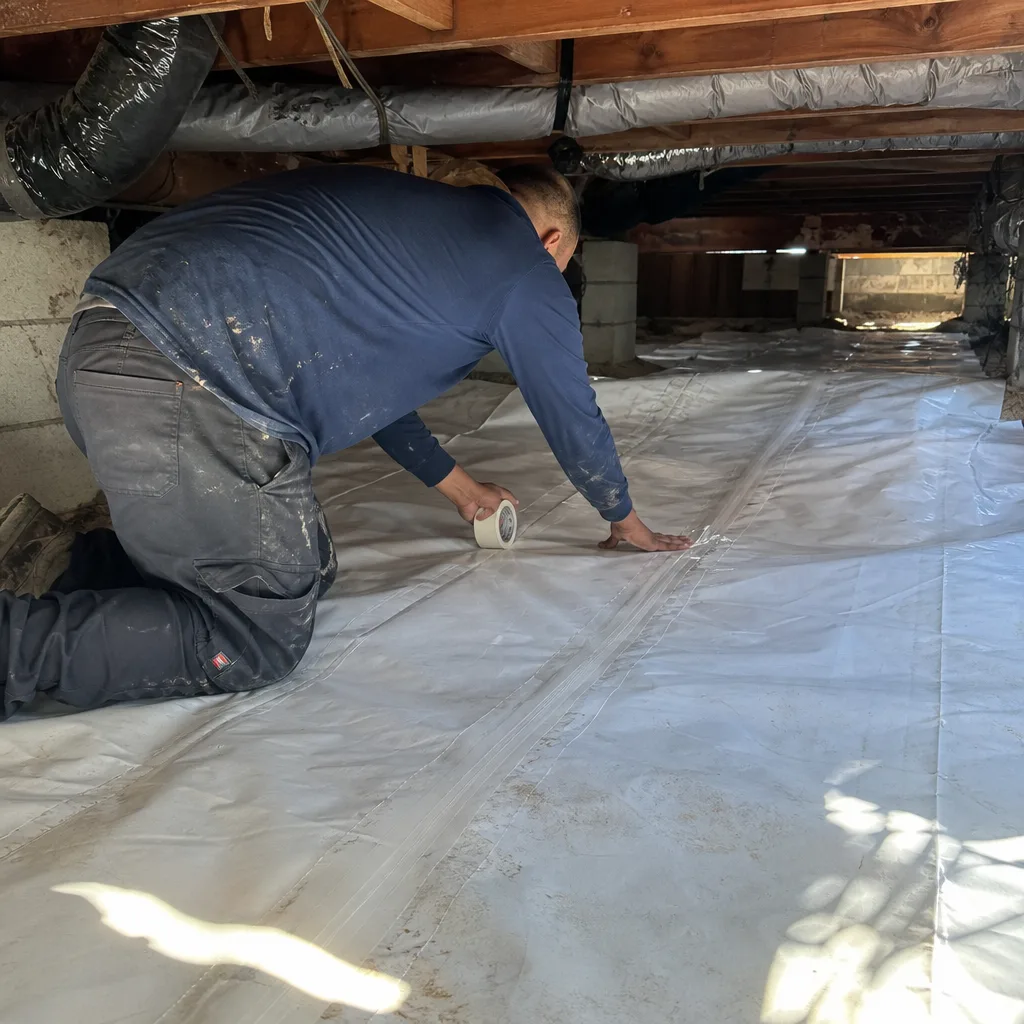
Open-Cell Spray Foam
Open-cell foam - 0.5 lb density, R-3.6 per inch, vapor-permeable - has its place in Lake Los Angeles, primarily in conditioned attic roof decks where you want the assembly to dry to the interior. On that 1960s owner-built slab home off Palmdale Boulevard in the Lake LA area, we found the original attic had no insulation at all and the underfloor cavity was wide open to the wind. We sprayed closed-cell foam on the rim joists and open-cell across the attic roof deck, sealing the top plate and penetrations, and the homeowner reported the house no longer cooked by 2 p.m. or froze overnight. Open-cell is less expensive per board foot, but we won’t spec it where the job needs vapor blocking or structural rigidity.
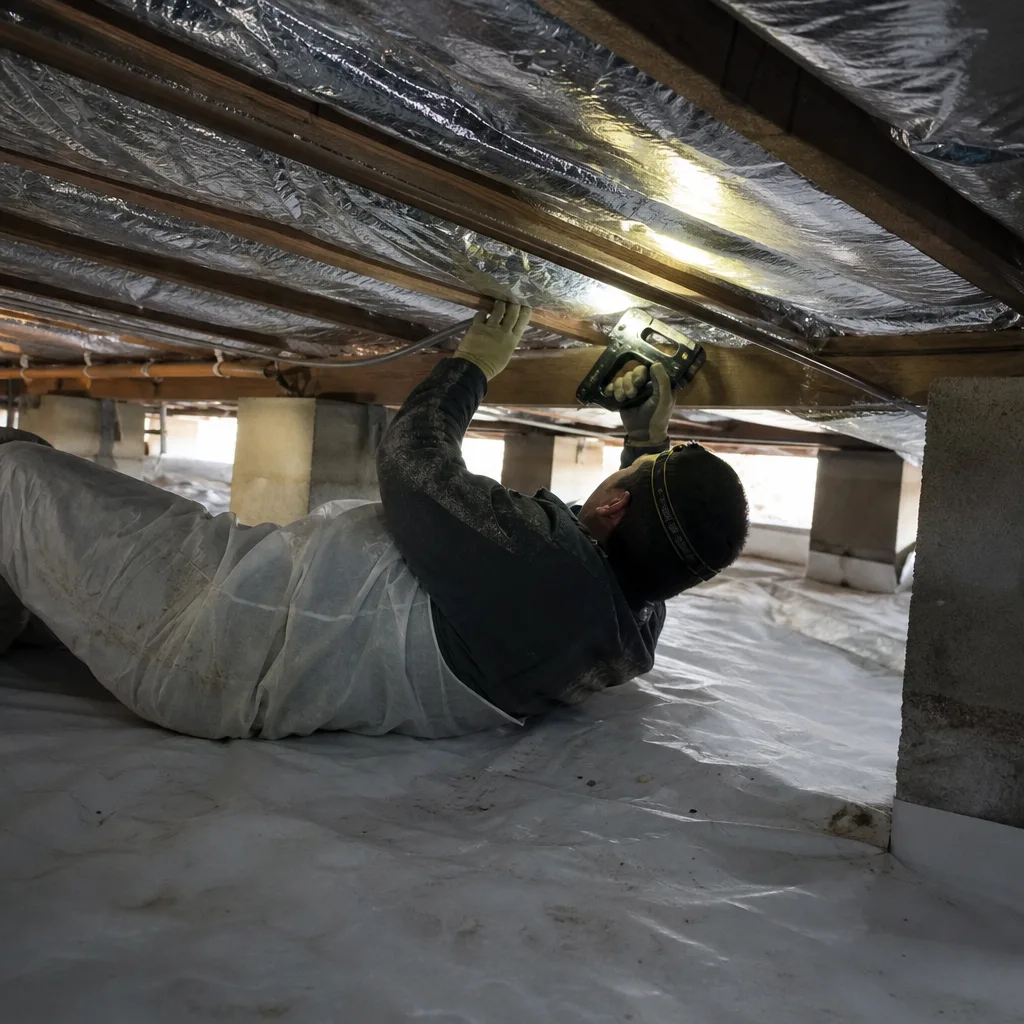
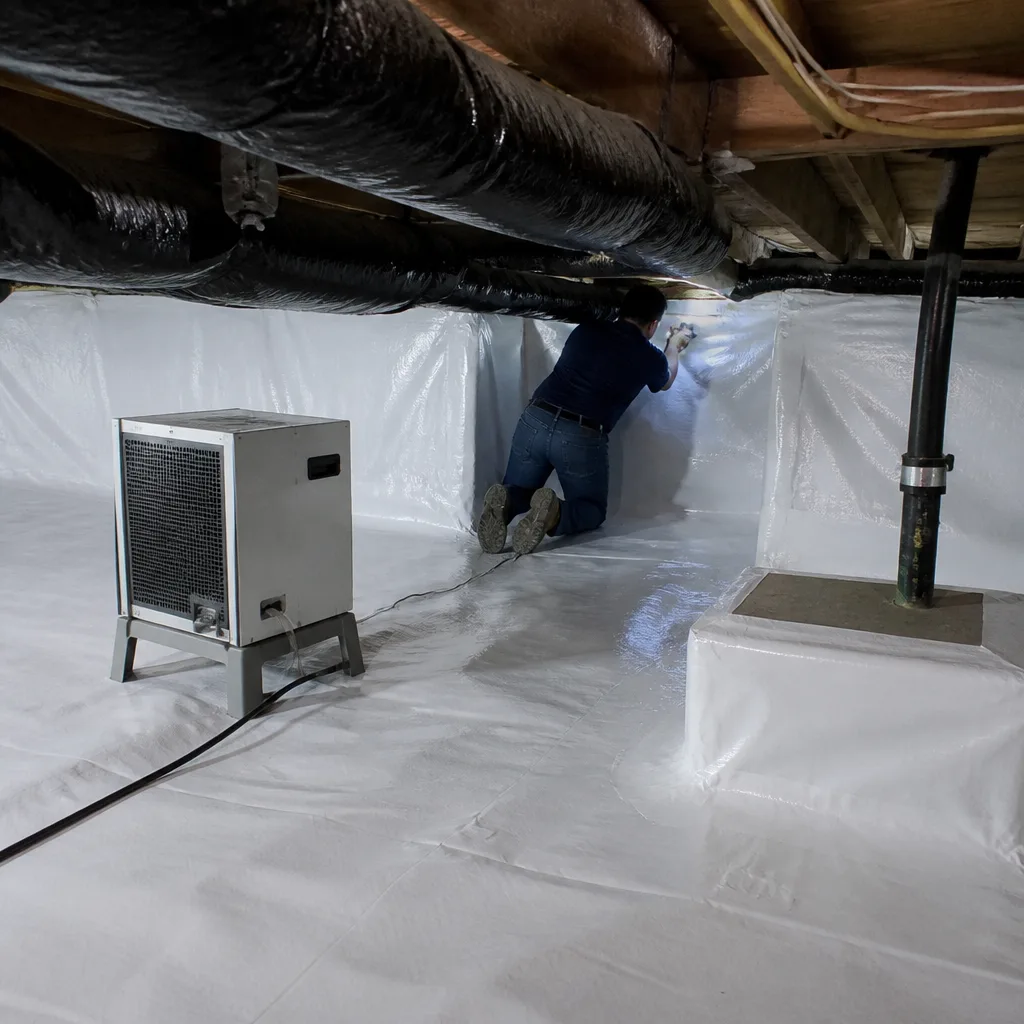
Rim Joist Spray Foam
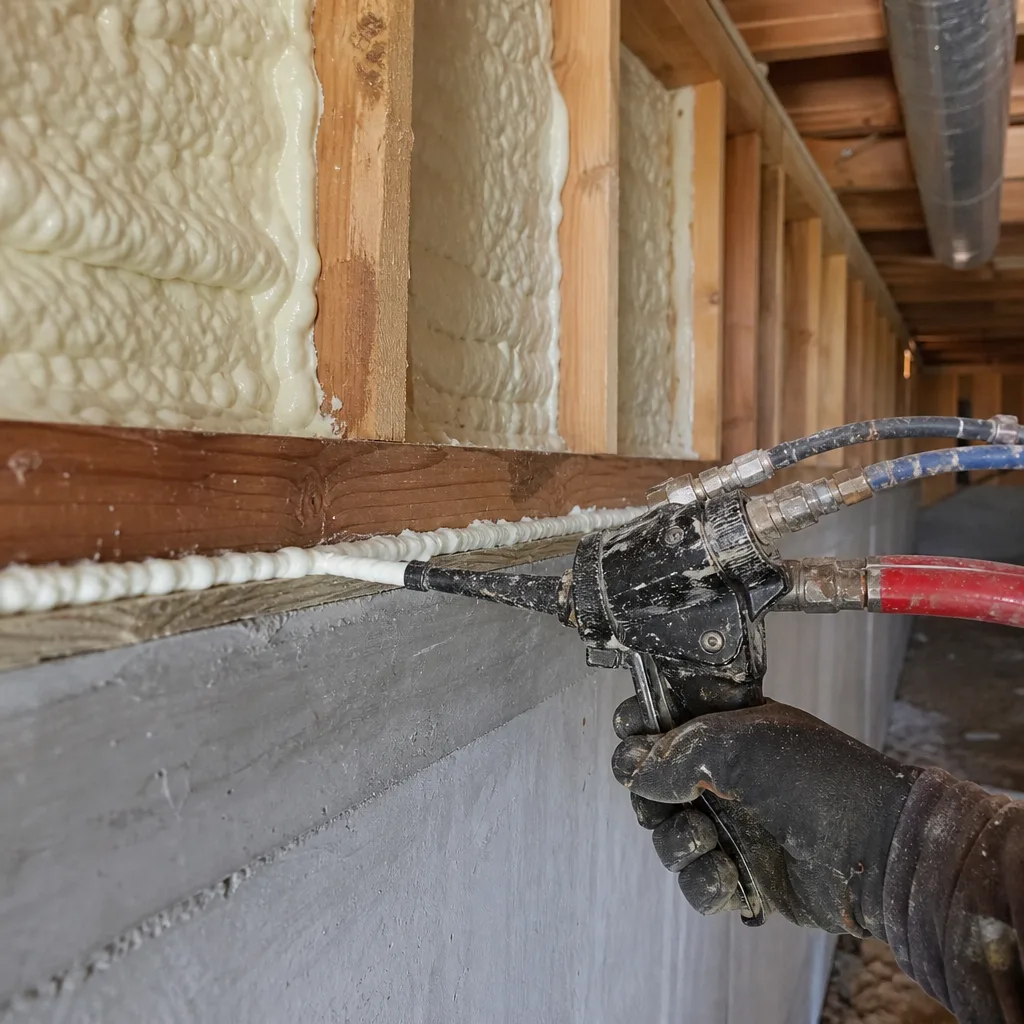
The rim joist - where the foundation wall meets the floor framing - is the single most under-insulated detail in Lake Los Angeles’s 1960s-70s slab-on-grade homes. In manufactured homes, it’s often completely open to the belly cavity. We spray closed-cell foam here at minimum 2 inches, sealing the sill plate and any penetrations for plumbing and wiring. This stops the stack effect in winter, when warm air escapes through the top of the house and pulls replacement air through the rim. In Lake Los Angeles’s wind-driven climate, an unsealed rim joist is like leaving a window cracked year-round.
Garage Ceiling Spray Foam
Garage ceiling spray foam in Lake Los Angeles solves a problem specific to the high desert: attached garages that act as thermal buffers in summer and heat sinks in winter. We spray the ceiling plane - typically open-cell to allow drying, or closed-cell if the garage is heated - after air sealing all top plates, light penetrations, and the wall-to-ceiling junction. The result is a garage that doesn’t radiate 120°F heat into the bedroom above it in August, and doesn’t pull 35°F air through the floor framing in January.
Spray Foam Roof Deck
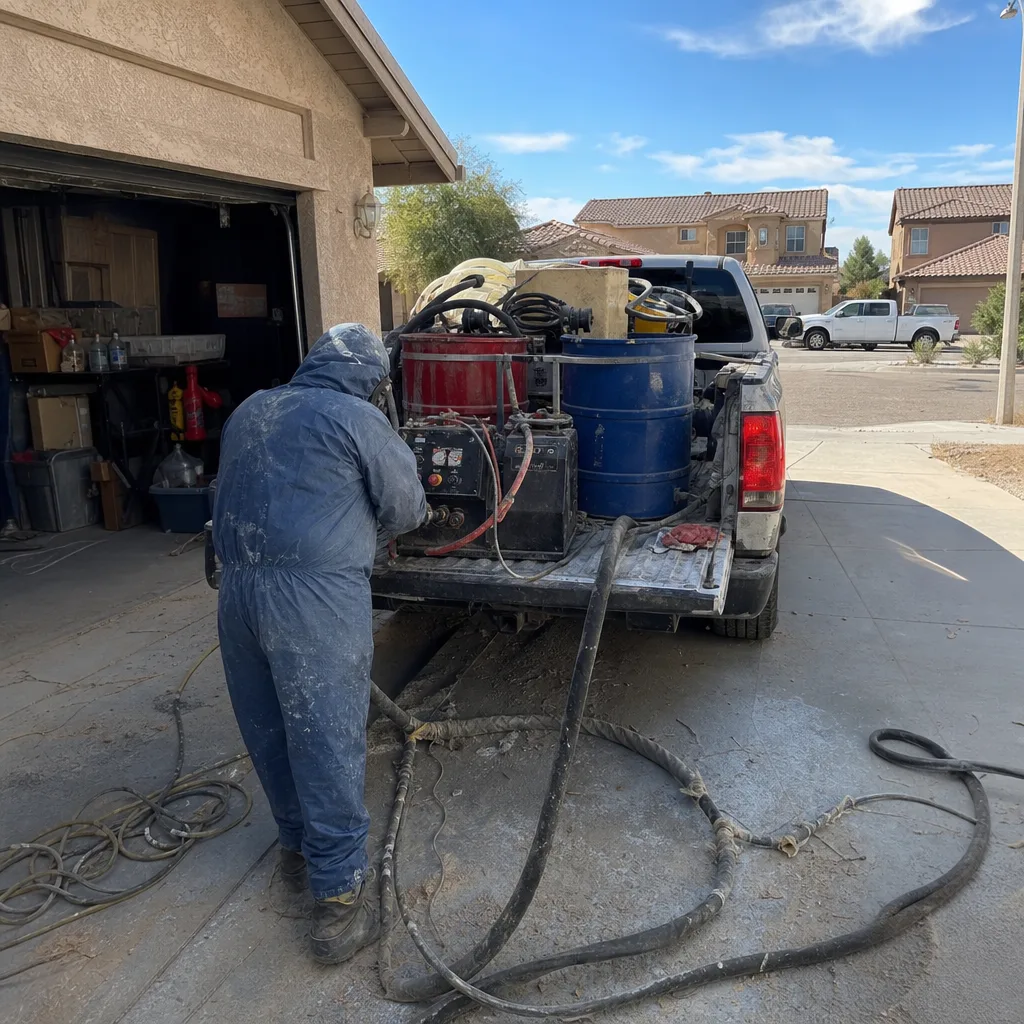
For homeowners converting Lake Los Angeles attics to conditioned space, we spray the roof deck rather than the attic floor. This brings the HVAC ducts inside the thermal envelope, which is critical when summer attic temperatures hit 140°F and winter nights drop below freezing. We always seal first - top plates, can lights, chimney chases - then insulate. Our Spray Foam Insulation team will not blow foam over an unsealed surface. That’s Haven Standard Clause 1.
What happens when you call
- 1
A real person answersNo phone trees - you reach a local pro.
- 2
You get an upfront price rangeHonest numbers before anyone is dispatched.
- 3
A background-checked tech heads outLicensed & insured, dispatched right away.
- 4
You approve before work beginsNothing starts until you say go.
 Before
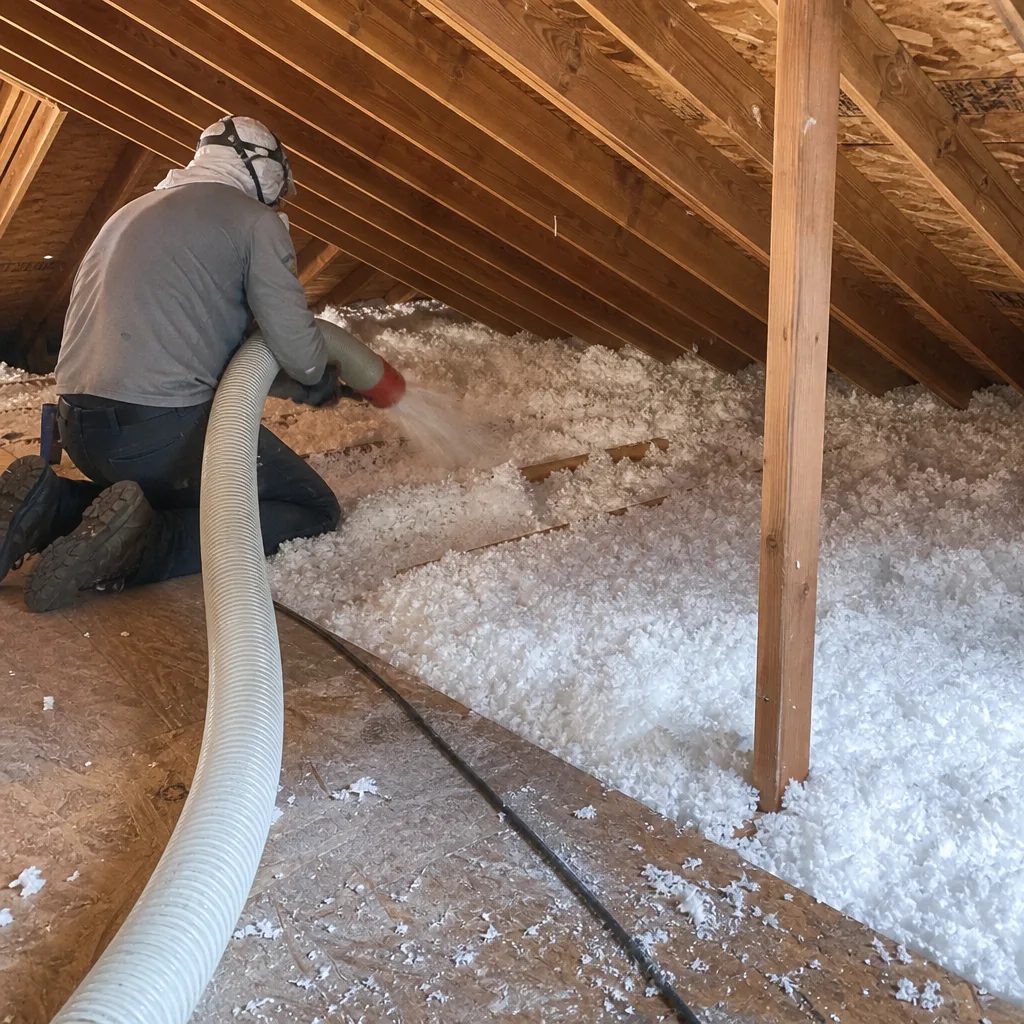 After
AfterTrusted Brands We Service in Lake Los Angeles
We source spray foam materials from Icynene, CertainTeed, and Knauf - no proprietary lock-ins, no single-source products. For Lake Los Angeles’s extreme thermal cycling, we spec foams with tested performance in ASTM E84 fire ratings and documented adhesion values on OSB and concrete substrates. We keep common densities and chemistries in stock locally, so a Lake Los Angeles job doesn’t wait on a truck from the coast. Every batch is tracked by lot number and applied with manufacturer-specified temperatures and substrate moisture limits. You get the documentation.
Common Spray Foam Insulation Problems We See in Lake Los Angeles Homes
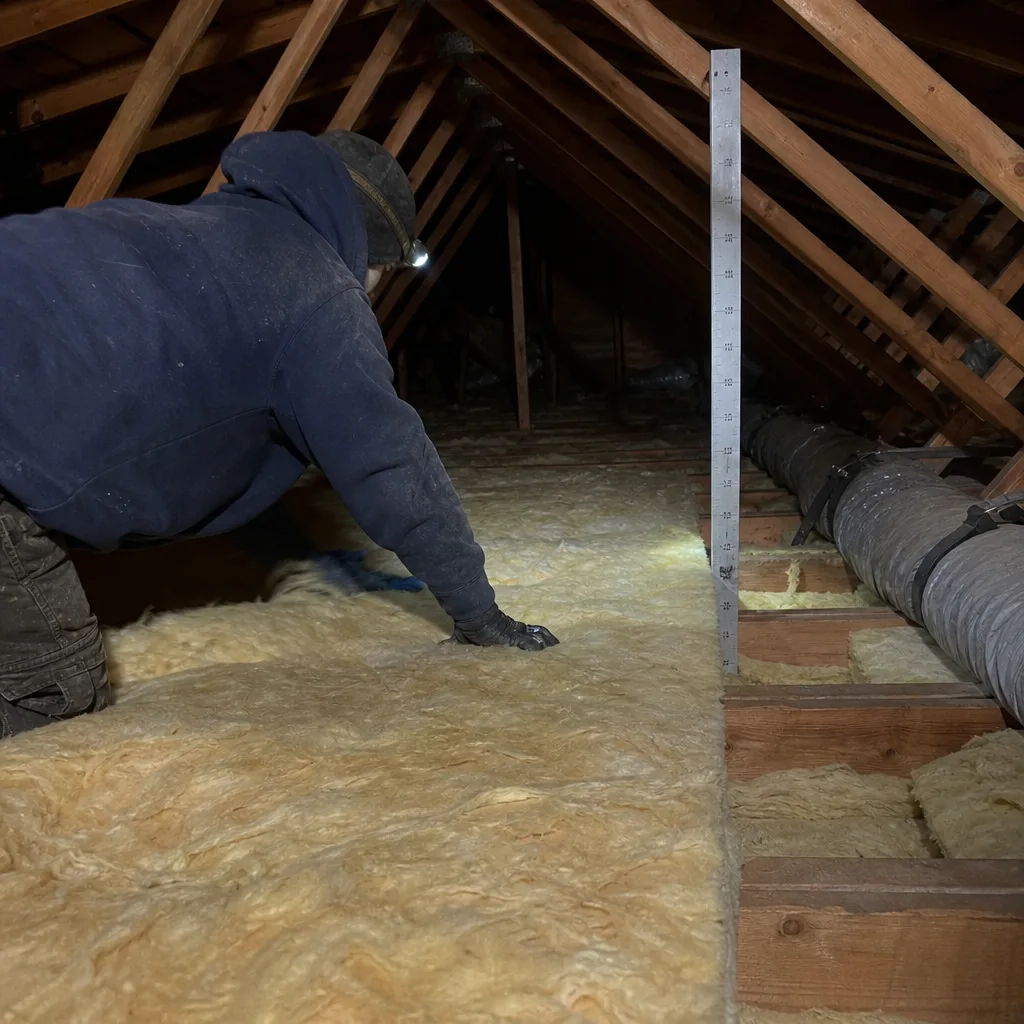
- Manufactured home skirting gaps exposing underfloor foam. Lake LA’s wind and freeze-thaw cycles warp and gap skirting faster than in milder climates, leaving spray foam exposed to UV degradation, wind-driven dust abrasion, and moisture intrusion. The foam doesn’t fail - its protection does. We inspect skirting integrity before quoting any underfloor work.
- Attic foam applied over unsealed 1960s slab construction. High-desert wind pushes air straight through the foam-to-wood bond at unsealed top plates, causing blow-through and eventual separation. We air seal every top plate, electrical penetration, and can light with fire-rated caulk and foam before the spray rig arrives.
- Cracking at foam-to-substrate seams from diurnal temperature swings. A 100°F Lake Los Angeles afternoon can drop below freezing that same night. Spray foam installed without accounting for this extreme delta-T can crack where it meets studs, sheathing, or concrete. We spec appropriate densities and application thicknesses for the substrate and climate zone.
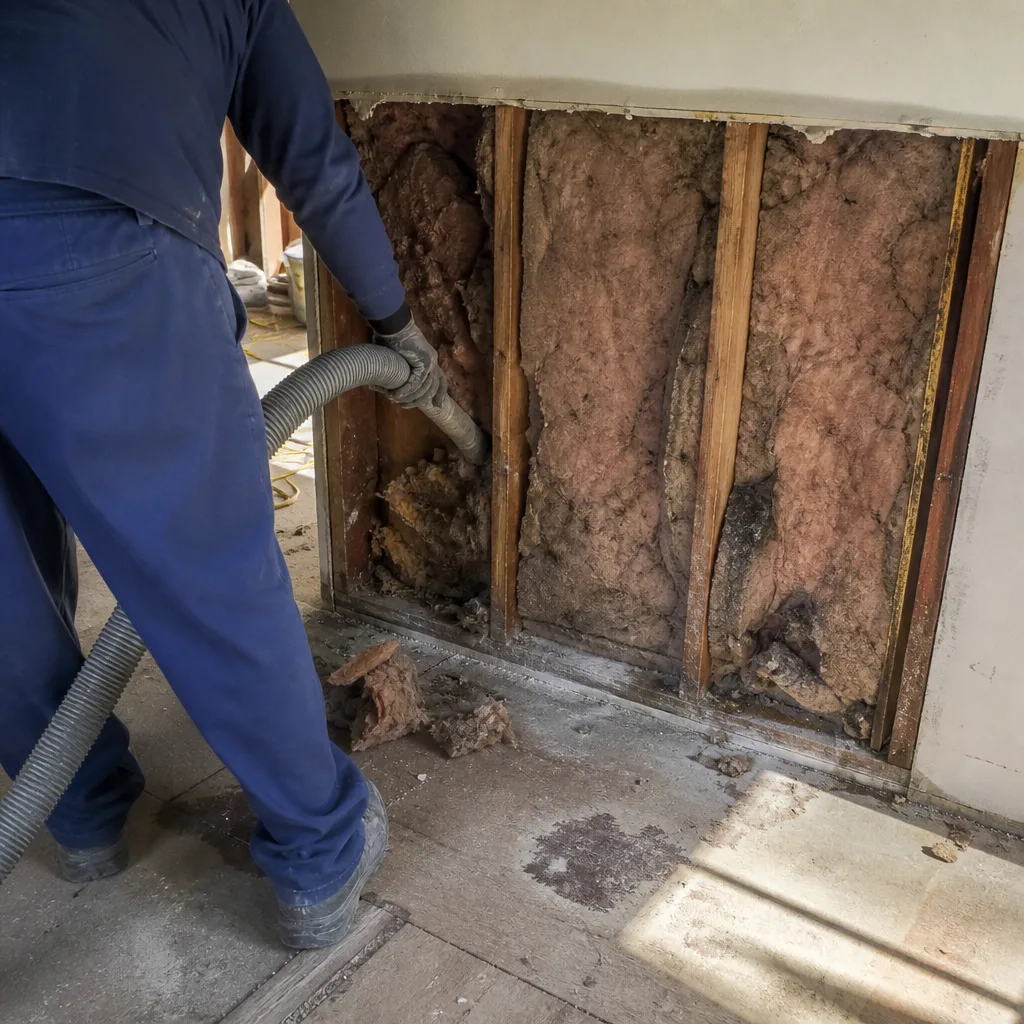
- Existing fiberglass batts compressed in manufactured home belly cavities. Original insulation in Lake LA’s manufactured housing stock is often moisture-laden, rodent-compromised, or simply missing after decades of wind intrusion. We remove and document the condition before spraying, so the new foam adheres to clean substrate.
Pricing for Spray Foam Insulation in Lake Los Angeles, CA
Most spray foam jobs in Lake Los Angeles fall within these ranges, based on 2024-2025 material costs and local labor rates:
| Application | Open-Cell (per board foot) | Closed-Cell (per board foot) | Typical Job Total |
|---|---|---|---|
| Attic roof deck (1,200 sq ft) | $2.80-$3.80 | $4.50-$6.20 | $4,200-$8,800 |
| Rim joist (per linear foot) | Not recommended | $18-$28 | $1,400-$2,800 |
| Garage ceiling (400 sq ft) | $2.80-$3.60 | $4.50-$5.80 | $1,600-$3,400 |
| Whole-home retrofit (manufactured, 1,000 sq ft) | Varies by cavity | Varies by cavity | $3,800-$7,200 |
| Whole-home retrofit (stick-built, 1,800 sq ft) | Varies by cavity | Varies by cavity | $6,500-$12,400 |
What moves the number: cavity accessibility (crawl space height, attic pitch), existing insulation removal, air sealing extent, and whether the job requires closed-cell throughout or a hybrid approach. We provide a written price before any work starts - Haven Standard Clause 1 - and a free second opinion on any competing written estimate. Call (661) 403-4467 for an exact quote.
We Also Serve Cities Near Lake Los Angeles
Our crews work the full Antelope Valley corridor. If you’re in Lake Los Angeles or nearby Palmdale, Desert View Highlands, Quartz Hill, or Acton, the same response times and pricing structure apply. Dispatch is coordinated from our Los Angeles office, but the trucks that roll to your door carry high-desert specs, not coastal assumptions.
Serving Lake Los Angeles, CA - Our Local Coverage Area
We’re based in the Lake Los Angeles area and know this community well. Use the map below to see our service coverage - if you’re nearby, we can almost certainly help.
FAQs - Spray Foam Insulation in Lake Los Angeles
Yes, but the skirting must be repaired or replaced first - we won’t spray underfloor foam that’s going to be exposed to wind, UV, and moisture within a season. We inspect skirting integrity during our initial assessment and include any needed repairs in the written scope. Call (661) 403-4467 and we’ll look at it with you.
Lake Los Angeles sits higher and farther east in the Antelope Valley, which means more extreme temperature swings and stronger wind exposure than Palmdale’s more developed core or Lancaster’s slightly buffered terrain. We spec higher-density closed-cell for rim joists and garage ceilings here, and we’re stricter about substrate moisture limits because the diurnal delta-T is larger. Coastal LA contractors rarely account for this.
Yes, and it’s one of the most cost-effective upgrades for these homes. Most 1960s-70s slabs in Lake LA have zero attic insulation and leaky top plates. We air seal first - blower-door guided, with documented before numbers - then spray open-cell or closed-cell depending on whether the attic is vented or conditioned. The photo record shows you every sealed penetration before foam covers it.
We use Icynene and CertainTeed closed-cell products with documented performance in climate zone 8B conditions, and Knauf open-cell where vapor permeability is desired. We don’t lock into a single brand - we match the material to the substrate, the cavity, and the thermal load. Every product is applied to manufacturer specs with tracked lot numbers.
Spray foam’s air-sealing value is as important as its R-value. In Lake Los Angeles’s persistent west-northwest winds, even a 1/16-inch gap at a top plate or rim joist can drive significant conditioned air loss. Closed-cell foam at rim joists and spray foam at all attic penetrations creates a continuous air barrier. We verify the result with a blower-door test - pressurization readings that show, in one number, how much air your building envelope was losing before and after.
Written by Wes Okafor, Owner at Envelope Insulation Co., serving Lake Los Angeles since 2016.