
How Much Does Spray Foam Insulation Cost in Palmdale?
Spray foam insulation in Palmdale, CA typically costs between $1.50 and $4.50 per board foot, depending on the foam type, application area, and thickness required. Most Palmdale homeowners pay somewhere between $2,200 and $6,800 for a full attic application, with crawl space and rim-joist jobs running lower and whole-home new-construction fills running higher. If you’ve seen lower numbers online, they usually reflect open-cell foam in mild climates – Palmdale’s desert heat load and wide temperature swings tend to push both the recommended R-value and the final price upward.
Spray Foam Insulation Cost Breakdown (2026)
The table below reflects installed pricing in the Palmdale market as of 2026. “Installed” means materials, labor, and the equipment to bring closed-cell or open-cell foam to temperature on a hot Antelope Valley afternoon – because both types are temperature-sensitive during application and a crew cutting corners on mix temperature produces foam that off-gasses, shrinks, or loses its rated R-value over time.
| Application / Scope | Foam Type | Typical Palmdale Range (Installed) |
|---|---|---|
| Attic rafters / roof deck (1,000 sq ft) | Closed-cell (2 in.) | $2,400 – $3,800 |
| Attic rafters / roof deck (1,000 sq ft) | Open-cell (3.5 in.) | $1,400 – $2,200 |
| Attic floor / joist bays – air seal + foam | Closed-cell (2 in.) | $1,800 – $3,200 |
| Crawl space walls and rim joists | Closed-cell (2 in.) | $1,200 – $2,600 |
| Garage ceiling / bonus room floor | Closed-cell (2 in.) | $900 – $1,800 |
| Exterior wall cavities (existing home) | Open-cell (blown) | $1.50 – $2.20 per board foot |
| New construction – full building envelope | Closed-cell (2-3 in.) + open-cell fill | $5,500 – $12,000+ |
| Single-zone air sealing + spot foam (rim joists, top plates, penetrations) | Two-component closed-cell kits | $650 – $1,400 |
What the Numbers Don’t Include
Removal of existing insulation is billed separately – usually $0.50 to $1.10 per square foot for an Palmdale attic job, depending on depth and contamination. If rodent activity or moisture has been present (both common in older Quartz Hill and Sun Village homes with vented crawl spaces), you may also need an attic cleaning and sanitizing step before foam goes in. At Envelope Insulation Co., the written price you receive covers exactly what we found in the inspection – not a ballpark that expands later.
Also worth flagging: Palmdale sits in Los Angeles County, and LA County building code requires a fire-thermal barrier over closed-cell foam in occupied spaces. If that drywall layer isn’t already there, it adds cost. We include that line item in every written scope before anyone touches a spray rig.
What Affects Spray Foam Insulation Pricing in Palmdale
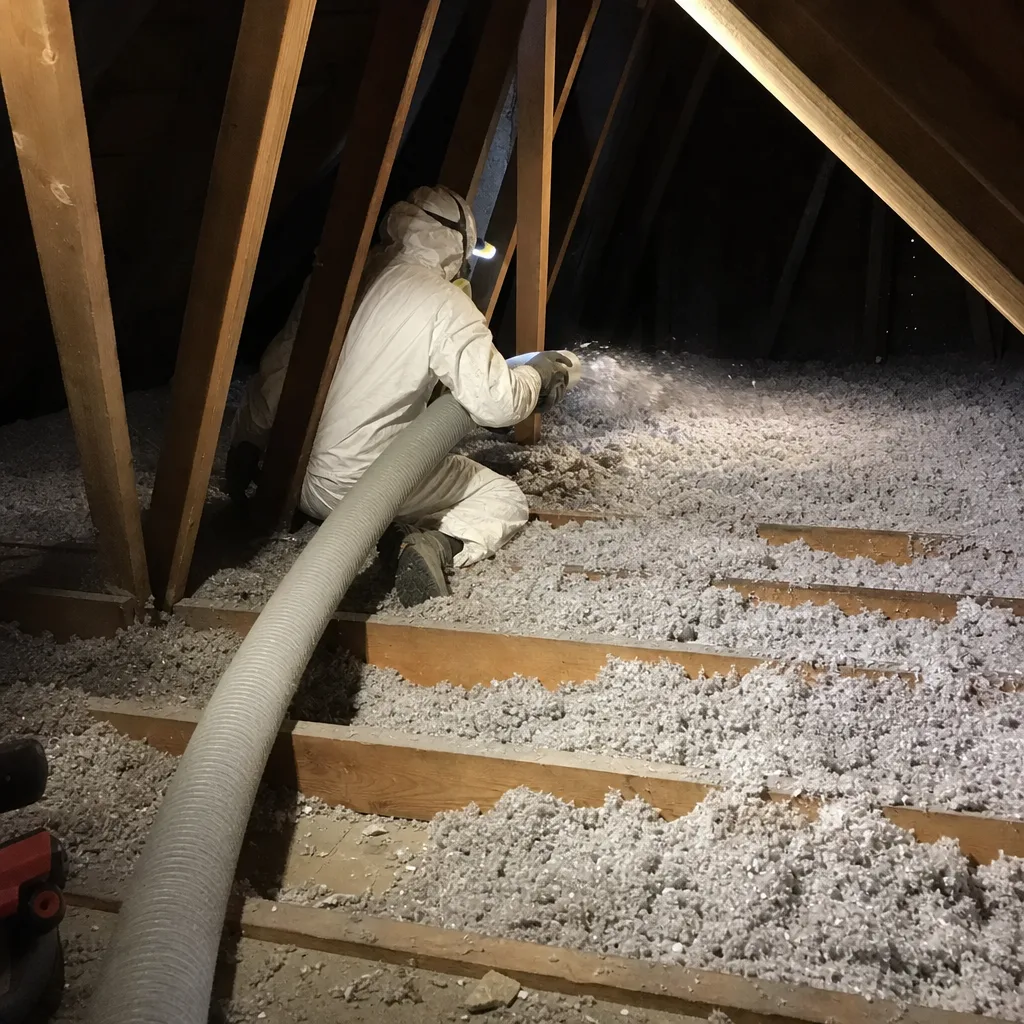
Six variables move the number more than anything else in this market. Here’s how each one works in the Antelope Valley context specifically.
- Open-cell vs. closed-cell foam. Open-cell foam (roughly R-3.7 per inch) is softer, expands to fill cavities well, and costs less per board foot – typically $0.44 to $0.65 installed. Closed-cell foam (R-6.5 to R-7 per inch) is rigid, acts as a vapor retarder, and costs $1.00 to $1.50 per board foot installed. In Palmdale’s climate – 100-plus-degree summers, cold nights in January, and a vapor drive that can flip direction seasonally – closed-cell is usually the right call for roof decks and crawl space walls. Using open-cell where closed-cell is warranted isn’t just a performance issue; it can void your foam manufacturer’s warranty.
- Application area and access difficulty. A clear, empty attic in a newer Palmdale Ranch-era tract home is a straightforward spray. A tight knee wall in a 1970s Lancaster-road hillside home with no pull-down access is a different job. Narrow bays, HVAC equipment in the spray zone, and low-pitch rooflines all add labor time, and labor is a significant share of the total cost.
- Existing insulation condition. Many Palmdale homes built in the 1980s and early 1990s still have original fiberglass batts that have settled, been disturbed by rodents, or gotten wet during a roof leak. Spraying over degraded insulation doesn’t fix the underlying problem – it seals it in. Insulation removal before foam application adds to the project cost but is sometimes the only way to do the job correctly.
- Required R-value for California Title 24. California’s energy code sets minimum R-values by climate zone. Palmdale falls in Climate Zone 14, which is one of the more demanding zones in the state – the code minimum for attic insulation is R-38, and R-49 to R-60 is what most energy auditors recommend for homes in this zone once you account for radiant heat gain from a sun-exposed roof deck. Getting to R-49 with closed-cell foam means more thickness, more material, and a higher per-project cost than a coastal installation targeting R-30.
- Air sealing before foam. This is the step that separates a real insulation job from a materials-only job. Top plates, can-light penetrations, plumbing chases, and attic hatch frames are where conditioned air actually escapes – and if those gaps aren’t sealed before the foam goes in, you’ve added R-value without fixing the air exchange problem. At Envelope Insulation Co., air sealing is a prerequisite, not an optional line item. We complete it first, document it with photos, and don’t spray foam over an unsealed floor. Some bids you’ll see skip this step entirely; that’s worth understanding before you compare numbers.
- Material costs and foam chemistry. Spray foam prices in the Palmdale market track raw material costs, which have fluctuated meaningfully since 2021. Isocyanate and polyol blends – the two components that react to form foam – are petrochemical derivatives, and their price moves with supply chain conditions. The ranges on this page reflect early-2026 material pricing. Jobs scoped in mid-year may shift by 5 to 10 percent depending on where commodity prices land.
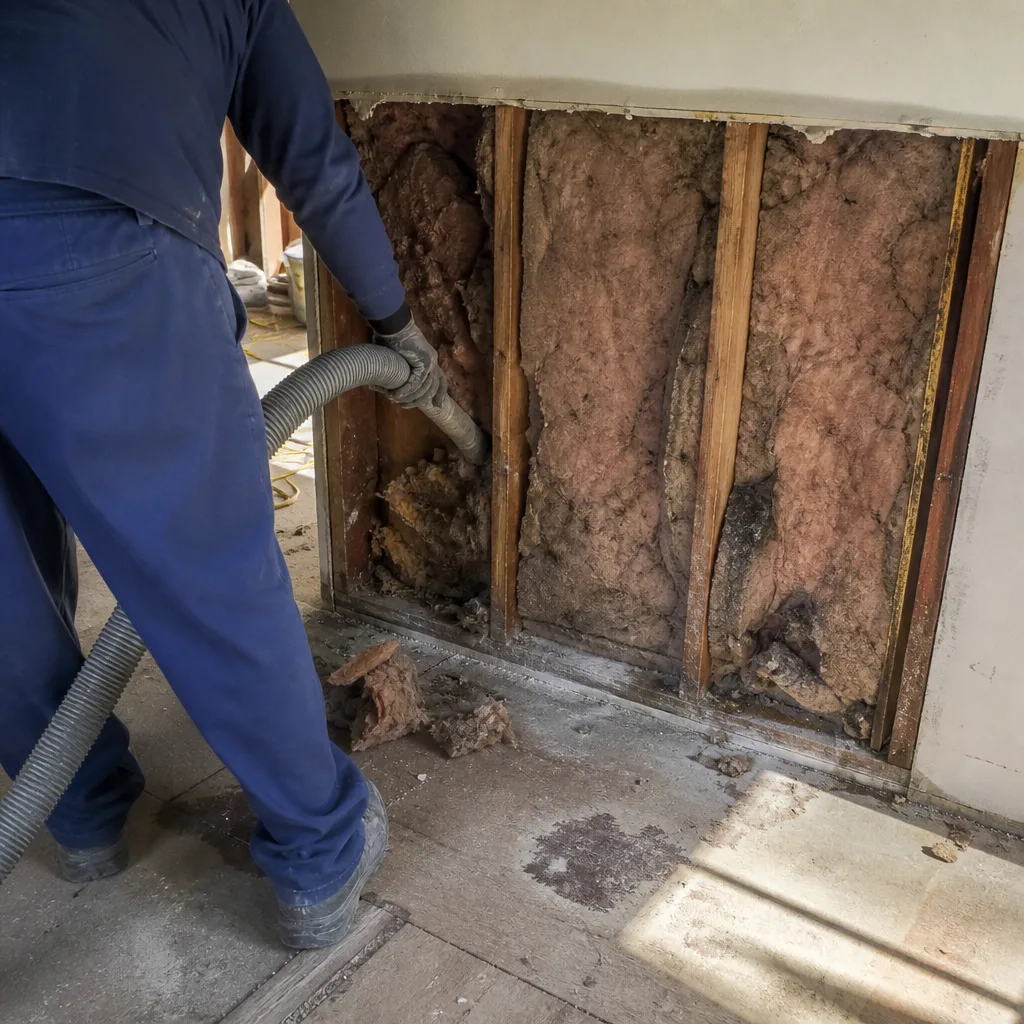 Before
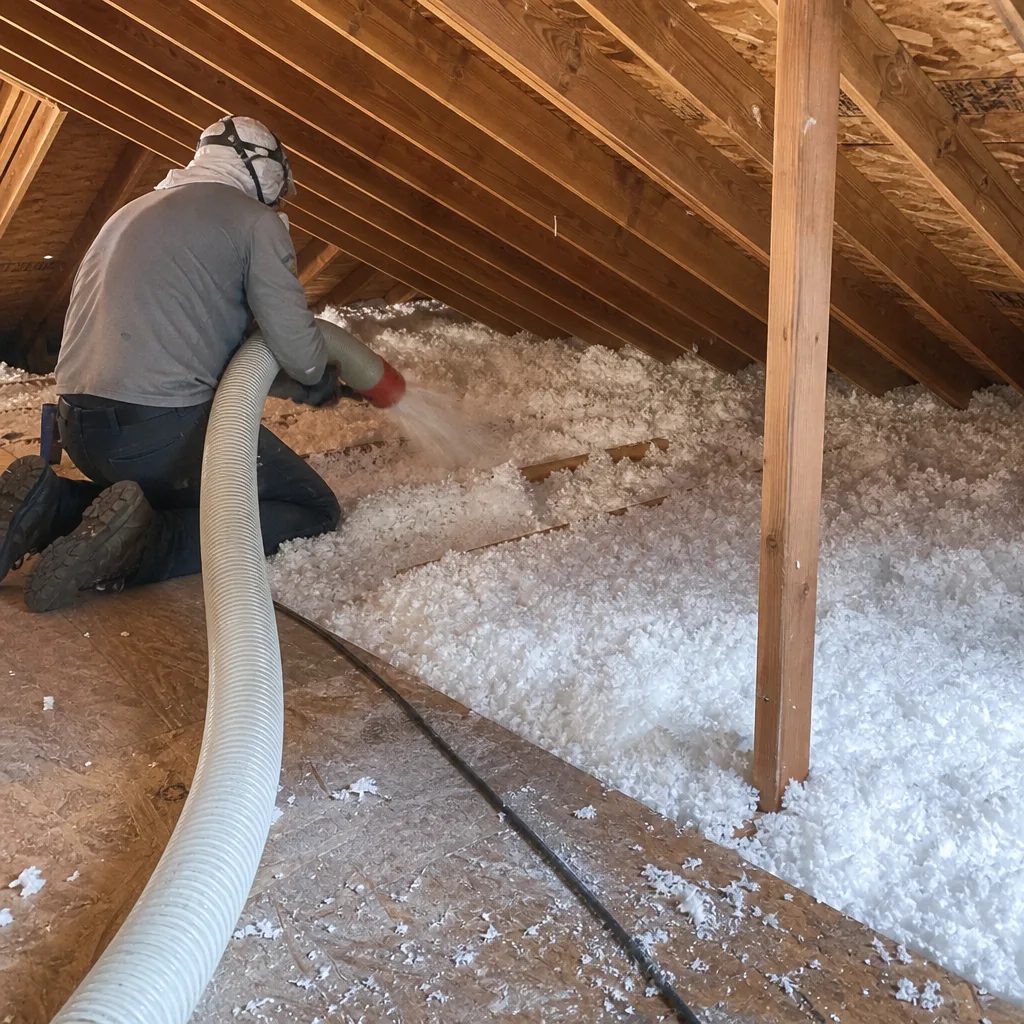 After
AfterClosed-Cell vs. Open-Cell Foam: Which One Does Palmdale Need?
The short answer: for most applications in the Antelope Valley, closed-cell wins on performance. Here’s why that matters in dollar terms.
Open-cell foam is cheaper upfront but achieves only R-3.7 per inch. To hit the Climate Zone 14 target of R-49 in an attic rafter bay, you’d need more than 13 inches of open-cell – which is rarely physically possible in a standard rafter bay. Closed-cell reaches R-6.5 per inch, meaning you hit R-49 at about 7.5 inches, which is achievable in most framing configurations. The higher per-board-foot cost of closed-cell often closes the gap when you price both options to the same target R-value.
Open-cell foam also absorbs moisture – a meaningful issue for Palmdale homes near the Palmdale Reservoir or in low-lying parcels in the Rancho Vista area where nighttime condensation can be significant. Closed-cell acts as a Class II vapor retarder, which is what California’s energy code calls for in certain assemblies anyway.
There are situations where open-cell is the right call: interior wall cavities in conditioned space, soundproofing applications, and some new construction scenarios where cost per square foot is constrained and vapor management is handled by another layer. A written scope from Envelope Insulation Co. will specify which foam goes where and why – not just a material name and a price.
Palmdale-Specific Factors That Change Your Quote
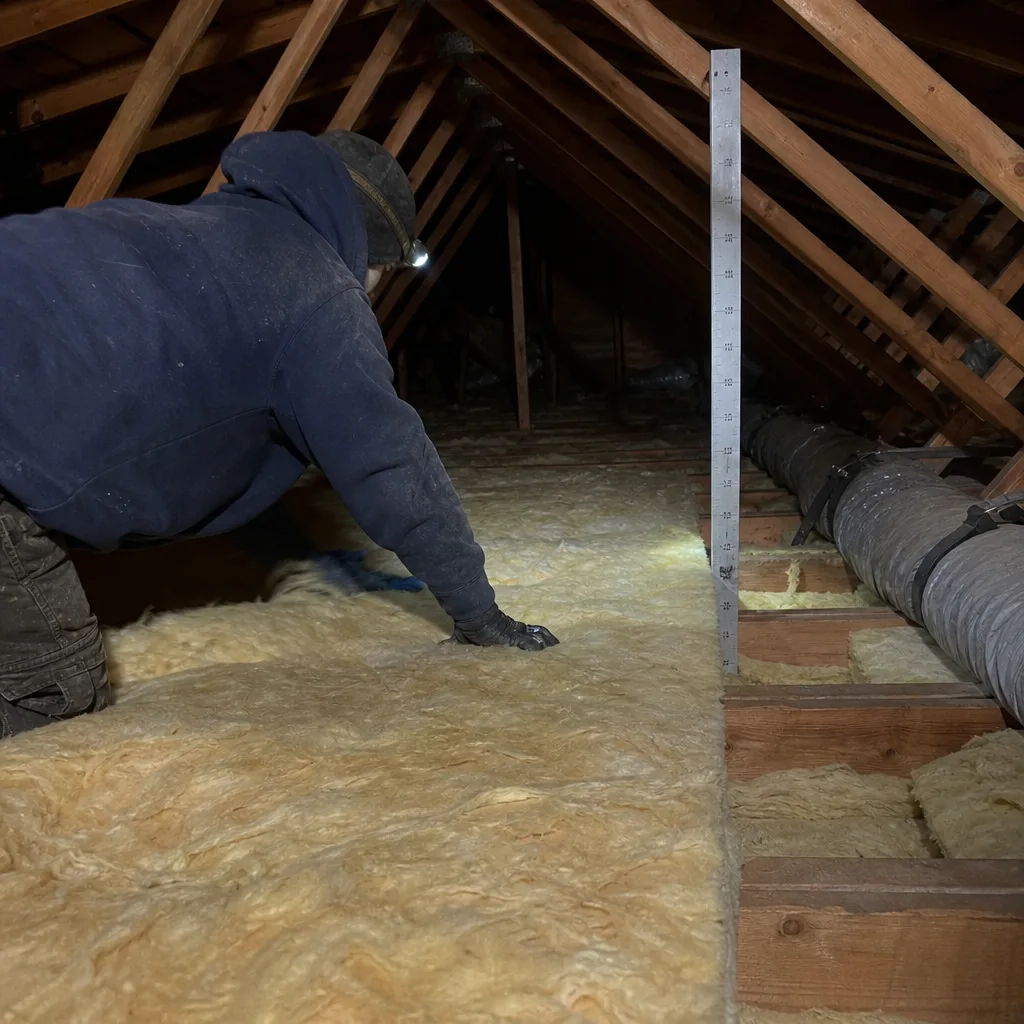
If you’ve gotten a quote from a contractor who works primarily in the San Fernando Valley or coastal LA and then applied that number to a Palmdale home, you may be working from the wrong baseline. A few things about this market specifically:
Heat gain at the roof deck is extreme. In July and August, roof surface temperatures in Palmdale regularly reach 160 to 180 degrees Fahrenheit. Spray foam applied to the underside of the roof deck – called an unvented attic assembly – has to handle that thermal load continuously. The foam thickness and R-value needed to keep attic temperatures near conditioned space temperatures under those conditions is higher than what’s required in a 72-degree coastal climate. Bids that don’t account for local peak load are often underbidding on thickness.
Radiant barriers interact with foam decisions. Many Palmdale homeowners have or are considering a radiant barrier – a reflective foil layer that blocks radiant heat transfer from the roof deck before it reaches the attic floor. When a radiant barrier is already in place (or is being added alongside foam), the total thermal performance math changes. The radiant barrier handles the radiation pathway; the foam handles the conduction pathway. Getting that combination right is part of what a blower-door test and energy audit document before we write a scope.
Permitting requirements in LA County. Spray foam in an unvented attic assembly in Los Angeles County may require a building permit, depending on scope and whether the work is part of a broader remodel. Wes Okafor’s team pulls every required permit before work starts – that’s built into the written scope, not a surprise after the fact.
Older homes in the 93550 and 93551 zip codes. Homes built in the early to mid-1980s in the original Palmdale tract developments often have attics that were insulated once and never revisited. That original fiberglass has lost a meaningful portion of its rated R-value through settling and may be harboring rodent damage. We see this regularly in homes near the Palmdale Civic Center and along 10th Street East – the inspection photos tell the story before we write a number.
How to Save on Spray Foam Insulation in Palmdale
There are a few approaches that actually reduce your net cost without cutting into the quality of the installation.
- Bundle air sealing with your foam job. If you’re already paying for labor and equipment setup, adding the attic air-sealing step at the same visit is significantly cheaper than scheduling it separately. The crew is already in the attic with the equipment staged. This is also how the work should be sequenced – air sealing first, foam second – so bundling is the right call on both cost and performance grounds.
- Check for California utility rebates. Southern California Gas Company and Southern California Edison both run rebate programs for insulation upgrades that meet Title 24 minimums. The specific dollar amounts and program availability shift year to year, but Palmdale homeowners have historically been eligible for rebates in the $200 to $600 range for qualifying attic insulation projects. Ask for the current program details when you request your estimate.
- Ask about the federal energy-efficiency tax credit. Under current IRS rules (Section 25C), homeowners can claim a credit of up to 30 percent of insulation and air-sealing costs, capped at $1,200 per year. That’s a real number that changes your out-of-pocket cost on a $3,500 foam job by over $1,000. Your tax preparer can confirm eligibility based on your specific return.
- Get a second opinion on any written estimate. Envelope Insulation Co. offers a free second opinion on any written quote – bring us a competing bid and we’ll read it with you. We’re not looking to match a number; we’re looking at scope. Low bids often leave out air sealing, skip the required fire-thermal barrier, or underspecify foam thickness. Understanding what a bid includes is how you compare correctly.
- Don’t skip the inspection. A free pre-job inspection – which documents what’s in your attic now, what’s in the way, and what the access situation looks like – prevents the scenario where a crew arrives, finds a problem the original quote didn’t account for, and charges you extra on the spot. Every Envelope Insulation Co. job starts with that inspection and a written price before any work starts. That written price is Haven Standard Clause 1: a flat price, a written scope, and a written warranty before anyone lifts a tool.
- Consider phased work if budget is a constraint. Doing the air sealing and critical zones first (rim joists, top plates, can lights) and adding full-coverage foam in a second phase is a legitimate approach. The first phase often delivers the largest portion of the performance improvement for a fraction of the full-project cost. A blower-door test after phase one documents exactly what you got – so you’re not guessing about whether the work moved the needle.
For a written estimate specific to your home’s square footage, attic configuration, and current insulation condition, call (661) 403-4467. The estimate is free, the price is in writing, and no work starts until you’ve seen and signed the scope.
What You Get When You Hire Envelope Insulation Co. in Palmdale
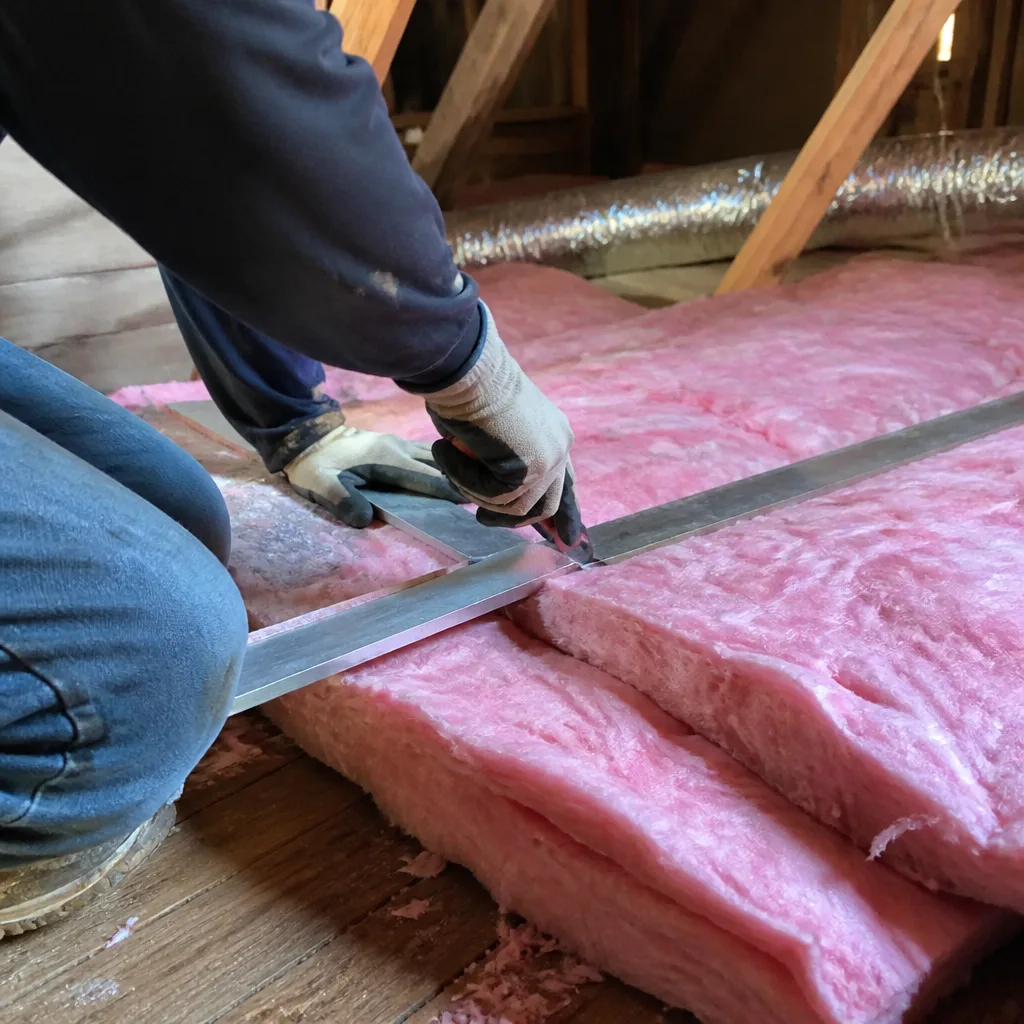
It’s worth being specific here rather than describing how we feel about our work.
Every Palmdale job led by Wes Okafor starts with a documented inspection – photos taken, attic conditions recorded, existing insulation measured, penetrations and air leak sources noted. That documentation becomes part of your written scope, so you know exactly what we found before we ask you to approve anything.
Air sealing happens before insulation. Always. We seal top plates, can-light penetrations, plumbing chases, and attic hatch perimeters before a spray rig is staged. On applicable jobs, we run a blower-door test – a pressurization measurement that produces a single number (expressed in CFM50, cubic feet per minute at 50 pascals) showing how much air the building envelope is losing. We run it before sealing and after, and we publish both numbers in your job record. The before-and-after numbers are how you verify that the air-sealing step actually worked – not our word for it, a measurement.
You leave with a Documented Photo Record of the completed installation, the blower-door readings if applicable, and a written warranty under the 365-Day Done Right Promise. If anything isn’t right within the first year, we make it right – that’s in writing before we start, not offered after the fact if you complain.
Envelope Insulation Co. has been independently owned and operated under The Haven Standard since 2016, with more than 9,000 homes sealed and insulated in that time – every one with a written price before work started and a documented record when the crew left. Our Spray Foam Insulation in Palmdale service page covers the full scope of what we do and how we do it. For a broader look at our full building-envelope service line, the home page has the complete picture.
FAQs – Spray Foam Insulation Cost in Palmdale
How much does spray foam insulation cost per square foot in Palmdale, CA?
Installed closed-cell spray foam in Palmdale runs $1.00 to $1.50 per board foot (a board foot is one square foot at one inch thick), or roughly $2.00 to $3.00 per square foot for a typical two-inch application. Open-cell foam runs $0.44 to $0.65 per board foot installed. Total project cost varies based on area, thickness, and access conditions. For a number specific to your home, call (661) 403-4467 – the estimate is free and the price is in writing before any work starts.
Is spray foam insulation worth it in Palmdale’s climate?
For most Palmdale homes, yes – and the math is straightforward. Palmdale sits in California Climate Zone 14, where summer cooling loads are among the highest in the state and roof-deck temperatures routinely exceed 160 degrees Fahrenheit. Closed-cell spray foam applied to the underside of the roof deck creates an unvented attic assembly that keeps attic temperatures far closer to conditioned-space temperatures than a vented attic with fiberglass batt insulation. Homeowners who’ve had before-and-after blower-door tests done have seen air leakage reduced by 40 to 60 percent in older Palmdale tract homes – that’s the number that shows up in lower utility bills, not a claim about how much you’ll save.
How long does spray foam insulation last in Palmdale?
Properly installed closed-cell spray foam has an expected service life of 80+ years with no maintenance required. It doesn’t settle, compress, or lose R-value over time the way fiberglass batts do. The critical word is “properly installed” – foam applied at incorrect temperatures, wrong mix ratios, or over unsealed air gaps can delaminate, shrink, or off-gas. Manufacturer warranties (from producers like Icynene and Demilec) typically cover materials for 20 years; our 365-Day Done Right Promise covers the installation for the first year, in writing, from day one.
Can you spray foam over existing insulation in a Palmdale attic?
Sometimes yes, sometimes no – and the difference matters. If the existing insulation is in good condition, dry, and not contaminated by rodents or mold, closed-cell foam can be applied over it in certain assemblies. But if the existing insulation has been disturbed, compressed, or moisture-damaged (common in Palmdale homes with older tile roofs that have had any leak history), spraying over it seals the problem in rather than fixing it. The inspection step documents what’s there before we write a price. Insulation removal, when needed, is quoted as a separate line item – typically $0.50 to $1.10 per square foot for a standard Palmdale attic.
Do I need a permit for spray foam insulation in Palmdale?
It depends on scope. In Los Angeles County, creating an unvented attic assembly using spray foam at the roof deck typically does require a building permit, because it changes the way the attic space is classified under California Building Code. Spot applications – sealing rim joists, top plates, or can-light penetrations without changing the assembly type – generally don’t require a permit, but that determination is made by the local building department, not by us. Wes Okafor’s team handles permit research and pulls all required permits before work starts; that’s included in the written scope, not added later.
What’s the difference in cost between open-cell and closed-cell spray foam?
Open-cell foam costs roughly $0.44 to $0.65 per board foot installed, versus $1.00 to $1.50 per board foot for closed-cell. The gap sounds large, but it narrows significantly once you price both options to the same target R-value. To hit R-49 in a Palmdale attic rafter bay, closed-cell needs about 7.5 inches while open-cell needs more than 13 – which is often not physically possible given rafter depth. In most Palmdale applications, closed-cell is both the more practical and the better-performing choice. If open-cell is the right call for your specific assembly, we’ll say so in writing and explain why.
Key Takeaways
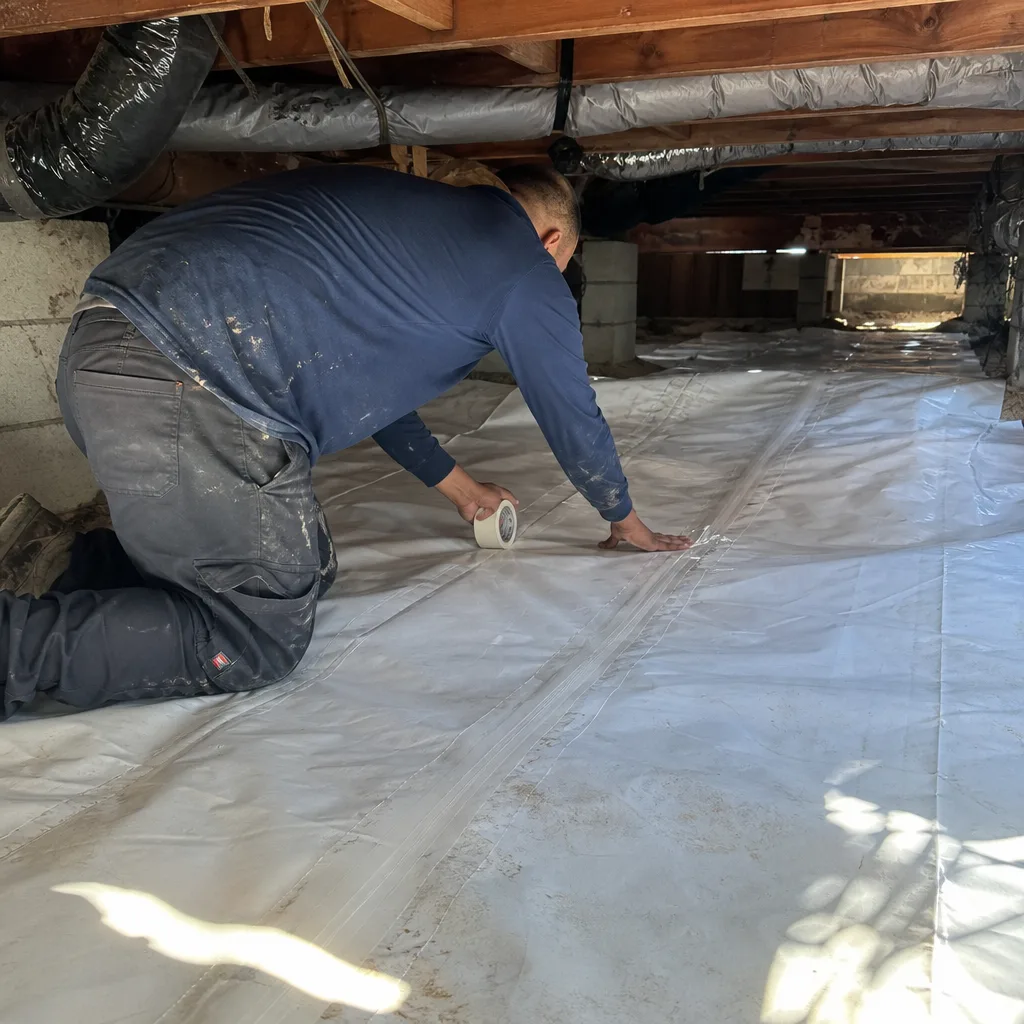
- Spray foam insulation in Palmdale runs $1,200 to $12,000+ depending on area, foam type, and scope – most single-zone residential jobs fall between $2,200 and $6,800.
- Closed-cell foam is usually the correct choice for Palmdale’s Climate Zone 14 heat loads and vapor conditions.
- Air sealing has to happen before foam is applied – not after, not skipped. It’s not an upsell; it’s the prerequisite.
- LA County code requires a fire-thermal barrier over closed-cell foam in occupied spaces – that line item should appear in any honest written scope.
- Federal tax credits (up to 30%, capped at $1,200/year) and California utility rebates can meaningfully reduce out-of-pocket cost.
- Before-and-after blower-door numbers are the only objective way to verify that air sealing worked – ask for them as part of the job record.
- Every Envelope Insulation Co. job starts with a written price and ends with a Documented Photo Record. The 365-Day Done Right Promise is in writing before work starts.
Pricing reflects the Palmdale market as of 2026. Topside Attic Insulation Palmdale offers free estimates – call (661) 403-4467.
Written by Wes Okafor, Owner at Envelope Insulation Co., serving Palmdale, CA since 2016.
What Our Customers Say
"They air-sealed the attic floor before insulating and showed me the blower-door number before and after. The upstairs is finally the same temperature as downstairs."
- Marisol D."The winter gas bill dropped by about a third. They had estimated a quarter, so they under-promised."
- Genevieve R."Two other companies quoted to blow more insulation on top of what was there. These were the only ones who said the existing material had to come out first, and explained why."
- Clifford E.