
How Much Does Insulation Removal & Replacement Cost in Palmdale?
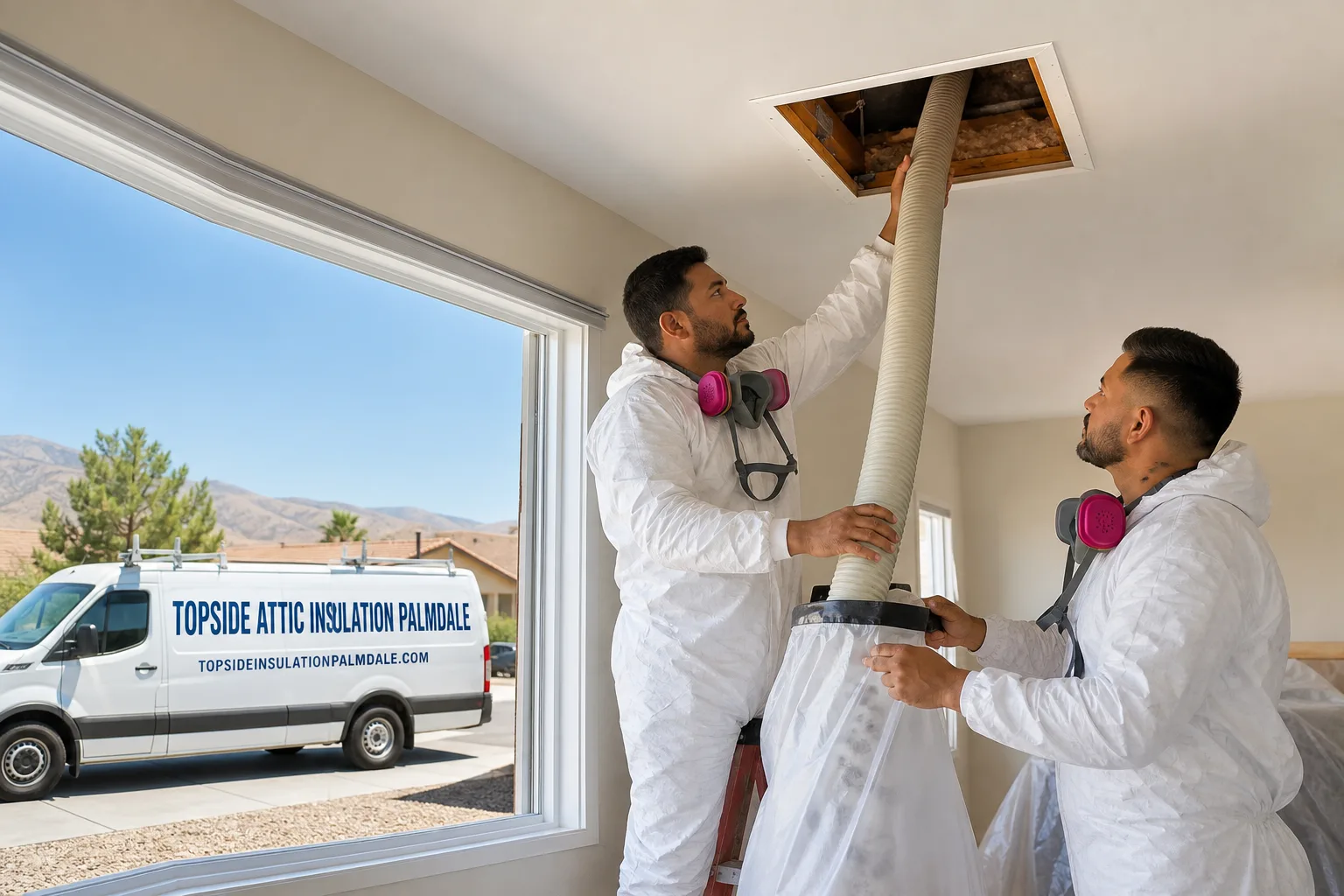
Insulation removal and replacement in Palmdale, CA typically runs between $1,800 and $4,500 for a standard attic in a 1,500-2,500 sq ft home, with most jobs landing around $2,800-$3,200 once removal, disposal, air sealing, and new insulation are factored in. Homes in older Palmdale neighborhoods like Rancho Vista or West Palmdale often come in at the higher end of that range because of deteriorated batt insulation, rodent contamination, or decades of settled blown-in material that requires full vacuum extraction. We provide a written price before any work starts – no exceptions, no “we’ll know more once we’re up there” adjustments after the fact.
Insulation Removal & Replacement Cost Breakdown (2026)
Most insulation projects involve several distinct phases, and each one has its own cost driver. Breaking it down by line item gives you a clearer picture than a single number ever could.
| Scope of Work | Typical Cost Range (Palmdale, 2026) | Notes |
|---|---|---|
| Attic insulation removal only (vacuum extraction) | $600 - $1,200 | Per 1,000 sq ft of attic floor. Contaminated or compacted material adds time. |
| Haul-away and disposal | $150 - $350 | Rodent-contaminated material requires sealed bag disposal – adds cost. |
| Attic cleaning and sanitizing | $300 - $700 | Required after rodent activity. Includes enzyme treatment of the attic deck. |
| Air sealing (top plates, can lights, penetrations) | $400 - $950 | Done before any new insulation is installed – always. This is not optional. |
| New blown-in fiberglass or cellulose (R-38 to R-60) | $800 - $1,800 | R-60 is the Title 24 target for Palmdale’s Climate Zone 14. |
| Radiant barrier installation (optional add) | $500 - $1,200 | Worth serious consideration in Palmdale, where summer attic temps hit 150°F+. |
| Batt replacement (walls or floors, if included) | $900 - $2,500 | Rarely bundled unless moisture or pest damage extends beyond the attic. |
| Full attic removal + air seal + re-insulation (complete project) | $1,800 - $4,500 | Most common package. Homes over 2,500 sq ft can exceed this range. |
What pushes a project toward $4,500 or beyond? Attic size is the biggest single factor – a 3,200 sq ft home in Quartz Hill will simply take more material and more labor hours than a 1,400 sq ft house near Sierra Highway. Severe rodent contamination is the other common cost multiplier in Palmdale’s high desert environment; when roof rats or pack rats have nested in the insulation, the material can’t simply be removed – the attic deck needs enzyme treatment and a thorough inspection before anything new goes in. We document all of that with photos, included on every visit under the Haven Standard, so you can see exactly what the crew found and what was done before they left.
What holds cost down: homes that had blown-in fiberglass installed more recently (post-2010), single-story floor plans with straightforward attic access, and attics with no pest activity. In those cases, removal is faster, disposal volume is lower, and the air-sealing scope is usually simpler. We’ve completed removal-and-replacement projects in the Palmdale area for as little as $1,800 on compact, clean attics with no contamination.
What Affects Insulation Removal & Replacement Pricing in Palmdale
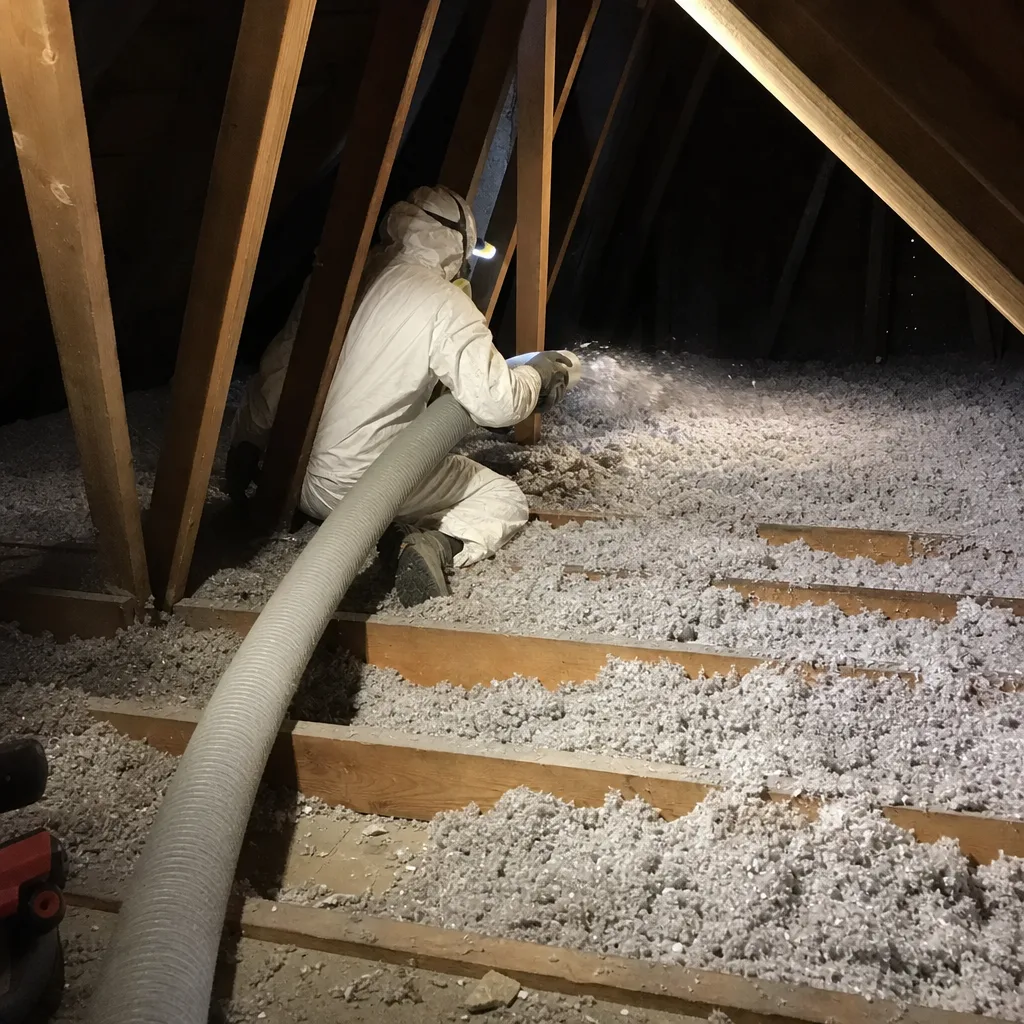
Six variables move the number more than anything else on a Palmdale project. Understanding each one helps you read a competing quote intelligently – or spot when something important has been left out of the scope.
- Attic square footage and access: Palmdale homes range from 900 sq ft condos near 10th Street West to 4,000+ sq ft homes in The Country Club area. Every additional 500 sq ft of attic floor adds roughly $300-$500 in removal and reinstallation labor. Attics with only one small hatch, or with knee walls and low clearance, cost more to work in because extraction takes longer.
- Degree of contamination: Rodent activity is common in Palmdale’s high-desert fringe neighborhoods – particularly in homes backing up to open scrub land near the Antelope Valley Freeway corridor or the edges of Lake Los Angeles. Contaminated insulation must be removed in sealed HEPA-vac bags, the attic deck treated, and entry points identified and sealed. This can add $400-$900 to a base removal quote.
- Existing insulation type and depth: Old cellulose compacts over time and becomes dense and heavy – it’s slower to extract than settled fiberglass batts. Wet or moisture-damaged insulation also adds extraction time and sometimes requires attic deck drying before new material goes in. In Palmdale, moisture damage is less common than in coastal markets, but it does show up in homes with swamp cooler leaks or aging HVAC condensate lines that have dripped into the attic.
- Air sealing scope: Under the Haven Standard, Envelope Insulation Co. seals before it insulates – always. That means every job includes a blower-door assessment and top-plate sealing, can-light air sealing, and penetration work before new insulation is blown in. The scope of that air-sealing work depends on how leaky the attic floor is. A 1970s track home near 47th Street East may need two to three times the sealing labor of a 2005 build in Rancho Vista Estates.
- Target R-value and material choice: California’s Title 24 energy code calls for R-60 in Climate Zone 14, which covers all of Palmdale. Hitting R-60 with blown-in fiberglass from GreenFiber or Johns Manville costs less per square foot than achieving the same R-value with Rockwool or spray foam. If the existing attic has ductwork resting on the floor joists, achieving R-60 around and over those ducts adds material and time.
- Radiant barrier addition: Palmdale’s summer highs regularly push 105-112°F. Attic surface temperatures can reach 145-155°F on a July afternoon. A radiant barrier – a reflective foil product stapled to the underside of the roof decking before or after insulation is installed – blocks radiant heat transfer and meaningfully reduces attic temperatures. It’s an add-on we see requested on roughly 60% of Palmdale replacement jobs, and it adds $500-$1,200 depending on attic size and pitch.
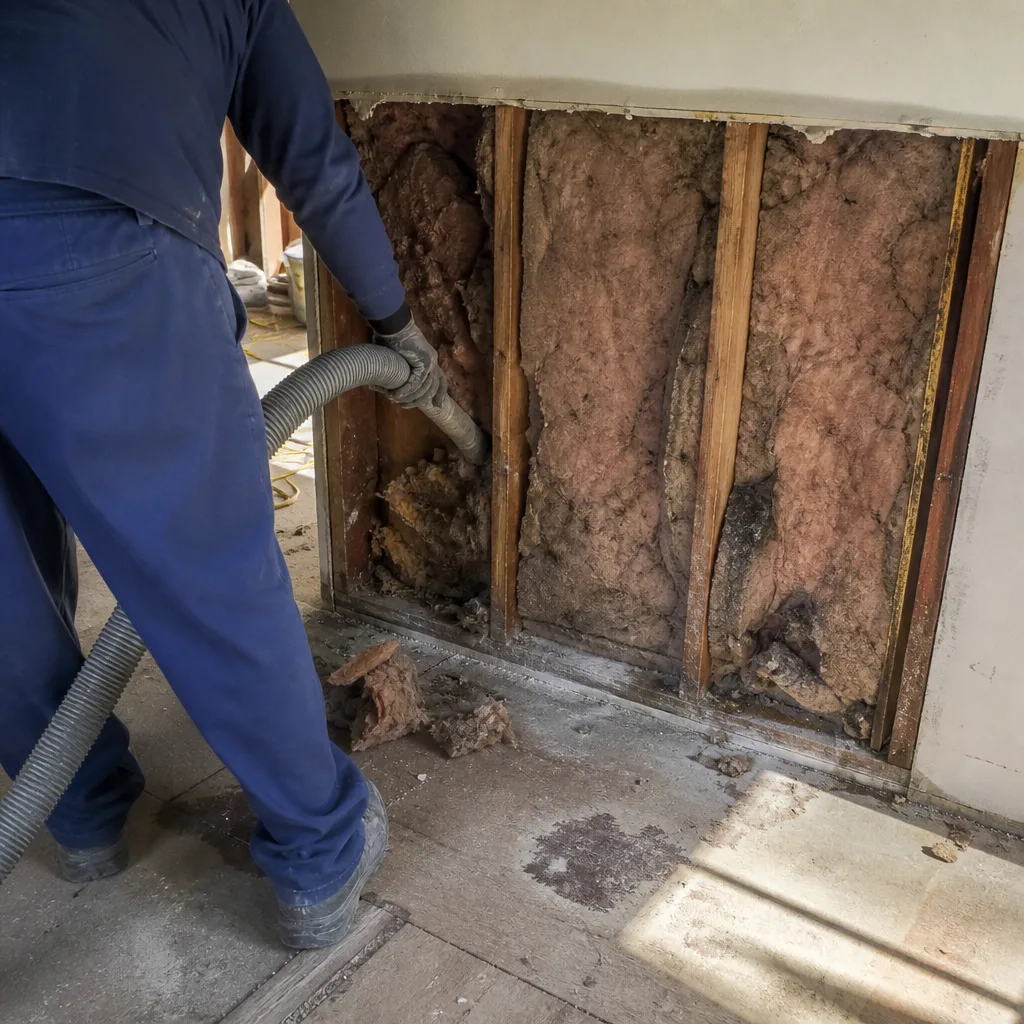 Before
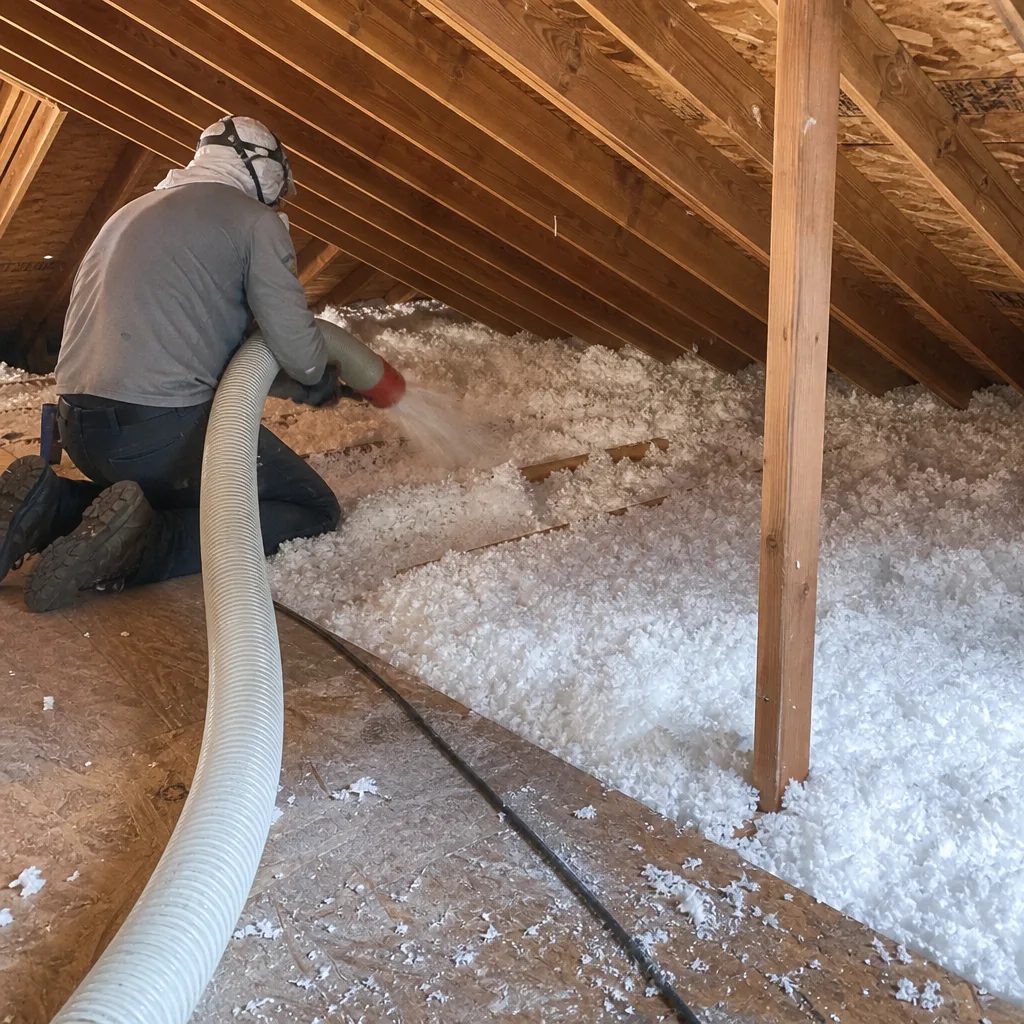 After
AfterWhy Palmdale’s Climate Zone 14 Matters for Your Insulation Budget
Palmdale sits in California’s Climate Zone 14 – a classification that reflects the Antelope Valley’s extreme temperature swings. Unlike the coastal communities in Zone 6 or the mild inland valleys in Zone 10, Zone 14 deals with triple-digit summer heat and overnight lows that drop into the 30s from November through February. That thermal stress is punishing on insulation. Batt insulation that settles or compresses loses R-value, and in Zone 14 that loss has a direct, measurable impact on cooling and heating bills.
The California Energy Commission requires R-60 in existing attics in Zone 14 when insulation is being replaced – that’s more than neighboring climate zones, and it adds material cost compared to what a homeowner in, say, Ventura County might pay. We bring that up not as a selling point but as a budget reality: if you get a quote that mentions R-30 or R-38 as the target in Palmdale, ask why it’s below code. You deserve to know.
California’s Building Energy Efficiency Standards also require a permit for certain insulation work, particularly when the scope involves spray foam or structural modifications. Our team is familiar with City of Palmdale and Los Angeles County permit requirements and will tell you upfront if your project falls into a permitted scope. That’s part of the written price – not a surprise at the end.
Local Data Point: What We See in Palmdale Attics
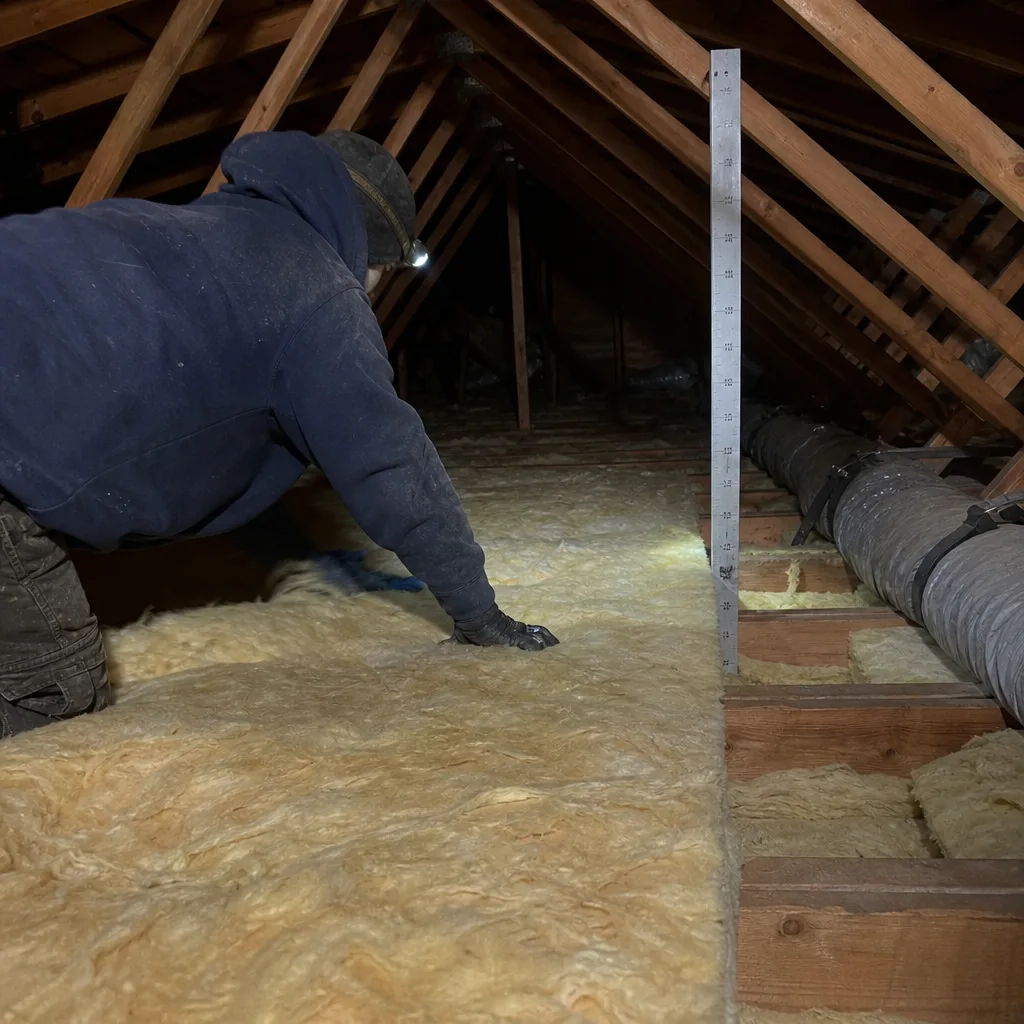
After working in Palmdale since 2016 and completing our Insulation Removal & Replacement services across more than 9,000 homes in the greater Antelope Valley and surrounding areas, a few patterns show up consistently in this market.
In West Palmdale and the neighborhoods south of Avenue P, a significant share of homes were built between 1975 and 1992 with R-11 or R-19 batt insulation. That material – often fiberglass batts laid between the joists without any air sealing at the top plates – has settled, shifted, and in many cases become a habitat for roof rats that enter through gaps around conduit and plumbing penetrations. When we run a blower-door test on these homes before touching anything, it’s common to see readings above 5,000 CFM50 – a figure that means the home is exchanging its entire air volume with the outside multiple times per hour. After removal, air sealing, and reinstallation to R-60, the same homes often test below 2,500 CFM50. That’s a real number, documented in writing, that you can compare to your utility bills over the following year.
In newer subdivisions like Anaverde and the developments along Rancho Vista Boulevard, the insulation is typically in better shape, but it still rarely meets R-60 unless the home was built after California’s 2016 Title 24 updates. Those projects usually involve a partial removal or a top-up, which costs less and takes less time.
How to Save on Insulation Removal & Replacement
There are real ways to reduce the cost of this project in Palmdale without cutting corners on what actually matters.
Apply for utility rebates before work begins. Southern California Edison offers rebates for qualifying insulation upgrades in Climate Zone 14 homes. The rebate amounts change annually, but in 2025 the program was offering up to $0.10-$0.20 per square foot for blown-in insulation meeting R-38 or higher. Depending on your attic size, that can offset $200-$600 of the project cost. Ask us to identify which rebates your project qualifies for – we’ll include that information in the written estimate.
Bundle air sealing with removal, not as a separate project. If air sealing is done at the same time as removal and replacement, the crew is already in the attic with equipment set up. Scheduling it separately means a second mobilization cost – usually $200-$400 in additional labor. Our process requires air sealing to happen before insulation anyway, so there’s no reason to split it across two visits.
Get a second opinion on any written estimate. We offer a Free Second Opinion on any written estimate from another contractor – no fee, no obligation. Bring us the document and we’ll read it with you and tell you what’s included, what’s missing, and how our price compares line by line. That’s Haven Standard practice, not a sales tactic.
Address rodent entry points at the same time. Paying to remove contaminated insulation and then skipping the pest exclusion work means you’ll be back here in three to five years doing it again. Identifying and sealing the entry points during the same project costs a fraction of what a second removal job runs. We document the entry points with photos during the initial inspection so you can see exactly what’s being sealed and where.
Consider timing. Palmdale insulation contractors – including us – tend to have lighter schedules in late winter (January through March), before the pre-summer rush of homeowners responding to high AC bills. Jobs booked in that window sometimes have shorter lead times and more scheduling flexibility, which doesn’t always reduce price but does mean faster project completion.
To get a written price specific to your home’s square footage, attic condition, and current insulation type, call (661) 403-4467. We don’t give ballpark numbers over the phone and then adjust on-site – the price you receive is the price you pay.
What You Receive When the Job Is Done
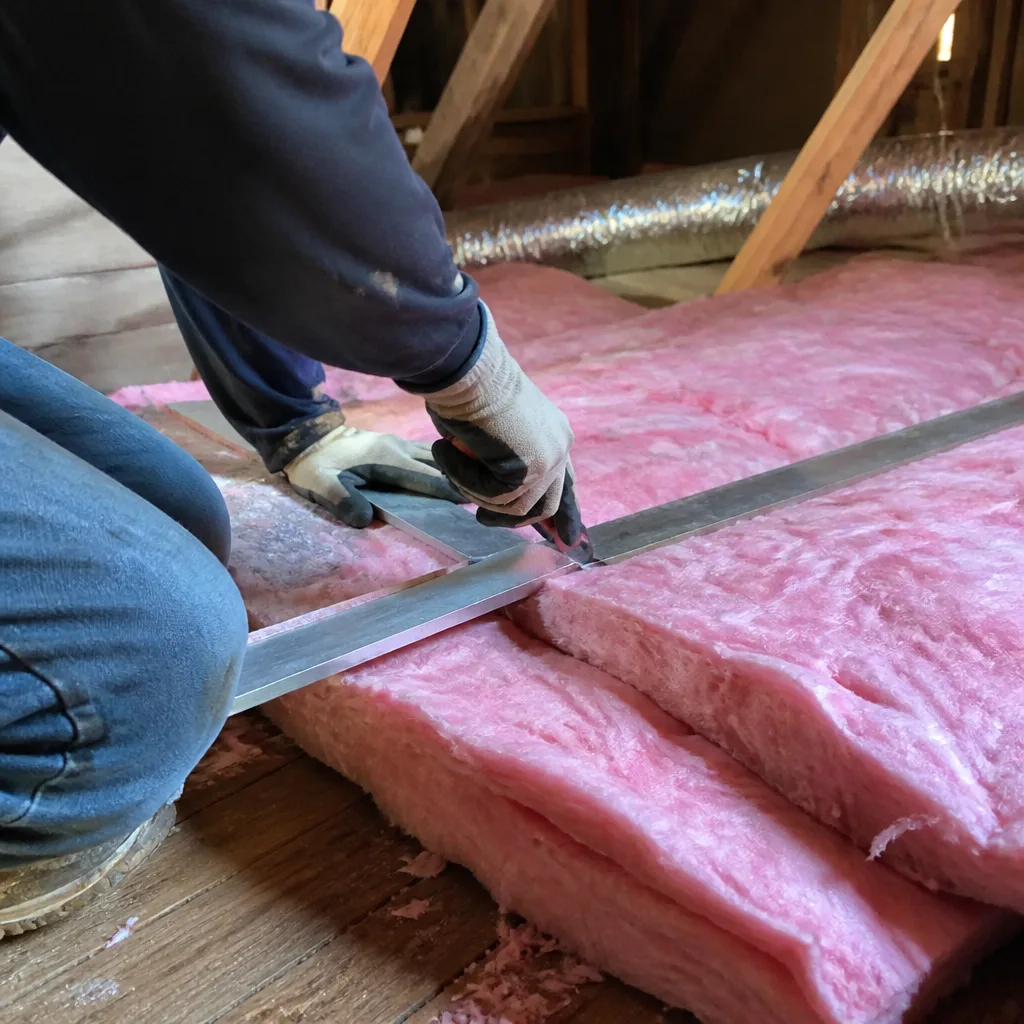
Every insulation removal and replacement project we complete in Palmdale closes with a documented record – not a handshake. Before the crew leaves, you receive a Documented Photo Record showing the attic before removal, after removal, after air sealing, and after reinstallation. On applicable projects, you also receive before-and-after blower-door readings – a pressurization measurement that shows, in a single figure, how much conditioned air the home was losing before the work versus after. That number is yours to keep, compare to future readings, and use when you sell the home.
The 365-Day Done Right Promise applies to every completed job. If anything we did isn’t right, we make it right within that year. The written warranty is delivered before anyone starts work – not after.
If you’d like to see what a full attic replacement project looks like from inspection through completion, our Insulation Removal & Replacement in Palmdale service page walks through the full process and explains how we approach air sealing as the first step, not an afterthought.
FAQs – Insulation Removal & Replacement Cost in Palmdale
How much does insulation removal cost in Palmdale, CA?
Insulation removal in Palmdale typically costs $600-$1,200 per 1,000 square feet of attic floor, including vacuum extraction and haul-away. A standard 1,500 sq ft attic with no contamination runs $900-$1,400 for removal alone. Rodent contamination adds $400-$900 to that baseline due to sealed-bag disposal requirements and attic sanitizing. For an exact number on your home, call (661) 403-4467 – we provide a written price before any work starts.
How much does insulation replacement cost in Palmdale?
Replacing attic insulation to California’s Title 24 target of R-60 in Palmdale’s Climate Zone 14 runs $800-$1,800 for blown-in fiberglass or cellulose in a 1,500-2,500 sq ft attic, not including removal. Combined removal and replacement on a typical Palmdale home costs $1,800-$4,500, with most complete projects landing around $2,800-$3,200. Homes over 2,500 sq ft or with radiant barrier additions will exceed that range. Call (661) 403-4467 for a written estimate specific to your square footage.
Is it worth replacing old insulation in a Palmdale home?
In most cases, yes – particularly in homes built before 1995 that still have original insulation. Palmdale’s Climate Zone 14 designation means the temperature differential between a summer attic and the living space below it is extreme. R-11 or R-19 insulation (common in 1970s and 1980s Palmdale builds) performs at a small fraction of the R-60 that current code requires. Replacing it reduces cooling loads measurably. Before-and-after blower-door readings on Palmdale jobs routinely show a 30-50% reduction in air leakage when removal is paired with proper air sealing – which translates directly to lower utility bills and more consistent indoor temperatures in homes that previously ran AC nearly around the clock in July and August.
Does insulation removal require a permit in Palmdale?
Standard blown-in attic insulation removal and replacement in Palmdale does not typically require a permit through the City of Palmdale or Los Angeles County Building and Safety. However, work involving spray foam insulation, structural changes, or projects tied to a larger permitted renovation may require inspection. We assess permit requirements during the initial inspection and include that information in your written price upfront – not as a surprise once work has started.
Can I just add insulation on top of old insulation instead of removing it?
Sometimes, but not always. Adding insulation on top of existing material is appropriate when the existing insulation is clean, dry, and at least partially effective – and when there’s no pest activity, no moisture damage, and no need to access the attic floor for air sealing. In Palmdale, homes with rodent contamination, settled wet cellulose, or significant air leakage through top plates need full removal first. Installing new blown-in material over a leaky, contaminated attic floor traps the problem underneath and doesn’t fix the air leakage. We assess both options during the initial inspection and show you the photos so the decision is based on what’s actually up there, not on which option costs more. Call (661) 403-4467 for an assessment.
How long does insulation removal and replacement take in Palmdale?
Most complete attic removal and replacement projects in Palmdale take one to two days. A 1,500-2,000 sq ft attic with no contamination and straightforward access is typically completed in a single day: removal and disposal in the morning, air sealing midday, blown-in installation in the afternoon. Larger attics, contaminated attics, or homes with complex layouts – multiple attic sections, low clearance, or extensive ductwork on the attic floor – may require a second day. You’ll know the timeline before we start, written in the scope.
Palmdale’s high-desert climate puts more thermal stress on attic insulation than most California markets, and the older housing stock in neighborhoods like West Palmdale, Rancho Vista, and the tracts near Antelope Valley College means a large share of homes in this city are running on insulation that was undersized when it was installed and has only degraded since. If you want to know exactly what replacing yours would cost – in writing, before any commitment – Wes Okafor and the team at Topside Attic Insulation Palmdale are here to give you that number.
We operate under the Haven Standard, which means a written price before any work starts, a Documented Photo Record when the crew leaves, and before-and-after blower-door readings on applicable jobs so you have documented evidence of what changed. You can learn more about what we do across the full building envelope on our home page.
Call (661) 403-4467 to schedule a free estimate. A live person answers – no voicemail, no callback window measured in business days. Or if you prefer, request an estimate by text and we’ll respond with a time to come out. The written price comes before any work starts, every time.
- Free estimates, in writing, before any work starts
- Air sealing completed before new insulation is installed – always
- Before-and-after blower-door readings on applicable jobs
- Documented Photo Record included on every visit
- 365-Day Done Right Promise on all completed work
- Materials from Owens Corning, Johns Manville, Knauf, Rockwool, CertainTeed, GreenFiber, and others – no proprietary product lock-in
- Background-checked, uniformed technicians
Written by Wes Okafor, Owner at Topside Attic Insulation Palmdale, serving Palmdale, CA since 2016.
Pricing reflects the Palmdale market as of 2026. Topside Attic Insulation Palmdale offers free estimates – call (661) 403-4467.
What Our Customers Say
"They air-sealed the attic floor before insulating and showed me the blower-door number before and after. The upstairs is finally the same temperature as downstairs."
- Marisol D."The winter gas bill dropped by about a third. They had estimated a quarter, so they under-promised."
- Genevieve R."Two other companies quoted to blow more insulation on top of what was there. These were the only ones who said the existing material had to come out first, and explained why."
- Clifford E.