
Rockwool Radiant Barrier Installation: The Palmdale Owner’s Guide
Rockwool radiant barrier installation in Palmdale typically runs $2,400-$4,800 for a standard 1,500-2,500 sq ft attic, and we stock the full Rockwool COMFORTBATT and AFB evo product lines on our trucks for same-day starts. Most Palmdale homeowners realize something’s wrong when their upstairs rooms won’t cool below 78°F by 4 p.m. in July, or when their AC runs continuously through the afternoon while the attic thermometer reads 135°F or higher. The radiant barrier - usually a reflective foil layer paired with Rockwool stone wool batts - has either degraded, was installed without proper air sealing, or was never specified correctly for our high-solar Zone 3/4 edge climate to begin with.
Which Rockwool Models This Applies To
We work with three Rockwool product families that accept radiant barrier pairing: COMFORTBATT for open attic floors and walls, AFB evo for interior fire-stopping assemblies that sometimes get incorrectly spec’d for attic use, and TOPROCK for commercial flat roofs that bleed into some Rancho Vista newer builds with conditioned attic schemes. The critical identifier is the density stamp on the batt face - 3.5 lbs/ft³ for COMFORTBATT R-30, 4.0 lbs/ft³ for R-38. If your existing insulation shows crumbling edges, black discoloration from dust infiltration, or gaps where the batts have slid off the top plates, you’re likely looking at a failed installation, not a failed product.
Rockwool’s stone wool is hydrophobic and won’t mold, but it will channel air if the deck above it isn’t sealed. That’s the compatibility gotcha we see most in Palmdale: homeowners buy the right R-value for the wrong assembly. OEM Rockwool radiant barrier systems use a specific perforated foil facing rated for 0.03 emissivity; aftermarket equivalents exist from Johns Manville and CertainTeed at lower cost, but they often skip the perforation and trap moisture against the roof deck during our rare winter rains. We stock both, but we’ll show you the permeance rating difference before we install either.
Signs Your Rockwool Radiant Barrier Installation Is Failing
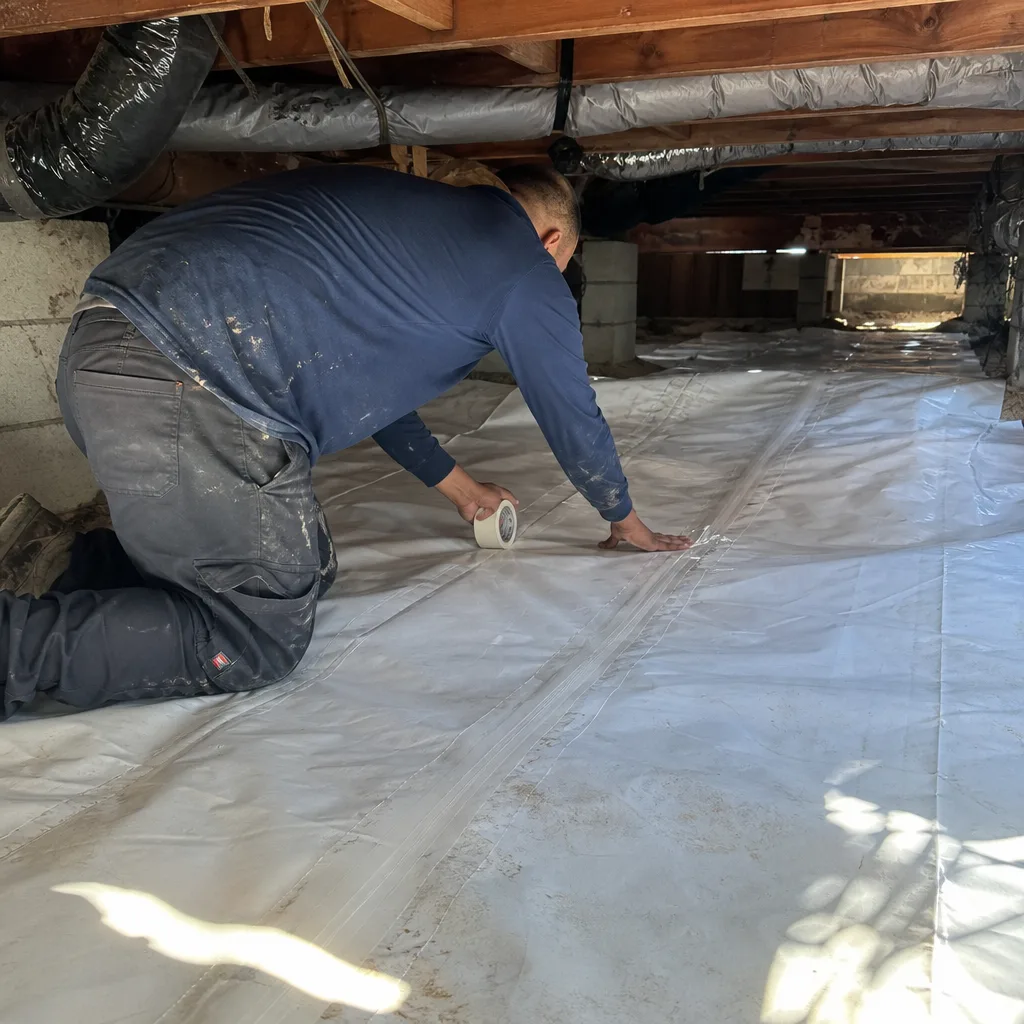
- Upstairs rooms lag 8-12°F behind the thermostat setpoint by late afternoon. This usually means the radiant barrier has separated from the batt face or was installed with gaps at the eaves, letting roof deck heat radiate directly into the conditioned space below. In Palmdale’s 280+ days of annual sun exposure, a 5% gap in coverage can reduce system effectiveness by 30%.
- AC compressor runs 14+ hours daily in July-August with no cycling. The system is fighting a thermal load that should be rejected at the roof plane. We measure this with a blower-door test - a pressurization reading that shows, in one number, how much conditioned air your building envelope is losing - and often find attic floor leakage above 3,000 CFM50 compounding the radiant barrier failure.
- Batt edges visible at the attic hatch are dusty, compressed, or discolored black. Rockwool stone wool doesn’t degrade from heat, but it will filter airborne dust for years when bypass air moves through it. Black faces mean air is moving through the material, not across it - a sure sign the air sealing was skipped before insulation went in.
- Original installation was 2018-2021 with no blower-door documentation. That vintage in Palmdale coincides with a wave of quick-turn insulation jobs that met Title 24 minimums on paper but failed in practice. We’ve pulled R-30 batts labeled “R-38 equivalent with radiant barrier” that had no foil facing at all, just kraft paper.
- Utility bills spike $80-$150 in July versus May, with identical thermostat settings. The thermal gradient across your ceiling assembly has collapsed. A properly installed Rockwool radiant barrier system in Palmdale should keep attic floor surface temperatures within 15°F of ambient indoor air; we commonly measure 40°F+ differentials on failed jobs.
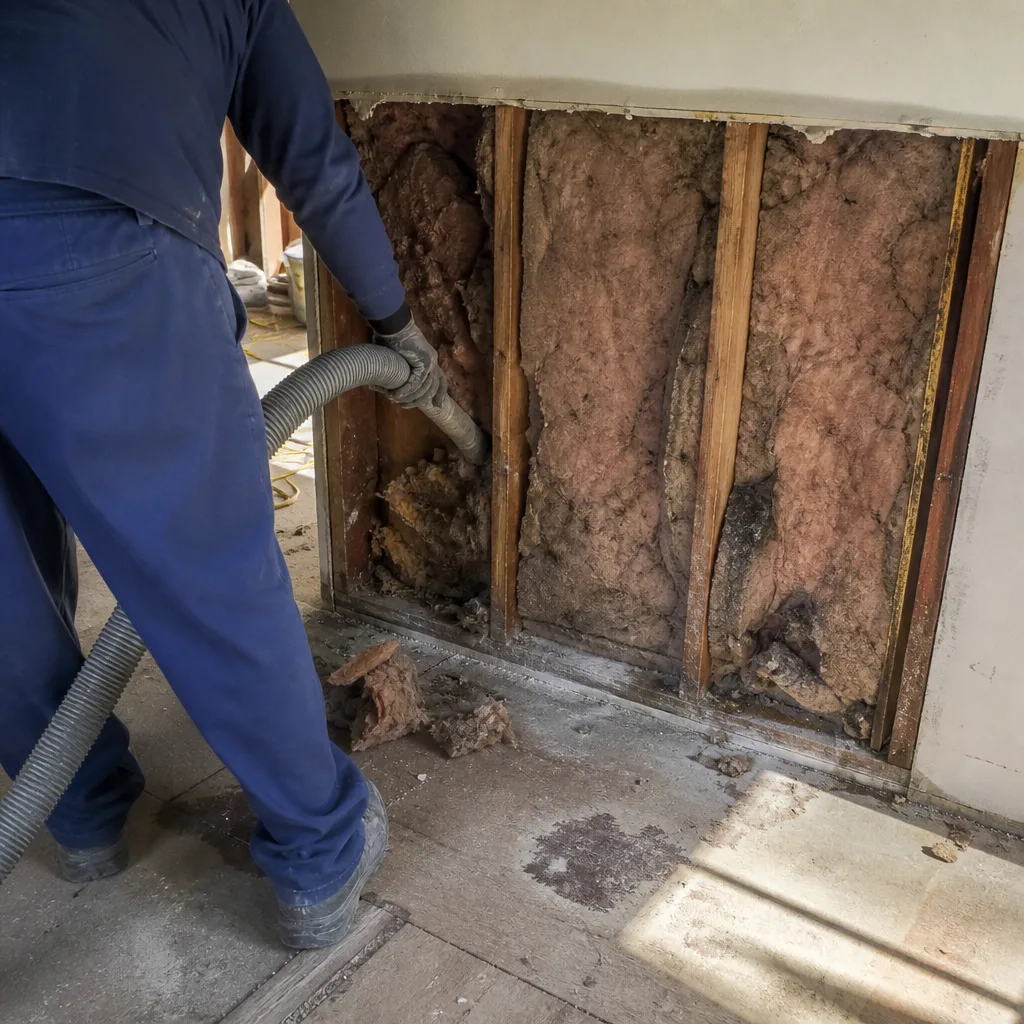 Before
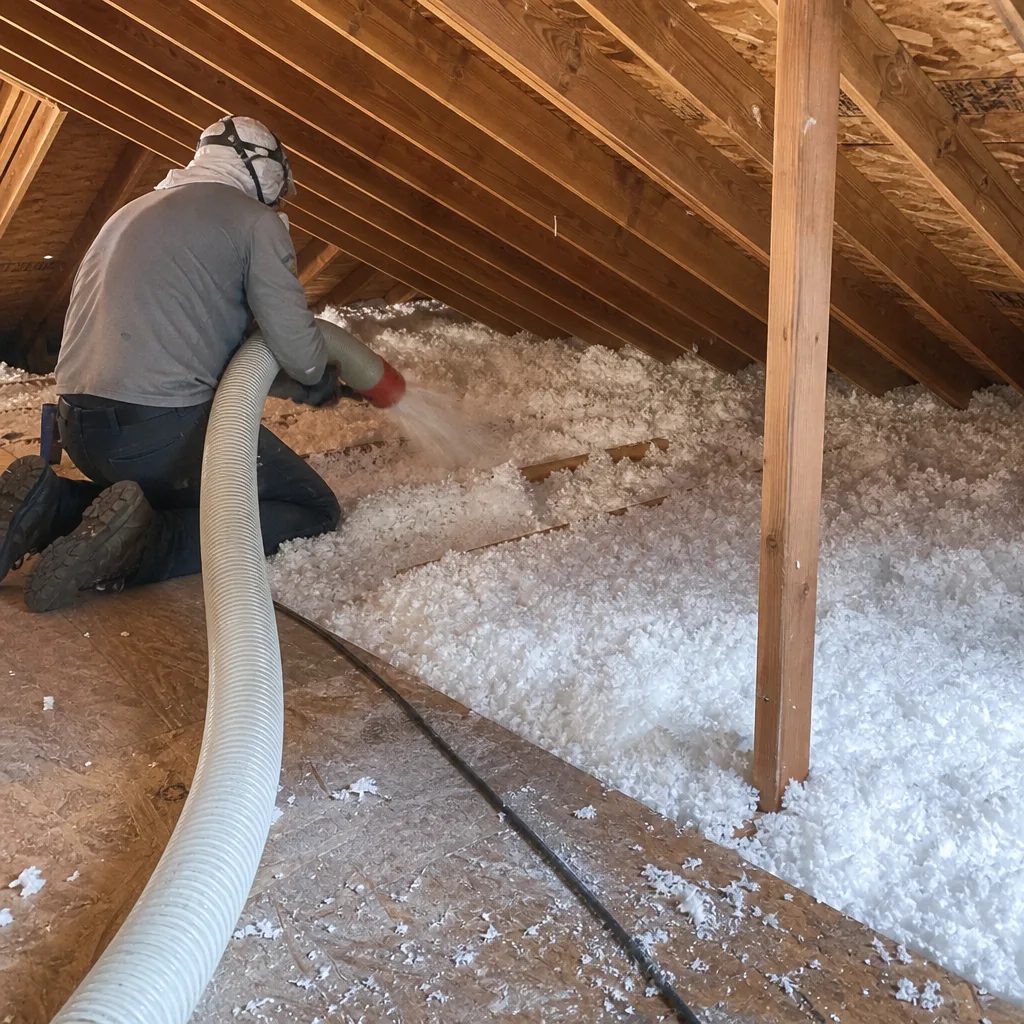 After
AfterReplacement Cost & What’s Included
| Component | Price Range (Palmdale) |
|---|---|
| Rockwool COMFORTBATT R-30 with perforated radiant barrier facing | $1.80-$2.40/sq ft installed |
| Rockwool COMFORTBATT R-38 with perforated radiant barrier facing | $2.10-$2.80/sq ft installed |
| Attic floor air sealing (top plates, can lights, penetrations) | $450-$850 (required before insulation) |
| Existing insulation removal and disposal | $0.90-$1.30/sq ft |
| Blower-door test with printed pre/post report | Included on every job |
Most Palmdale homes in the 1,800-2,200 sq ft range fall between $2,400 and $4,800 total. The spread depends on three things: whether we’re removing failed existing material, how many can lights and top-plate gaps need sealing first, and whether the roof deck geometry allows full coverage or requires custom cutting around trusses and HVAC platforms. We don’t quote by phone without photos or a site visit - but we do provide a Written Price Before Any Work Starts, always, and that price includes the Documented Photo Record you’ll receive at completion. Our 365-Day Done Right Promise covers the full assembly, not just the material.
DIY or Call Us?
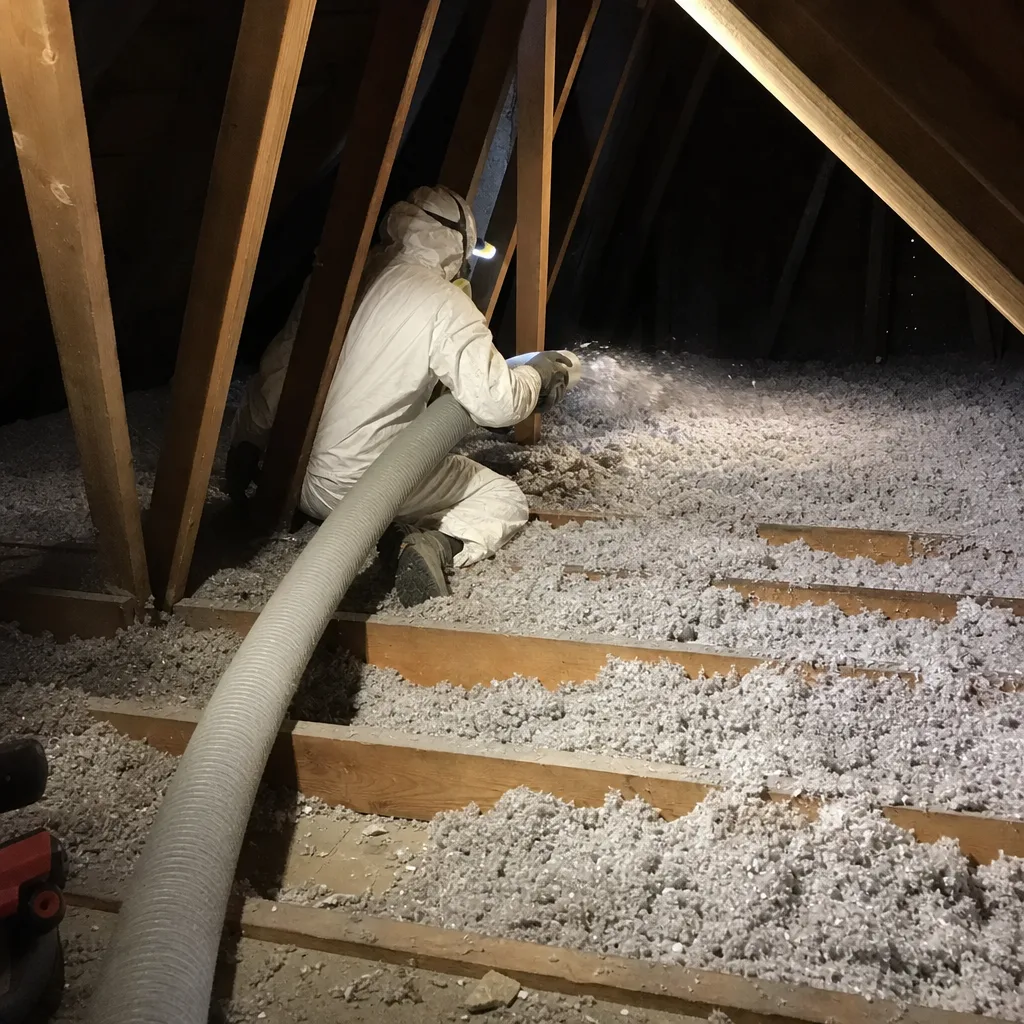
You can safely check three things from the attic hatch with a flashlight: whether the batt facing is foil or kraft paper, whether gaps exist at the eaves where insulation meets the top plate, and whether the insulation depth matches the labeled R-value (R-30 Rockwool is 7.25 inches, R-38 is 9.25 inches). Write down what you see. That’s useful information.
What you shouldn’t do: walk a truss-bottom-chord attic without proper plank bridging, disturb existing insulation if you suspect rodent activity, or attempt to install new batts over an unsealed attic floor. The radiant barrier only works when the air below it is conditioned and still. Blow insulation over a leaky ceiling, and you’ve built a filter, not a thermal boundary. Wes Okafor puts it this way: “Seal the leaks first. The insulation is just the last step.” Call (661) 403-4467 and we’ll run the blower-door test, show you the CFM50 number, and give you a written scope with the price before anyone lifts a tool.
FAQs
Properly installed, the stone wool itself is good for 50+ years; the foil facing typically shows degradation at 15-20 years in our high-UV climate, though we’ve seen premature failure at 8 years when installers used non-perforated facing that trapped moisture. The real lifespan variable is the air sealing quality beneath it - leaks undermine the system regardless of material age. Call (661) 403-4467 for a free assessment of your existing assembly.
Partial repairs are possible if the Rockwool batts are still full-depth and properly positioned, but the foil facing isn’t field-repairable - once delaminated or torn, the emissivity performance is gone. We more often find that “repair” requests reveal underlying air sealing failures that require full attic floor work to correct. We offer Free Second Opinions on any written estimate if you want a documented comparison.
Most Palmdale residential jobs complete in one to two days: half a day for air sealing and blower-door verification, half a day for Rockwool installation with radiant barrier facing, plus documentation. Homes with complex HVAC platforms or cathedral ceiling transitions may run into a third day. We don’t charge by the hour - your written price is your price.
We stock COMFORTBATT R-30 and R-38 with factory-applied radiant barrier facing on every truck, plus the AFB evo line for fire-rated assemblies. No order delays, no “we’ll come back next week.” Same-day starts are standard when you approve the written scope. Call (661) 403-4467 to schedule - a live person answers 24/7.
Topside Attic Insulation Palmdale is an independent service provider, not affiliated with Rockwool. We also stock and install Reflectix radiant barrier systems where they better match the assembly requirements.
Written by Wes Okafor, Owner, Topside Attic Insulation Palmdale at Topside Attic Insulation Palmdale, serving Palmdale and nearby areas.