
Owens Corning Spray Foam Insulation in Palmdale: What to Know First
We provide independent Owens Corning spray foam insulation in Palmdale, typically completing open-cell and closed-cell jobs in one to two days with a written price locked before any work starts. Most Palmdale homes in the Rancho Vista corridor and Anaverde neighborhoods run between $3,800 and $7,200 for full attic spray foam, depending on whether we’re treating the roof deck or the floor and what air-sealing prep the top plates need. We are not affiliated with or authorized by Owens Corning; we are an independent Owens Corning service provider who sources their materials alongside Johns Manville, Knauf, and others so you are not locked into a single product line. If you are seeing uneven curing, off-gassing past the 24-hour mark, or thermal gaps where the foam pulled from the studs, we will run a blower-door test - a pressurization reading that shows, in one number, how much conditioned air your building envelope is losing - before we quote anything. Call (661) 403-4467 for a written estimate; estimates are free.
How Owens Corning Products Fail - and How We Fix Them
- FOAMULAR NGX 250 in garage ceiling applications: We have pulled this rigid-foam board from at least a dozen Palmdale garage ceilings where the homeowner was told it would “work like spray foam.” It does not. FOAMULAR NGX is an XPS board, not a spray-applied system, and when butted against rafters without continuous air sealing at the perimeter, it creates convection loops that show up as 18-degree temperature deltas on our infrared camera. We remove the boards, seal the rim joist and top plate with closed-cell spray foam, then install the correct Owens Corning open-cell or closed-cell system depending on whether the garage is conditioned.
- AttiCat blown-in over unsealed top plates: Owens Corning’s AttiCat system is a loose-fill fiberglass machine, not spray foam, but we find it constantly in Palmdale attics where a prior installer used it as a cheap fill after a partial spray foam job. The failure mode is thermal bypass at the wall-to-ceiling junction - the AttiCat does not adhere to framing members, so air leaks straight through the eaves. We vacuum out the loose fill, seal every top plate and penetration with closed-cell foam, then re-insulate with the specified Owens Corning spray foam product.
- PINK Next Gen Fiberglass batts mislabeled as spray foam equivalent: In several West Palmdale homes built 2019-2021, we have found R-30 batts stuffed against roof decks with no air gap, no vent baffles, and no spray foam seal at the ridge. The batts compress to R-19 or lower, and summer attic temperatures - we have logged 143°F in Rancho Vista attics in July - degrade the binder. We strip the batts, install proper venting, and apply Owens Corning closed-cell spray foam to the roof deck at the thickness specified for Zone 3/4 boundary.
- Closed-cell spray foam with improper substrate prep on stucco exteriors: Owens Corning closed-cell foam requires a clean, dry substrate; we have found jobs in the Pearland-adjacent Palmdale subdivisions where foam was shot over dust-coated block or stucco with residual moisture from the builder’s curing cycle. The foam delaminates in sheets within 18 months. We cut back to sound substrate, apply a vapor-balanced primer where needed, and reshoot to the specified pass thickness - never more than 2 inches per pass to avoid exotherm cracking.
- Open-cell spray foam in unvented crawl spaces with no vapor management: Owens Corning open-cell is vapor-permeable by design. In Palmdale’s high-desert climate, that works fine in vented attics, but we have found it installed in sealed crawl spaces where winter ground moisture migrates through the foam and condenses on ductwork. The fix is either a full crawl encapsulation with closed-cell on the stem walls or, where the homeowner prefers open-cell for cost, a 6-mil vapor barrier lapped and sealed to the walls before foam application. Wes Okafor checks the soil moisture content with a pin meter before we spec either approach.
Our Owens Corning Spray Foam Insulation Process
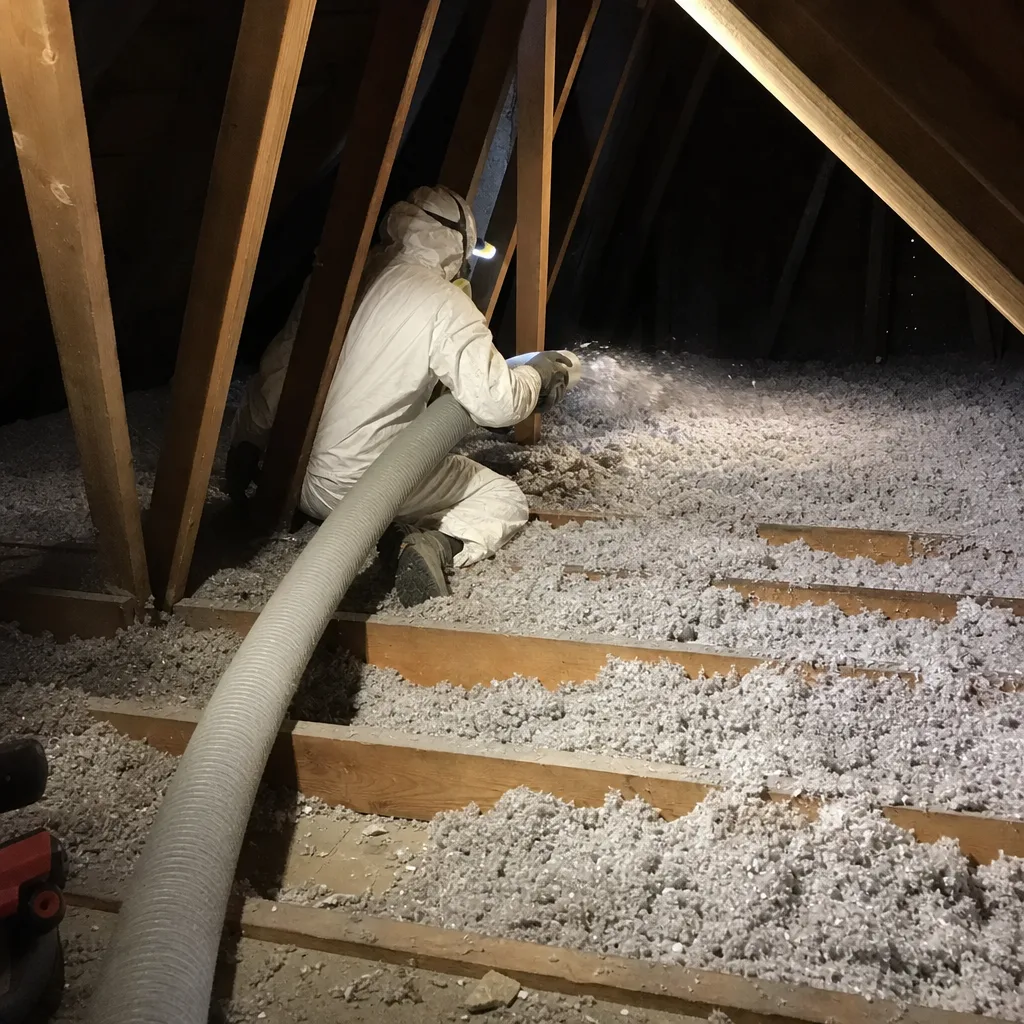
- 1
Call and scheduling: A live person answers, 24/7. We book a site visit, not a phone estimate. Under Haven Standard: Arrive on schedule, you get a named technician and a text when they are on the way.
- 2
Blower-door test and infrared scan: We pressurize the house and walk the envelope with a FLIR camera. The pre-test number goes on your written scope. In Palmdale, we typically see 3,500 to 5,200 CFM50 on pre-2010 homes; post-2015 builds with taped drywall are usually 2,800 to 3,800.
- 3
Air sealing before foam: Seal the leaks first. The insulation is just the last step. We seal top plates, can lights, plumbing and electrical penetrations, and chimney chases with closed-cell foam or fire-rated caulk as code requires. No insulation touches the attic until this is documented with photos.
- 4
Substrate prep and foam application: We verify moisture content, remove failed prior insulation, and apply Owens Corning spray foam in passes that respect the manufacturer’s exotherm limits. OEM specs are followed; where a quality aftermarket equivalent meets the same density and R-value per inch, we note it on your written scope with the trade name so you know exactly what is going in.
- 5
Post-install blower-door test and documentation: We pressurize again. The CFM50 reduction goes on your printed report, alongside before-and-after photos and the product lot numbers. You get this record before we leave; it is not available on request later because you already have it.
- 6
Written warranty and 365-Day Done Right Promise: Your scope, warranty, and final invoice are delivered as a packet. If the blower-door number does not hold or the foam shows a defect, we make it right. Haven Standard Clause 1: flat price, written scope, written warranty before anyone lifts a tool.
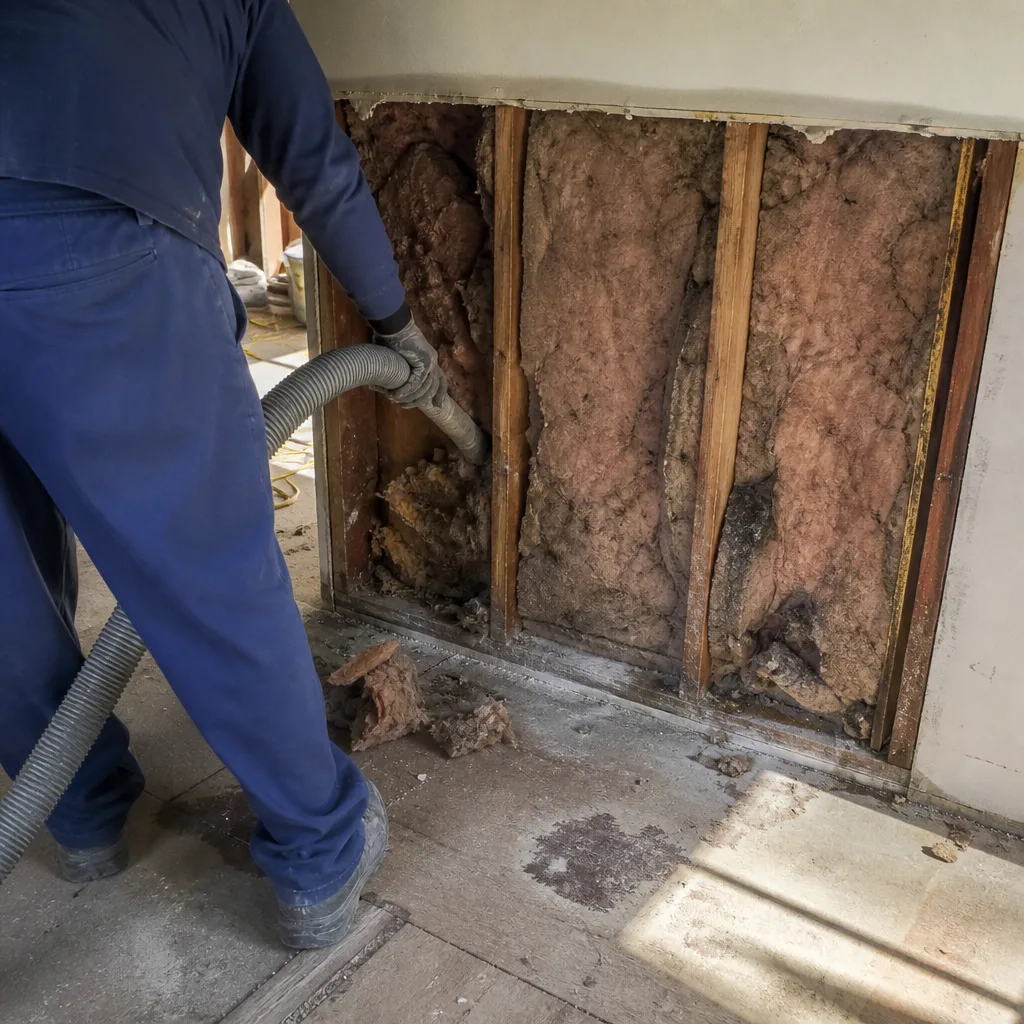 Before
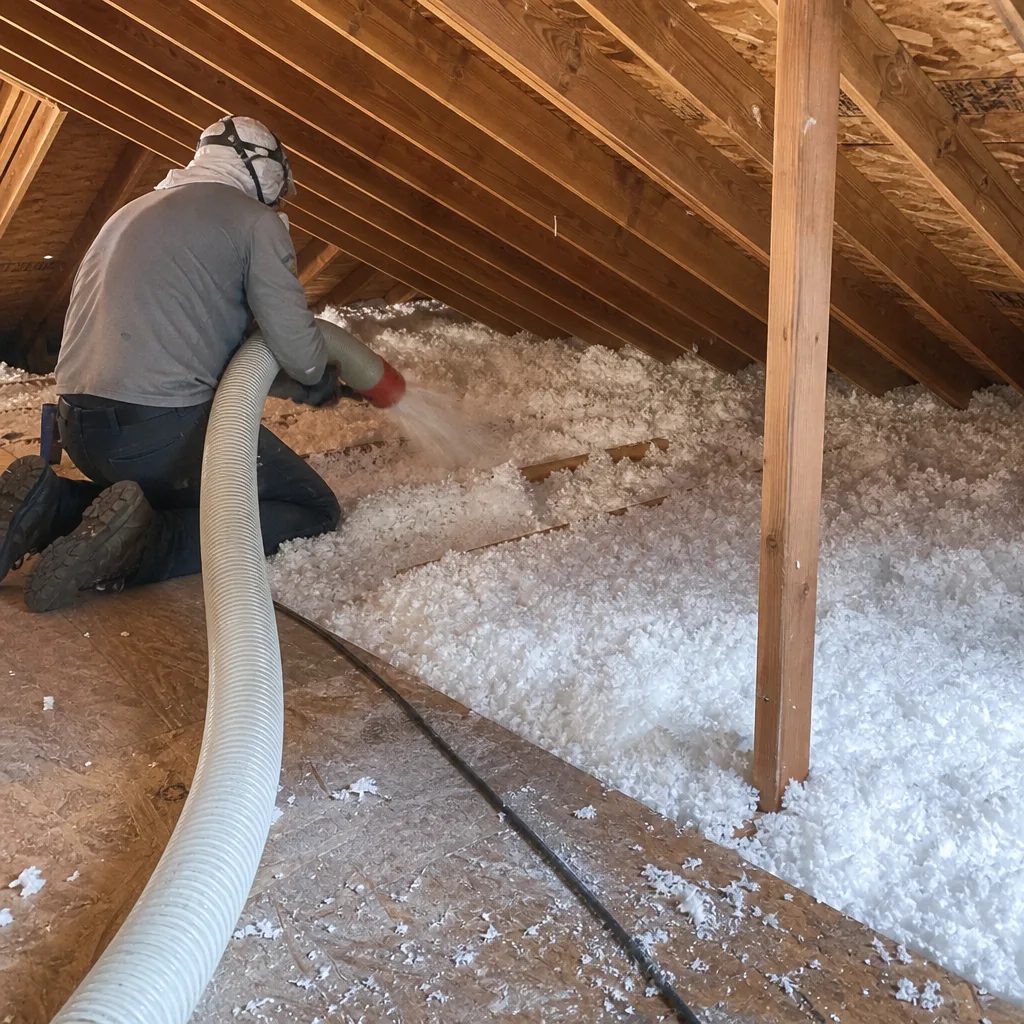 After
AfterWhat Owens Corning Spray Foam Insulation Costs in Palmdale
Most Owens Corning spray foam jobs in Palmdale run between these ranges, based on what we have written in 2024 and 2025:
| Job Type | Typical Range | What Moves the Price |
|---|---|---|
| Open-cell attic floor (1,200 sq ft) | $3,800 - $5,400 | Air-sealing extent; existing insulation removal; access difficulty |
| Closed-cell roof deck (1,200 sq ft) | $5,200 - $7,200 | Thickness specified (3.5″ vs 5.5″); vent baffle install; ridge detail |
| Rim joist only (crawl or basement) | $1,800 - $2,800 | Linear footage; debris clearance; vapor barrier integration |
| Garage ceiling (conditioned space above) | $2,400 - $3,600 | Fire-rated thermal barrier requirement; drywall prep |
What moves the price up: homes with multiple roof planes, buried ductwork that must be raised and sealed, or failed prior foam that must be mechanically removed. What does not move it: we do not charge extra for the blower-door test, the photo documentation, or the written scope - those are standard on every job. We also offer a Free Second Opinion on any written estimate; bring us a competing quote and we will read it with you line by line. Call (661) 403-4467 for your written price.
Why Palmdale Homeowners Call Topside Attic Insulation Palmdale for Owens Corning Work
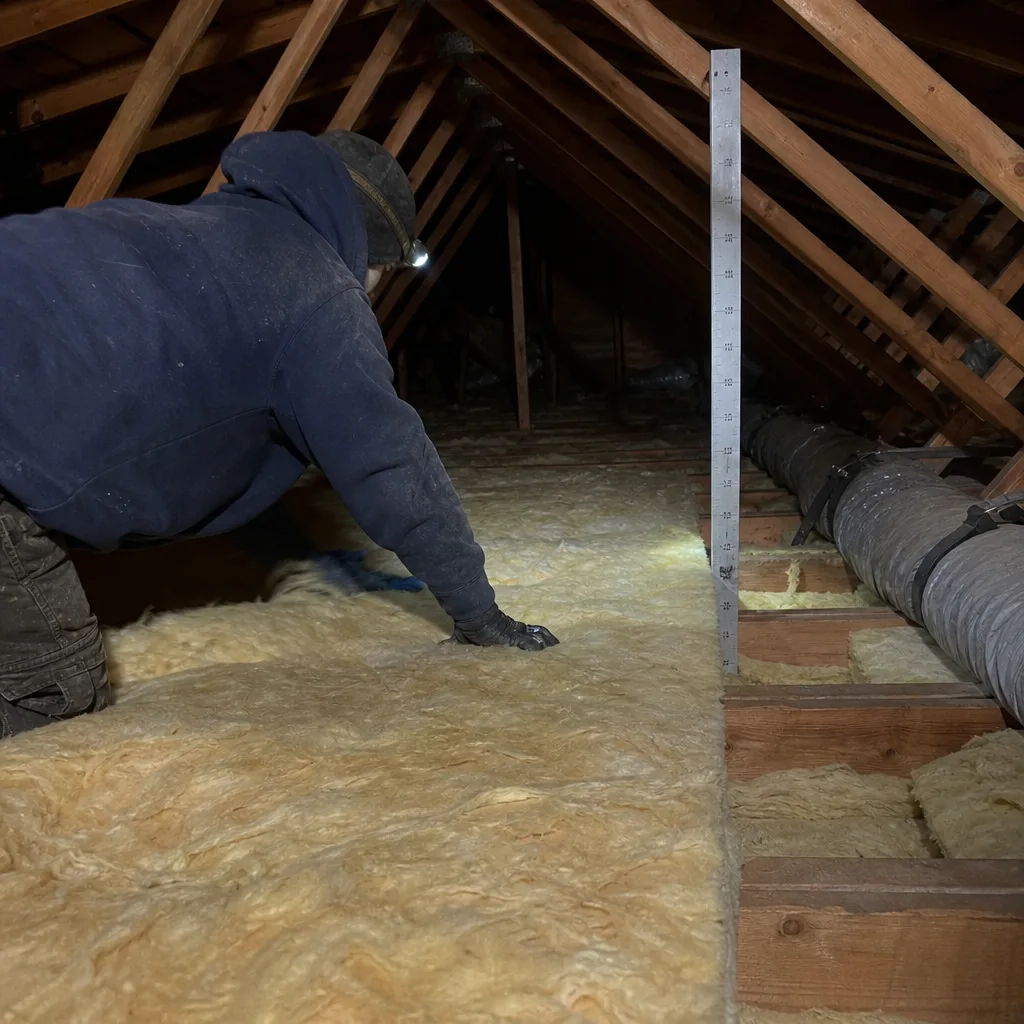
We have sealed and insulated over 9,000 homes since 2016, every one with a written price before work started and a documented record when the crew left. Our technicians are background-checked and uniformed; they know the difference between Owens Corning’s open-cell and closed-cell specifications, and they know why Palmdale’s position on the IECC Zone 3/4 boundary means a half-inch of R-value can cost you a rebate. We source from Owens Corning, Johns Manville, Knauf, Rockwool, CertainTeed, Icynene, Demilec, and GreenFiber - no proprietary lock-in, so if Reflectix or another brand suits your assembly better, we will say so on the written scope. Calls are answered by a live person, 24/7. The 365-Day Done Right Promise applies to all completed work.
FAQs
No. Owens Corning’s product warranty covers manufacturing defects in the material itself, regardless of who installs it, provided the product was stored and applied per OEM specifications. What voids coverage is improper installation - wrong pass thickness, substrate moisture, or skipping the required thermal barrier. We document every step so the chain of custody is clear. Call (661) 403-4467 if you need help with a warranty claim; we will pull your lot numbers from our records.
Owens Corning spray foam cures to an off-white or pale yellow depending on the specific formulation; exact color matching is not guaranteed with any aftermarket equivalent, though density and R-value per inch can be matched precisely. For visible areas, we note on your written scope whether we are using OEM Owens Corning foam or a quality aftermarket equivalent so you can decide before we start. If color consistency matters for your application - exposed ceiling foam in a finished garage, for example - we will source OEM.
Spot repair is cheaper only when the failure is isolated to a single area - typically 10% or less of the total coverage - and the substrate beneath is sound. We have found that in Palmdale, failed foam is usually a symptom of a systemic issue: unsealed top plates, moisture intrusion, or improper pass thickness across the whole job. In those cases, partial repair leaves the root cause unaddressed and the warranty chain broken. We will tell you which situation you are in after the blower-door test and infrared scan; the written scope breaks out both options if both are viable.
We typically schedule site visits within 48 hours, and most spray foam jobs start within 5 to 10 business days of written scope approval. Same-week starts happen when the job is straightforward attic floor work with no insulation removal. We do not manufacture urgency; we book the next available slot and text you when the crew is on the way. Call (661) 403-4467 to check current lead times.
We do not stock liquid foam components in our warehouse - the isocyanate and resin have shelf lives that make bulk storage wasteful - but our Palmdale-area suppliers carry Owens Corning formulations with standard 24- to 48-hour lead time. Custom density orders or specialized fire-rated formulations can take 5 to 7 business days. Your written scope includes the expected material delivery date before you sign; we do not start demolition until the foam is on-site.
Written by Wes Okafor, Owner, Topside Attic Insulation Palmdale at Topside Attic Insulation Palmdale, serving Palmdale and nearby areas.