
Knauf Vapor Barrier Installation: The Palmdale Owner’s Guide
Knauf vapor barrier installation in Palmdale typically runs $1,800-$3,400 for a full crawl space or attic application, depending on square footage and whether the space needs prep work. We stock Knauf Insulation’s Faced Batt and EcoSeal-compatible vapor barrier systems on our trucks, and most residential jobs in the Rancho Vista or Quartz Hill areas are completed in a single day. Homeowners usually discover a failing vapor barrier when they notice musty odors, visible condensation on ductwork, or insulation that looks flattened and darkened from moisture absorption.
Which Knauf Models This Applies To
Knauf manufactures vapor barrier solutions across several product lines, and matching the right system to your existing insulation prevents compatibility failures we see regularly in Palmdale homes.
The Knauf Insulation Faced Batt line uses a kraft-facer vapor retarder bonded to fiberglass batts, common in attic floors from the 2015-2020 construction boom around West Palmdale. Check the insulation jacket for the Knauf logo and facer weight rating, typically printed as 0.5 perm or 1.0 perm. The EcoSeal System pairs a liquid-applied air barrier with a separate polyethylene vapor barrier, found in higher-efficiency builds near the Antelope Valley Country Club area.
We also encounter Knauf MiraVista, a reflective vapor barrier used in metal building applications, though less common in residential Palmdale construction. For retrofits, we source OEM Knauf materials from our supplier in Lancaster, but we also carry quality aftermarket equivalents that meet the same ASTM E96 perm ratings when the OEM lead time runs long. The critical spec is the perm rating - a measure of how much moisture vapor passes through - and in Palmdale’s dry climate, we typically specify 1.0 perm or lower for crawl spaces and 0.5 perm for attic applications where winter temperature differentials drive condensation risk.
One compatibility gotcha: Knauf’s Faced Batt from 2016-2018 used a facer adhesive that degrades faster in attic temperatures above 130°F, which is routine in Palmdale from June through September. If your home was built in that window, the facer may be delaminating even if the fiberglass itself looks intact.
Signs Your Knauf Vapor Barrier Installation Is Failing
- Condensation on ductwork or framing. When the vapor barrier loses its seal, warm moist air hits cooler surfaces and condenses. In Palmdale, this shows up most in spring when overnight lows still drop into the 40s but daytime heating pushes conditioned air through leaks.
- Flattened or discolored insulation. Fiberglass that was fluffy when installed but now looks dark gray or matted has absorbed moisture past the failed barrier. The R-value drops by roughly half once fiberglass compresses, which we verify with a thermal camera on every inspection.
- Musty odors rising from crawl space vents. A functioning vapor barrier blocks soil moisture from evaporating into the crawl space. When it tears or separates at seams, that moisture loads the air and migrates upward through floor penetrations.
- White powder on concrete or block walls. This is efflorescence - mineral salts left behind as moisture moves through masonry. It means vapor is passing through the barrier at a rate the material was not designed to handle, often at seam failures or punctures from recent plumbing or electrical work.
- Increased cooling bills with no equipment change. Wet insulation conducts heat faster than dry insulation. We’ve measured attic floor R-values that tested at R-11 effective when they were specified at R-30, purely from moisture saturation that a failed barrier allowed.
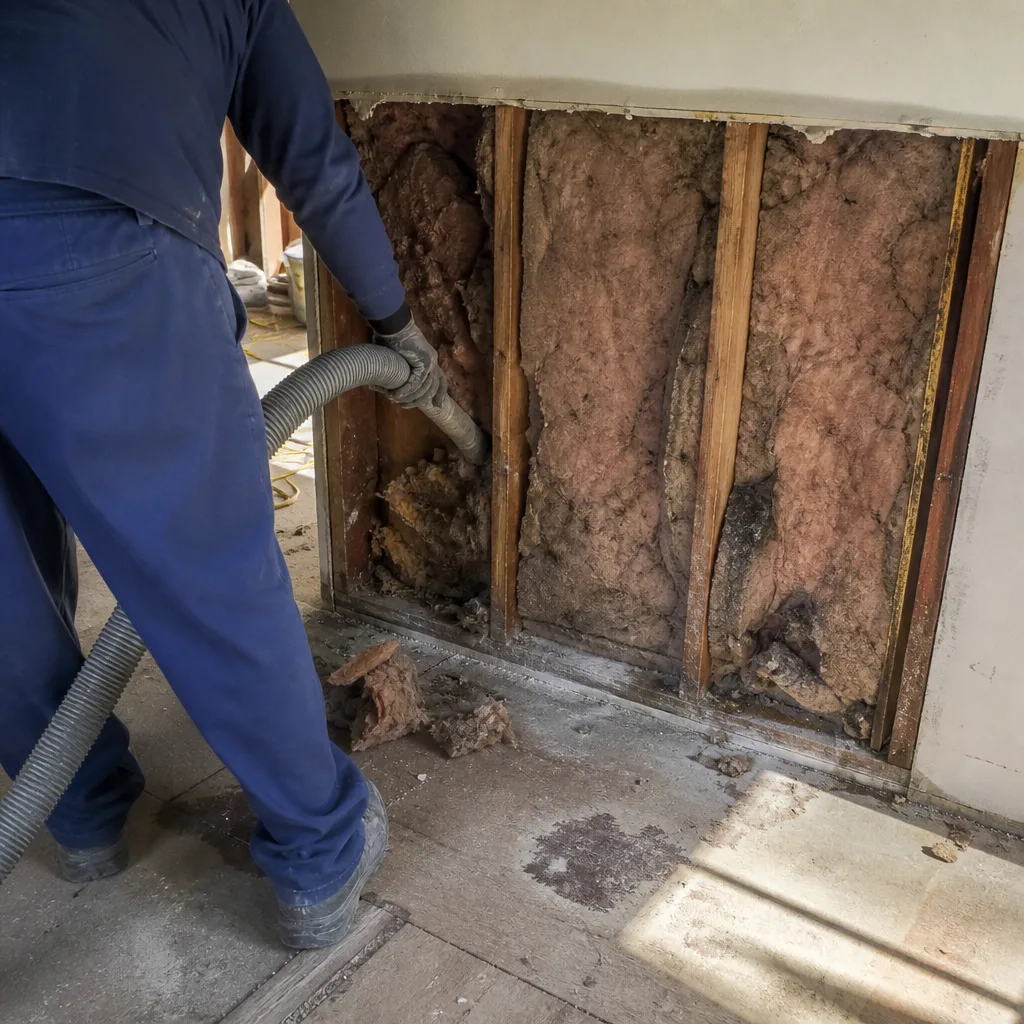 Before
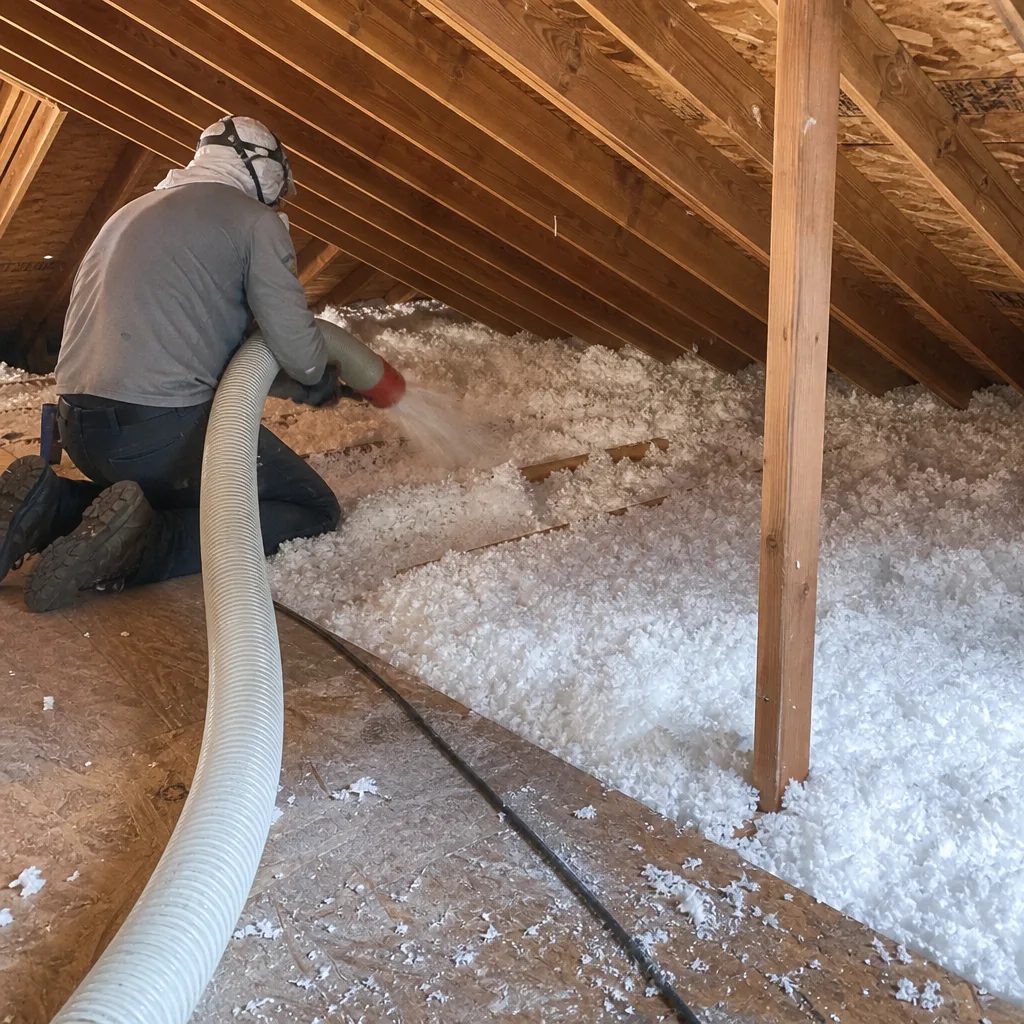 After
AfterReplacement Cost & What’s Included
Most full vapor barrier replacements in Palmdale run $1,800-$2,800 for crawl spaces under 1,200 square feet and $2,400-$3,400 for attic applications of similar size. The range depends on three factors: how much old material needs removal, whether the substrate requires cleaning or mold remediation before new installation, and whether we’re also sealing top plates and penetrations as part of the same job.
Our price includes Knauf-compatible vapor barrier material, all seam tape and mechanical fasteners, labor, and disposal of the failed barrier. We do not start work without a written price - Haven Standard Clause 1 - and every job closes with a Documented Photo Record showing before, during, and after. Crawl space jobs include a moisture meter reading at completion; attic jobs include thermal imaging to confirm no bypasses were missed.
The 365-Day Done Right Promise covers all vapor barrier work. If seams separate or moisture readings rise, we return and fix it.
DIY or Call Us?
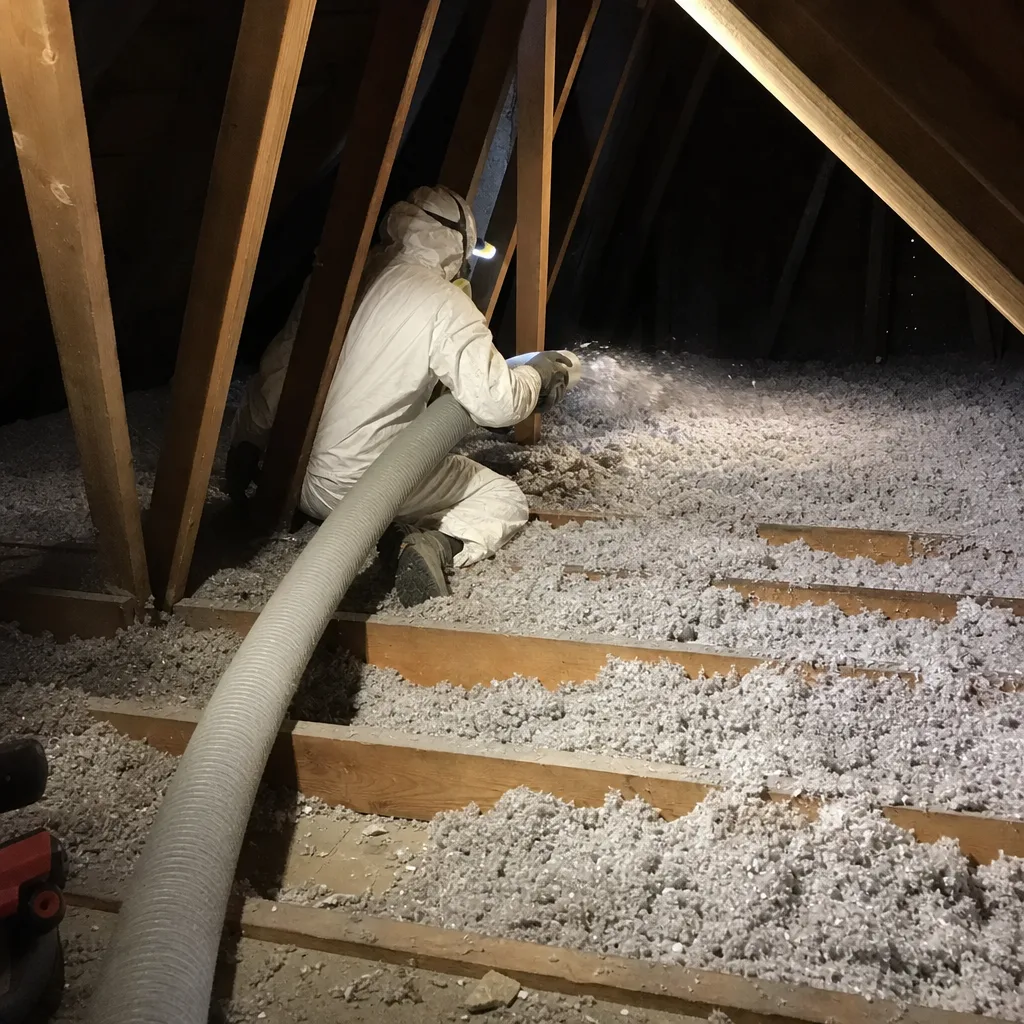
Homeowners can safely inspect their own vapor barrier with a flashlight and moisture meter from the hardware store. Look for tears at seams, gaps around piers or penetrations, and any area where the barrier has pulled away from the walls. These observations help us diagnose over the phone.
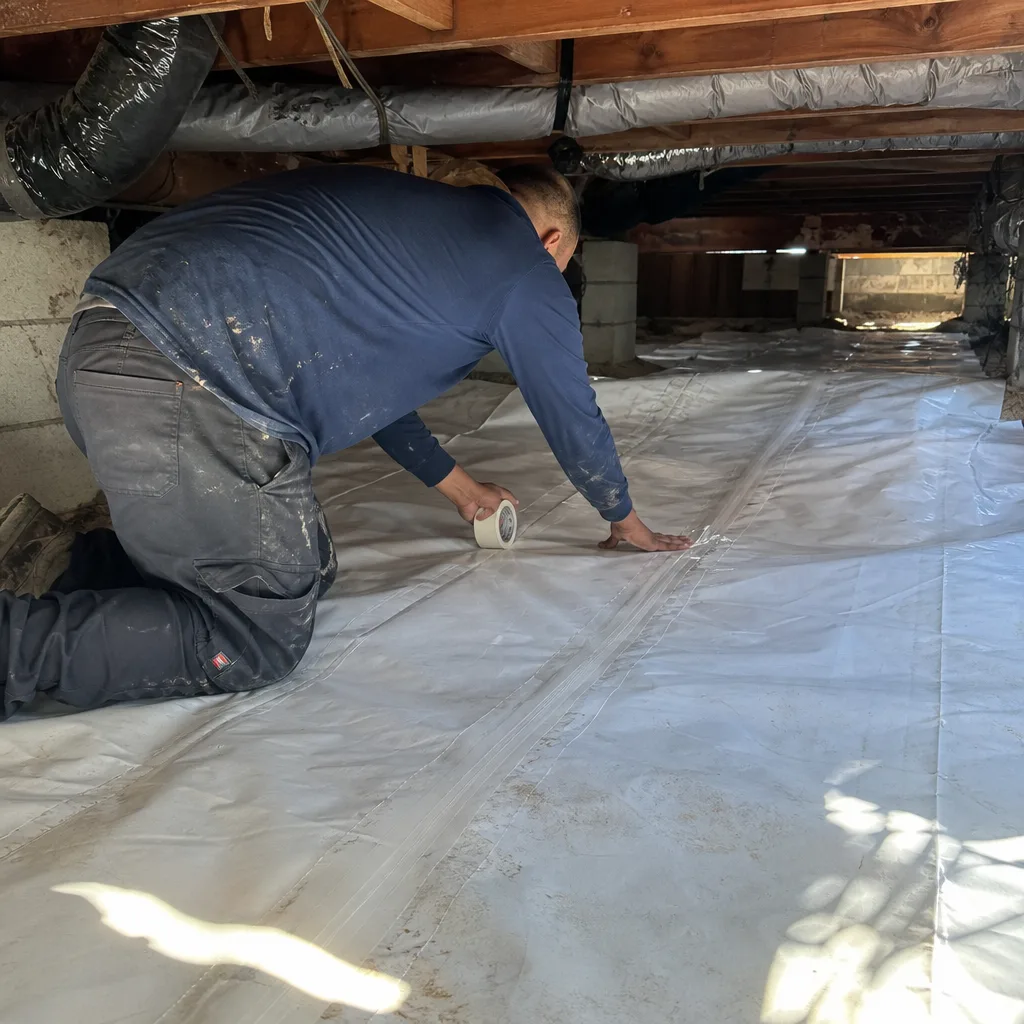
Where DIY goes wrong is in the installation details. Vapor barrier must be continuous - one tear or missed seam negates the entire system. In crawl spaces, proper overlap at seams is 12 inches minimum, taped with pressure-sensitive tape rated for damp conditions. Most homeowners use the wrong tape or fail to seal around plumbing stacks, which is where we find the majority of moisture intrusion. Attic vapor barrier work involves working around electrical, recessed lighting, and often compromised decking - safety risks that warrant a trained crew.
We also run a blower-door test before and after any vapor barrier job that includes air sealing, which a homeowner cannot replicate without $4,000 in equipment. That test is how we prove the building envelope actually improved, not just that new material went in.
Call (661) 403-4467 for a free estimate. We’ll bring the right Knauf-compatible material and leave you with the numbers that prove it worked.
FAQs
In Palmdale’s dry climate, a properly installed polyethylene vapor barrier lasts 15-20 years, though Knauf’s kraft-faced products in attics exposed to 140°F summer temperatures may delaminate in 8-12 years. The 2016-2018 facer adhesive issue we mentioned above can shorten that further. Call (661) 403-4467 and we can inspect what you have and give you a realistic lifespan estimate.
Small punctures or tears under six inches can be patched with compatible tape if the surrounding material is still supple and the seam system is intact. If the barrier is brittle, extensively torn, or the original installation lacked proper overlap, patching is a short-term fix that usually fails within a year. We assess this on every inspection and will tell you honestly which path makes sense.
Most residential crawl space vapor barrier replacements take 4-6 hours; attic applications run 6-8 hours depending on access and whether we’re air sealing as part of the job. We complete the majority of Palmdale jobs in a single day, including cleanup and the final photo documentation.
We carry Knauf-compatible 6-mil and 10-mil polyethylene sheeting, seam tape, and mechanical fasteners on every truck, along with aftermarket equivalents that match Knauf’s ASTM specs. For specific Knauf OEM facer batts, we source from our Lancaster supplier with next-day availability. We do not require you to wait for a special order to get your moisture problem under control.
Written by Wes Okafor, Owner, Topside Attic Insulation Palmdale at Topside Attic Insulation Palmdale, serving Palmdale and nearby areas.