
Johns Manville Blown-In Insulation in Palmdale: What to Know First
We provide independent Johns Manville blown-in insulation service in Palmdale, typically completing attic jobs in one day with a written price delivered before any work starts. Most homes in the Rancho Vista corridor and west Palmdale see attic temperatures of 130-140°F in July, which means undersized or settled Johns Manville blown-in fiberglass compresses faster here than in cooler climate zones. We run a blower-door test - a pressurization reading that shows, in one number, how much conditioned air your home is losing - before we touch any insulation, because blowing new material over an unsealed attic floor is throwing money into the wind. This page is for Johns Manville owners who want to know what specific product failures look like, what the repair costs, and whether their warranty still matters. Call (661) 403-4467 for a written estimate with no obligation.
How Johns Manville Products Fail - and How We Fix Them
- AttiCat PINK Blown-In Fiberglass settling below labeled R-value. The AttiCat system uses loose-fill fiberglass that can lose 2-3 inches of settled depth in Palmdale’s high-vibration, high-heat attic environments, especially near HVAC air handlers. We measure current depth against the original bag count stamped on the attic hatch, then calculate the actual R-value versus the labeled R-30 or R-38. Our fix: remove the settled layer, air-seal all top plates and can-light penetrations, then reinstall to full labeled depth with a density check every 100 square feet.
- Climate Pro Blowing Wool moisture absorption in south-facing attics. Johns Manville’s cellulose-based Climate Pro line is treated with borate fire retardant, but in Palmdale homes with roof leaks or bathroom fan ducts exhausting into the attic, the material cakes and compresses. We’ve found this most often in the Anaverde and Sand Creek neighborhoods where tile roof leaks go undetected. Our fix: full removal of compromised material, rodent-proofing and vapor-barrier assessment, then replacement with fresh Climate Pro or a switch to fiberglass if moisture risk persists.
- Formaldehyde-free binder breakdown in early-production Spider Plus systems. Spider Plus uses a spray-applied adhesive to lock fiberglass in place; the original formaldehyde-free binder can degrade after 8-10 years in attics that cycle above 120°F regularly. The symptom is visible sagging or voids near the eaves. Our fix: spot-stabilize with compatible aftermarket binder or full removal and replacement, depending on the percentage of compromised area. We document the binder condition with photos before recommending either path.
- Insul-Safe 2 blown-in fiberglass stratification in cathedral ceilings. In Palmdale’s 1970s-1990s tract homes with vaulted ceilings, Insul-Safe 2 can separate by density, leaving dense pockets near the ridge and thin spots at the eaves where ice dam risk isn’t the issue - radiant heat gain is. Our fix: dense-pack verification with a fill tube and density camera, or conversion to dense-pack cellulose if the cavity geometry won’t hold uniform fiberglass distribution.
- Submittal documentation missing for rebate programs. Johns Manville bags carry lot numbers and R-value certifications that Southern California Edison and LADWP rebate programs require. Homeowners who self-installed or used an unlicensed contractor often lack these. Our fix: we source current Johns Manville materials with full chain-of-custody documentation, complete the utility rebate paperwork as part of the job, and keep copies in your file for audit protection.
Our Johns Manville Blown-In Insulation Process
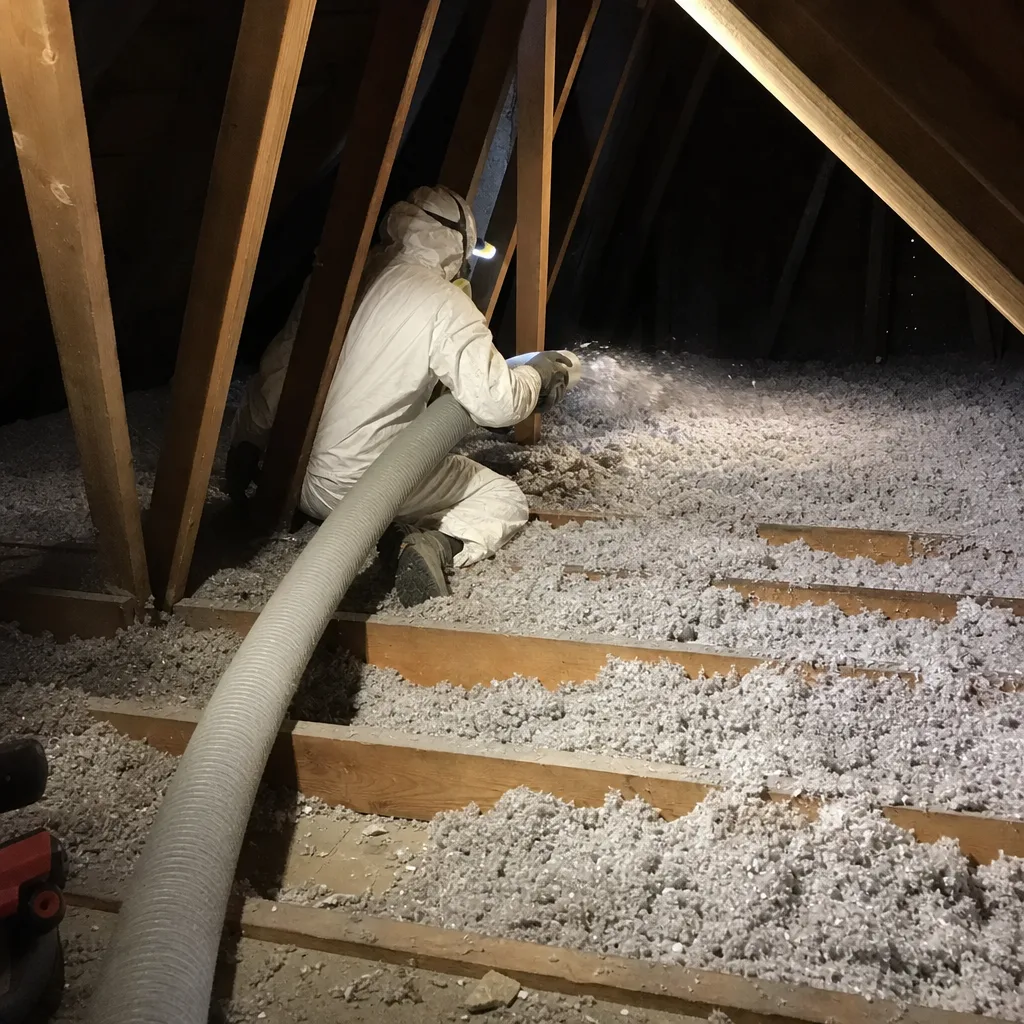
- 1
Call intake with a live person. No voicemail loops. We schedule a site visit, text you the technician’s name and ETA, and email a pre-visit checklist.
- 2
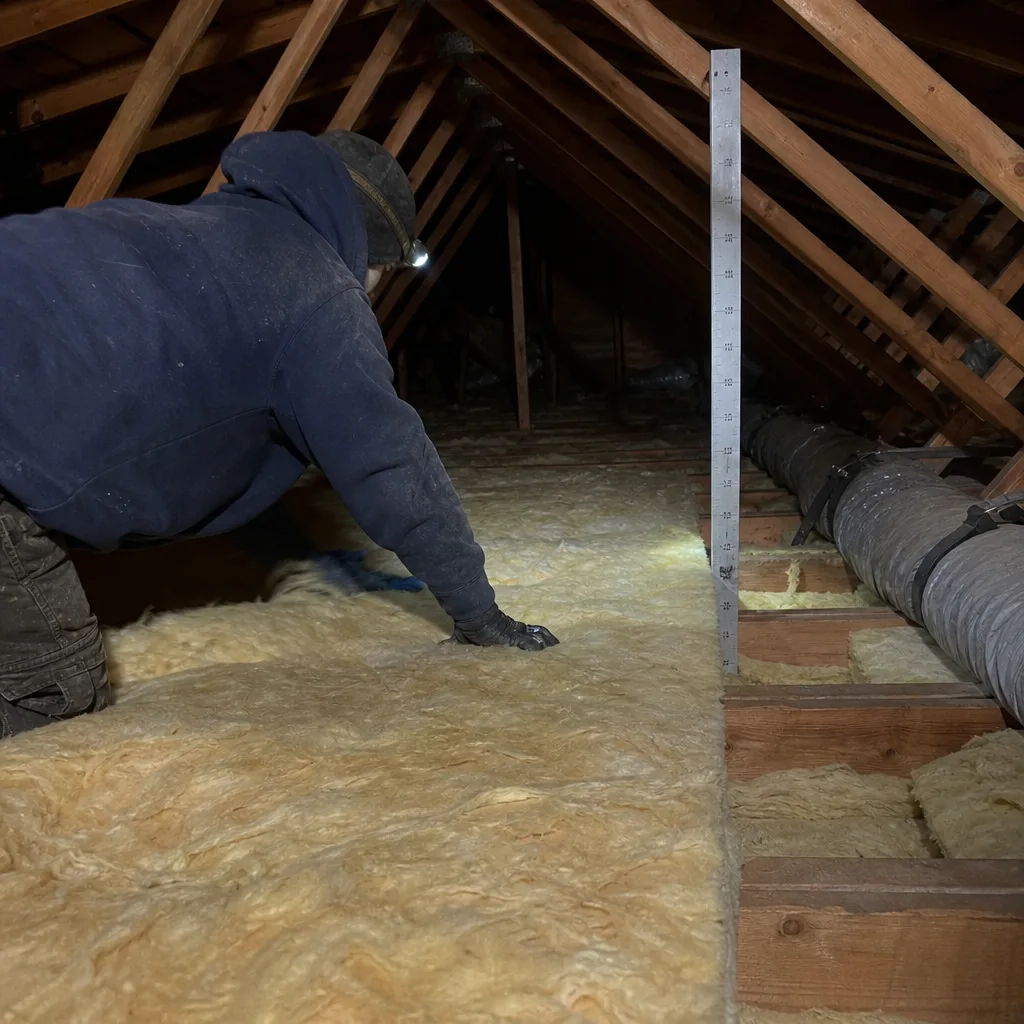
Blower-door test and attic inspection. We pressurize the house, record the CFM50 baseline, then photograph current Johns Manville product condition, depth measurements, and any air-leak points. You get a printed pre-installation report.
- 3
Written scope and price. We specify exact Johns Manville product line or approved equivalent, depth target, air-sealing details, and total cost. No work starts without your signature on this document.
- 4
Air sealing first, then insulation. Seal the leaks first. The insulation is just the last step. We seal top plates, wire penetrations, can lights, and duct boots with fire-rated caulk and foam. Second blower-door test confirms the reduction.
- 5
Installation to spec. We blow to labeled depth plus settling allowance, verify with depth probes across a grid pattern, and photograph the finished surface.
- 6
Final blower-door test and documentation. Post-installation CFM50 reading, side-by-side comparison with the pre-work number, Documented Photo Record delivered by email before the crew leaves. Written warranty and 365-Day Done Right Promise included.
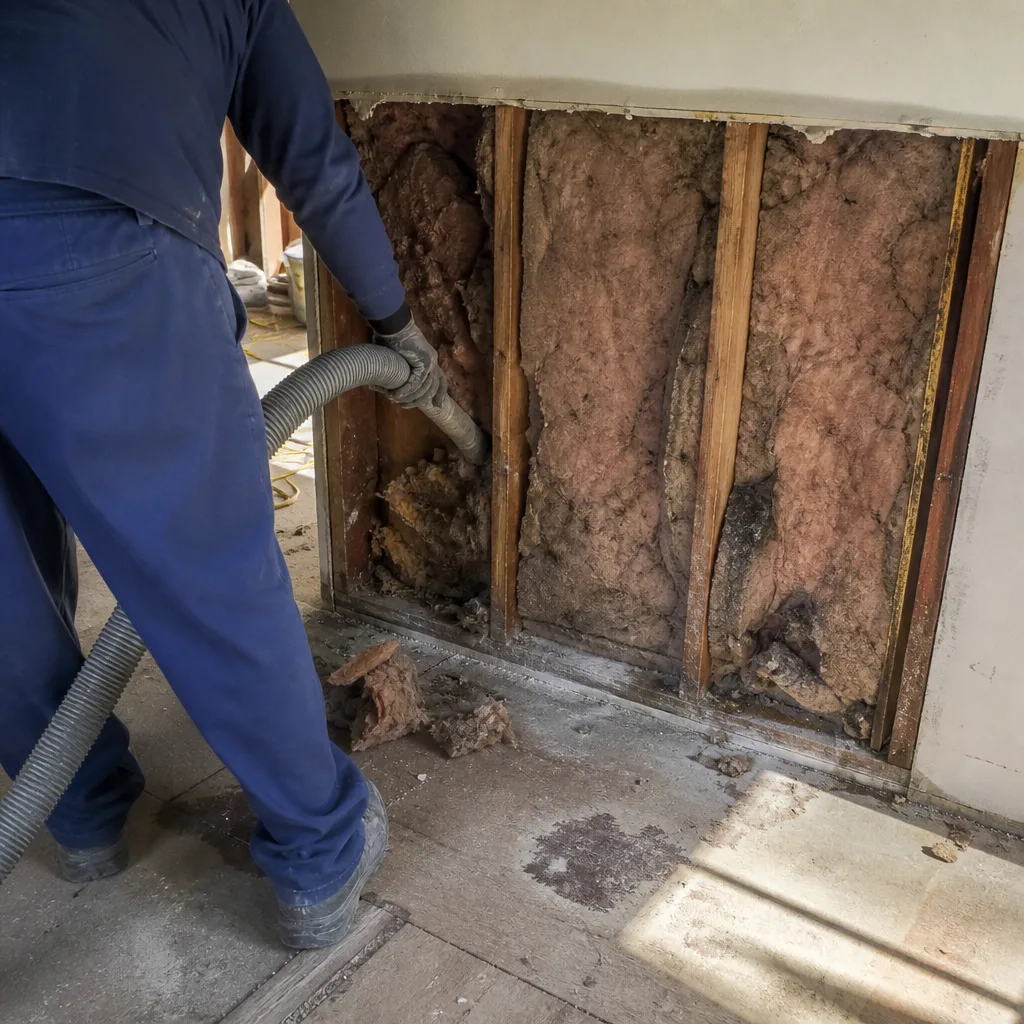 Before
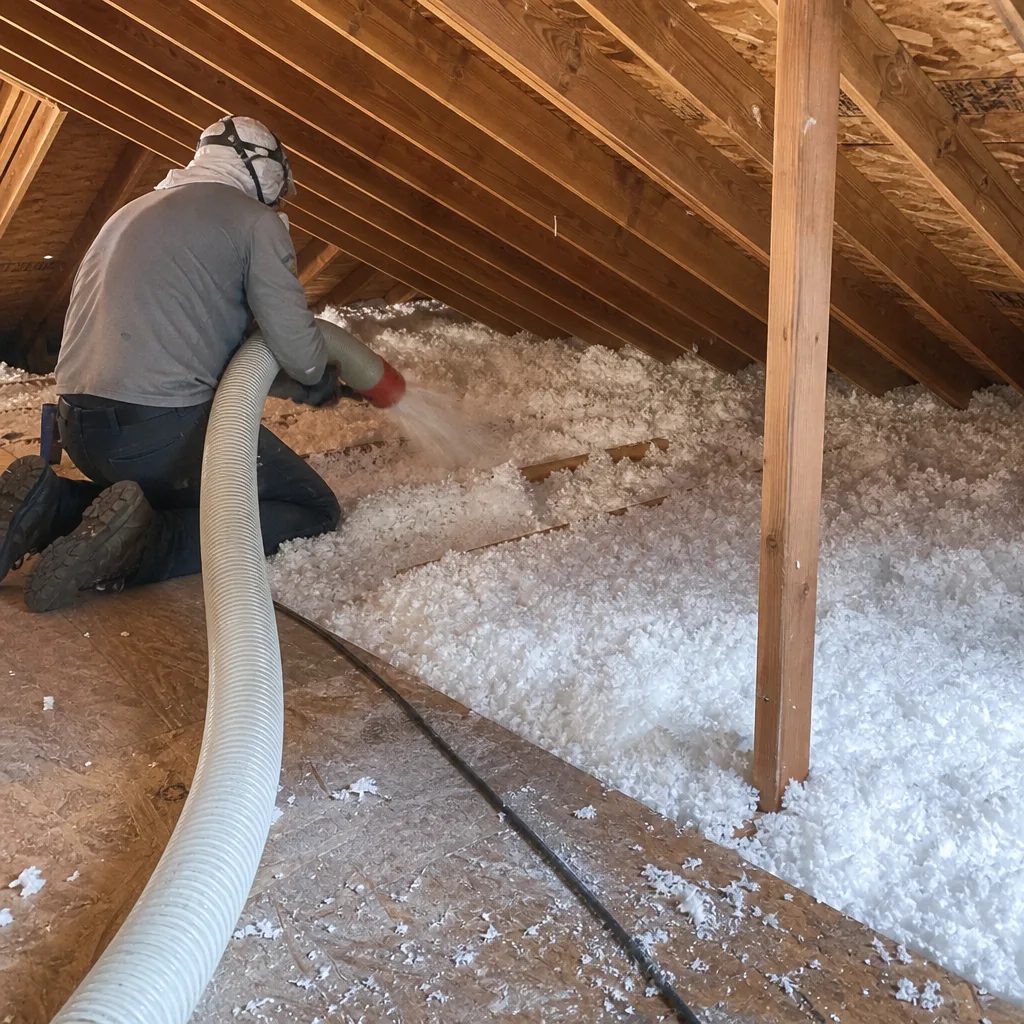 After
AfterWhat Johns Manville Blown-In Insulation Costs in Palmdale
| Job Type | Typical Range | What Moves the Price |
|---|---|---|
| AttiCat top-up (1,200 sq ft attic, R-30 to R-38) | $1,400 - $2,200 | Current depth, access difficulty, whether removal is needed |
| Climate Pro full replacement with air sealing | $2,800 - $4,500 | Extent of moisture damage, attic floor square footage, number of penetrations to seal |
| Spider Plus stabilization or repair | $900 - $2,100 | Percentage of binder failure, cavity accessibility |
| Insul-Safe 2 cathedral ceiling dense-pack | $3,200 - $5,800 | Cavity height, roof pitch, need for baffle installation |
| Full removal + replacement with upgrade to R-49 | $4,500 - $7,200 | Volume of old material, disposal fees, rebate documentation handling |
These are 2024-2025 price ranges for the Palmdale market, based on jobs we’ve completed in Rancho Vista, Anaverde, and the Pearblossom Highway corridor. Every quote is flat and written - no open-ended hourly rates. Call (661) 403-4467 for an exact figure on your home; estimates are free.
Why Palmdale Homeowners Call Topside Attic Insulation Palmdale for Johns Manville Work
We’ve sealed and insulated over 9,000 homes since 2016, and the ones in Palmdale teach you something specific: the high desert sun doesn’t forgive shortcuts on attic R-value or air sealing. Wes Okafor runs every job with before-and-after blower-door numbers published in the customer’s file, not kept in-house. Our technicians are background-checked, uniformed, and trained on Johns Manville’s full product line plus alternatives from Owens Corning, Knauf, and Reflectix if your situation calls for a different approach. We’re not locked into any single manufacturer. The 365-Day Done Right Promise means if the insulation settles or the air leak returns, we make it right. And a live person answers (661) 403-4467 at any hour - no callback windows measured in business days.
FAQs
No. Johns Manville’s product warranties cover material defects regardless of who installs them, provided the product was applied to manufacturer specifications. Our documentation - depth readings, bag lot numbers, installation photos - protects your claim if a material issue arises. We keep copies for seven years. Call (661) 403-4467 if you need help locating your original installation records.
Yes. We source from Owens Corning, Knauf, Rockwool, and others, and we can match or exceed any Johns Manville R-value specification. The critical factor is the installed depth at settled density, not the brand name on the bag. We document both on every job.
We measure current depth against the original bag count and check for compression, moisture damage, or rodent contamination. If the material is dry and structurally intact, a top-up is usually sufficient. If we find caked Climate Pro or degraded Spider Plus binder, removal is the only path that won’t trap the problem. We show you the photos and explain the difference before you decide.
Most attic jobs are scheduled within 3-5 business days of estimate approval. Emergency situations - active roof leaks, failed insulation after a home sale inspection - can sometimes be accommodated next-day. Call (661) 403-4467 to check current availability.
Usually yes, especially for homes built before 2019 when California’s Title 24 raised attic requirements. Palmdale sits in IECC Climate Zone 3 on the edge of Zone 4, and that half-zone difference has cost homeowners utility rebates they expected. The payback on an R-49 upgrade runs 4-7 years in this market, faster if you’re on SCE’s time-of-use rates. We calculate your specific payback in the written estimate.
Written by Wes Okafor, Owner, Topside Attic Insulation Palmdale at Topside Attic Insulation Palmdale, serving Palmdale and nearby areas.