
Icynene Crawl Space Encapsulation: The Palmdale Owner’s Guide
We stock and install Icynene-compatible crawl space encapsulation systems in Palmdale, with most complete jobs running between $3,800 and $7,200 depending on crawl square footage and whether the existing vapor barrier can be salvaged. Same-day starts are available when we have your liner specs confirmed by 10 a.m., and we carry 12-mil and 20-mil reinforced polyethylene rolls on the truck for Icynene-integrated jobs. Most Palmdale homeowners discover their encapsulation has failed when they catch a musty smell returning after a dry winter, or when their spring energy bill jumps $80-$140 despite no thermostat change - both signs that conditioned air is escaping through gaps in the barrier or the seam tape has delaminated.
Which Icynene Models This Applies To
Icynene does not manufacture crawl space vapor barriers directly; instead, their open-cell and closed-cell spray foam systems are paired with third-party polyethylene liners as part of a complete encapsulation assembly. The critical match is between the foam thickness, the liner mil rating, and the mechanical fastening schedule. For Icynene MD-R-200, LD-C-50, and the newer Icynene ProSeal LE series, we spec a 20-mil reinforced liner with a woven scrim because the expansion rate of those foams can stress thinner 6-mil or 10-mil barriers at the sill plate junction.
To identify what you have, check the spray foam itself: Icynene labels are stamped directly onto the cured foam every 24 inches with the product code and install date. The vapor barrier should have a printed mil rating and ASTM E1745 Class A or C notation in the corner. We also stock Reflectix foil-faced bubble insulation for hybrid systems where radiant barrier is layered above the Icynene foam. Topside Attic Insulation Palmdale is an independent service provider, not affiliated with Icynene or Demilec.
OEM-spec liners from Icynene-certified distributors run 30-40% higher than quality aftermarket equivalents from Stego or Crawlspace Depot, and for most Palmdale homes we find the aftermarket 20-mil reinforced line performs identically when the seam overlap is heat-welded rather than taped. The exception: if your original install included a passive radon mitigation port, the OEM liner has a pre-formed collar that aftermarket sheets lack, and retrofitting that collar adds roughly 90 minutes of labor.
Signs Your Icynene Crawl Space Encapsulation Is Failing
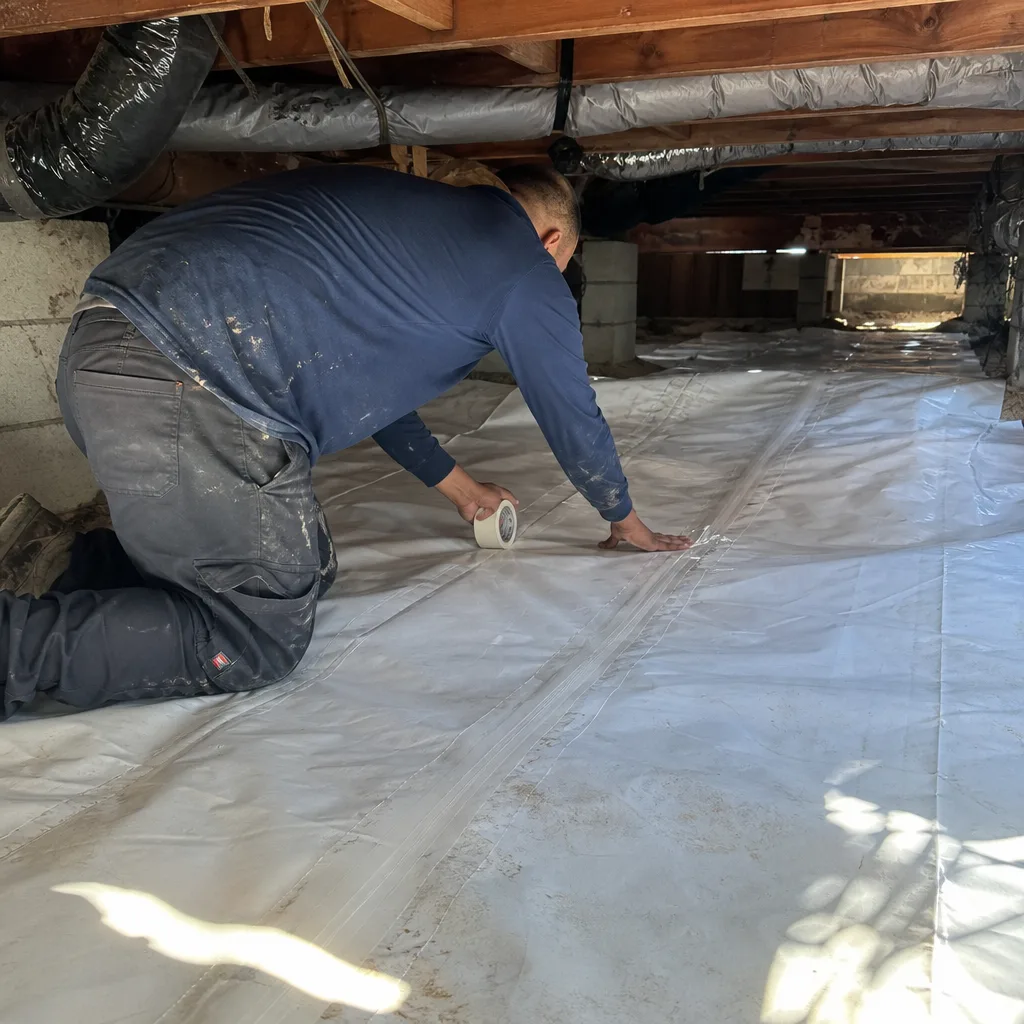
- Musty odors returning in summer months. In Palmdale, the Antelope Valley’s dry climate actually masks this until July humidity spikes; what you’re smelling is ground moisture breaching a torn liner or failed seam, then wicking into the Icynene foam’s open-cell structure. The foam itself doesn’t rot, but it holds odor and loses R-value when saturated.
- Energy bills climbing 15-25% year-over-year. When the encapsulation seal breaks, your crawl space reverts to outside air temperature - which in Palmdale means 95°F-105°F air pulling against your ductwork and subfloor all summer. The blower-door number we measure at your floor joists jumps accordingly.
- Condensation on ductwork or joist ends. This means your vapor barrier is no longer blocking soil moisture, and the dew point inside the crawl space has crossed above the surface temperature of your metal ducts. In Palmdale’s hard-water areas near the aqueduct, that condensation leaves white calcium deposits that corrode galvanized hangers.
- Pest activity or rodent trails on the liner surface. A intact 20-mil barrier is a physical block; once torn, even a 4-inch gap becomes a highway. We find this most often in Rancho Vista and Anaverde homes where the original install used 6-mil builder-grade plastic that rodent teeth puncture in one season.
- Sagging or pooling on the liner surface. Standing water means either your sump pump has failed or the liner was never properly secured to the walls with mechanical fasteners. Icynene foam on the rim joist can hide this until the water reaches the sill plate and triggers termite inspection flags.
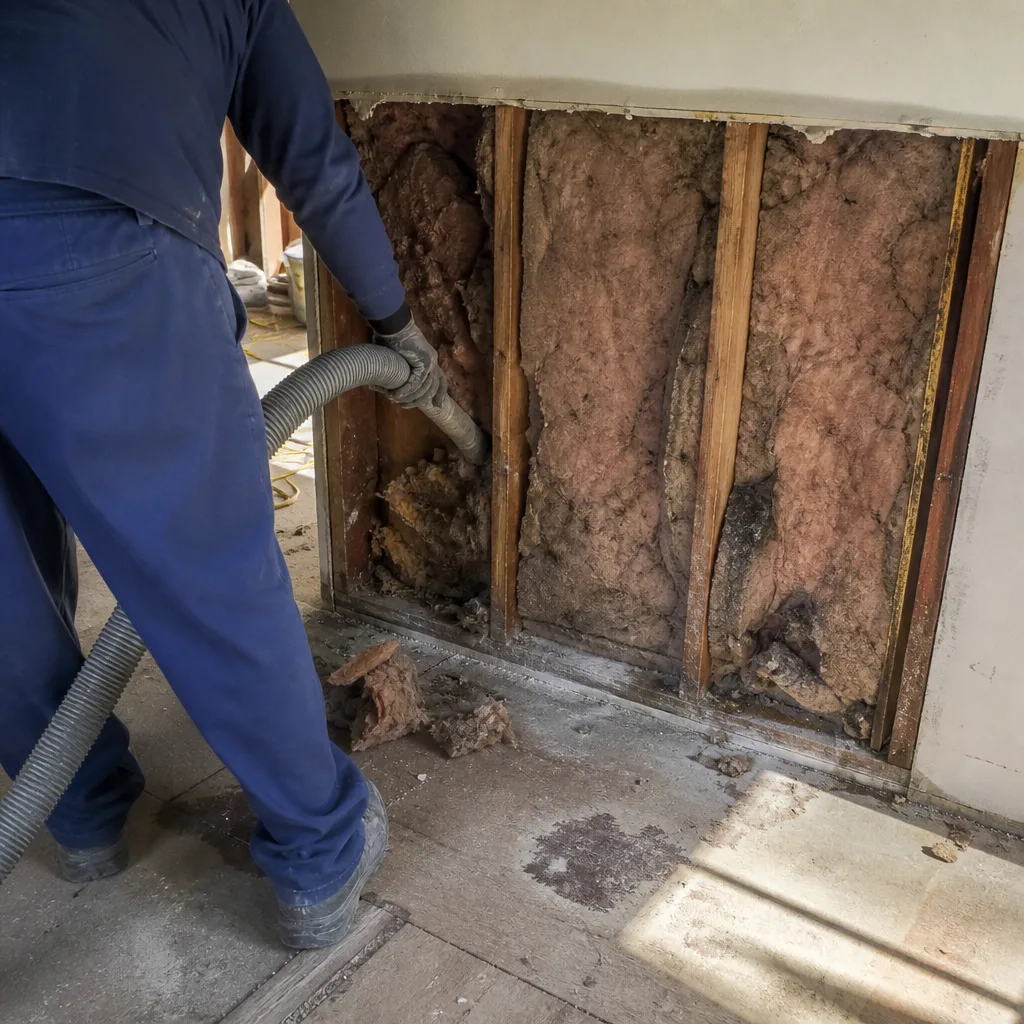 Before
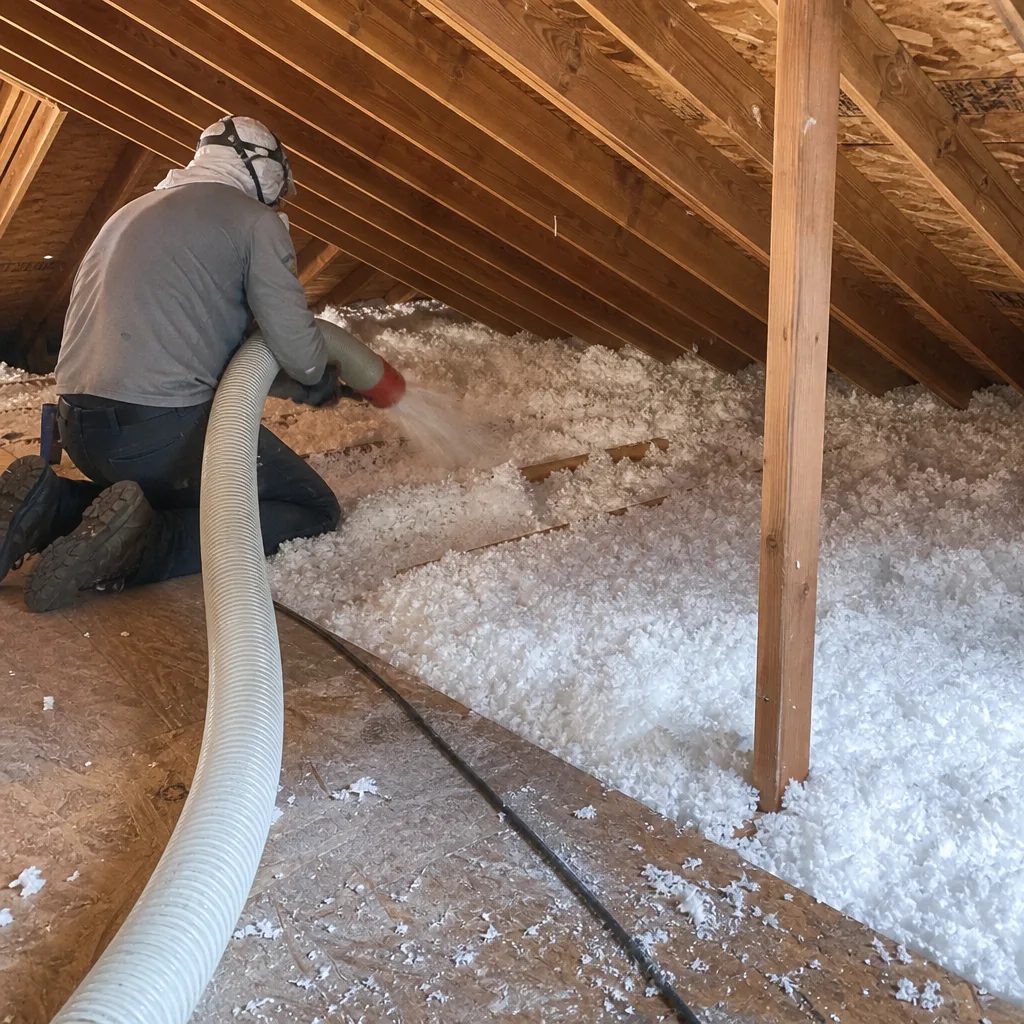 After
AfterReplacement Cost & What’s Included
| Component | Palmdale Price Range |
|---|---|
| 12-mil standard liner replacement (under 1,200 sq ft crawl) | $3,800 - $5,100 |
| 20-mil reinforced liner with heat-welded seams (under 1,200 sq ft) | $5,200 - $6,400 |
| 20-mil reinforced liner (1,200-2,000 sq ft) | $6,100 - $7,200 |
| Sump pump replacement or addition | $890 - $1,450 |
| Rim joist Icynene touch-up (localized, up to 20 linear ft) | $680 - $940 |
| Full rim joist re-foam with Icynene MD-R-200 | $2,100 - $3,400 |
What drives the range: crawl height (anything under 18 inches adds labor), whether the existing liner can be left in place as a base layer, and how many penetrations (HVAC plenums, electrical conduit, gas lines) must be cut around and re-sealed. Every job gets a Written Price Before Any Work Starts under Haven Standard Clause 1, and we deliver a Documented Photo Record showing the pre-condition, the stripped crawl, and the finished encapsulation with seam weld close-ups. Our 365-Day Done Right Promise covers liner delamination and seam failure.
DIY or Call Us?
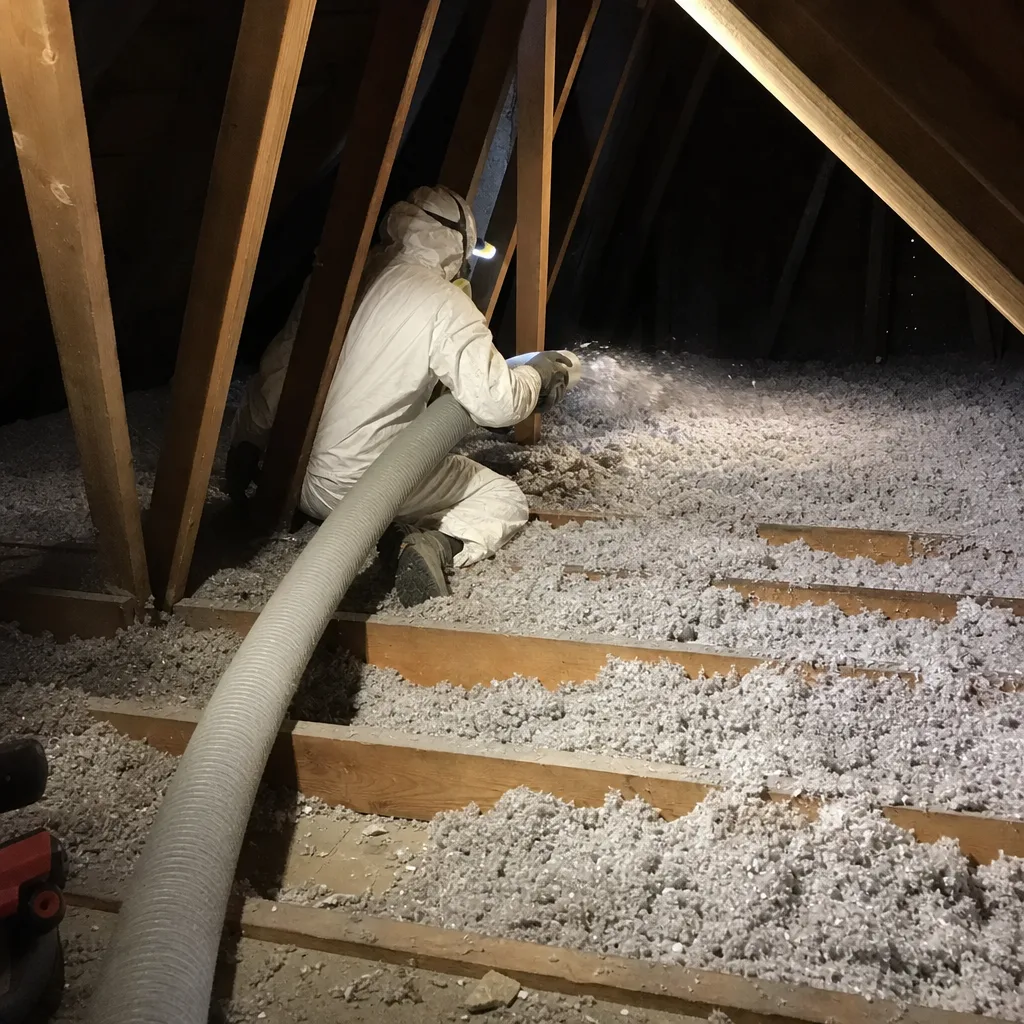
What you can safely check yourself: the mil rating printed on your liner corner, whether your sump pump activates when you lift the float, and whether any Icynene foam has pulled away from the rim joist (look for daylight gaps where the foam meets wood). Use a flashlight; do not enter the crawl space if you smell gas or see standing water near electrical equipment.
Where DIY goes wrong: heat-welding polyethylene seams requires a 1,200°F automated wand that most homeowners don’t own, and tape adhesives fail within 18 months in Palmdale’s temperature swing cycle. More critically, disturbing existing Icynene foam without respiratory protection exposes you to isocyanate dust, and compressing open-cell foam during liner removal voids its thermal performance without visible damage. We carry the welding equipment, the PPE, and the replacement foam on every truck. Call (661) 403-4467 and we’ll read your situation with you - estimates are free, and we publish before-and-after blower-door numbers on every encapsulation job so you can verify the air-sealing result in a single figure.
FAQs
A properly installed 20-mil reinforced liner with heat-welded seams typically lasts 15-20 years in Palmdale’s dry climate, though homes near the California Aqueduct with higher water tables may see 10-12 years before sump pump or liner edge deterioration. The Icynene foam itself does not degrade, but its bond to wood can loosen if repeated moisture cycles saturate the substrate. Call (661) 403-4467 for an exact condition assessment - estimates are free.
Isolated punctures under 6 inches can be patched with compatible 20-mil tape if the surrounding liner is still pliable and the tear is in the field, not at a seam or wall termination. We replace rather than patch when we find multiple tears, tape delamination along more than 20% of seams, or any liner below 10-mil thickness because the material is too thin to hold a weld. Call (661) 403-4467 and we’ll show you the photo evidence before recommending either route.
Most residential crawls under 1,500 square feet are completed in one long day or two standard days: half a day to remove the failed liner and inspect the Icynene foam, half a day to install and weld the new barrier, plus any rim joist touch-up. We schedule a blower-door test at completion, and you receive the pre- and post-installation CFM50 readings in a printed report before we leave. Call (661) 403-4467 to check this week’s availability.
Yes - we carry 12-mil and 20-mil reinforced polyethylene, Stego seam welding equipment, and Icynene MD-R-200 and LD-C-50 foam sets on every Palmdale-area truck. For the ProSeal LE series or jobs requiring a specific vapor retarder class, we can have materials at your site within 24 hours. We also stock Reflectix for hybrid radiant barrier systems if your original install included that layer. Call (661) 403-4467 to confirm compatibility with your specific Icynene stamp code.
Seal the leaks first. The insulation is just the last step. That’s the sequence we learned at Richard J. Daley College, and it’s the sequence we still run on every job in Palmdale - from the Rancho Vista corridor out to the Anaverde developments where attic temps hit 140°F and a half-inch of R-value difference can cost a homeowner their rebate.
Call (661) 403-4467 for a free estimate. A live person answers 24/7, and every job starts with a written price and ends with a documented record - no exceptions.
Written by Wes Okafor, Owner, Topside Attic Insulation Palmdale at Topside Attic Insulation Palmdale, serving Palmdale and nearby areas.