
Demilec Radiant Barrier Installation: The Palmdale Owner’s Guide
Demilec radiant barrier installation in Palmdale typically runs $1,800-$3,400 for a standard 1,500-square-foot attic, and we stock Demilec-compatible reflective barrier rolls and fastening systems for same-day starts. Most homeowners realize something’s wrong when their upstairs rooms won’t cool below 78°F even after sunset, or when their July electric bill jumps $80-$120 year-over-year with no rate change. We see this pattern constantly in Palmdale homes built between 2005 and 2015, where original radiant barriers have oxidized, torn at staple lines, or been buried under blown-in insulation that shouldn’t have been added on top.
Which Demilec Models This Applies To
Demilec doesn’t manufacture radiant barrier as a standalone branded product line; instead, their reflective insulation systems appear as specified components in spray-foam-and-barrier hybrid assemblies, particularly in commercial and high-performance residential builds from the mid-2010s forward. What we actually encounter in Palmdale attics are Demilec-approved or Demilec-specified radiant barrier installations: typically ASTM C1313-compliant foil-faced kraft paper or double-sided aluminum products installed in conjunction with Demilec’s Heatlok or Sealection 500 open-cell foam systems.
To identify what you have, check the attic for any remaining installation tags or spray-foam batch labels. Demilec foam applications usually include a date-and-lot sticker on the rafter bays; if the radiant barrier was part of that original scope, it’ll be fastened to the underside of the roof deck with cap staples every 6-8 inches. The critical compatibility gotcha: Demilec hybrid systems require a perforated radiant barrier to allow vapor transmission through the assembly. Installing a solid, non-perforated barrier over Demilec open-cell foam traps moisture and voids any remaining warranty coverage. We carry both perforated and non-perforated rolls on the truck, and we’ll verify what your assembly was designed for before we cut anything.
OEM-specified barrier from Demilec distributors runs 30-40% higher than quality aftermarket equivalents from Reflectix and similar ASTM-rated manufacturers. For most Palmdale retrofits, we install aftermarket perforated barrier that meets the same emissivity specs (0.03-0.05) at a lower material cost, with no performance penalty. Topside Attic Insulation Palmdale is an independent service provider, not affiliated with Demilec.
Signs Your Demilec Radiant Barrier Installation Is Failing
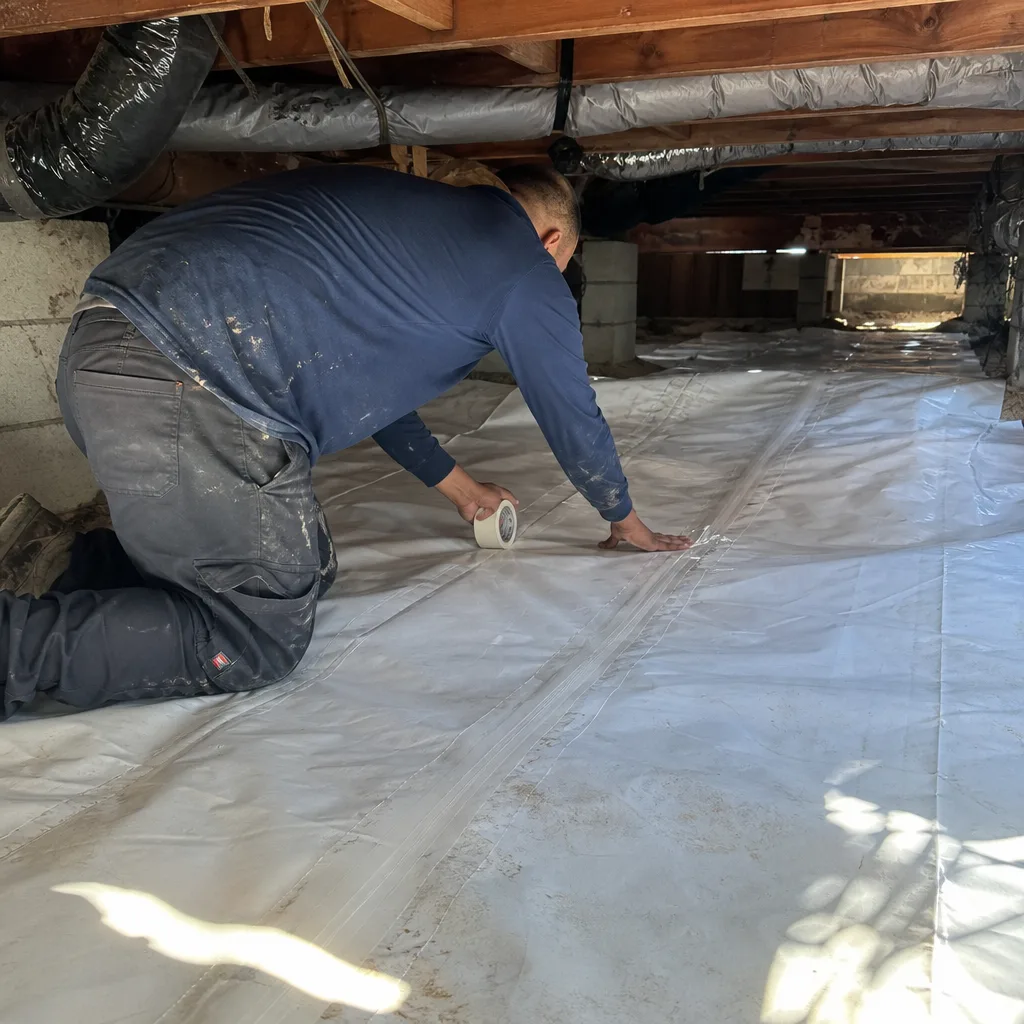
- Hot second-floor ceilings after 7 p.m. A working radiant barrier drops radiant heat transfer by 95%; when it’s torn or oxidized, that heat soaks through drywall for hours after sunset. We measure attic deck temperatures in Rancho Vista homes at 140°F in July; with a failed barrier, that heat radiates straight into living space.
- Dust-covered or buried reflective surface. Blown-in cellulose or fiberglass added over a radiant barrier turns it into a conductive heat sink, not a reflector. This is the most common “failure” we find: a previous contractor improved R-value while destroying the barrier function.
- Visible tearing along staple lines or at seams. Palmdale’s 40-50°F daily temperature swings in shoulder season cause expansion contraction at fastener points. Demilec-specified installations from 2012-2016 used lighter-weight foil that fatigues faster in this cycling.
- Corroded or blackened foil patches. When non-perforated barrier was installed over moisture-permeable foam, condensation forms at the foil face. The aluminum oxidizes, emissivity climbs toward 0.20 or higher, and the barrier stops working.
- HVAC running 20+ minutes longer per cycle than prior years. This is the billable symptom. We compare current run-time data to the blower-door and load calc we perform at inspection; a failed barrier typically adds 15-25% cooling load in Palmdale’s Zone 3 climate.
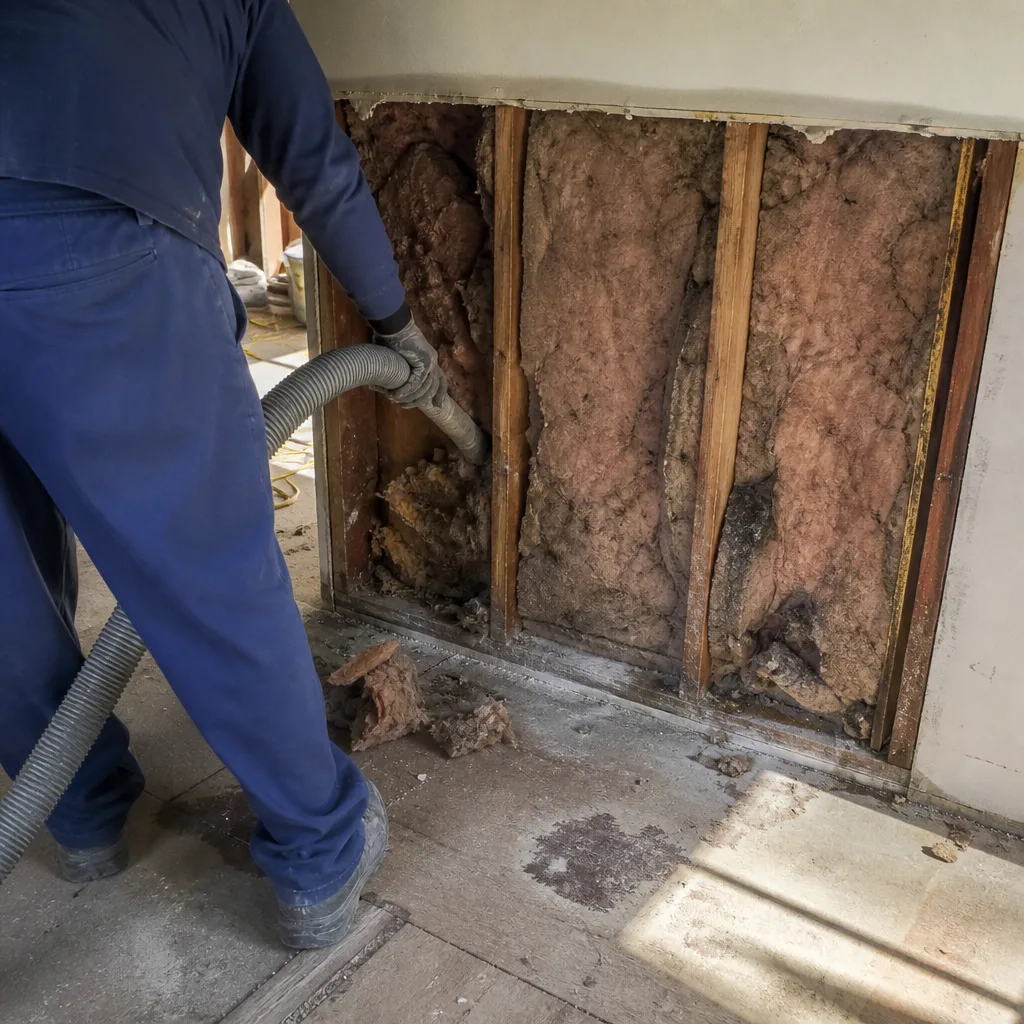 Before
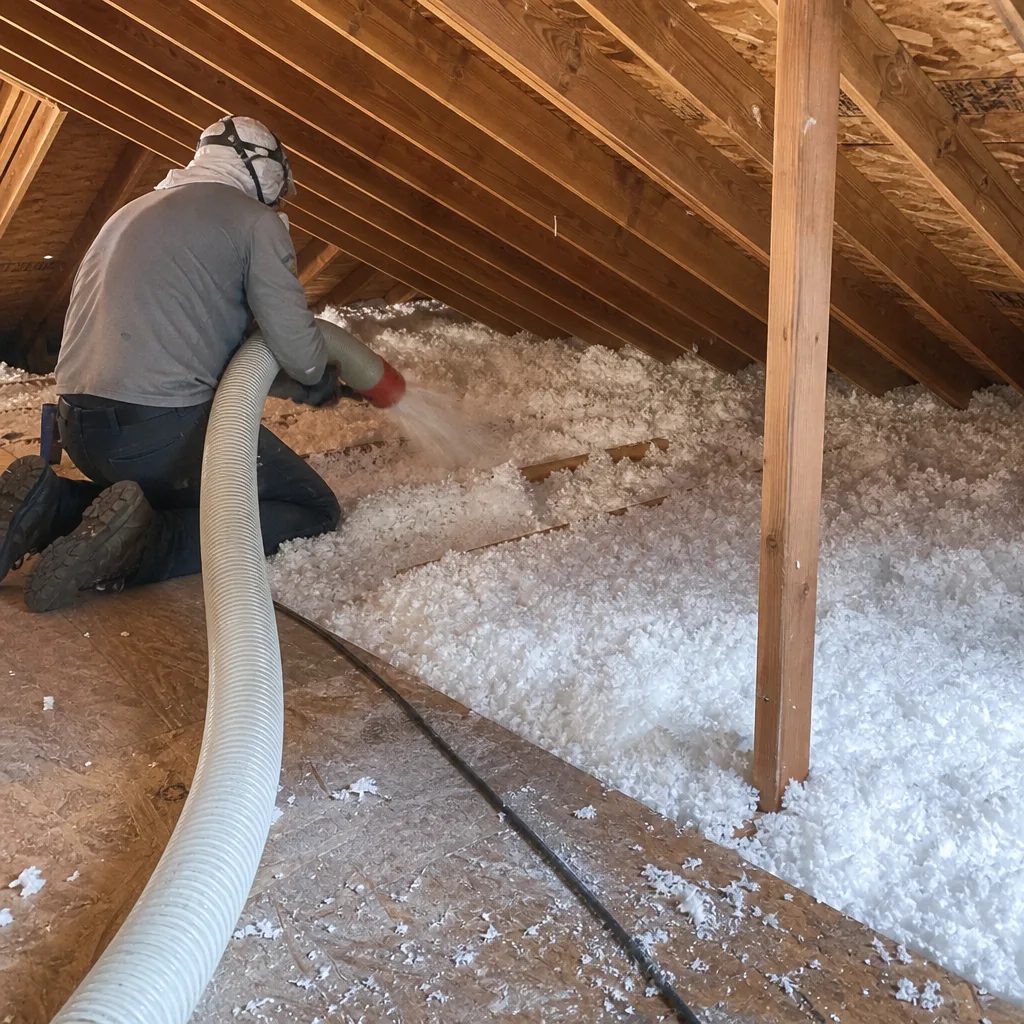 After
AfterReplacement Cost & What’s Included
For a typical Palmdale single-story with 1,200-2,000 square feet of attic deck, Demilec-compatible radiant barrier replacement runs:
| Scope | Price Range |
|---|---|
| Barrier removal + disposal (existing failed product) | $280-$450 |
| Perforated radiant barrier material (ASTM C1313) | $0.45-$0.85/sq ft |
| Cap-staple installation to roof deck | $1.10-$1.60/sq ft |
| Air sealing of top plates, can lights, penetrations (pre-requisite) | $380-$620 |
| Blower-door test, before and after | Included |
| Documented Photo Record + written scope | Included |
Most complete jobs land between $1,800 and $3,400. The range driver is attic accessibility: truss spacing under 24 inches, ductwork in the way, or a 12/12 pitch adds labor time. We don’t price by square footage alone because a 1,500-square-foot attic with three HVAC runs and a cathedral ceiling section takes longer than a wide-open 2,000-square-foot deck. Every job gets a written price before any work starts, under Haven Standard Clause 1. The 365-Day Done Right Promise covers installation defects; material defects are backed by the manufacturer’s warranty.
DIY or Call Us?
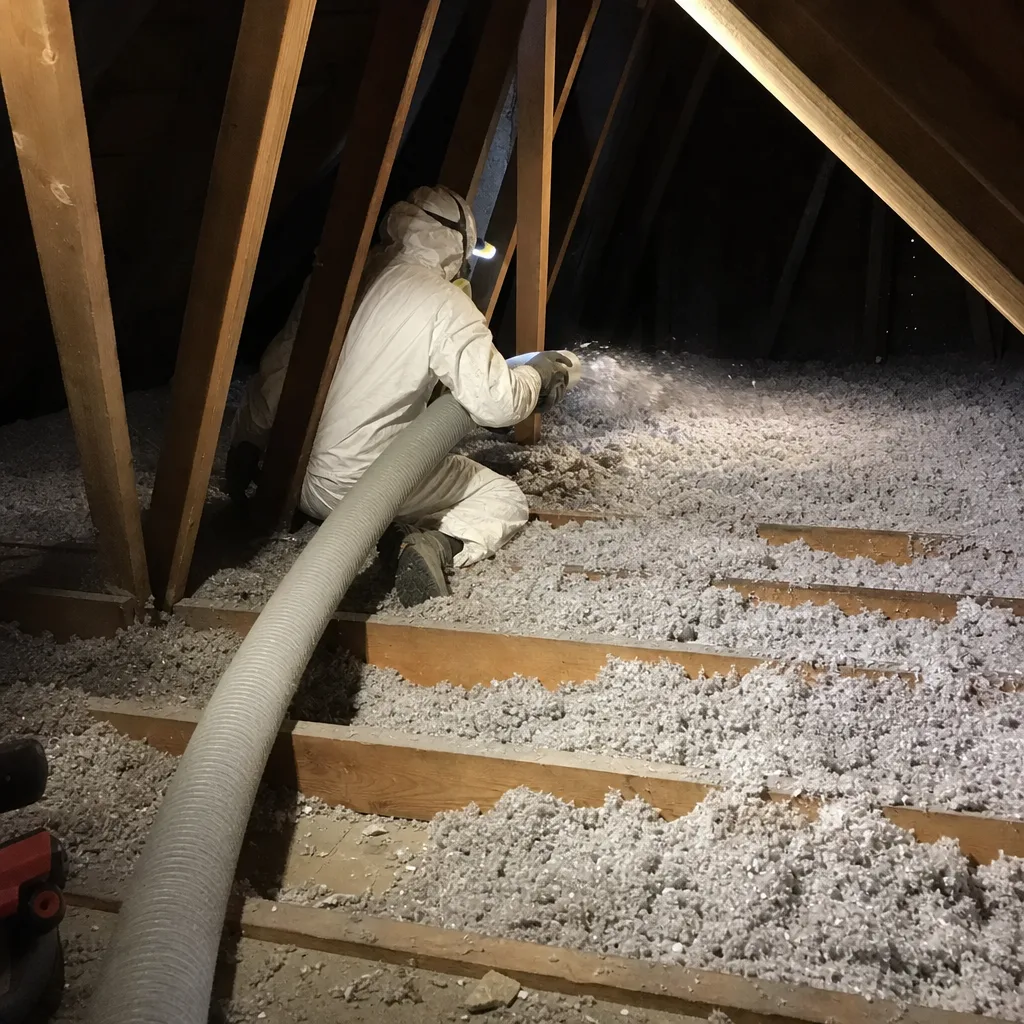
What you can safely check yourself: confirm whether your barrier is perforated (hold it to light; holes should be visible) or solid, and whether it’s fastened to the roof deck or laid on the attic floor. A deck-mounted barrier works; a floor-laid barrier doesn’t, period. You can also photograph any manufacturer tags and email them to us for identification.
Where DIY goes wrong: attic work in Palmdale summer is genuinely dangerous. Deck temperatures exceed 130°F by 10 a.m.; heat exhaustion hits fast, and a single misstep through a drywall ceiling is a hospital trip. Beyond safety, improper staple spacing (industry spec is 6-8 inches on center, 2 inches at seams) creates sagging pockets that trap air and defeat the barrier. And without a blower-door test, you can’t verify whether the real problem is the barrier itself or the unsealed air leaks that made the barrier irrelevant.
Seal the leaks first. The insulation is just the last step. Call (661) 403-4467 and we’ll run the blower-door test, show you the CFM50 numbers, and give you a written price before anyone lifts a tool.
FAQs
A properly installed perforated radiant barrier in Palmdale’s dry climate lasts 20-25 years before oxidation reduces emissivity below effective levels. The failure mode we see sooner is mechanical: staple tear-out or burial under added insulation, usually at year 8-12. Call (661) 403-4467 for an attic inspection and exact quote - estimates are free.
Patching small tears is possible, but it’s rarely cost-effective. Labor to access, patch, and re-verify coverage exceeds replacement cost in most attics, and patched areas create emissivity inconsistencies that show up on infrared cameras. We replace the full field so the performance is uniform and documentable. Call (661) 403-4467 for an exact quote - estimates are free.
Most residential replacements take one day: 2-3 hours for removal and air sealing, 3-4 hours for barrier installation, plus blower-door testing before and after. Two-story homes with complex rooflines or limited attic access may run into a second day. We schedule starts so the crew finishes same-day whenever possible.
Yes. We carry perforated and non-perforated ASTM C1313 barrier rolls, cap staplers, and seam tape on every Palmdale truck. For Demilec hybrid assemblies, we verify the original foam spec before selecting barrier type. Same-day installation is available for most calls received before noon.
Written by Wes Okafor, Owner, Topside Attic Insulation Palmdale at Topside Attic Insulation Palmdale, serving Palmdale and nearby areas.