
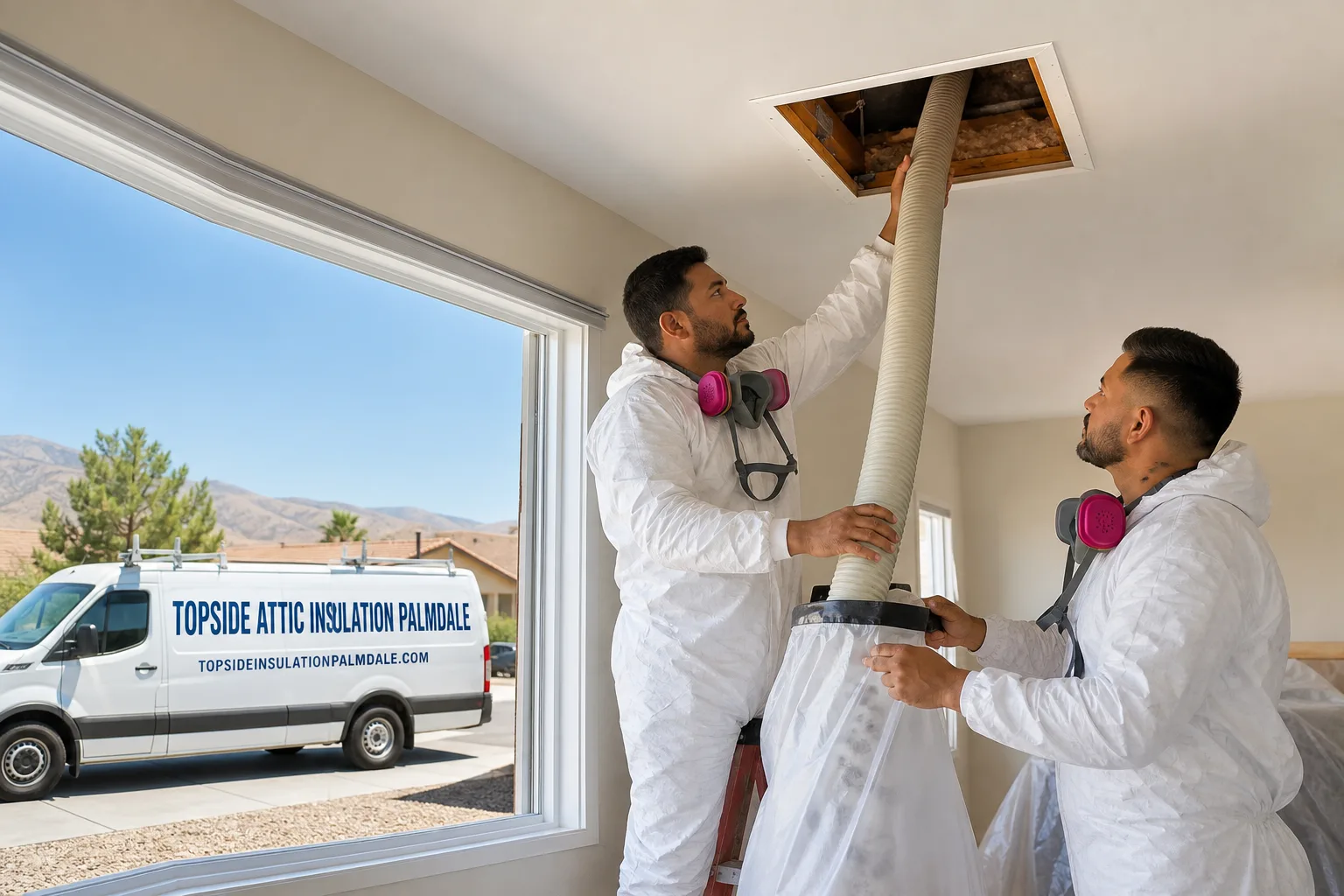
Fast, Reliable Blown-In Insulation Across Lake Los Angeles
Most blown-in insulation jobs in Lake Los Angeles run $1,800-$4,500 for a typical attic retrofit, with same-week scheduling available and crews dispatched from our Los Angeles office. We serve Lake Los Angeles homeowners with the understanding that homes here face a dual thermal load - 100°F summer afternoons and hard winter freezes - that coastal contractors rarely account for in their scope.
Call (661) 403-4467 for a written price before any work starts.
Why Topside Attic Insulation Palmdale Is Lake Los Angeles’s Preferred Blown-In Insulation Company
We’ve sealed and insulated more than 9,000 homes since 2016, and the Lake Los Angeles jobs stay with us. The owner-built ranches off 240th St East, the manufactured homes along Avenue P, the 1960s slabs near the community center - we’ve worked in all of them. Our crews know to check for warped skirting before quoting, to test for failed vapor barriers in slab-on-grade ceilings, and to account for wind-driven infiltration across the open desert floor.
Our reviews from Lake Los Angeles customers consistently cite two things: the before-and-after blower-door numbers we publish, and the fact that we actually show up when we say we will. Under Haven Standard: Arrive on schedule, you get a named technician and a text when they are on the way.
Response time to Lake Los Angeles is typically 24-48 hours for standard appointments, with emergency scheduling available for homes with exposed insulation or failed heating systems tied to envelope leaks. Calls are answered by a live person, 24/7 - no voicemail loops.
What separates us from West LA crews is simple: we engineer for the high desert. The San Gabriel Mountains aren’t just scenery here - they’re the barrier that traps Lake Los Angeles in a climate zone most LA contractors never work in.
Our Blown-In Insulation Services in Lake Los Angeles
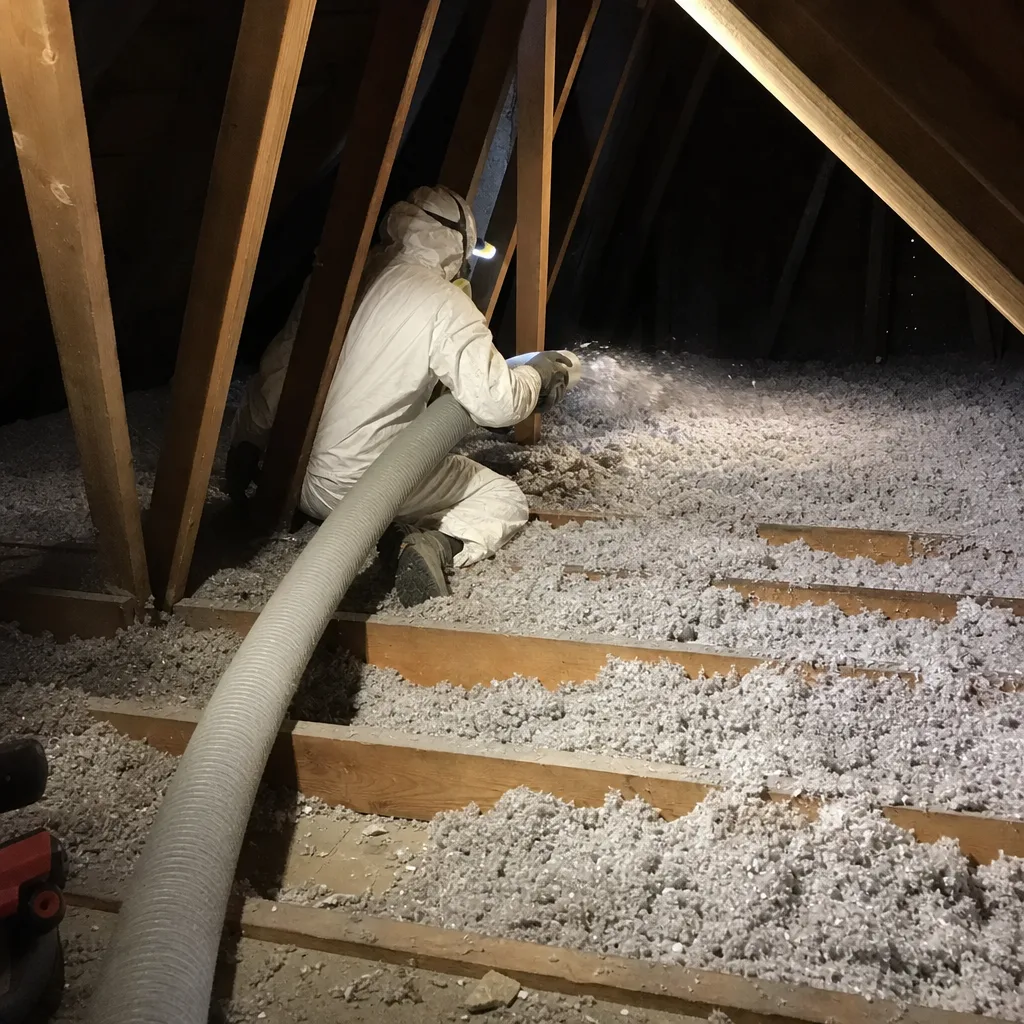
Blown-In Cellulose
Blown-in cellulose is our most common Lake Los Angeles retrofit, and for good reason. The 1970s owner-built homes and manufactured structures that dominate this community were often built with no attic insulation at all, or with a thin layer of rock wool that has settled to R-5 or less. We blow GreenFiber cellulose to targeted densities that fill irregular joist cavities and seal around penetrations. In Lake Los Angeles’s high winds, properly dense-packed cellulose resists settling and air movement better than loose-fill alternatives. A typical attic retrofit runs $2,200-$3,800.
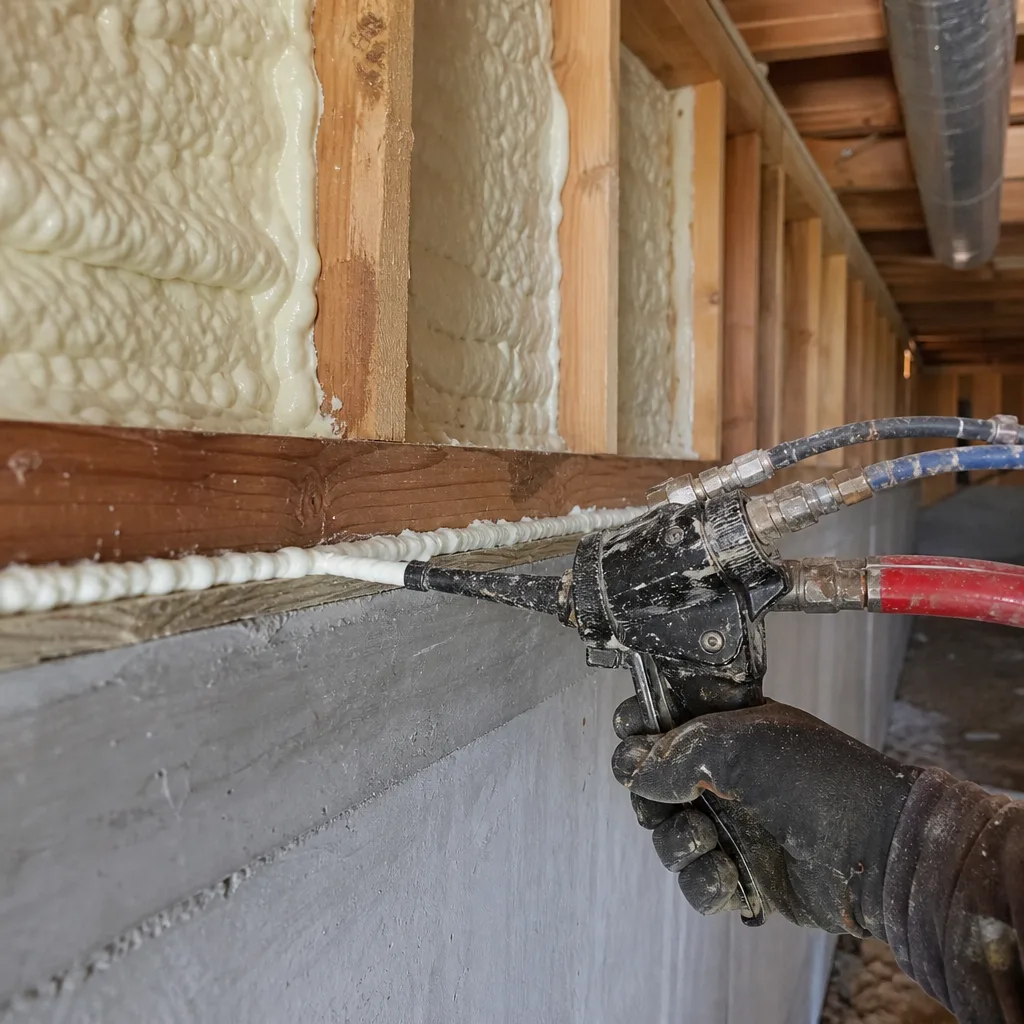
Blown-In Fiberglass
Fiberglass works well in Lake Los Angeles attics where moisture management is already handled and the homeowner wants a non-cellulose option. We use Owens Corning and Johns Manville loose-fill products, blown to manufacturer-specified density. Fiberglass doesn’t absorb moisture the way cellulose can, which matters in homes where a failed vapor barrier has already caused ceiling issues. Typical range: $1,800-$3,200 for attic coverage.
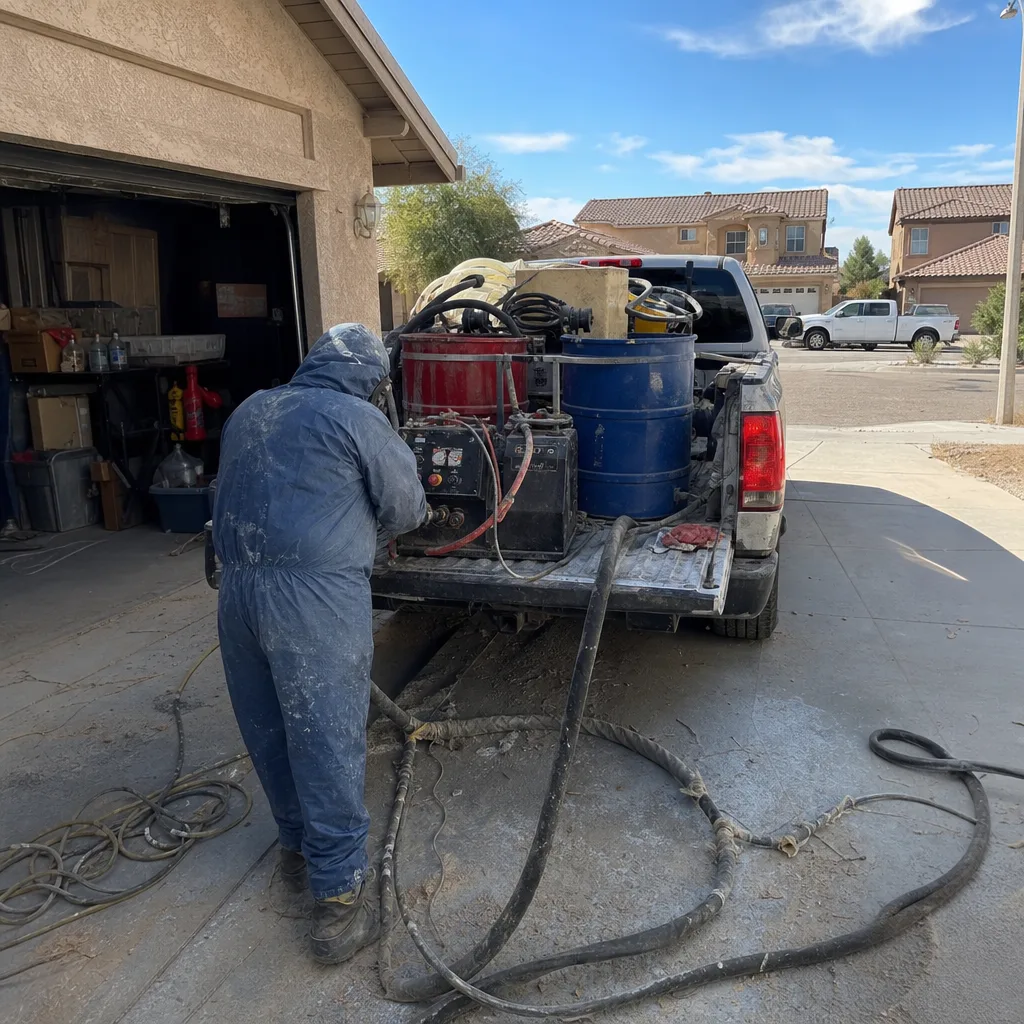
Dense-Pack Wall Insulation
This is where Lake Los Angeles’s wind exposure becomes critical. The west-facing walls of homes along the open desert edge - think the ranches off 170th St East and north of Avenue R - see sustained winds that drive air straight through empty stud cavities. Dense-pack cellulose, blown at 3.5-4.0 lbs per cubic foot, creates an air-impermeable wall assembly that stops that infiltration cold. We dense-pack after sealing top plates and electrical penetrations. Most Lake Los Angeles wall jobs run $3,500-$6,000 depending on linear footage and access.
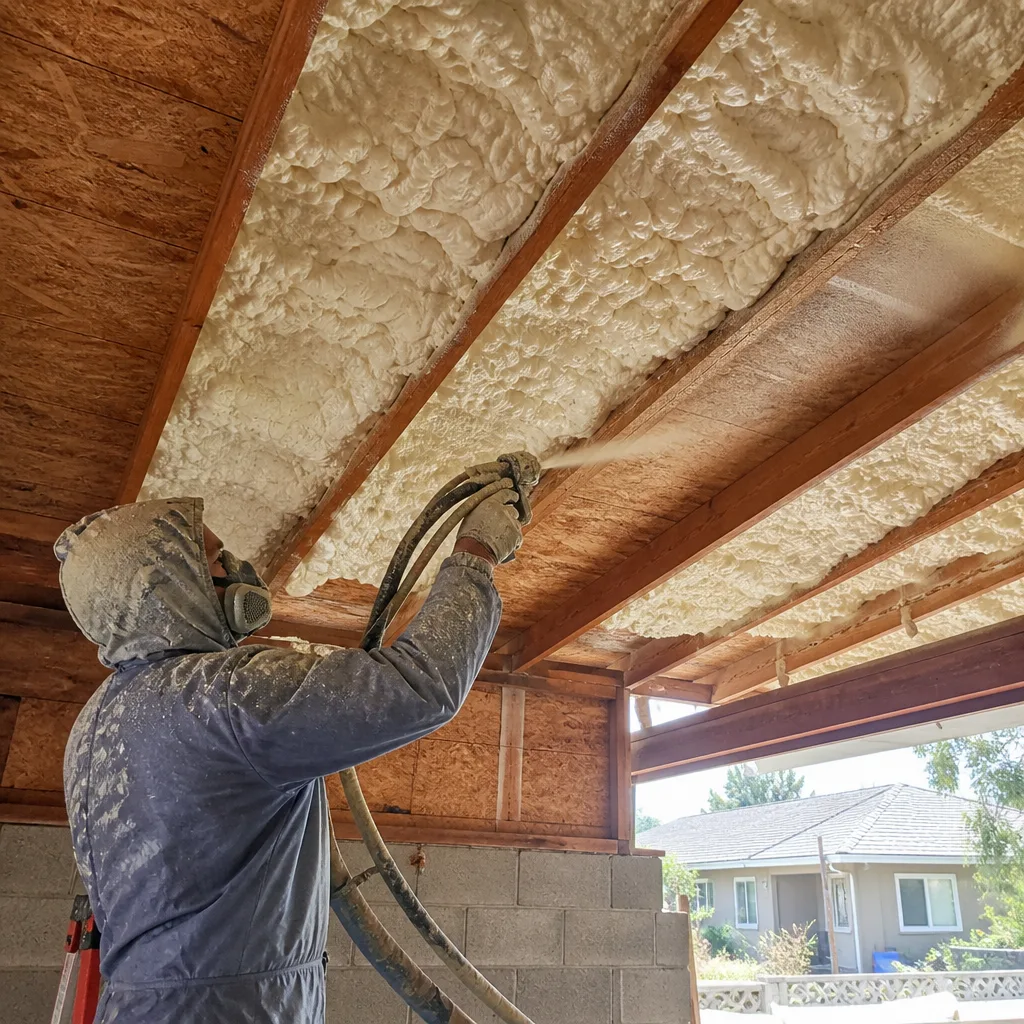
Blown-In Top-Up
Some Lake Los Angeles homes do have existing insulation, but it’s thin, uneven, or contaminated by rodent activity in the attic. A blown-in top-up adds R-value without full removal, provided the existing material is dry and structurally intact. We photograph the existing condition, test for moisture, and blow new cellulose or fiberglass to achieve the target R-value. Top-ups typically cost $1,200-$2,400. If the existing insulation is wet or compressed, we’ll tell you - and show you the photos - before recommending anything.
What happens when you call
- 1
A real person answersNo phone trees - you reach a local pro.
- 2
You get an upfront price rangeHonest numbers before anyone is dispatched.
- 3
A background-checked tech heads outLicensed & insured, dispatched right away.
- 4
You approve before work beginsNothing starts until you say go.
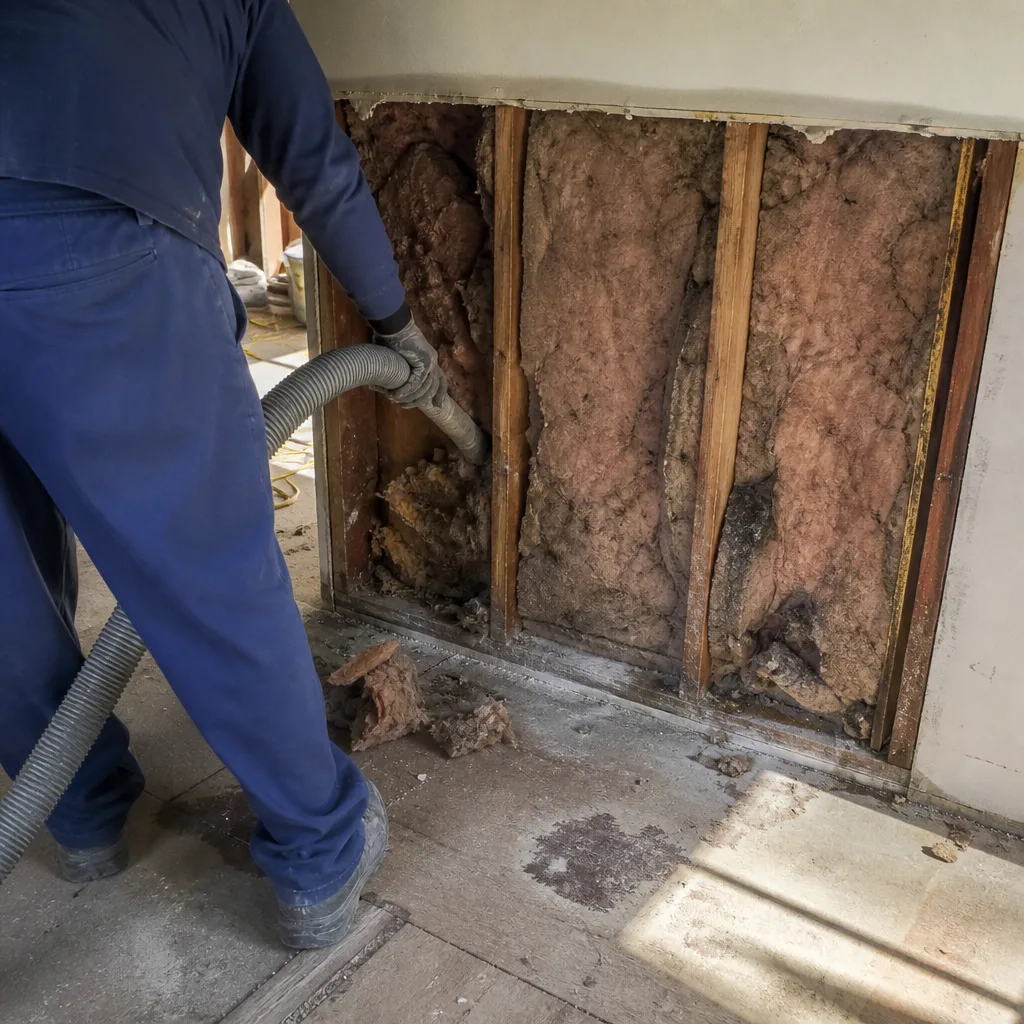 Before
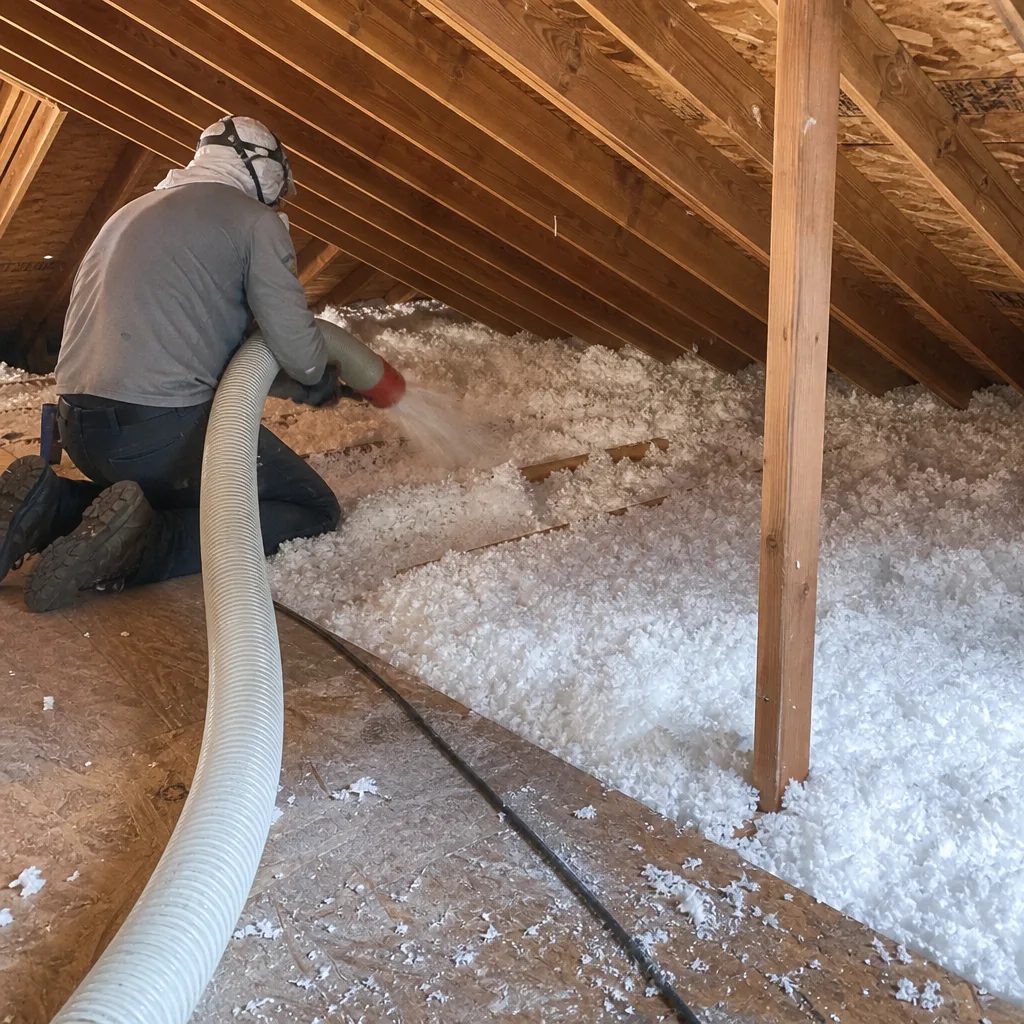 After
AfterTrusted Brands We Service in Lake Los Angeles
We source blown-in materials from Owens Corning, Johns Manville, Knauf, Rockwool, CertainTeed, Icynene, Demilec, and GreenFiber - no proprietary lock-in, no mystery products. For Lake Los Angeles customers, this means we can match the right material to the specific failure mode we’re seeing: GreenFiber cellulose for the wind-exposed owner-built ranches, Rockwool for fire-resistant applications near the wildland interface, CertainTeed fiberglass for moisture-compromised attics where cellulose isn’t appropriate. Our Los Angeles office stocks common densities and blower configurations, so we’re not waiting on freight when your propane bill is climbing.
Common Blown-In Insulation Problems We See in Lake Los Angeles Homes
- Manufactured-home skirting gaps expose underfloor insulation to desert dust and moisture. The high winds and temperature cycles in Lake Los Angeles warp and gap skirting faster than in most California climates. Once that happens, blown-in underfloor insulation gets loaded with dust, which collapses its R-value and can harbor moisture against the floor deck. We see this on homes along Avenue P and 240th St East regularly.
- 1960s-70s attic hatches and can lights act as chimneys in the diurnal swing. Lake Los Angeles’s 40°F day-night temperature swings in shoulder season create powerful stack effect pressure. Unsealed can lights and rickety attic hatches become one-way valves, pulling conditioned air out and letting 100°F attic air in - or the reverse in winter. Blowing insulation without sealing these first is throwing money into the wind.
- Failed vapor barriers in slab-on-grade ranchers trap winter condensation. The 1960s stick-built homes near the community center often have polyethylene vapor barriers that have torn or disintegrated. Blow new cellulose on top, and winter’s interior moisture migrates up, condenses against the cold drywall, and sags the ceiling. We test for this before we quote.
- Original rock wool settled to near-zero effectiveness. The 1950s-70s owner-built homes frequently started with a thin scattering of rock wool that has compressed over decades to R-3 or less. Homeowners think they have insulation; they have a thermal fig leaf. Our blower-door test shows the truth in one number.
Pricing for Blown-In Insulation in Lake Los Angeles, CA
Here’s what blown-in insulation costs in Lake Los Angeles, based on jobs we’ve completed in the last 18 months:
| Service | Typical Range | Notes |
|---|---|---|
| Blown-in cellulose attic (typical 1,200 sq ft) | $2,200-$3,800 | Includes air sealing of top plates, can lights, penetrations |
| Blown-in fiberglass attic | $1,800-$3,200 | Non-cellulose option; moisture-tolerant |
| Dense-pack wall insulation | $3,500-$6,000 | Per linear footage; west-facing walls priority |
| Blown-in top-up (existing adequate insulation) | $1,200-$2,400 | Contingent on dry, intact existing material |
| Manufactured home underfloor (with skirting repair) | $2,800-$4,500 | Includes skirting assessment and sealing |
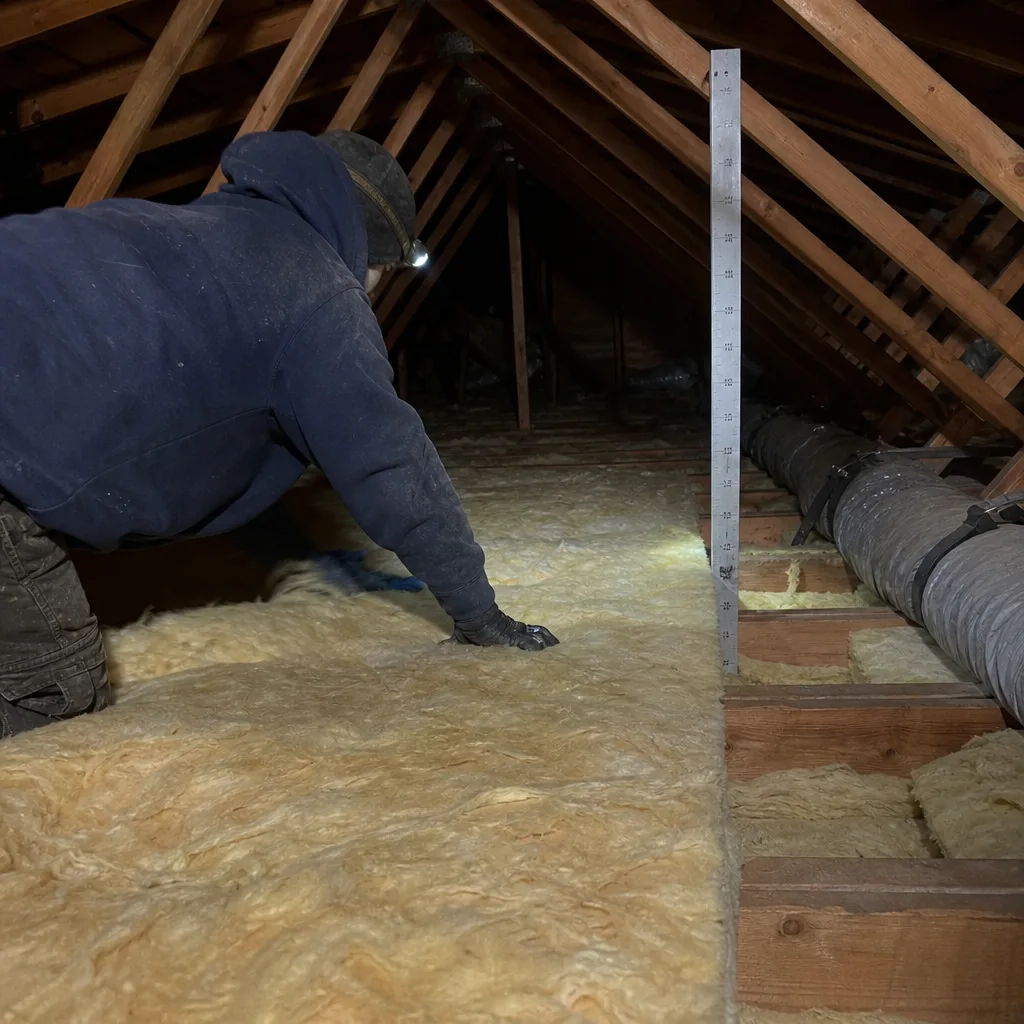
What moves the needle: attic accessibility (steep pitches add labor), existing insulation condition, whether air sealing is needed before blowing, and the target R-value. Lake Los Angeles’s high desert climate means we typically target R-38 to R-49 in attics - higher than coastal LA’s R-30 minimum - because the dual thermal load justifies the incremental cost. Every quote is a flat written price with scope and warranty, delivered before anyone lifts a tool. Free Second Opinion on any written estimate from another contractor.
Call (661) 403-4467 for your written price - estimates are free, and we publish the blower-door numbers so you can verify the result.
We Also Serve Cities Near Lake Los Angeles
Our crews work throughout the Antelope Valley and high desert, including Lake Los Angeles, Palmdale, Desert View Highlands, Quartz Hill, and Acton. Dispatch and scheduling are coordinated from our Los Angeles office; crews serve Lake Los Angeles locally with the same written-price, documented-record standard we apply everywhere.
Serving Lake Los Angeles, CA - Our Local Coverage Area
We’re based in the Lake Los Angeles area and know this community well. Use the map below to see our service coverage - if you’re nearby, we can almost certainly help.
FAQs - Blown-In Insulation in Lake Los Angeles
Sometimes, but we rarely recommend it. The skirting is already your thermal and moisture boundary, and if it’s warped or gapped - which we see constantly in Lake Los Angeles’s wind cycles - blowing underfloor insulation without addressing that boundary first traps dust and moisture against the floor system. We assess the skirting condition as part of every manufactured home quote. If repair or replacement is needed, we include it in the written scope. Call (661) 403-4467 and we’ll show you what we found in the photo record.
We target R-38 to R-49 in the attic and R-13 to R-21 in walls, depending on cavity depth and access. The 1960s slab-on-grade ranchers near the Lake Los Angeles community center typically have 2×4 walls, so R-13 dense-pack is the practical maximum without furring out. In the attic, we blow to R-38 minimum - higher than coastal LA’s R-30 - because the high desert’s sub-freezing winter nights and 100°F summer days create a dual load that demands more thermal resistance. The blower-door test before and after shows whether we hit the air-sealing target that makes the R-value actually perform.
Yes, and it’s often the best solution for the irregular framing we find in 1950s-70s owner-built construction. These homes weren’t built to uniform standards - stud spacing varies, corners are sometimes open to the attic, and fire blocking is inconsistent. Dense-pack cellulose at 3.5-4.0 lbs per cubic foot fills these irregularities and creates an air-impermeable assembly that fiberglass batts can’t match. We dense-packed the west wall of a 1970s ranch off 240th St East near Avenue P last year, and the homeowner reported the propane furnace running half as often after the first freeze. Before-and-after blower-door numbers: 4,200 CFM50 down to 2,100.
The freeze-thaw cycle itself doesn’t damage properly installed blown-in insulation, but it amplifies any air-leakage problem. When attic air hits 20°F at night and 100°F by afternoon, the pressure differential drives air through every gap in the envelope - pulling conditioned air out, pulling dust and moisture in. Insulation that isn’t paired with thorough air sealing becomes a filter, not a barrier. In Lake Los Angeles, we see cellulose that has migrated away from leaky can lights, creating bare spots exactly where the thermal loss is worst. That’s why our Blown-In Insulation team never blows without sealing first.
Only if the existing insulation is dry, intact, and uncontaminated. We inspect with photos before recommending a top-up. In Lake Los Angeles, we frequently find that “some insulation” means settled rock wool at R-3, rodent-compacted fiberglass, or cellulose that got wet from a roof leak and dried into a crust. A top-up over any of these just buries the problem. If the existing material is sound, we’ll blow to R-38 or higher and document the final depth with photos. If not, we’ll show you the evidence and quote removal plus new installation. Either way, you get a written price before any work starts.
Written by Wes Okafor, Owner at Topside Attic Insulation Palmdale, serving Lake Los Angeles since 2016.