
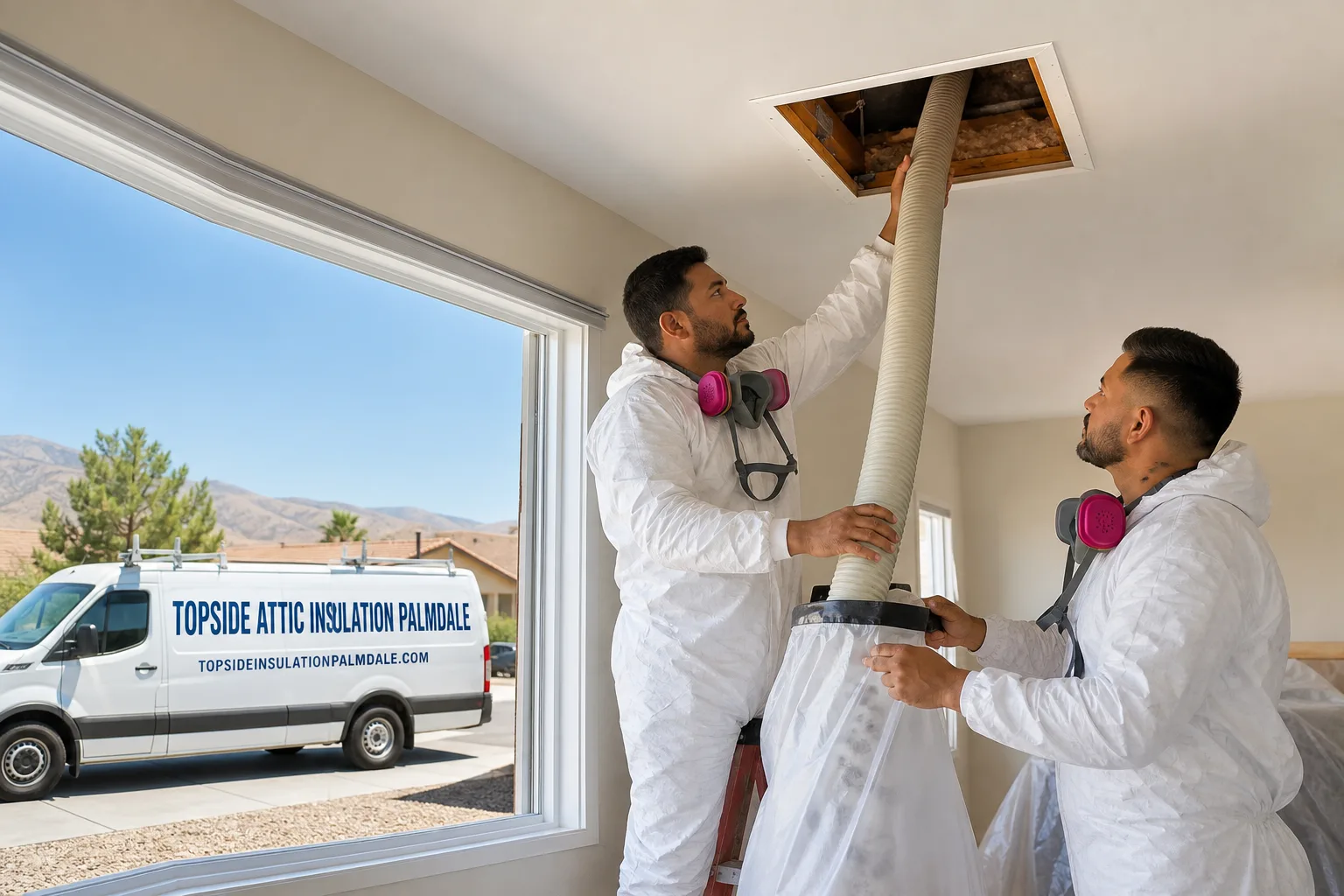
How Much Does Attic Cleaning & Rodent Proofing Cost in Palmdale?
Attic Cleaning & Rodent Proofing in Palmdale, CA typically runs between $1,200 and $4,800 for a single-family home, with most jobs landing in the $1,800-$3,200 range once contaminated insulation removal, sanitization, and entry-point sealing are all factored in. Homes in Palmdale’s older tracts – think the ranch-style builds in West Palmdale or the 1980s subdivisions near Sierra Highway – tend to sit at the higher end because rodent activity has often gone undetected longer, meaning more insulation to pull and more framing to treat. A written price is issued before any work starts, so you know the full number before a technician touches anything.
Attic Cleaning & Rodent Proofing Cost Breakdown (2026)
The total cost on your invoice reflects several distinct scopes of work. Some homeowners need all of them; others need two or three. Here is how each line item typically prices out in the Palmdale market as of 2026:
| Scope of Work | Typical Palmdale Price Range | Notes |
|---|---|---|
| Attic inspection & assessment | Free – $150 | Free with a project estimate at Envelope; standalone diagnostic billed separately by some contractors |
| Contaminated insulation removal (per 1,000 sq ft) | $500 – $900 | Blown-in cellulose or fiberglass soaked with urine costs more to bag and haul than intact batts |
| Attic sanitization & deodorization | $300 – $700 | Enzyme-based treatments for active urine odor; two-pass treatment needed on heavy infestations |
| Rodent exclusion / entry-point sealing | $400 – $1,200 | Depends on number of penetrations; Palmdale homes with tile roofs typically have more gap points at eave transitions |
| Dead rodent & debris removal | $150 – $400 | Usually bundled into a full cleaning scope; billed separately on partial jobs |
| New insulation installation (after removal) | $1,200 – $3,500 | Varies by R-value, attic size, and material; air sealing of top plates completed first – always |
| Full project (cleaning + exclusion + new insulation) | $2,500 – $6,500 | All-in range for a 1,500-2,400 sq ft Palmdale home |
The widest variable is insulation replacement. If the insulation in your attic is badly saturated or compressed by years of nesting activity, it cannot be left in place – it holds odor, harbors pathogens, and insulates poorly. Replacing it after a full clean is not an upsell; it is what the job actually requires. At Envelope Insulation Co., air sealing of top plates, can-light penetrations, and wall-plate gaps is completed before any new insulation goes in – that sequencing is non-negotiable and is written into the scope before a crew arrives.
For a standard 1,600 sq ft ranch home in Palmdale’s West Antelope Valley tracts, a realistic budget covering removal, sanitization, exclusion sealing, and new blown-in insulation sits around $3,400 – $4,200. Smaller, less-affected attics in newer construction east of the 14 freeway can come in under $2,000 when only partial removal and exclusion work is needed.
What Affects Attic Cleaning & Rodent Proofing Pricing in Palmdale
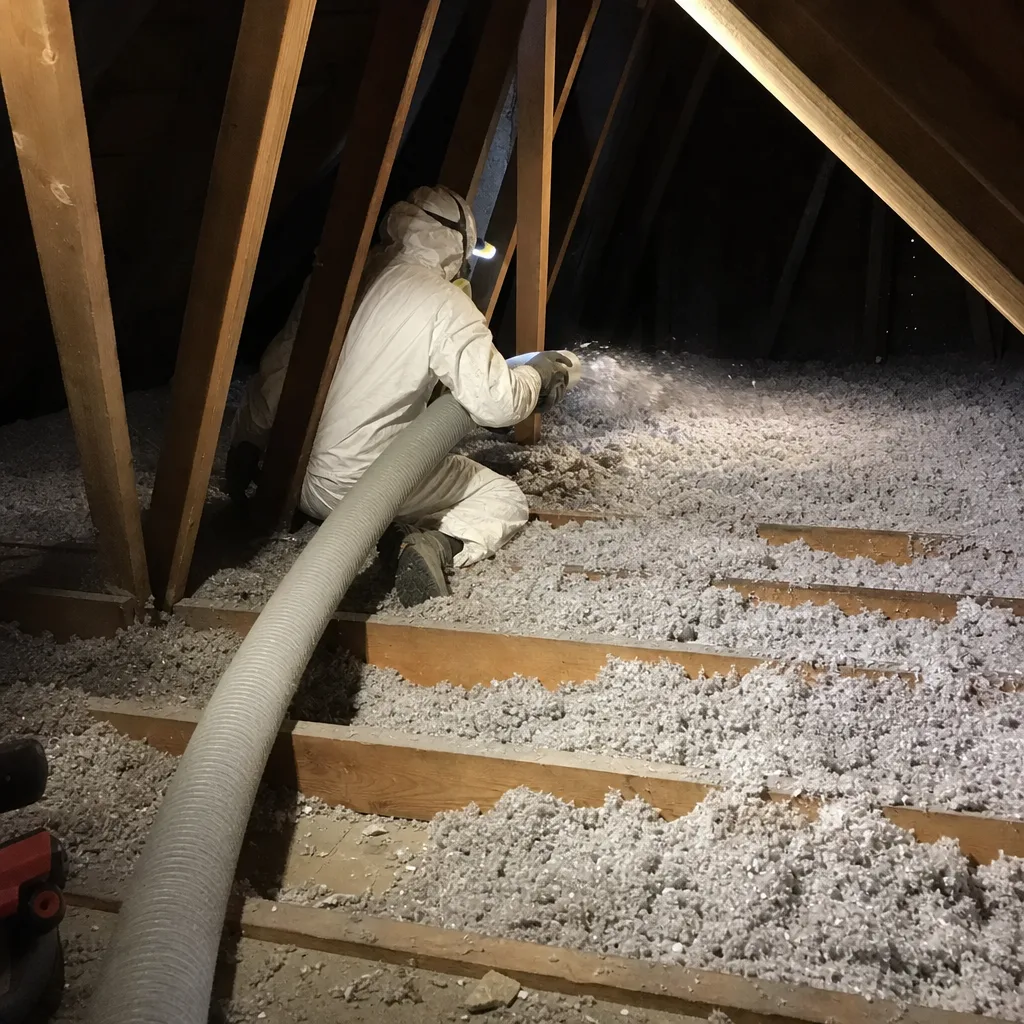
- Attic square footage and access: A 2,200 sq ft footprint costs more to clean and re-insulate than an 800 sq ft one, and Palmdale attics with low-pitch roofs or single pull-down stairs slow technician movement considerably, adding labor time to the estimate.
- Severity and duration of infestation: A roof rat colony that has been active for two seasons in a Quartz Hill neighborhood home will have deposited far more waste – and structural damage – than a recent entry. Heavily soiled insulation must be double-bagged, HEPA-vacuumed from framing cavities, and hauled off-site, all of which adds cost per bag.
- Palmdale’s climate and seasonal timing: The Antelope Valley’s temperature swings – summer highs that routinely exceed 105°F and winter nights that drop into the low 20s – push rodents hard into attic spaces during transitional months (October-November and March-April). Jobs booked after those seasonal pushes typically involve larger active populations and more damage than jobs caught early.
- Number and type of entry points: Homes with tile roofs (common in the master-planned communities around Rancho Vista and Anaverde) have more potential gap points at hip transitions and eave ends. Each sealed penetration adds material and labor. A wood-frame single-story with a simple gable roof typically has fewer gap opportunities.
- Insulation type already in place: Blown-in cellulose that has collapsed under rodent traffic is heavier and slower to extract than fiberglass batts. If there are multiple insulation layers from successive re-insulation jobs – common in Palmdale homes built in the 1970s and 1980s – removal takes longer.
- Permit requirements: Los Angeles County (which governs most of unincorporated Palmdale) does not currently require a building permit for attic insulation removal and replacement as a standalone scope, but if structural repairs are identified during the rodent exclusion work, a permit may be required for those repairs. Any reputable contractor should flag this during the inspection rather than after the invoice arrives.
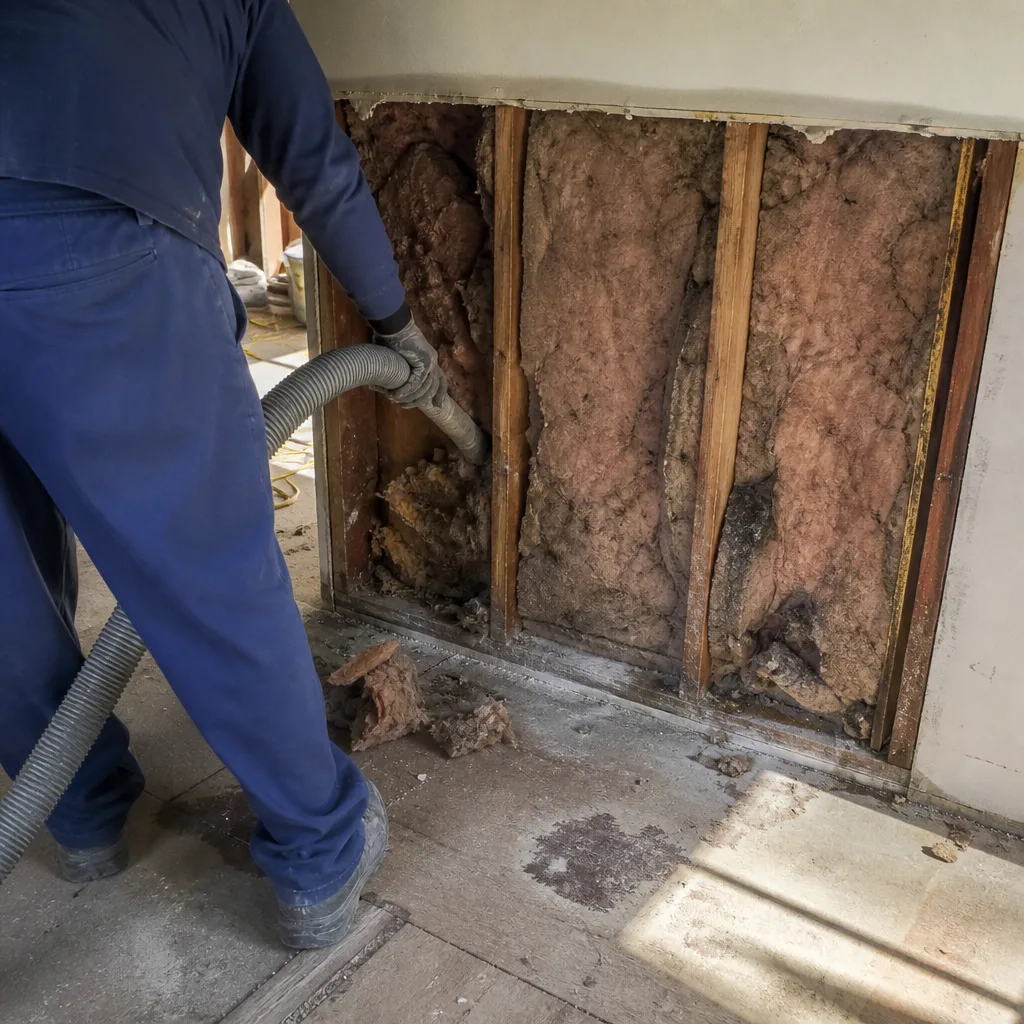 Before
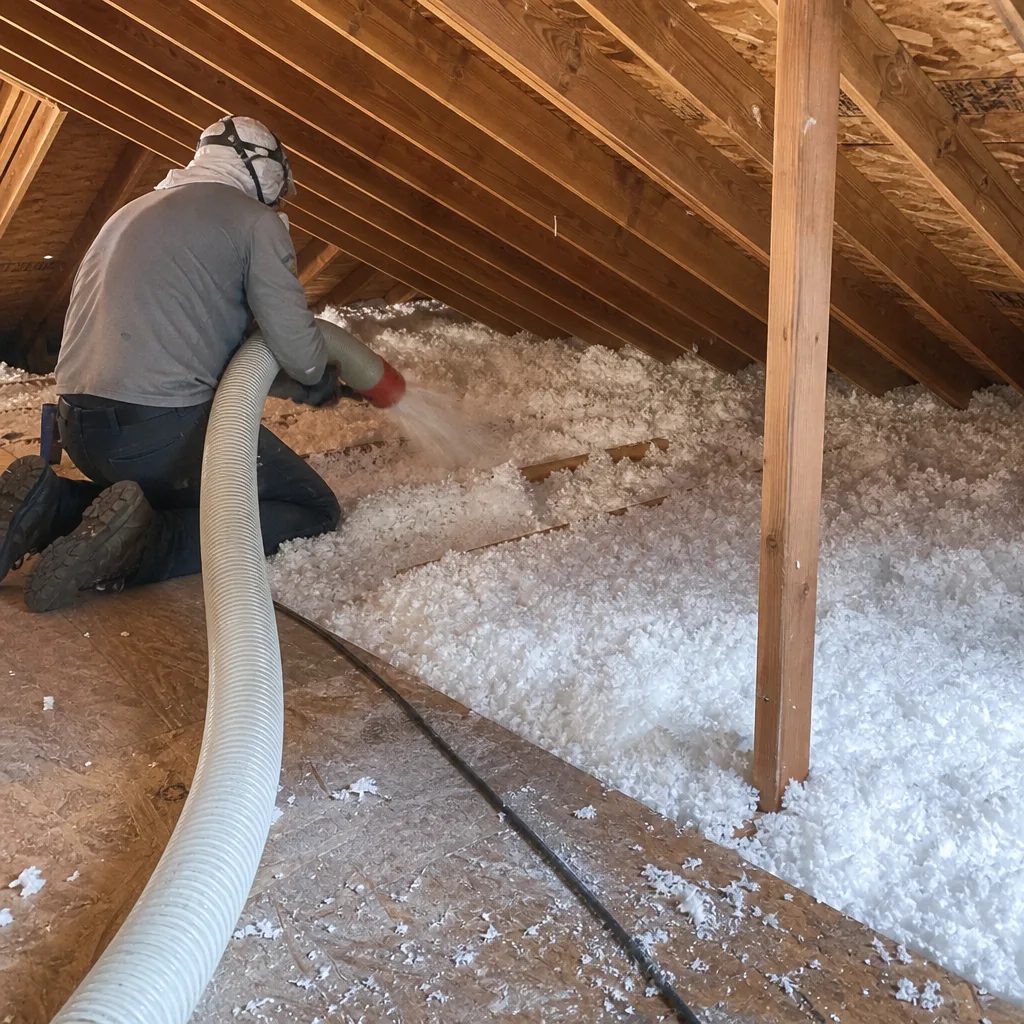 After
AfterHow to Save on Attic Cleaning & Rodent Proofing
Address it early – before the infestation spreads
The single most effective way to keep the bill down is not to delay. A roof rat or Norway rat population compounds quickly. A pair of adults can produce 20-40 offspring in a year. In Palmdale’s dry desert climate, rodents actively seek attic spaces for water and warmth, and a small entry point that costs $150 to seal in October can become a full removal-and-sanitization job by March if ignored. Noise above the ceiling, droppings in the garage, or a musty odor through supply vents are the signals most homeowners in our area describe before we open the hatch.
Get the inspection before assuming you need a full removal
Not every attic with evidence of rodent activity requires a full insulation pull. On some jobs – particularly in newer Palmdale homes built after 2005 with open-cell blown fiberglass – we find activity limited to one section of the attic and insulation that is otherwise intact and performing at specification. A written assessment tells you exactly what is compromised and what can stay. Starting with that documented inspection means your scope of work is based on what is actually there, not on a worst-case assumption. Call (661) 403-4467 and we can walk you through what a free estimate includes before you book anything.
Bundle the exclusion work with the cleaning, not separately
Some homeowners hire a pest control operator to seal entry points and then hire a separate insulation contractor to handle removal and replacement weeks later. The problem with that sequence: the pest operator seals gaps they can see from the exterior, then the insulation crew opens the attic and finds interior penetrations that were missed – and the exclusion work needs to be redone. Booking the cleaning, exclusion, and insulation replacement as a single scope with one contractor eliminates that overlap and usually costs less in aggregate. The written scope you receive before work starts will show exactly which penetrations are being sealed, with what material, so there is no ambiguity.
Check your homeowner’s insurance policy
Some homeowner policies in California cover attic remediation costs when rodent damage is documented as part of a covered loss. This is not guaranteed – rodent damage is explicitly excluded in many standard policies – but it is worth reviewing your declarations page or calling your agent before paying entirely out of pocket. We can provide a documented photo record and written scope language that satisfies most insurer documentation requirements.
Ask about air sealing while the insulation is out
If insulation is coming out anyway, the attic floor – top plates, ceiling penetrations, recessed lights, HVAC boots – is fully exposed. That is the lowest-cost moment to air seal those gaps, because no insulation needs to be moved to access them. At Envelope Insulation Co., air sealing before re-insulation is a hard prerequisite, not an option, but if you are getting competing bids, ask each contractor whether air sealing is included or quoted separately. On a Palmdale home that runs air conditioning six months a year, unsealed top plates can add hundreds of dollars annually to your utility bill. Getting that sealing done while the attic floor is already exposed – rather than as a separate mobilization – is where the cost-to-benefit math is clearest.
Signs You Need Attic Cleaning & Rodent Proofing in Palmdale
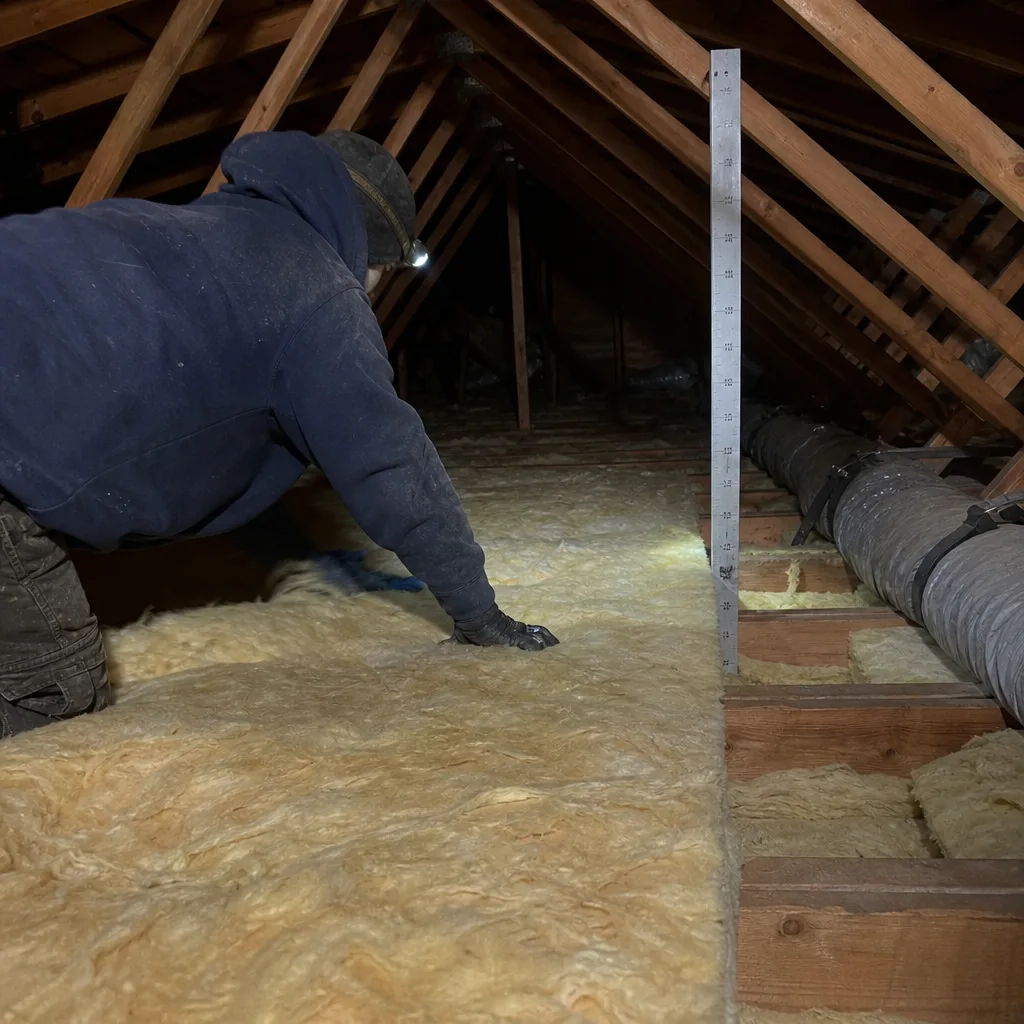
We work throughout Palmdale – from the established neighborhoods in the north near Avenue P to the newer builds along Tierra Subida and east toward Littlerock – and the call pattern is consistent. Homeowners usually reach us after noticing one or more of the following:
- Scratching or movement sounds in the ceiling, typically between 10 p.m. and 2 a.m. (roof rats are nocturnal)
- Dark, rice-shaped droppings along attic joists or at the perimeter of the attic floor
- A persistent ammonia or musty odor coming through HVAC vents or from the ceiling itself
- Chewed insulation batt edges or collapsed blown-in insulation that has been tunneled through
- Gnaw marks on HVAC ducts or wiring in the attic – this is a fire and mechanical risk, not just an odor issue
- Visible entry points at the roofline: missing or corroded vent screens, open soffit transitions, or gaps at roof-to-fascia junctions
In the Antelope Valley’s climate, the window between “rodents moved in” and “insulation is unsalvageable” is often a single winter season. Palmdale’s January lows can push into the teens in freeze years, and rodents nesting in attic insulation compact and shred it aggressively to build nests. What was R-30 blown insulation in October can test at R-12 effective performance by February if a colony has been active through it.
What the Work Looks Like – Step by Step
Knowing what actually happens during the job makes the invoice line items legible. Here is the sequence Envelope Insulation Co. follows on every Attic Cleaning & Rodent Proofing in Palmdale project:
1. Written inspection and scoped estimate
A background-checked, uniformed technician opens the attic hatch, photographs what is there, and produces a written price with a line-itemized scope. Under Haven Standard Clause 1: Written Price Before Any Work Starts, no crew begins until you have that document in hand and have signed off on the scope. The estimate is free.
2. Contaminated insulation removal
Existing insulation that is soiled, compressed, or nesting-damaged is vacuumed out with commercial HEPA-grade equipment or hand-bagged, depending on access and material. Every bag is sealed on-site and hauled to a licensed disposal facility. The attic floor is left clean and inspectable before any further work proceeds.
3. HEPA vacuuming of framing surfaces
Rodent droppings, urine traces, nesting debris, and dander on joists, blocking, and sheathing are vacuumed from all accessible surfaces. This is the step that most low-cost competitors skip or rush – leaving this material in place means the odor and the pathogen load remain even after new insulation goes in.
4. Sanitization and enzyme treatment
An enzyme-based sanitizer is applied to all cleaned framing surfaces. On jobs with heavy urine saturation – common in Palmdale attics where an infestation went undetected for more than one season – a second application after drying may be required. The technician notes whether a second pass is needed and that is documented in the photo record.
5. Rodent exclusion sealing
Every identified entry point is sealed with appropriate material: hardware cloth at vent openings, expanding foam backed with wire mesh at pipe penetrations, and caulk or metal flashing at roofline gaps. This is structural prevention – without it, any cleaned and re-insulated attic will be re-colonized within a season. The specific locations sealed and the materials used are listed in the written scope.
6. Air sealing (completed before insulation)
Top plates, recessed can lights, HVAC boot penetrations, and any plumbing or electrical pass-throughs in the attic floor are sealed with fire-rated caulk or two-component spray foam before insulation is installed. On applicable jobs, a blower-door test – a pressurization reading that shows, in one number, how much conditioned air the home’s envelope was losing – is performed before and after to document the air-sealing result. Envelope is the only local contractor that publishes these before-and-after readings as a standard deliverable.
7. New insulation installation
Blown-in fiberglass, blown-in cellulose, or batts – the material is selected based on your attic geometry, your performance goals, and your budget, sourced from manufacturers including Owens Corning, Johns Manville, Knauf, and GreenFiber. The installed depth is measured and documented. No proprietary product requirement; no upsell pressure.
8. Documented photo record delivered
Before the crew leaves, a documented photo record is compiled – before and after photos of every major scope item – and provided to you. This is included on every job, not available on request. You have a record of what was found, what was done, and what materials were installed. Under the home-improvement standard most homeowners should hold contractors to, that documentation should be the minimum expectation, not a differentiator.
FAQs – Attic Cleaning & Rodent Proofing Cost in Palmdale
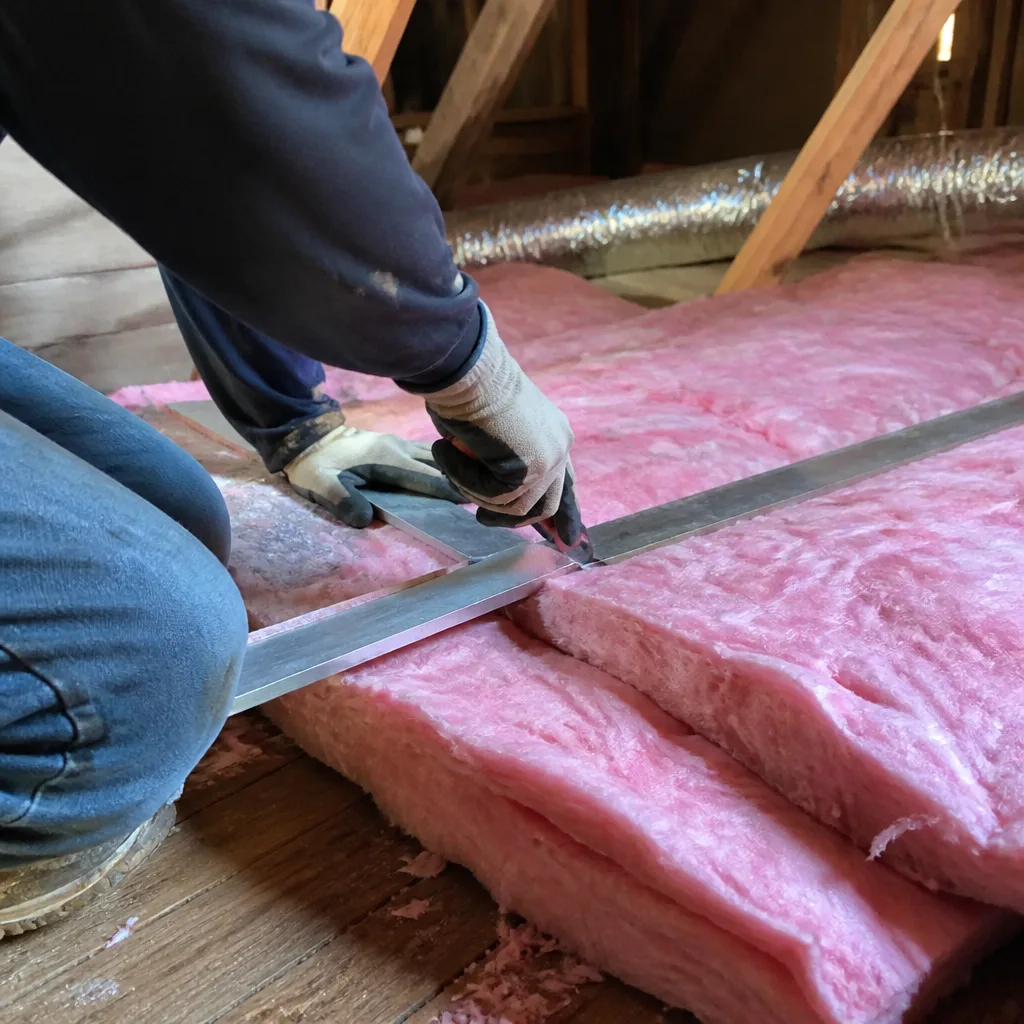
How much does attic cleaning cost in Palmdale, CA?
Attic cleaning in Palmdale – including contaminated insulation removal, HEPA vacuuming of framing surfaces, and sanitization – typically runs between $900 and $2,400 for a single-family home, depending on attic size and the extent of rodent activity. That range covers cleaning only; exclusion sealing and insulation replacement are quoted separately and added to the scope if needed. Call (661) 403-4467 for a written estimate with a line-itemized price before any work starts.
How much does rodent proofing cost in Palmdale?
Rodent exclusion sealing alone – identifying and closing all accessible entry points at the roofline, eaves, vents, and penetrations – typically costs $400 to $1,200 in the Palmdale market. The range reflects the number of gap points found: a simple gable-roof home may have four or five; a tile-roof home in a master-planned community near Rancho Vista may have fifteen or more at hip transitions and eave ends. Each sealed location is listed in the written scope. Call (661) 403-4467 to schedule an inspection and get that number in writing.
Does homeowner’s insurance cover attic rodent damage in California?
Most standard California homeowner policies explicitly exclude rodent damage, but some policies cover remediation costs when the rodent activity caused a secondary covered loss – a chewed wire that sparked a fire, for example. The only way to know is to read your declarations page or call your carrier directly. We provide a documented photo record and written scope that satisfies most insurer documentation requirements if you do have a covered claim.
How long does attic cleaning and rodent proofing take in Palmdale?
A full scope – removal, sanitization, exclusion sealing, and new insulation – on a 1,500 to 2,000 sq ft Palmdale home typically takes one to two full days. Cleaning and exclusion only, without insulation replacement, is usually completed in a single day. Attics with low pitch, minimal access, or heavy debris accumulation take longer; the written scope will include a time estimate before work begins.
Is it cheaper to do attic cleaning without replacing the insulation?
Sometimes, yes – but only when the existing insulation is genuinely salvageable. If insulation is dry, structurally intact, and not saturated with urine, a targeted clean and exclusion can leave it in place and cost $1,000 to $2,000 less than a full removal-and-replacement scope. The problem is that many homeowners – and some contractors – underestimate how deeply rodent waste penetrates blown-in material. Leaving heavily contaminated insulation in place means the odor returns through your HVAC system within a season. The inspection determines which category you are in, and that answer is in the written scope before any work starts. Call (661) 403-4467 and we will tell you exactly what we find.
What R-value should replacement insulation be in Palmdale, CA?
The California Energy Code (Title 24) requires a minimum of R-38 for attic insulation in Palmdale’s climate zone (Climate Zone 14). Most energy consultants and building scientists working in the Antelope Valley recommend R-49 to R-60 given Palmdale’s extreme summer temperatures – attic air can exceed 160°F on a 108°F day, and higher R-values reduce the heat load on your HVAC system more than almost any other single upgrade. The written scope will specify the installed R-value before any material goes in.
Why Envelope Insulation Co. for Attic Cleaning in Palmdale
Since 2016, Envelope Insulation Co. has completed work on more than 9,000 homes across Southern California, every one with a written price before work started and a documented record when the crew left. In Palmdale specifically, we see the same patterns repeatedly: older West Palmdale ranch homes with unscreened gable vents that have been open for decades; newer Anaverde homes where tile roofs were installed without proper eave blocking; and mid-valley builds along the 14 corridor where blown-in insulation from the 1990s has settled to half its original depth and been tunneled through by successive rat populations.
The 365-Day Done Right Promise covers every job: if it is not done right, we make it right, backed by a written scope and written warranty delivered before anyone starts. That is Haven Standard practice, not a marketing line. The written price you receive before we begin is a flat price – not an estimate that grows after the hatch opens.
Wes Okafor leads the team that handles every Palmdale attic project. If you want a second opinion on a written estimate you have already received from another contractor, bring it in – we will read it with you at no charge. That free second opinion is a standing offer, not contingent on you hiring us.
Key Takeaways
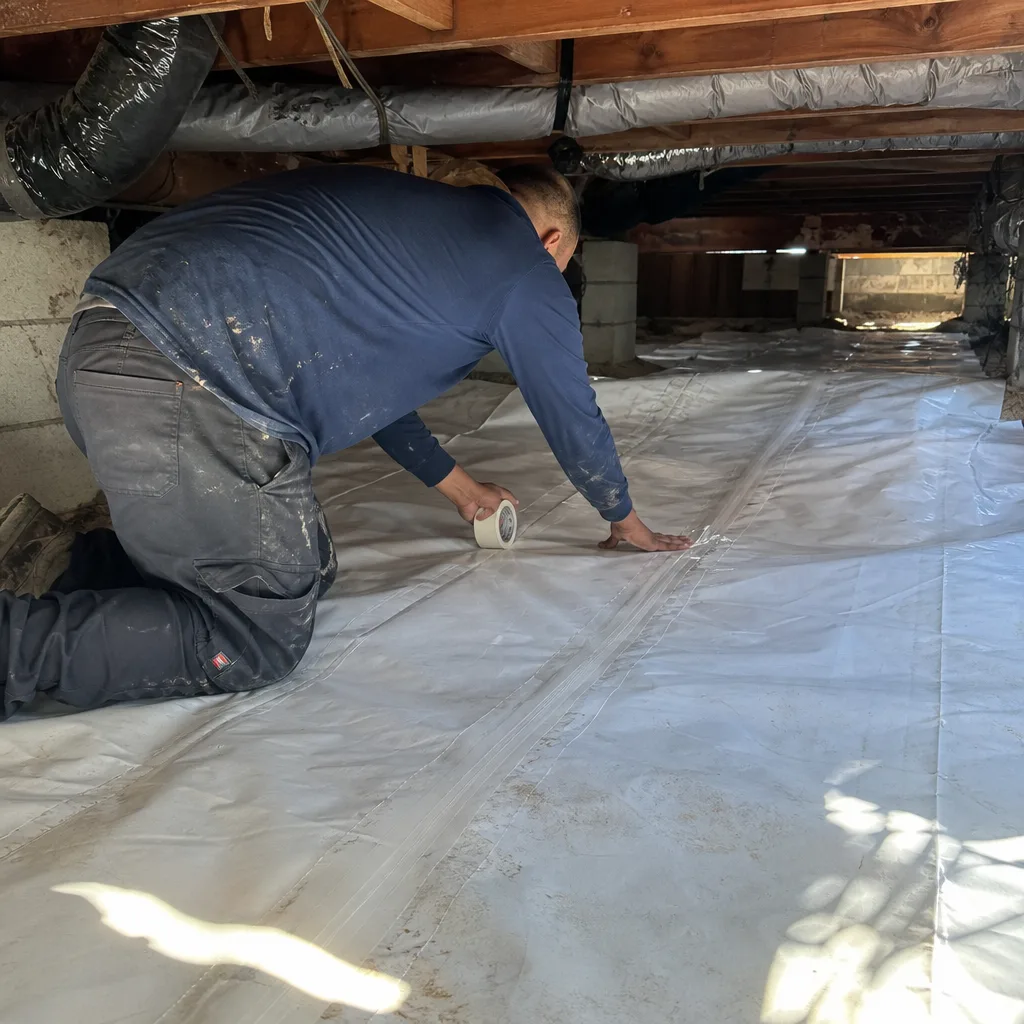
- Full attic cleaning and rodent proofing in Palmdale runs $1,200 to $4,800 for most single-family homes; all-in with new insulation, budget $2,500 to $6,500.
- The biggest cost driver is insulation condition – heavily saturated material must come out; intact material may not.
- Palmdale’s extreme summer heat and cold winter nights mean inadequate or damaged attic insulation has a measurable energy cost year-round.
- Air sealing must be completed before new insulation goes in – that sequencing is documented in the written scope.
- A written price before any work starts is a hard requirement, not a courtesy – you will have the full number before a technician touches anything.
- The 365-Day Done Right Promise and a documented photo record are included on every job.
- Wes Okafor leads Envelope Insulation Co.’s Palmdale projects; call (661) 403-4467 for a free estimate with no voicemail loops.
Get a Written Estimate for Your Palmdale Attic
If you are hearing sounds in the ceiling, seeing signs of rodent activity, or simply do not know what condition your attic insulation is in, the most useful next step is an inspection that produces a written price – not a ballpark range over the phone. At Envelope Insulation Co., the estimate is free, the price is flat, and the scope is in writing before anyone does anything. Wes Okafor and the team serve Palmdale and the broader Antelope Valley and answer calls live, around the clock.
Call (661) 403-4467 to schedule your free attic inspection and written estimate. You will leave with a documented assessment, a line-itemized price, and a clear picture of what the job actually involves – no callback windows, no voicemail.
Pricing reflects the Palmdale, CA market as of 2026. Topside Attic Insulation Palmdale offers free estimates – call (661) 403-4467.
Written by Wes Okafor, Owner at Envelope Insulation Co., serving Palmdale since 2016.
What Our Customers Say
"They air-sealed the attic floor before insulating and showed me the blower-door number before and after. The upstairs is finally the same temperature as downstairs."
- Marisol D."The winter gas bill dropped by about a third. They had estimated a quarter, so they under-promised."
- Genevieve R."Two other companies quoted to blow more insulation on top of what was there. These were the only ones who said the existing material had to come out first, and explained why."
- Clifford E.