
How Much Does Attic Air Sealing Cost in Palmdale?
Attic Air Sealing services in Palmdale, CA typically run between $850 and $2,400 for a single-family home, with most jobs landing around $1,200 to $1,600 when the attic is accessible and the home is between 1,400 and 2,200 square feet. That range covers the labor to seal top plates, recessed-light penetrations, and duct chase openings – plus the blower-door test before and after that shows you, in one number, exactly how much air the sealing actually stopped.
Attic Air Sealing Cost Breakdown (2026)
Attic air sealing in Palmdale costs more than a simple per-square-foot calculation suggests, because the real work happens at dozens of individual penetration points – not across an open floor. Here is how a typical job breaks down:
| Line Item | Typical Cost Range | Notes |
|---|---|---|
| Blower-door diagnostic (pre-work) | $150 – $275 | Pressurization test that produces your baseline CFM50 reading before any sealing starts |
| Top-plate sealing (per linear foot) | $1.50 – $3.00 / LF | Closed-cell spray foam or fire-rated caulk applied along every interior wall top plate |
| Recessed-light air-sealing dams | $18 – $40 per fixture | Older IC-rated and non-IC cans in Palmdale tract homes are among the worst leakage points we find |
| Plumbing, electrical, and flue penetrations | $8 – $22 per penetration | Number varies widely – a 1,600 SF home often has 30 to 55 individual penetrations |
| Attic hatch / pull-down stair sealing | $90 – $220 | Often the single largest air bypass in the building; weatherstripped cover or foam-sealed box |
| Duct chase and soffit blocking | $120 – $350 | Common in split-level and two-story Palmdale homes built in the 1980s and 1990s |
| Post-work blower-door confirmation test | $100 – $200 | Produces your after number so you can verify the change you paid for |
| Typical total – 1,400 to 2,200 SF home | $850 – $2,400 | Written flat price delivered before work starts, under Haven Standard Clause 1 |
| Larger homes (2,200 – 3,500 SF) | $2,000 – $3,800 | More linear footage of top plate, more fixtures, higher likelihood of complex framing |
| Air sealing + blown-in insulation (combined scope) | $2,400 – $5,500 | When both are done in the same visit, labor overlap reduces the combined price vs. two separate calls |
A few things push a Palmdale job toward the top of that range. Homes in Rancho Vista and West Palmdale built in the 1980s and early 1990s tend to have more recessed fixtures per square foot than newer construction, and those fixtures are almost always the old non-IC-rated style – meaning each one is a deliberate hole in your ceiling. Homes in the newer sections of North Palmdale near Tierra Subida, built post-2000, tend to have cleaner framing but sometimes have more complex HVAC duct-chase penetrations that require blocking before sealing. Job complexity, not square footage alone, is the better predictor of final cost.
Every price we deliver at Envelope Insulation Co. is a flat written number under Haven Standard Clause 1 – written scope, written warranty, delivered before anyone lifts a tool. There is no “estimate range” handed to you at the end of a job. You see the number first.
What Affects Attic Air Sealing Pricing in Palmdale
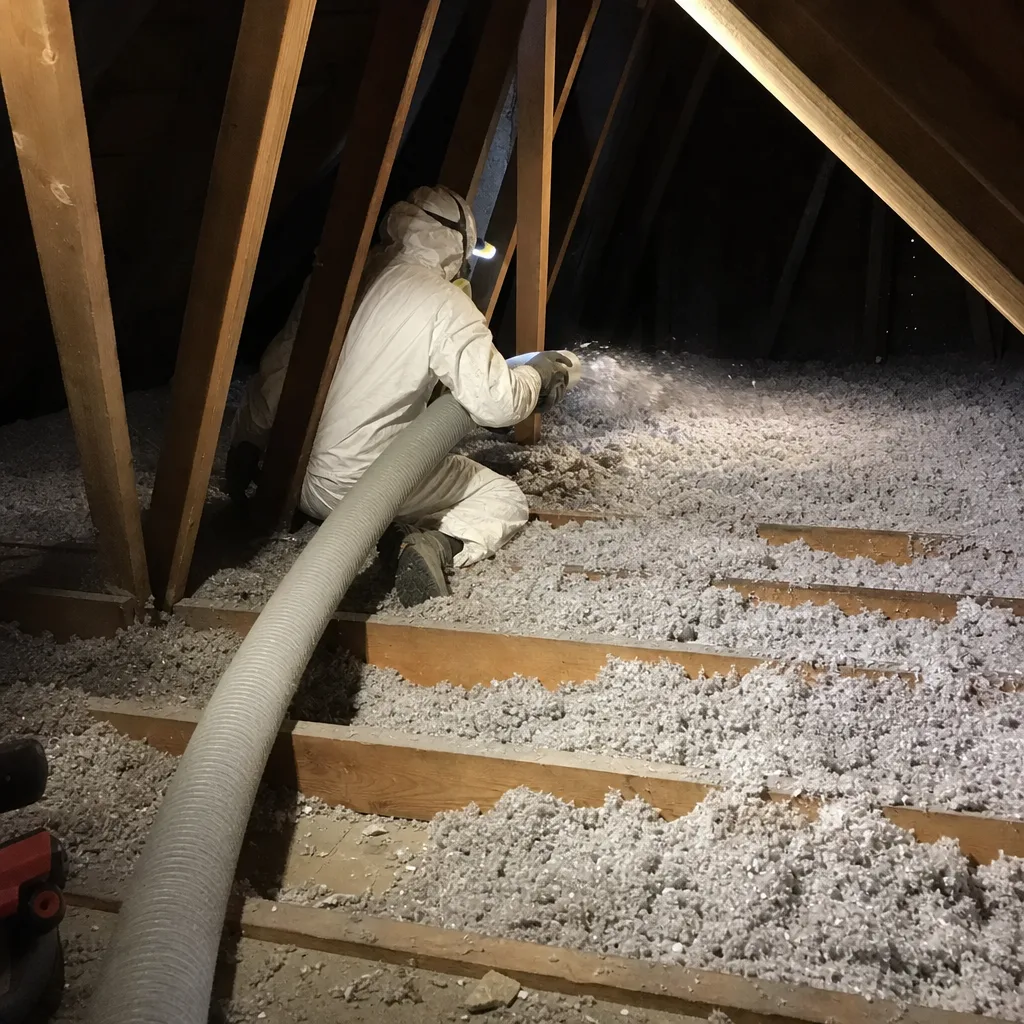
Six factors move the price in the Palmdale market more than anything else:
- Home size and attic square footage. A 1,200 SF single-story home in the older parts of Palmdale near Sierra Highway might have 80 linear feet of interior top plate to seal. A 2,800 SF two-story in Anaverde could have 220 feet or more. Linear footage of top plate is one of the strongest cost drivers because it determines how much material and labor the crew needs at the most critical air-bypass location in the building.
- Number and type of penetrations. Every pipe, wire, flue, and recessed fixture punched through your attic floor is a separate air pathway. A blower-door diagnostic on a 1970s-era Palmdale home near the Antelope Valley Freeway corridor routinely finds 40 to 70 individual penetrations. Homes built after 2005 closer to the newer master-planned sections often have fewer but larger duct chases. Neither is “cheaper” necessarily – just different work.
- Attic height and accessibility. Palmdale’s tract construction spans roughly five decades, and attic clearance varies a lot. Low-slope roofs on some 1990s production homes in the Rancho Vista area can leave less than 24 inches of working clearance over portions of the attic floor. When a technician has to work flat on their back in tight spaces, labor time increases and so does the price.
- Existing insulation depth. If the attic already has 10 to 14 inches of blown fiberglass – which we see regularly in homes that had insulation added in the mid-2000s – the crew has to move material aside to reach the top plates, seal, and replace it. That adds time. We will not, under any circumstances, seal on top of or around existing insulation and call the job done; top plates have to be physically exposed and sealed to the framing, not to a fiberglass surface sitting above them.
- Palmdale’s climate and thermal load. The Antelope Valley runs hot – sustained 100°F-plus days from June through September and overnight lows that can drop 35°F from the afternoon peak. That diurnal swing means your attic is under thermal pressure for more hours per day than coastal LA homes. It also means air sealing here delivers measurable HVAC load reduction quickly, often visible in the first full summer electric bill. That practical urgency does not make the job cheaper, but it does make the ROI faster.
- Whether air sealing is combined with insulation work. When both scopes are completed in a single mobilization – air sealing first, then blown insulation immediately after – the combined price is lower than scheduling them separately. This is the sequence we follow on every applicable job: sealed first, then insulated. The insulation never goes in until the attic floor is air-tight. Combining scopes also means one blower-door setup, one documentation visit, one crew mobilization.
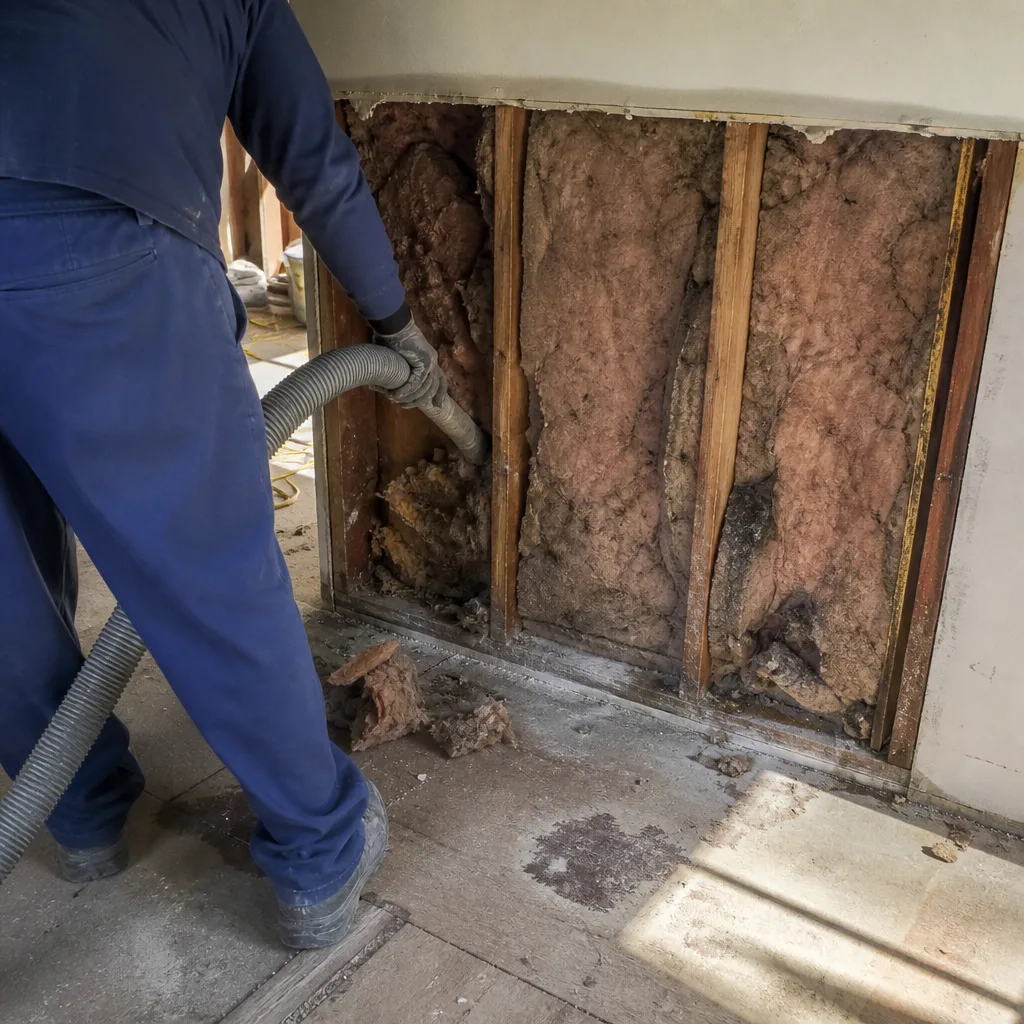 Before
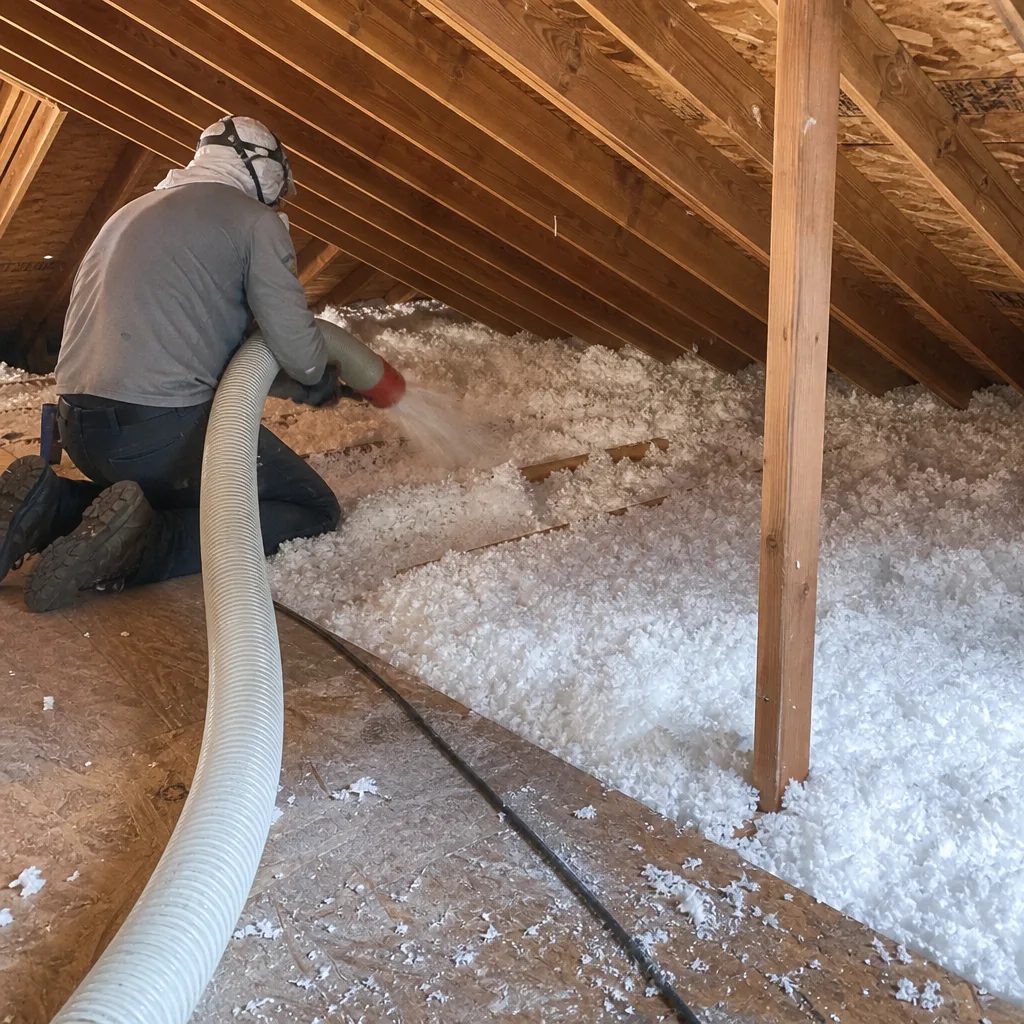 After
AfterHow to Save on Attic Air Sealing in Palmdale
The most effective thing a Palmdale homeowner can do before scheduling attic air sealing is pull up their last 12 months of Southern California Edison bills and note whether their summer cooling costs have been climbing without a corresponding change in usage habits. That context does not lower the price of the job, but it sharpens the scope conversation: a technician reviewing those numbers alongside a blower-door baseline can tell you whether the leak rate your attic is producing is costing you more or less than the sealing would. That is the kind of math that makes the cost conversation concrete.
A few practical ways to keep the project cost in the lower half of the range:
- Combine air sealing and insulation in one visit. If your attic insulation is already below current California Title 24 minimums – R-38 is the effective benchmark for Palmdale’s climate zone – doing both in one scope saves the cost of a second crew mobilization and reduces the number of blower-door setups billed to the job. Combined jobs consistently come in lower per line item than two separate visits.
- Get a blower-door diagnostic first. Paying for a standalone diagnostic before requesting a full air-sealing quote means the technician can show you exactly where the leakage is concentrated. Sometimes a home reads high on the blower-door test but 70 percent of the leakage is concentrated at five or six large attic bypasses rather than distributed across dozens of small ones. That finding can reduce scope and cost significantly.
- Bring a competing written estimate for a free second opinion. Under the Haven Standard, Envelope Insulation Co. offers a free second opinion on any written estimate from another contractor. Bring us the quote and we will read the scope with you line by line – not to undercut it blindly, but to tell you whether the scope covers what the home actually needs and whether the price reflects Palmdale market rates.
- Check for SCE and CHEEA rebates. Southern California Edison’s Energy Efficiency Programs and the California Home Energy Efficiency Assistance Program have historically offered rebates on qualifying air-sealing scopes. Availability and amounts change year to year; we verify current rebate status during the estimate visit and document it in the written scope when applicable. We do not quote rebate amounts that are not yet confirmed in writing.
- Schedule during off-peak months. January through March tends to be the slower part of the season in Palmdale before summer cooling demand brings in a wave of calls. Scheduling in that window does not automatically mean a lower price, but crew availability is higher and scheduling lead times are shorter, which means work gets done before the heat arrives and you see the benefit on your first summer bills.
For a free written estimate on attic air sealing at your Palmdale home, call (661) 403-4467. You will get a flat written price before any work starts – that is not a sales promise, it is Haven Standard Clause 1.
Why Palmdale Attics Leak More Than Most
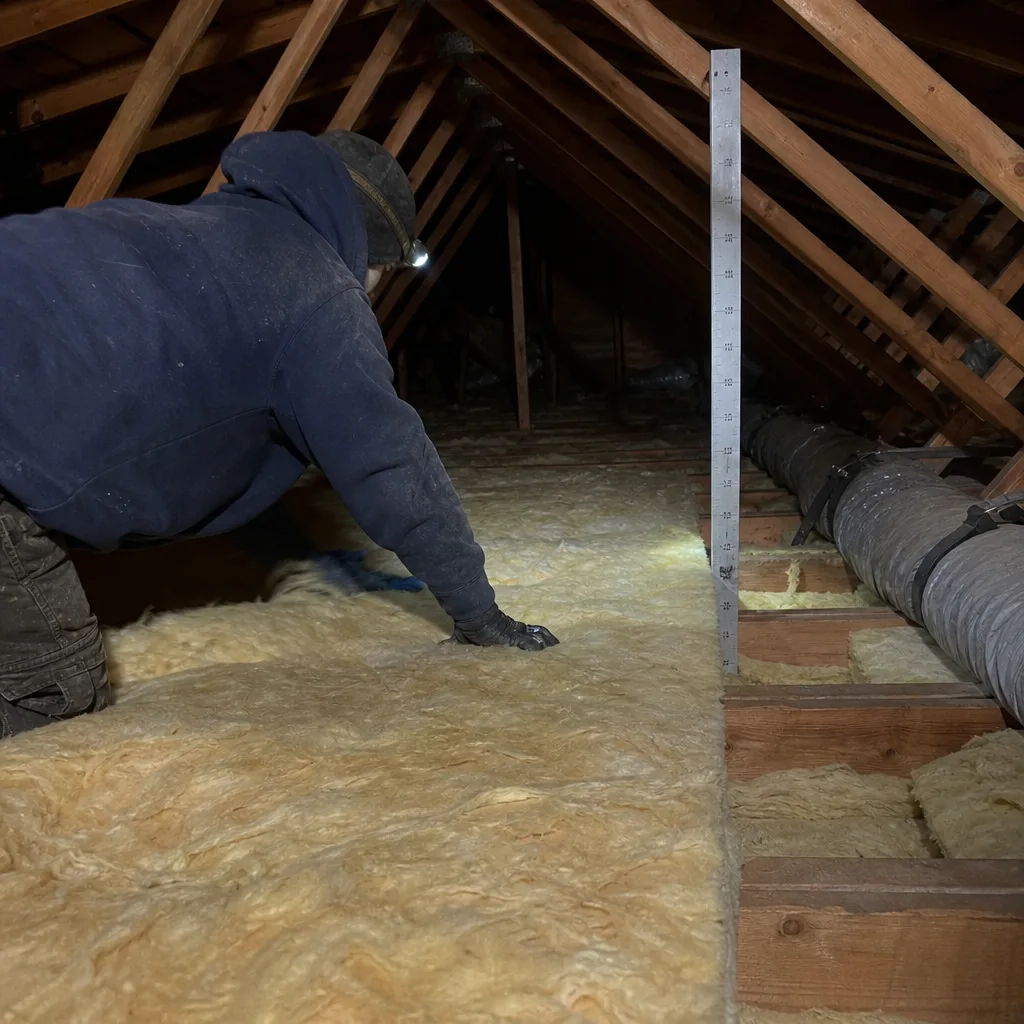
Palmdale’s housing stock is heavily weighted toward tract construction from the 1970s through the mid-2000s – decades when air sealing was not a required or even standard step during insulation installation. The California Energy Commission did not begin enforcing meaningful residential air-sealing standards until the 2013 Title 24 compliance cycle. Homes built before that window, which covers most of the existing housing in established Palmdale neighborhoods like Quartz Hill adjacent, Rancho Vista, and the older sections along 10th Street West and Avenue S, were built with insulation blown directly over unsealed attic floors. The penetrations – top plates, can lights, chase openings, bathroom exhaust stubs – were left open to the attic space.
What that means in practice: on a 1,600 SF Palmdale home built in 1988, a pre-sealing blower-door test commonly reads between 3,800 and 5,500 CFM50 (cubic feet per minute at 50 pascals of pressure – the standard measurement of how much air a building envelope loses). After thorough attic air sealing, the same home often tests between 1,800 and 2,800 CFM50. That reduction translates directly to a smaller HVAC runtime during the 105°F days Palmdale sees every August, and to less cold infiltration during the nights that can drop to 28°F in January.
We publish those before-and-after numbers on every applicable job. Not as a marketing claim, but as documentation – the same documentation we deliver to you in the Documented Photo Record when the crew leaves. You should know the number your attic read before we touched it and the number it reads when we are done. That is the evidence that tells you whether the job was worth what you paid.
This is also why we treat air sealing as a prerequisite, not an upsell. Adding R-38 of blown insulation over an attic that reads 5,000 CFM50 does reduce heat transfer through the insulation layer – but it does nothing to stop the air column moving through open top plates from carrying your conditioned air directly into the attic space. The insulation sits on top of the bypass, not over it. Sealed first, then insulated: that is the sequence on every job we do, and it is why our blower-door after-numbers look the way they do.
For more detail on what the sealing process itself covers, visit our Attic Air Sealing in Palmdale service page.
What the Job Actually Looks Like
Before we quote a price, a technician visits the home and does three things: a visual attic inspection, a blower-door baseline reading, and a written scope of work. The inspection covers attic access, existing insulation depth and condition, visible penetrations, and anything that would affect crew safety or job complexity – low clearance, rodent activity, vermiculite presence in older homes, damaged duct work. The blower-door reading produces your CFM50 baseline. The written scope lists every penetration category to be sealed, the materials to be used, the expected post-sealing result range, and the flat price.
The crew uses a combination of two-part closed-cell spray foam (for large gaps and bypasses), fire-rated intumescent caulk (for penetrations near flues or in fire-separation assemblies), and rigid blocking materials where required by the size of the opening. Recessed-light fixtures get fitted with sealed, insulated dams that stop convective air movement through the fixture body while keeping the fixture accessible for bulb changes. Pull-down attic stairs get weatherstripped frames and, where clearance allows, a sealed insulated cover installed from the attic side.
When the sealing is complete, the blower-door runs again. The post-work reading goes into your Documented Photo Record alongside photos of each sealed penetration category. You leave with a number-to-number comparison, not a technician’s word that the job went well.
Attic Air Sealing vs. Adding More Insulation: Which Comes First?
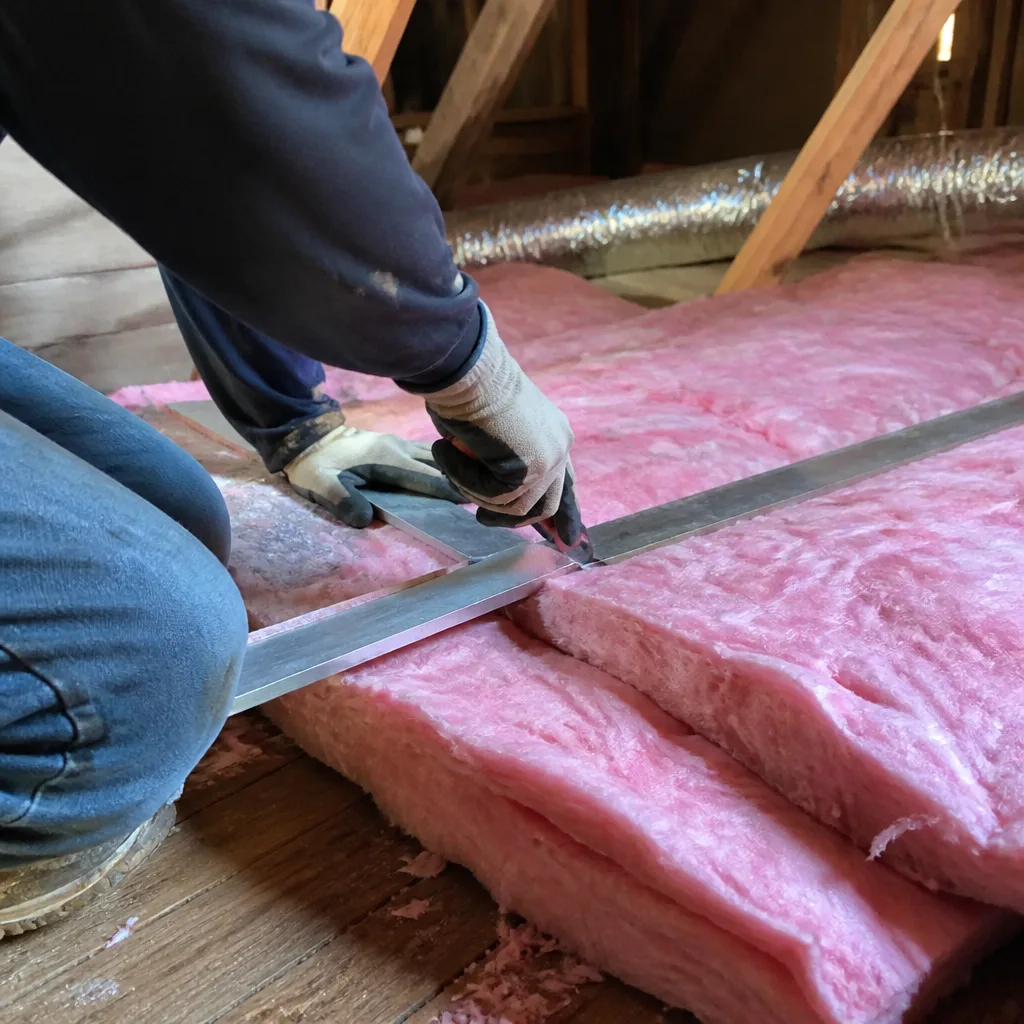
This question comes up often in Palmdale, partly because insulation contractors have historically marketed the two services separately and sometimes sequenced them backward. The short answer: air sealing always comes first, and insulation on top of an unsealed attic floor is a partial solution at best.
Here is the physics. Insulation resists heat transfer by conduction – the slow movement of heat through a solid or semi-solid material. But air moves by convection, and a single one-inch gap at a top plate can move more conditioned air per hour than a square foot of uninsulated ceiling. If the air bypasses are open, the R-value on your insulation label does not reflect the actual thermal performance of the assembly. California Title 24 and Department of Energy guidance both recognize this, which is why post-2013 code requires air sealing to be inspected and documented before insulation is approved.
In practical terms for a Palmdale homeowner: if your home is already at R-38 or above in the attic but your summer cooling bills have not dropped the way they should, air sealing – not more insulation – is almost certainly the correct next step. A blower-door test will confirm it. If your home is below R-38 and also has an unsealed attic floor, doing both in the correct sequence (sealing first, blown insulation second) in one visit is both more effective and less expensive than either approach alone.
You can read more about how our full building-envelope services are structured on our home page.
FAQs: Attic Air Sealing Cost in Palmdale
How much does attic air sealing cost in Palmdale, CA?
Most attic air sealing jobs in Palmdale run between $850 and $2,400 for homes between 1,400 and 2,200 square feet. The midpoint for a typical 1,600 SF single-story tract home is around $1,200 to $1,600, including a pre-work blower-door diagnostic and a post-work confirmation test. Larger homes or those with complex framing, many recessed fixtures, or low attic clearance will fall toward the upper end or above that range. Call (661) 403-4467 for a free written estimate specific to your home – you will see the flat price before any work begins.
Is attic air sealing worth it in Palmdale’s climate?
Yes, and the Palmdale climate makes the case faster than most markets. At an average of 107 cooling degree-days in July alone and overnight lows that can swing 35°F below the afternoon peak, an unsealed attic in Palmdale is running your HVAC system for far more hours than it needs to. On a 1,600 SF home that tests at 4,500 CFM50 before sealing and 2,200 CFM50 after, the blower-door numbers translate to roughly a 40 to 50 percent reduction in envelope air leakage – a change that shows up on your Southern California Edison bill within the first full billing cycle after the work is complete. The payback period for a $1,200 to $1,600 job in Palmdale is typically 3 to 5 years based on current SoCal electricity rates, though that varies by home.
Does attic air sealing qualify for rebates or tax credits in California?
Potentially, yes. Southern California Edison has offered rebates through its Energy Efficiency Programs on qualifying air-sealing projects, and federal tax credits under the Inflation Reduction Act have covered a portion of air-sealing costs for primary residences. The available amounts and eligibility requirements change annually and sometimes mid-year. During the estimate visit, we verify what rebate or credit programs are currently active for your specific scope and include confirmed amounts in the written quote – we do not quote rebate numbers that have not been verified in writing. Call (661) 403-4467 to schedule that conversation before you commit to any scope.
How long does attic air sealing take?
A standard attic air sealing job on a 1,400 to 2,000 SF Palmdale home takes 4 to 7 hours for a two-person crew, including the pre-work and post-work blower-door tests. Homes with more penetrations, lower attic clearance, or combined insulation scope will run longer – a combined air-sealing-plus-blown-insulation visit on a 2,200 SF home typically runs 7 to 10 hours. You will know the expected duration in your written scope before the crew arrives.
Can I just add more insulation instead of air sealing?
No – adding insulation without sealing first leaves the primary air bypasses open, and insulation does not stop convective air movement through gaps and penetrations. A home at R-49 with an unsealed attic floor still loses conditioned air through every open top plate and recessed fixture at the same rate it did at R-19. The correct sequence is sealed first, then insulated: air sealing is completed and blower-door confirmed before any insulation is added. We will not install blown insulation over an unsealed attic floor. If you have an existing quote from another contractor that proposes adding insulation without a prior sealing step, bring it to us for a free second opinion and we will walk through what the scope does and does not address.
What blower-door reading should I expect after attic air sealing?
The result depends on the starting point and the home’s construction era, but in Palmdale we routinely see pre-sealing readings of 3,800 to 6,000 CFM50 on homes built before 2000. After thorough attic floor air sealing, the same homes typically test between 1,800 and 3,200 CFM50 – a reduction of 40 to 55 percent in most cases. Newer construction in North Palmdale built after 2005 starts lower (sometimes 2,000 to 3,500 CFM50) and ends lower as well. The post-work blower-door number goes into your Documented Photo Record so you have the before-and-after comparison in writing when the crew leaves.
Key Takeaways
- Attic air sealing in Palmdale costs $850 to $2,400 for most single-family homes, with a midpoint around $1,200 to $1,600 for 1,400 to 2,200 SF.
- The main cost drivers are attic square footage, number of penetrations, attic clearance, and whether sealing is combined with insulation in a single visit.
- Palmdale’s pre-2000 tract homes – particularly in areas like Rancho Vista and older sections near Avenue S – consistently show high pre-sealing blower-door readings due to unsealed recessed fixtures and open top plates.
- Air sealing must precede insulation. Installing blown insulation over an unsealed attic floor does not address convective air movement through bypasses.
- Before-and-after blower-door numbers are documented on every applicable job and included in the Documented Photo Record you receive when the crew leaves.
- Every job at Envelope Insulation Co. begins with a flat written price under Haven Standard Clause 1 – no work starts without it.
- SCE rebates and federal tax credits may reduce net cost; confirmed amounts are documented in the written scope before work starts.
Get a Written Price for Your Palmdale Home
Wes Okafor and the team at Envelope Insulation Co. have documented attic air sealing results on more than 9,000 homes since 2016, every one with a written price delivered before the first tool was unpacked. If you are ready to see the actual blower-door numbers your attic is producing – and what sealing would cost to fix them – call (661) 403-4467. A live person answers. No voicemail loop, no callback window. You will have a written estimate in hand before you commit to anything.
Under the 365-Day Done Right Promise, if the work is not done right, we make it right – in writing, before the crew leaves your Palmdale home.
Pricing reflects the Palmdale market as of 2026. Written by Wes Okafor, Owner at Envelope Insulation Co. (operating as Topside Attic Insulation Palmdale), serving Palmdale since 2016.
What Our Customers Say
"They air-sealed the attic floor before insulating and showed me the blower-door number before and after. The upstairs is finally the same temperature as downstairs."
- Marisol D."The winter gas bill dropped by about a third. They had estimated a quarter, so they under-promised."
- Genevieve R."Two other companies quoted to blow more insulation on top of what was there. These were the only ones who said the existing material had to come out first, and explained why."
- Clifford E.