
GreenFiber Attic Air Sealing: The Palmdale Owner’s Guide
GreenFiber attic air sealing in Palmdale typically runs $340-$780 installed for a standard single-story home, and we stock the compatible sealants and components for same-day service. Most Palmdale homeowners call us after noticing hot attic air pushing down through ceiling penetrations in July, or after a home energy audit flags top-plate leakage that GreenFiber cellulose alone can’t fix. We carry GreenFiber-compatible low-expansion foam, fire-rated caulk, and rigid baffles sized to their blown-in system on every truck.
Here’s what happens: GreenFiber cellulose insulates well, but it doesn’t stop air movement. In Palmdale’s climate, with 140°F attic peaks and Santa Ana pressure events, unsealed top plates and can-light housings turn your insulation into a filter while conditioned air escapes upward. We see this in Rancho Vista homes built 2005-2015 where the original contractor blew cellulose straight over leaky drywall seams. The fix isn’t more insulation - it’s sealing first, then replacing or supplementing the GreenFiber where needed.
Which GreenFiber Models This Applies To
GreenFiber manufactures loose-fill cellulose, not a sealed attic system, so “GreenFiber attic air sealing” refers to the air-barrier work that must accompany their insulation to meet code in Palmdale’s IECC Climate Zone 3 edge. We seal for homes with GreenFiber All Borate, Sanctuary, or Cocoon - identifiable by the gray-green bag labeling and the loose, gray-fiber appearance in your attic. The critical compatibility gotcha: GreenFiber’s recommended coverage depth for R-38 is 10.25 inches at settled density, but if your attic floor has unsealed top plates or open chase ways, that depth won’t perform to spec. The air bypasses the material.
We use Owens Corning Foamular or Johns Manville AP Foil-Faced sheathing for thermal barriers where required, paired with GreenFiber-compatible sealants. OEM isn’t really a category here - GreenFiber doesn’t sell air-sealing products directly - so we source fire-rated acrylic latex (for drywall-to-top-plate gaps) and low-expansion polyurethane (for electrical and plumbing penetrations) from the same suppliers that stock GreenFiber cellulose. The aftermarket decision matters on foam type: some one-component foams degrade at sustained 140°F, which is why we spec Hilti CF 810 or equivalent for Palmdale attics rather than box-store generic cans.
To identify what you have, check the attic floor for gray cellulose with visible black paper flecks (All Borate) or a more uniform gray (Sanctuary). Measure a settled spot away from the eaves - if you’re under 9 inches and your home was built 2005-2015, you likely have both an R-value gap and an air-leakage problem.
Signs Your GreenFiber Attic Air Sealing Is Failing
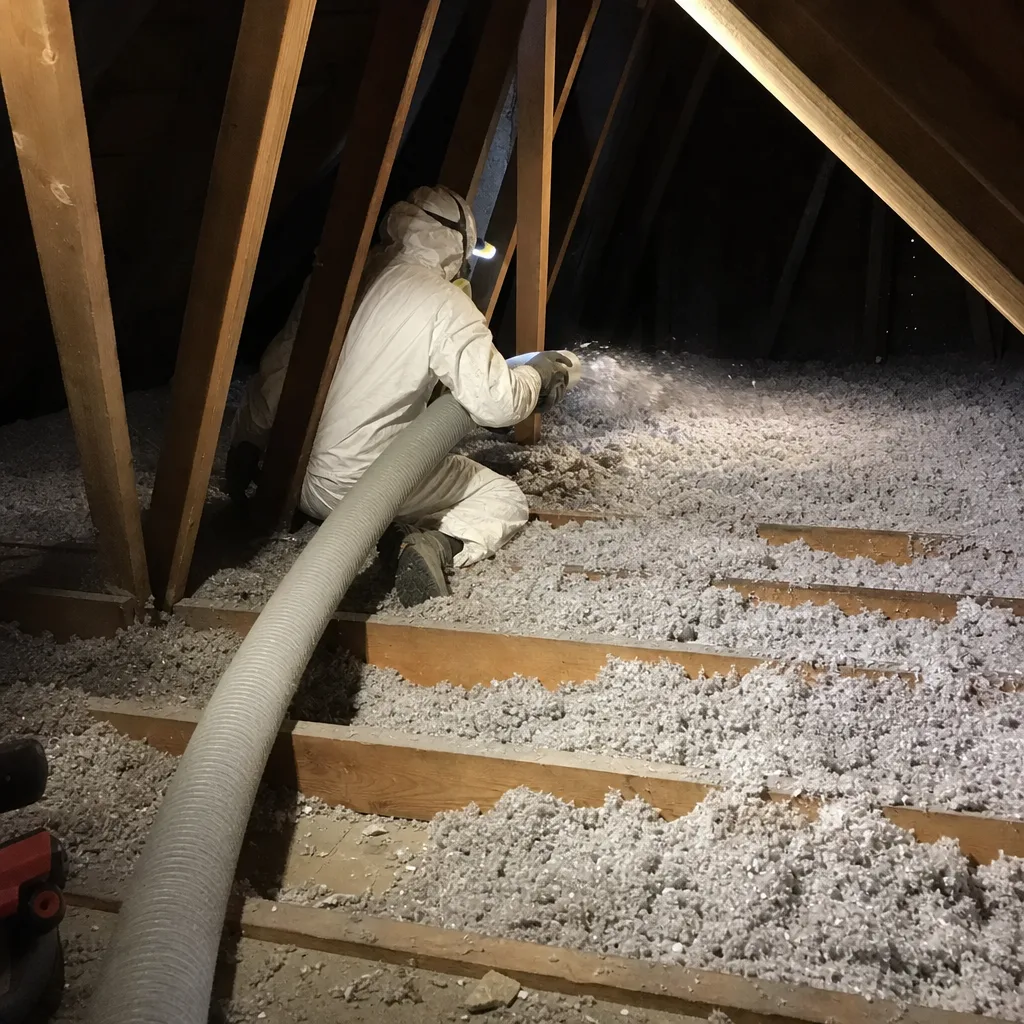
- Dust streaks around ceiling registers and can lights. These dark lines are cellulose particles carried by moving air. Where you see streaking, air is bypassing the GreenFiber entirely, pulling dust through the insulation matrix and depositing it at exit points. In Palmdale’s windy spring months, this accelerates.
- Hot rooms directly below the attic despite adequate insulation depth. The GreenFiber may measure 10 inches deep, but if top plates and wire holes aren’t sealed, convective loops move hot attic air through the insulation mass. We blower-door test this regularly - the thermal image shows 85°F ceiling patches while the attic air hits 130°F.
- Ice damming or moisture staining at the drywall. Even in Palmdale’s dry climate, conditioned air leaking upward carries moisture that condenses on cold ductwork or sheathing in winter. GreenFiber wicks some moisture, but sustained wetting collapses the fiber structure and drops R-value permanently.
- HVAC runs continuously on 100°F days without reaching setpoint. Your unit is cooling air that’s escaping as fast as it’s produced. We see this in Rancho Vista and Quartz Hill homes where the original builder met code minimum with GreenFiber but skipped the air-sealing detail that IECC 2012 and later require.
- Energy audit flags “bypass” or “exfiltration” without specifying location. The auditor found leakage but couldn’t access the attic floor to pinpoint it. This is common - the blower door tells you how much, not where. We follow with a Zonal Pressure Test and visual inspection to map the actual failure points under your GreenFiber.
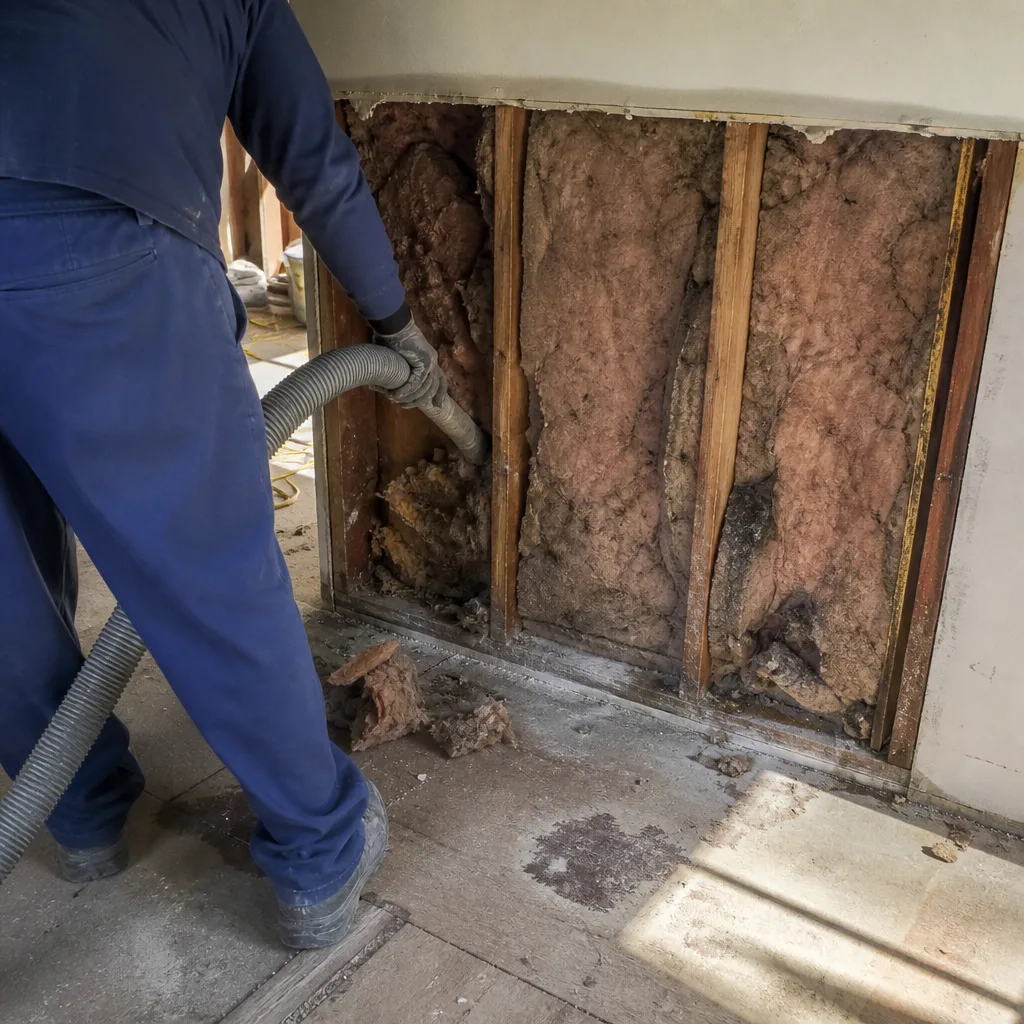 Before
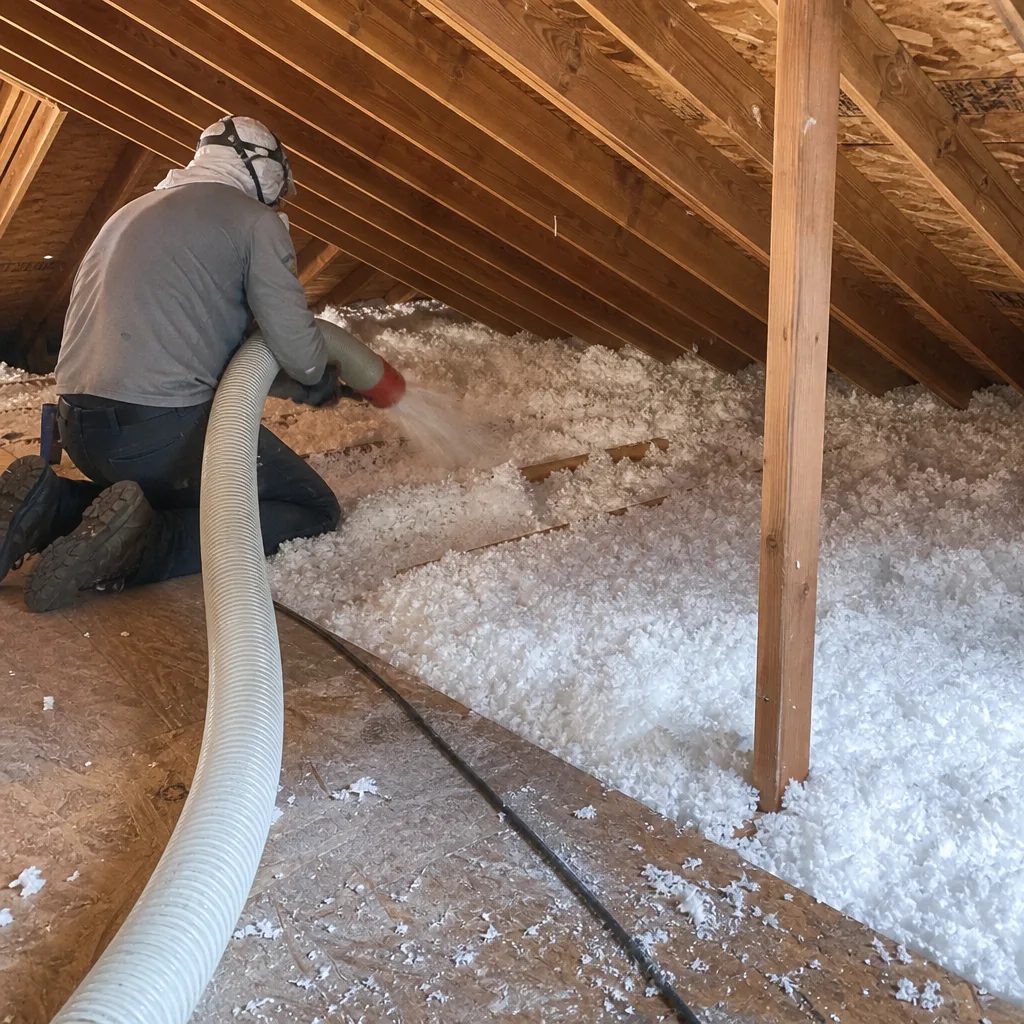 After
AfterReplacement Cost & What’s Included
Most GreenFiber attic air sealing jobs in Palmdale run $340-$780 for a single-story home up to 1,800 square feet. Two-story homes with complex chase ways and bonus-room overhangs typically land at $680-$1,400. The range depends on accessible attic floor area, number of can-light housings that need fire-rated covers, and whether we’re working around existing GreenFiber (more labor) or installing fresh after removal.
| Component | Typical Range |
|---|---|
| Top-plate sealing (per linear foot) | $2.80-$4.50 |
| Can-light airtight cover (fire-rated, installed) | $45-$85 each |
| Penetration foam (electrical/plumbing) | $18-$35 each |
| Blower-door test (pre and post) | $180-$220 |
| GreenFiber cellulose touch-up/replacement | $1.10-$1.60/sq ft |
What’s included: written scope with line-item pricing before work starts, the Haven Standard documented photo record, pre- and post-blower-door readings with printed CFM50 comparison, and our 365-Day Done Right Promise. We don’t start without a written price - that’s Clause 1.
DIY or Call Us?
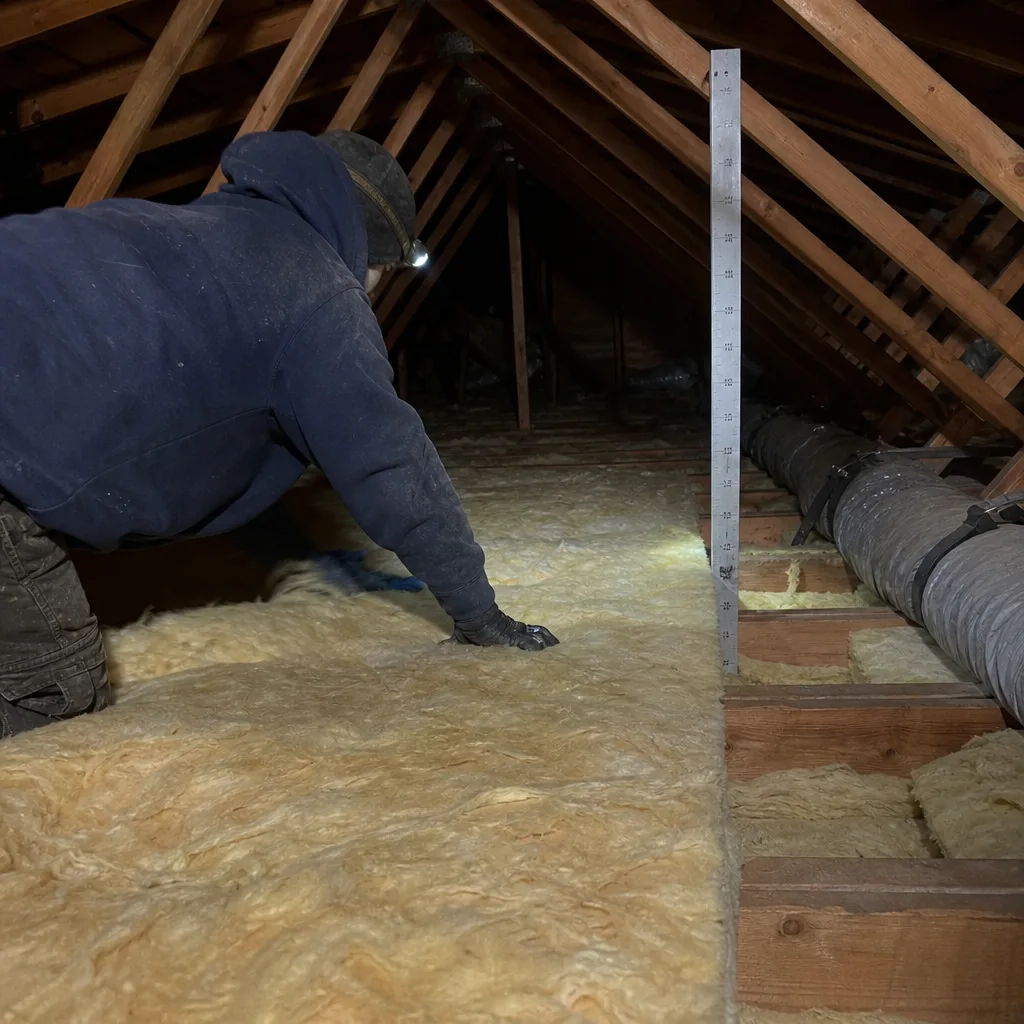
Homeowners can safely check two things: measure GreenFiber depth at multiple attic spots (use a yardstick, avoid compacting), and look for visible gaps at the attic hatch and around duct boots where foam has cracked or pulled away. If you find settled cellulose below 9 inches in a home built after 2005, you have an R-value problem. If you see black streaks at ceiling fixtures below, you have an air-leakage problem.
Where DIY goes wrong: working near active knob-and-tube or damaged Romex, stepping through ceiling drywall (common in Palmdale homes with 24-inch truss spacing and thin OSB), and using the wrong foam type. Standard gap foam degrades at sustained attic temperatures above 140°F - we’ve pulled crumbly, failed DIY foam from Rancho Vista attics that lasted two summers. Fire-rated penetration sealing around flues and recessed housings has specific code requirements in Los Angeles County.
We carry GreenFiber-compatible sealants, fire-rated covers, and blower-door testing equipment on every truck. Call (661) 403-4467 for a written estimate - we read your existing audit with you if you have one, and we offer a Free Second Opinion on any competing quote.
FAQs
In Palmdale’s climate, properly installed acrylic latex and low-expansion polyurethane hold 15-20 years, though we recommend a visual inspection every 7-10 years because Santa Ana wind cycles and thermal shock at 140°F attic peaks stress sealant bonds faster than in coastal Zone 3 areas. Call (661) 403-4467 and we’ll check your existing work against current IECC standards - estimates are free.
Partial repair is common and often sufficient - we spot-seal failed top-plate beads, re-foam pulled-away penetrations, and replace degraded baffles without touching sound existing work. The decision depends on your blower-door number: if post-repair CFM50 still exceeds code target for your home’s conditioned floor area, full replacement is the honest recommendation. We test before and after so you see the number.
A standard Palmdale single-story with accessible attic space takes 4-6 hours including setup, sealing, and blower-door verification. Two-story homes with dropped soffits or bonus-room complexities run a full day. We schedule morning starts and leave you with printed pre- and post-test results before we pack up.
Yes - low-expansion foam, fire-rated acrylic latex, rigid baffles sized to GreenFiber blow depths, and fire-rated can-light covers are on every truck. We source from the same distribution chain that stocks GreenFiber cellulose, so compatibility is verified, not guessed. Same-day service is standard for calls before noon in the Palmdale area.
Written by Wes Okafor, Owner, Topside Attic Insulation Palmdale at Topside Attic Insulation Palmdale, serving Palmdale and nearby areas.