
Icynene Radiant Barrier Installation: The Palmdale Owner’s Guide
Icynene radiant barrier installation in Palmdale typically runs $2,800-$4,600 for a standard 1,800-2,400 sq ft attic, and we stock Icynene-compatible reflective barrier rolls and fastening systems for same-day start on most jobs. Most homeowners figure out something’s wrong when their July electric bill jumps $180-$340 over the previous year despite the AC never cycling off, or when they climb into the attic in August and the air feels like a convection oven against the roof deck. We’re Topside Attic Insulation Palmdale - independently owned and operated, not affiliated with Icynene - and we carry the full line of Icynene-approved radiant barrier materials plus Owens Corning and Reflectix equivalents on every truck.
Which Icynene Models This Applies To
Icynene doesn’t manufacture radiant barrier as a standalone branded product; instead, their open-cell and closed-cell spray foam systems (LD-C-50, MD-R-200, and the newer Classic Plus series) are frequently paired with radiant barrier in hybrid attic assemblies across Palmdale’s 2015-2023 build stock. The compatibility issue isn’t the foam itself - it’s the substrate the radiant barrier attaches to. Icynene open-cell requires a vapor retarder coating in our climate zone, and if your original installer stapled standard kraft-faced radiant barrier directly to the underside of the roof deck without that coating, you’ve got a condensation trap that’ll delaminate the barrier from the inside out.
To identify what you’re working with: check the roof deck for a bright, perforated aluminum facing (that’s your barrier) and the rafter bays for a creamy-yellow foam that springs back when poked (open-cell) or a rigid, pinkish-tan foam (closed-cell). The critical measurement is the barrier’s emissivity rating - Icynene-specified assemblies call for 0.03 or lower, and the cheap big-box rolls run 0.05-0.07. We stock both the OEM-spec .03 emissivity rolls and a Johns Manville aftermarket equivalent that tests at .025; the JM costs about 8% more per square foot but carries a 20-year warranty vs. Icynene’s 10-year on the barrier component. One compatibility gotcha we’ve hit three times in Rancho Vista: Icynene Classic Plus expands to 3.5 inches in a 2×6 rafter bay, leaving no air gap for a radiant barrier installed on the underside. Those assemblies need a furred-down barrier or a roof-deck-applied product, not a staple-up.
Signs Your Icynene Radiant Barrier Installation Is Failing
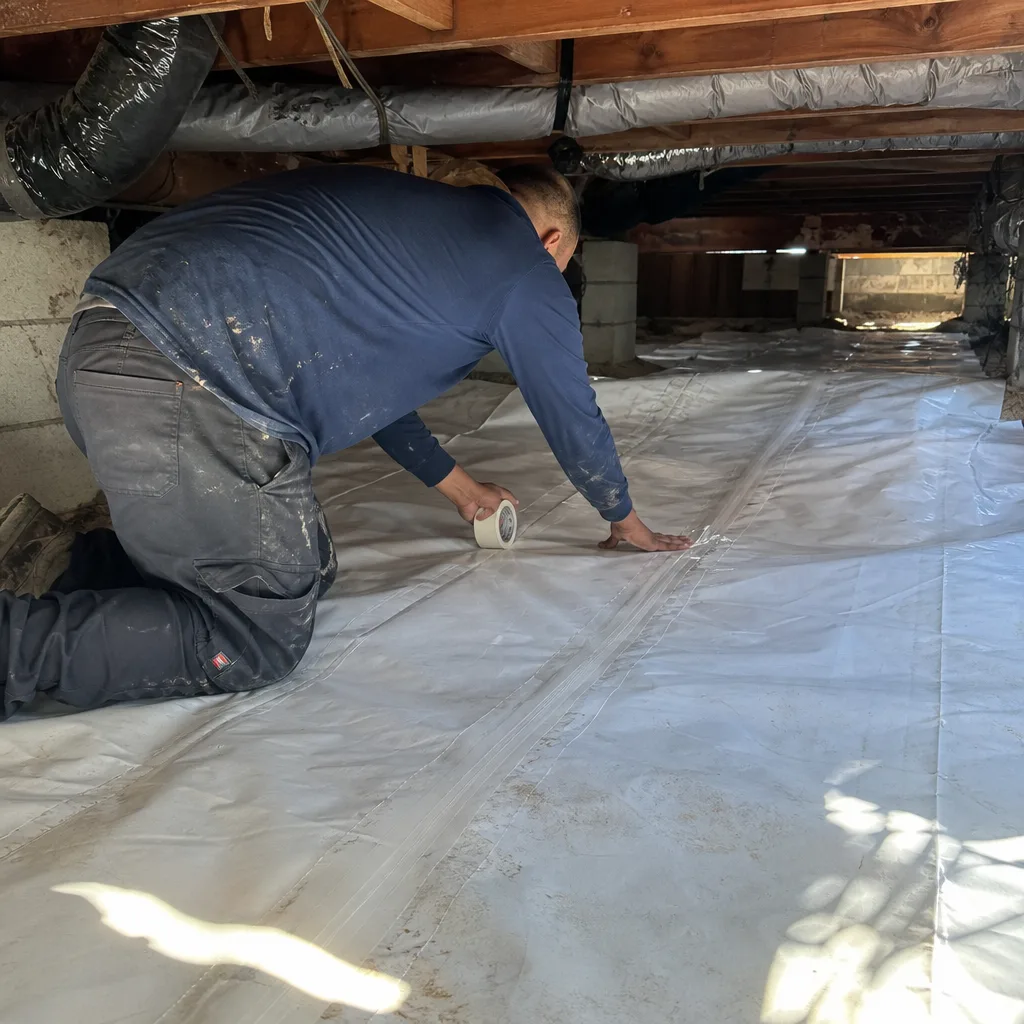
- Attic air temperature stays within 15°F of outdoor ambient. A functioning radiant barrier should drop attic peak temps 25-40°F below unconditioned space. When we measure 138°F in a Palmdale attic in July with a 105°F ambient, the barrier’s either delaminated or installed without proper emissivity. The aluminum facing oxidizes, emissivity climbs, and you’re basically paying to cool a solar collector.
- Visible water staining on the barrier facing or rafter tails. This means your Icynene open-cell assembly is missing its vapor retarder coating. Moisture drives through the foam, hits the cool aluminum surface at night, and condenses. In Palmdale’s dry climate this usually shows up first on north-facing roof pitches where overnight radiant cooling is strongest.
- Barrier facing is dusty, dull, or flaking. A spec-grade radiant barrier stays mirror-bright for 15+ years. If yours looks like aluminum foil that’s been through the dishwasher, the emissivity has degraded past useful range. Dust accumulation alone can raise emissivity by 0.02 - enough to cut performance 30% in a Zone 3/4 edge case like ours.
- Sections of barrier have pulled loose or are sagging between rafters. Staple-up installation in Icynene assemblies often uses 1/4-inch crown staples that shear out when the foam substrate shifts during thermal cycling. Palmdale’s 50°F+ daily temperature swings in summer accelerate this. Sagging barrier loses the critical air gap that makes radiant heat reflection work.
- Your blower-door number hasn’t moved but your cooling load has. This is the sneaky one. The air barrier (Icynene foam) is intact, so your CFM50 stays flat. But the radiant barrier failed, so radiant heat gain through the roof deck spiked. We see this in homes where the original installer sealed well but cheaped out on the barrier spec. Wes Okafor caught this exact pattern in a 2019 Rancho Vista build last spring - 2,100 CFM50 before and after, but attic peak temp jumped from 112°F to 141°F. The homeowner’s July bill was $287 higher than the previous owner’s records showed.
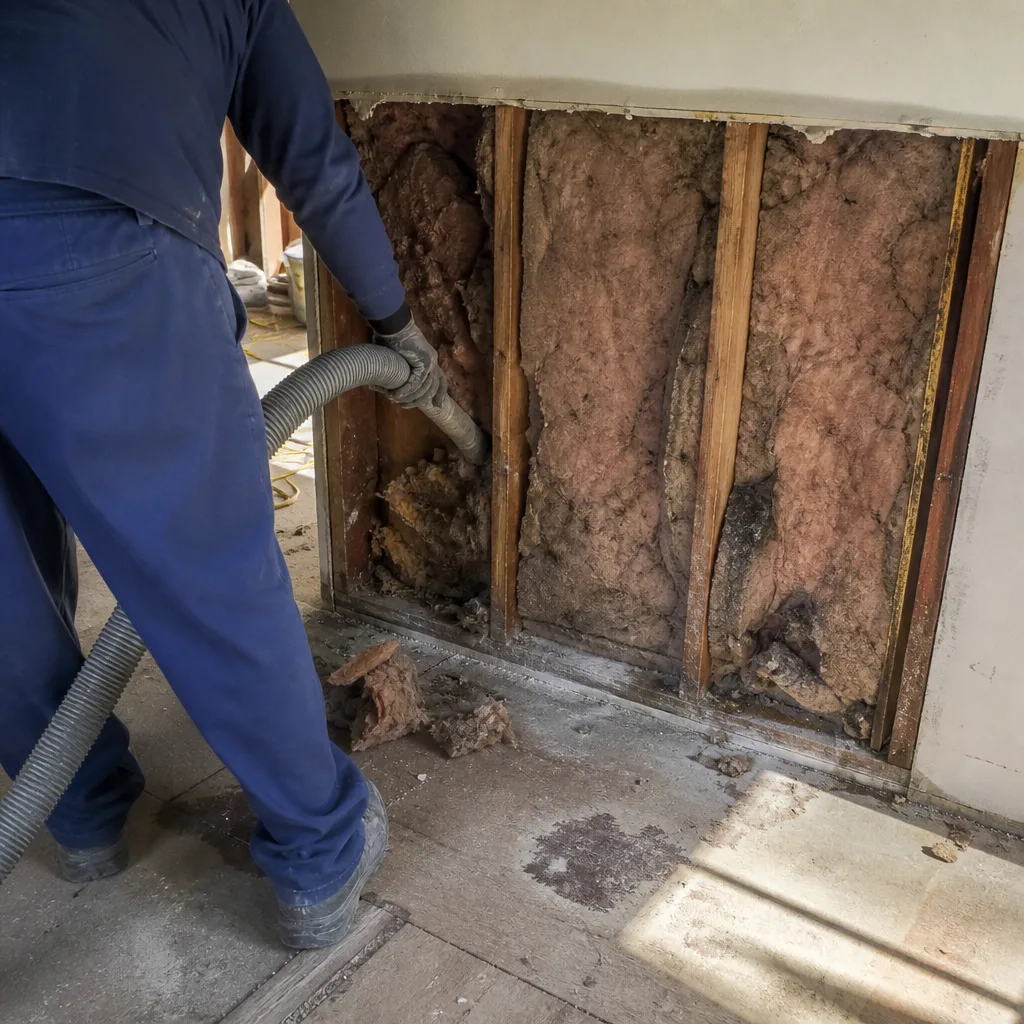 Before
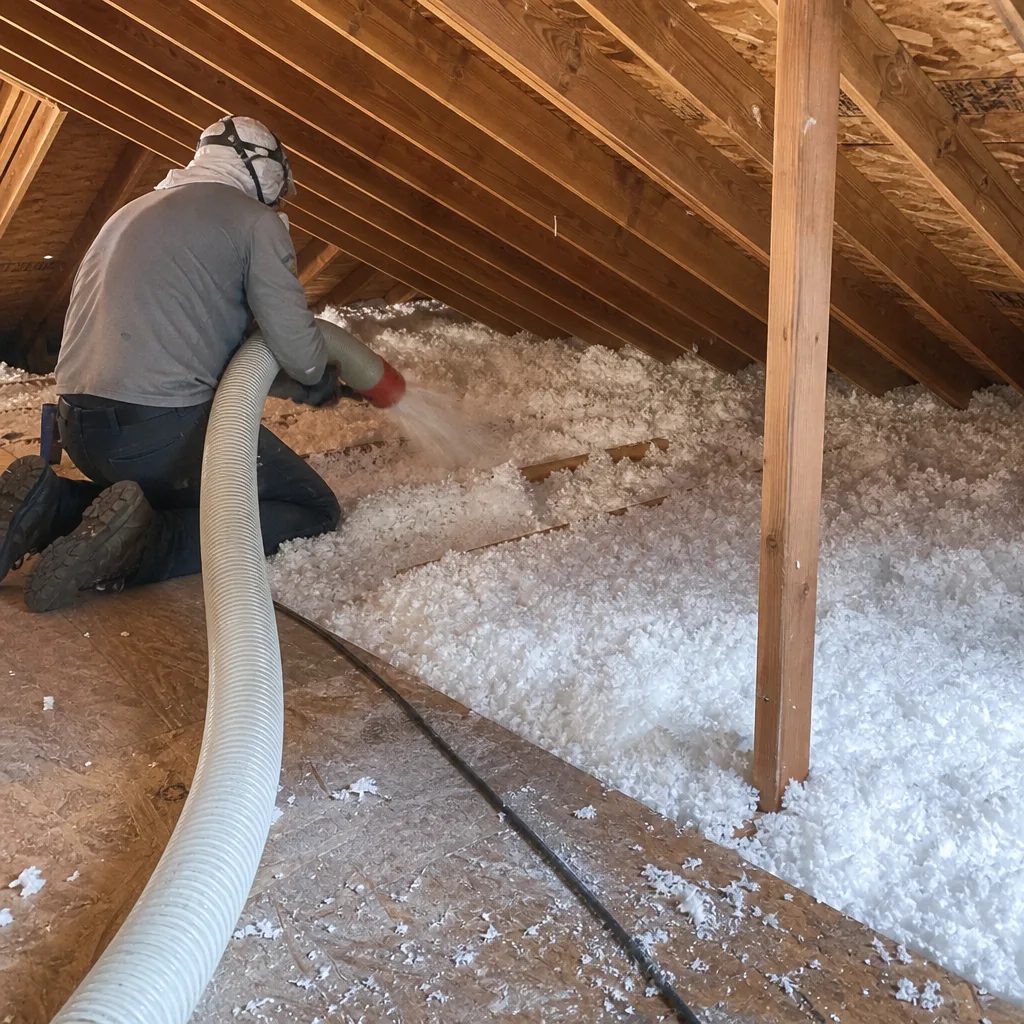 After
AfterReplacement Cost & What’s Included
| Component | Price Range (Palmdale) |
|---|---|
| Icynene-spec radiant barrier material (.03 emissivity) | $1.40-$1.85 / sq ft installed |
| Johns Manville aftermarket equivalent (.025 emissivity) | $1.55-$2.05 / sq ft installed |
| Vapor retarder coating (open-cell assemblies only) | $340-$520 |
| Furring strips for air-gap restoration | $180-$290 |
| Full attic access, prep, and debris removal | $280-$420 |
Most complete Icynene radiant barrier replacements in Palmdale fall between $2,800 and $4,600 for attics in the 1,800-2,400 sq ft footprint range. What drives the spread: roof pitch (steeper = more square footage of barrier), whether we need to fur down for air gap, and if the original vapor retarder was skipped and needs remediation. Every job gets a Written Price Before Any Work Starts - Haven Standard Clause 1 - with line-item breakdown. The 365-Day Done Right Promise covers labor and material defects. We publish before-and-after blower-door numbers on every applicable job so you can verify the air-sealing result; on radiant barrier-only replacements where the Icynene foam stays intact, we document attic peak temperature and emissivity readings instead.
DIY or Call Us?
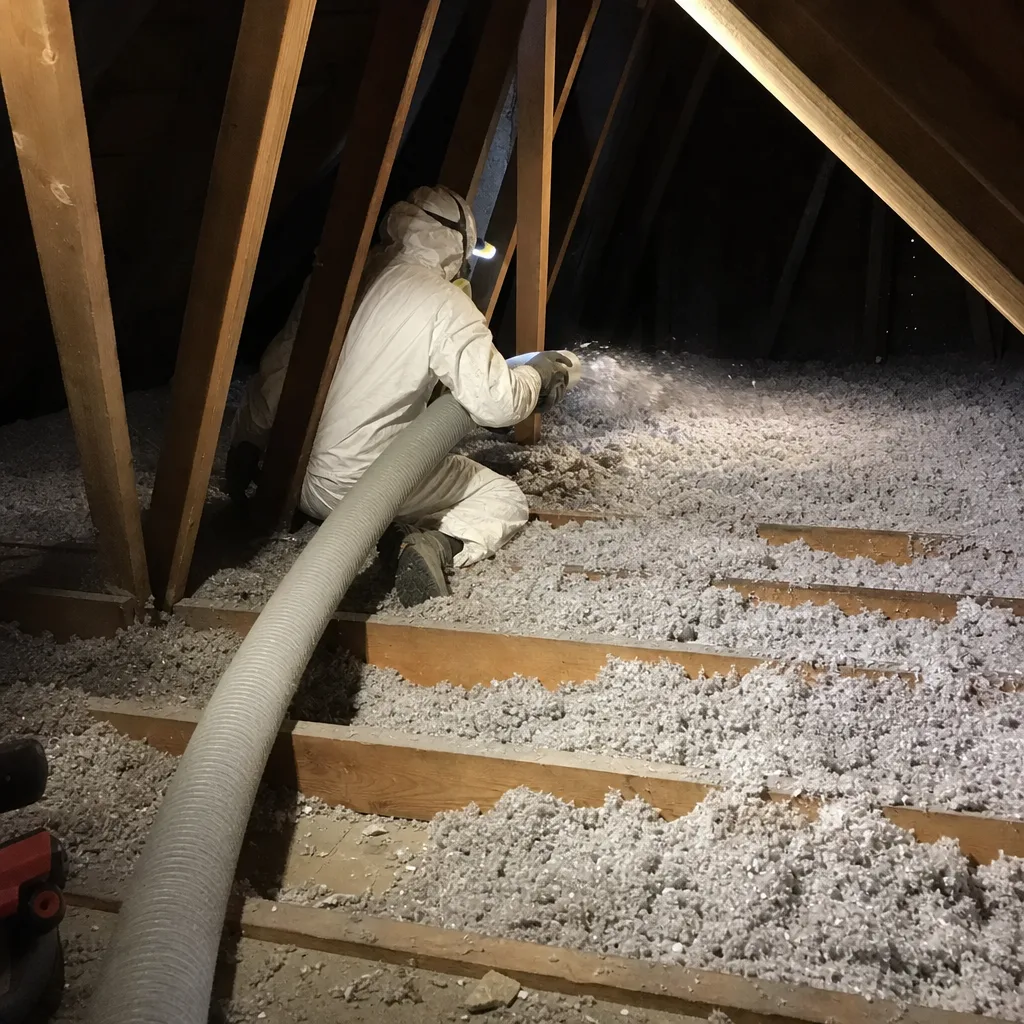
Here’s what you can safely check yourself: confirm the barrier is actually Icynene-spec (look for the printed emissivity rating on the facing edge, or use a non-contact infrared thermometer - a healthy barrier should read within 5°F of ambient air on its reflective side in morning shade). Measure any loose sections. Photograph water stains for documentation.
Where DIY goes wrong: working on a roof deck in a 130°F+ attic is heat-exhaustion territory, not just uncomfortable. Removing failed barrier without damaging intact Icynene foam requires a plastic blade and patience - metal tools gouge the foam and break the air seal. Re-stapling without verifying rafter spacing and air gap violates IRC R806.5; we’ve been called in after a homeowner’s “simple” re-staple job created a condensation failure that cost $4,200 to remediate. The vapor retarder coating, if needed, is a two-part water-based product that demands 50°F+ substrate temp and 24-hour cure - timing that doesn’t happen in a Palmdale attic without climate control.
We stock Icynene-compatible barrier rolls, JM equivalents, and the full fastening system on every truck. Call (661) 403-4467 for a free estimate - we’ll read your attic, give you a written price, and if you bring us a competing quote we’ll give you a Free Second Opinion line by line.
FAQs
Spec-grade barrier in our climate should perform 15-20 years if the air gap stays intact and emissivity stays below 0.05. The failure mode we see most isn’t the aluminum - it’s the substrate or fastening system, accelerated by Palmdale’s thermal cycling and occasional Santa Ana wind pressurization that flexes the roof deck. Call (661) 403-4467 and we’ll test your current emissivity; estimates are free.
Patching works if the failure is isolated to under 15% of the attic footprint and the surrounding barrier tests at spec emissivity. We cut in matching material with vapor-tape seams. Anything more extensive, and the thermal bridging at patch edges costs you more in cooling load than the material savings. We price both ways in our written scope so you can see the five-year cost comparison.
A standard 2,000 sq ft attic runs one long day or two standard days: half day for removal and substrate prep, half day for installation and verification. We don’t rush the cure time on vapor retarder coating if your assembly needs it. You’ll get a Documented Photo Record of each phase, plus peak temp and emissivity readings before we leave.
We stock both Icynene-spec .03 emissivity rolls and the Johns Manville .025 equivalent on every truck, plus all fastening and furring hardware. Same-day start is available on most Palmdale jobs booked before 10 a.m. The only delay we’ve hit in two years was a 2023 supply chain hiccup on the Icynene-branded product - we installed the JM equivalent with homeowner approval and documented the spec improvement in the job record.
Seal the leaks first. The insulation is just the last step.
Written by Wes Okafor, Owner, Topside Attic Insulation Palmdale at Topside Attic Insulation Palmdale, serving Palmdale and nearby areas.