
CertainTeed Blown-In Insulation in Palmdale: What to Know First
We provide independent CertainTeed blown-in insulation service in Palmdale, typically scheduling within 48 hours and completing most attic jobs in a single day. Most homeowners receive a written price before we load the truck, and every job closes with a documented photo record and, where applicable, before-and-after blower-door numbers. This page is for owners of CertainTeed InsulSafe SP, TrueComfort, or Optima systems who need blown-in cellulose or fiberglass installed, topped up, or replaced in Palmdale’s high-desert climate. Call (661) 403-4467 for a free estimate or a free second opinion on any written quote you’ve already received.
How CertainTeed Products Fail - and How We Fix Them
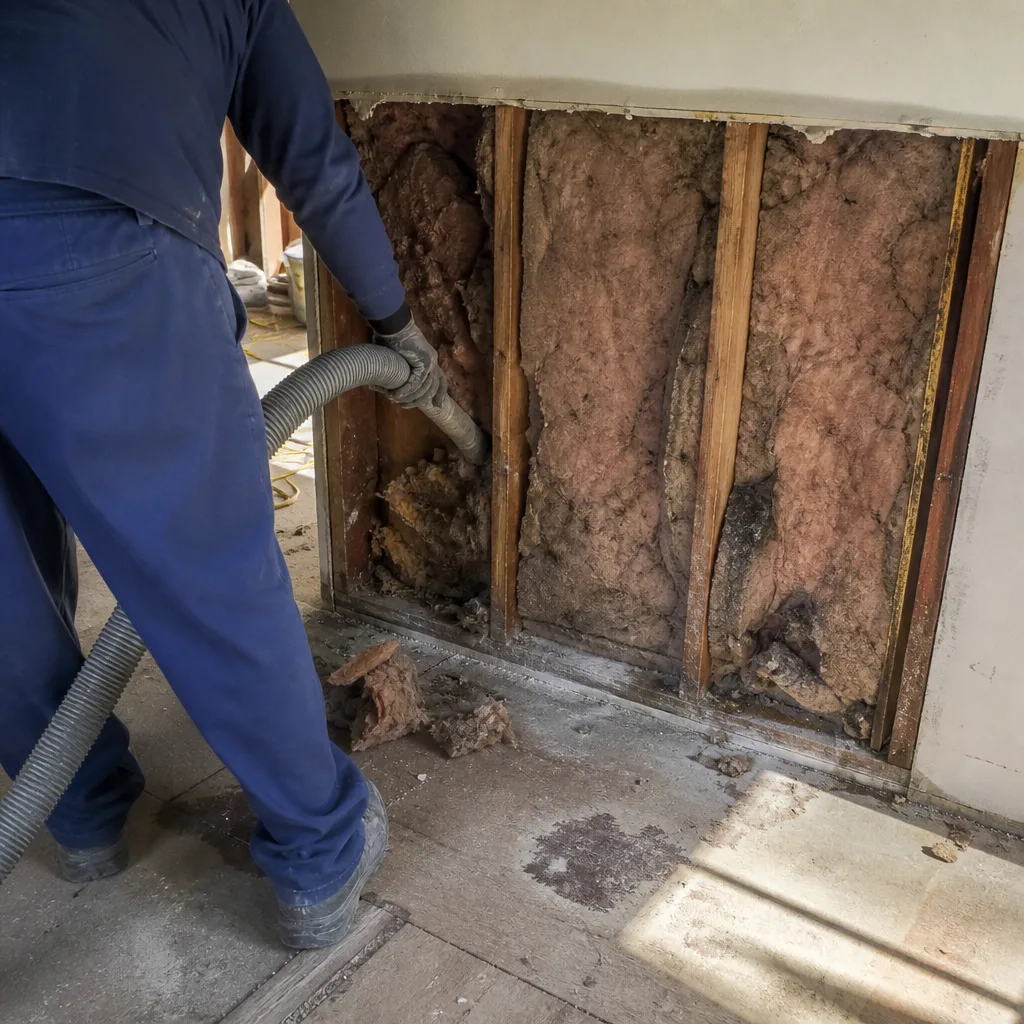
- InsulSafe SP settling in Rancho Vista attics. The fiberglass blown-in product performs to spec when installed at proper density, but we’ve found bags installed at 0.5 lbs/ft³ instead of the specified 0.6 lbs/ft³ in homes built 2018-2021. The material settles 15-20% within two seasons, leaving collar ties and top plates exposed. We remove the settled layer, re-establish the target density with a new InsulSafe SP blow, and document the installed weight per bag on your invoice.
- TrueComfort cellulose bridging over irregular joist bays. CertainTeed’s stabilized cellulose can form voids when blown across the mixed 2×6 and engineered-joist framing common in Palmdale’s newer subdivisions. The bridge looks level from the hatch but leaves a 4-6 inch gap at the eaves. We spot-check with a probe rod every third bay, break any bridges by hand, and re-blow before the blower leaves the driveway.
- Optima loose-fill density failures in Zone 3/4 border homes. Palmdale sits at the climate-zone boundary where R-38 becomes R-49, and Optima’s coverage chart assumes settled density. We’ve seen contractors use the R-38 bag count for an R-49 job to win a bid, leaving the homeowner short on rebate paperwork. We cross-check your permit year against the IECC map in our truck and install to the code year that applies to your structure, not the one that saves material.
- InsulSafe SP contamination from unsealed can lights. CertainTeed fiberglass doesn’t degrade from moisture, but it will transport attic dust and particulate into living spaces if IC-rated cans aren’t properly gasketed. We find this in homes where insulation was blown over unsealed fixtures. Our fix: pull back, seal with fire-rated covers, then re-insulate. The blower-door test before and after shows whether the leak is actually closed.
- TrueComfort boric acid depletion in high-heat attics. Palmdale attic temperatures regularly reach 140°F in July and August, accelerating the chemical degradation of TrueComfort’s fire retardant. After eight to ten years, the material can lose its Class 1 fire rating without visible change. We test a sample with a pH strip during every TrueComfort removal; if boron levels read below 8.5, we recommend full replacement rather than top-up, and we note the finding on your written scope.
Our CertainTeed Blown-In Insulation Process
- 1
Call and scheduling. A live person answers, or you can text. We ask for your home’s build year, last permit on file, and whether you’ve had a blower-door test. We schedule an on-site evaluation, not a phone quote.
- 2
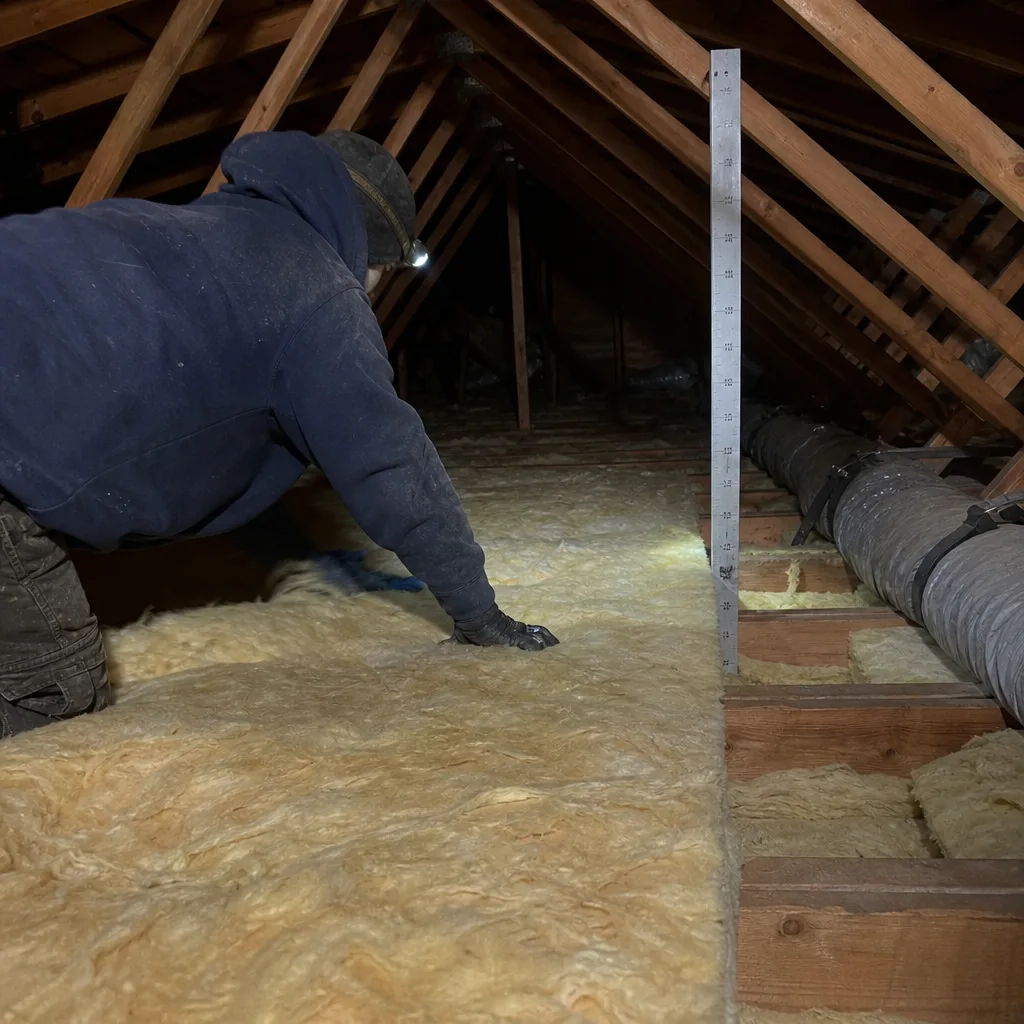
Attic inspection and blower-door baseline. Wes Okafor or a technician runs a pressurization test to establish your CFM50 starting point, then probes the existing CertainTeed material for depth, density, and contamination. We photograph everything.
- 3
Air sealing before insulation. Top plates, wire penetrations, chimney chases, and can lights get sealed with fire-rated foam or gasketed covers. Seal the leaks first. The insulation is just the last step.
- 4
Material selection and written price. We specify CertainTeed OEM product or, if you’re matching an existing system, a compatible aftermarket equivalent with the same thermal and fire specs. You get a flat price, written scope, and written warranty before anyone lifts a tool - Haven Standard Clause 1.
- 5
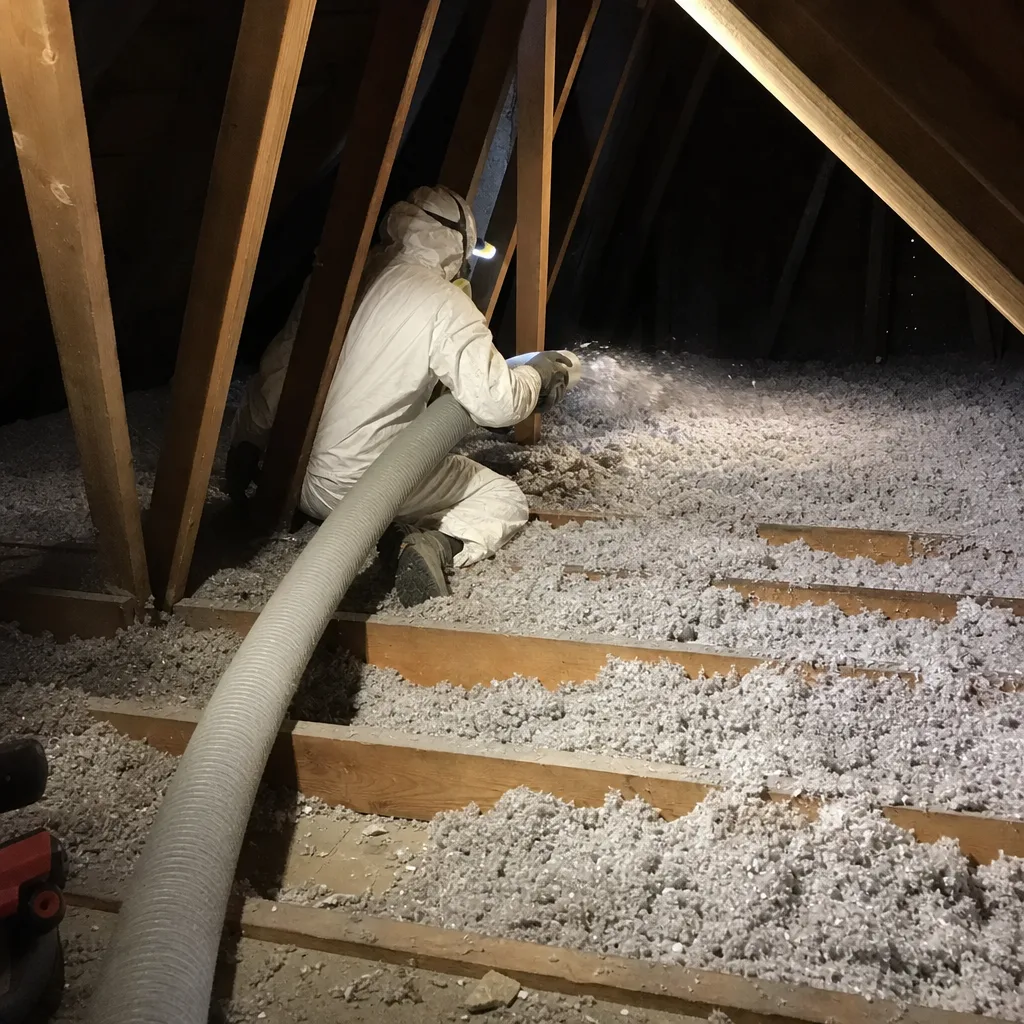
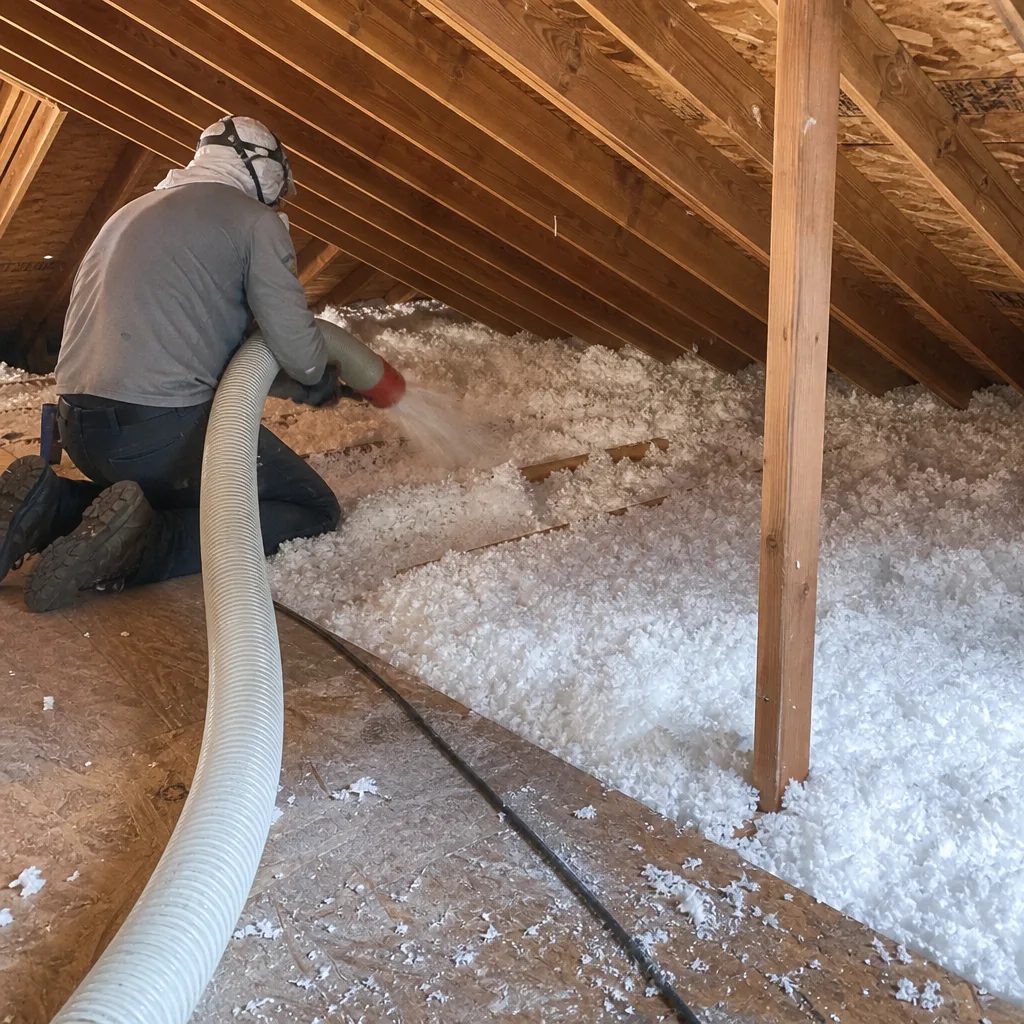
Installation and density verification. We blow to manufacturer depth, spot-check with a probe rod, and weigh bags against square footage to confirm installed density. The crew documents coverage with time-stamped photos.
- 6
Final blower-door test and documentation. We run the pressurization test again, print your pre- and post-installation report with CFM50 numbers side by side, and leave the photo record on a USB drive or email link. The 365-Day Done Right Promise begins when you sign the completion form.
 Before
 After
AfterWhat CertainTeed Blown-In Insulation Costs in Palmdale
| Job Type | Typical Range | What Moves the Price |
|---|---|---|
| TrueComfort cellulose top-up (R-19 to R-38, 1,200 sq ft attic) | $1,400 - $2,200 | Access hatch size, joist bay irregularity, need for air sealing first |
| InsulSafe SP full replacement (removal + R-38 new install, 1,200 sq ft) | $2,800 - $4,100 | Depth of existing material, contamination level, disposal fees |
| Optima loose-fill to R-49 (new construction or gut renovation) | $1,900 - $3,000 | Attic pitch, baffle installation for vented roofs, Zone 3 vs. Zone 4 code requirement |
| Dense-pack wall insulation (CertainTeed compatible, per sq ft of wall) | $2.50 - $4.00/sq ft | Cavity access method (drill-and-fill vs. open wall), wiring density, plaster vs. drywall |
These ranges reflect what we’ve written for Palmdale homes in the last 24 months. Your price may land above or below depending on what the attic inspection reveals. Call (661) 403-4467 for a written estimate - estimates are free, and we provide free second opinions on any competing written quote.
Why Palmdale Homeowners Call Topside Attic Insulation Palmdale for CertainTeed Work
We’ve sealed and insulated more than 9,000 homes since 2016, and the ones in Palmdale teach you something specific: the high desert’s 50-degree daily temperature swing in spring and fall means your attic is working harder than coastal Zone 3, but not quite like the mountain Zone 4s. That half-zone difference has cost homeowners rebates when the wrong R-value went in.
Our technicians are background-checked and uniformed, and they know CertainTeed’s product lines from the bag codes up. When InsulSafe SP is back-ordered, we can specify compatible materials from Owens Corning, Johns Manville, Knauf, or Rockwool - no proprietary lock-in, no delay. Every job leaves with a documented photo record and, on air-sealing jobs, printed blower-door numbers. The 365-Day Done Right Promise applies to all completed work. Calls are answered by a live person, 24/7.
FAQs
No. CertainTeed’s product warranty covers manufacturing defects regardless of who installs it, provided the material was stored and installed to manufacturer spec. As an independent CertainTeed service provider, we document density, depth, and bag lot numbers so any future claim has the paperwork it needs. Keep your written scope and photo record. Call (661) 403-4467 if you have questions about an existing installation.
Most homeowners are scheduled within 48 hours, and standard attic jobs finish in one day. Dense-pack wall work or jobs requiring full removal and reinstallation may run two days. We don’t start without a written price, so the evaluation visit happens first. Text or call (661) 403-4467 to check this week’s availability.
Topping up costs roughly half of full replacement, but only makes sense if the existing material is dry, uncontaminated, and hasn’t settled below 80% of its original depth. We probe and sample during evaluation; if we find moisture staining, rodent activity, or boric acid depletion in TrueComfort, we recommend removal. You’ll get both options in writing with the price difference clear. Call for a free evaluation.
We can source InsulSafe SP, TrueComfort, or Optima to match existing material when the lines are in stock. When they’re not, we specify a compatible alternative with matching thermal resistance, fire rating, and density - never a mismatch that creates a thermal boundary issue. The substitution, if any, is noted on your written scope before work begins.
You receive a written scope of work, a written warranty, time-stamped photos of the completed installation, and on air-sealing jobs, a printed blower-door report showing your pre- and post-installation CFM50 numbers. This is standard on every job, not available on request. Under Haven Standard: Have it in writing.
Written by Wes Okafor, Owner, Topside Attic Insulation Palmdale at Topside Attic Insulation Palmdale, serving Palmdale and nearby areas.