
Rockwool Attic Insulation: The Palmdale Owner’s Guide
Most Rockwool attic insulation installations in Palmdale run between $2.40 and $3.80 per square foot installed, with a typical 1,200-square-foot attic totaling $2,900-$4,600. We stock Rockwool Comfortbatt and AFB (Acoustical Fire Batt) in R-30 through R-38 on every truck, and we can usually measure and install same-day. Homeowners usually figure out something’s wrong when their summer electric bill jumps $80-$150 from one year to the next, or when they climb up and find batts compressed to half their labeled thickness, stained from roof leaks, or chewed through by rodents that got in through an unsealed penetration.
Which Rockwool Models This Applies To
Rockwool’s residential attic line breaks into two families: Comfortbatt, the semi-rigid batt designed for friction-fit in open stud and joist bays, and AFB, the slightly denser batt used where both thermal and acoustical ratings matter. In Palmdale attics, we see Comfortbatt R-30 and R-38 most often, with the 15.25-inch width for 16-inch on-center framing and the 23-inch width for 24-inch on-center. The product code is printed on the foil-facing edge of every batt: look for “CB” followed by the R-value and width, like CB33815 for Comfortbatt R-38, 15-inch wide.
Here’s the compatibility gotcha that costs homeowners money: Rockwool batts are sized metric at the factory and converted to nominal inch dimensions. A “15-inch” Comfortbatt is actually 14.5 inches wide, designed for a 14.5-inch bay. If your attic was framed at true 16-inch on-center with 15.5-inch bays, that half-inch gap leaves a thermal bypass. We measure with a framing square before ordering, not after the truck is loaded.
We are an independent service provider with no affiliation to Rockwool. We source Comfortbatt and AFB through standard distribution, same as any contractor, and we also stock Johns Manville, Knauf, and Owens Corning equivalents when the job calls for them. For homeowners who want a radiant barrier layer, we carry Reflectix as well.
Signs Your Rockwool Attic Insulation Is Failing
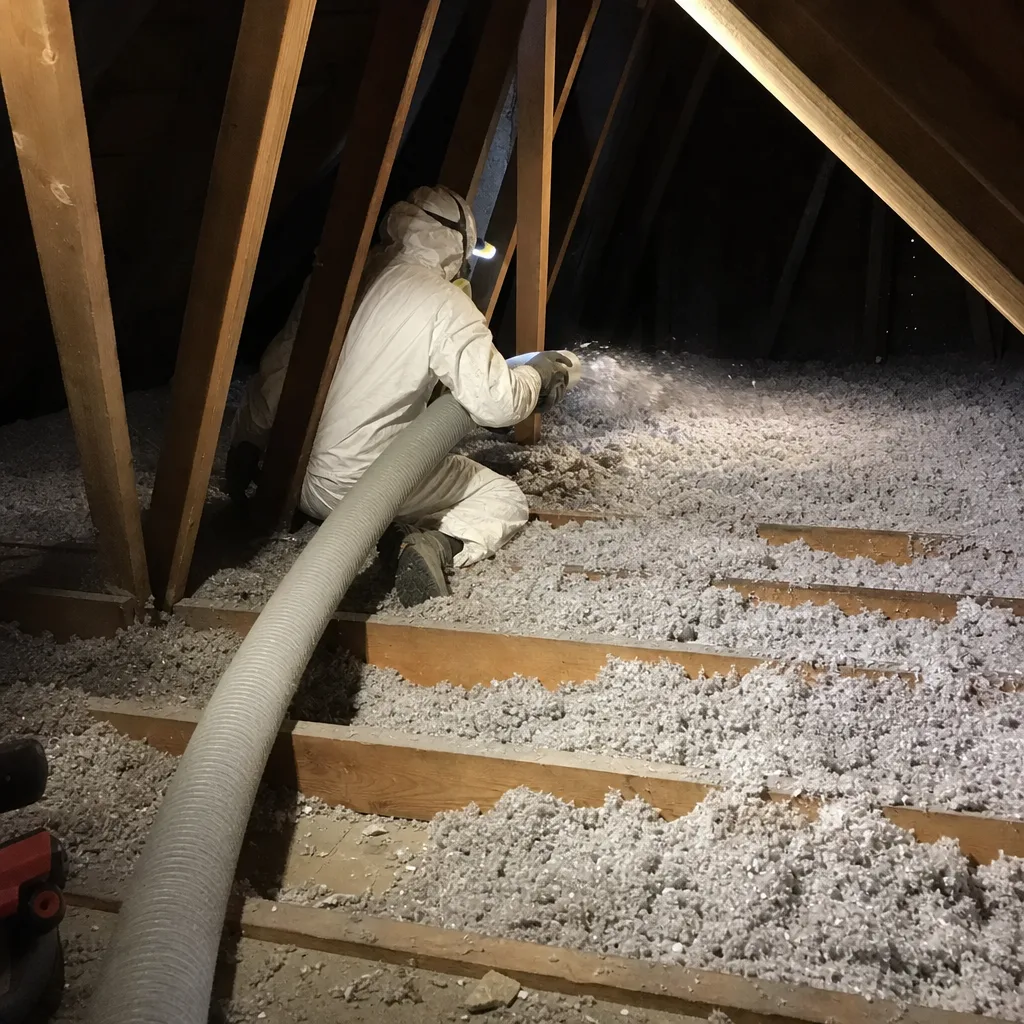
- Compressed or displaced batts. Rockwool holds its structure better than fiberglass, but walking on it, storing boxes on it, or having a previous installer jam oversized batts into undersized cavities compresses the fiber matrix. Once compressed from 12 inches to 6 inches, an R-38 batt performs closer to R-19. We measure actual thickness against labeled thickness on every inspection.
- Water staining or mineral deposits on the facing. Palmdale’s rare but heavy winter rains find their way through compromised flashing or ridge vents. Rockwool is hydrophobic and won’t mold like cellulose, but water still degrades the binder and creates channels for air movement. The white mineral streaks you see are dissolved salts from the stone wool itself.
- Hot ceiling spots in summer, detected by hand or infrared. Missing batts over top plates, light fixtures, or HVAC penetrations create thermal bridges. In Rancho Vista homes we’ve worked, a single uninsulated 4-foot top plate section can read 115°F on the ceiling below when attic air is 140°F.
- Rodent nesting material or droppings. Rockwool’s density resists burrowing better than fiberglass, but determined roof rats will tunnel along the edges where batt meets framing. The telltale is shredded paper or plastic mixed with compressed, dark-stained wool at the perimeter.
- Utility bills climbing year-over-year with no rate change. We pull 24 months of SCE bills on every estimate. A 20% summer cooling increase with no rate hike usually points to insulation performance loss, air sealing failure, or both. The blower-door test - a pressurization reading that shows, in one number, how much conditioned air your building envelope is losing - separates the two.
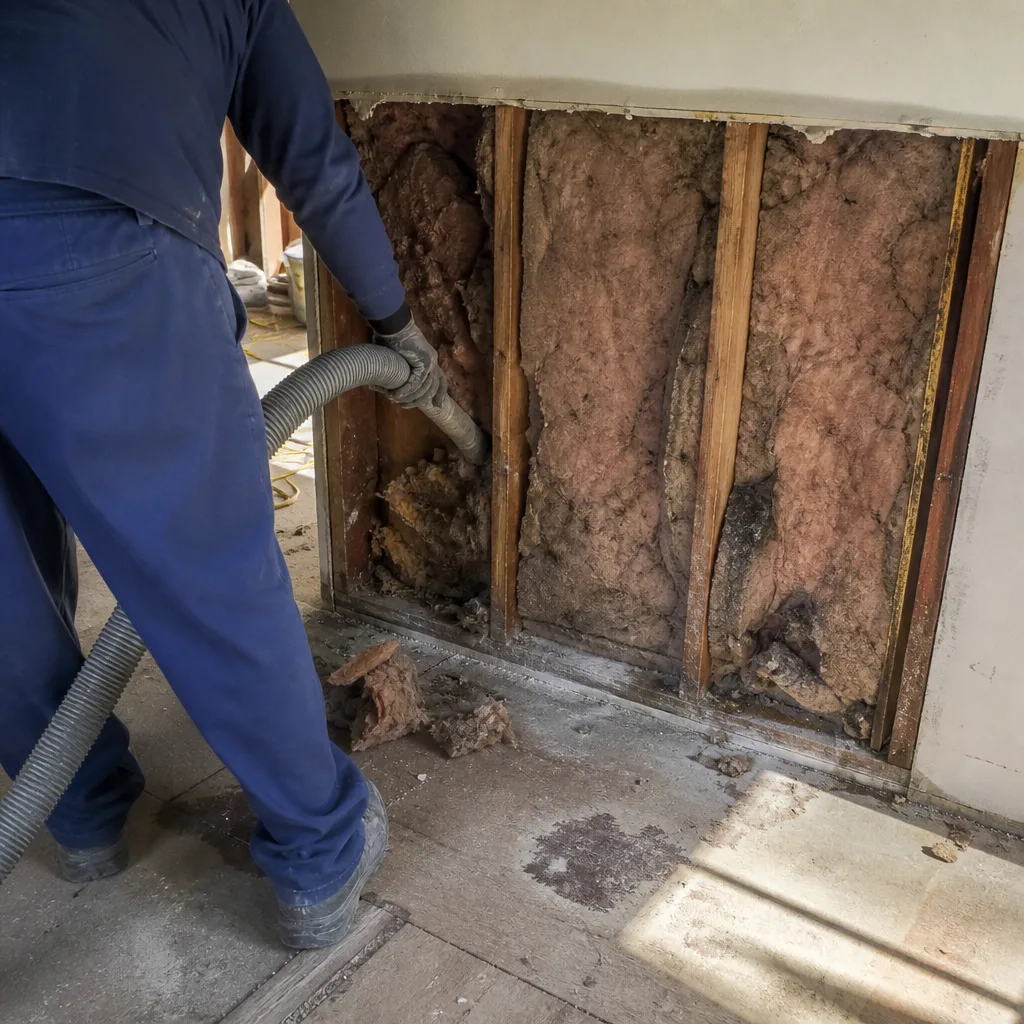 Before
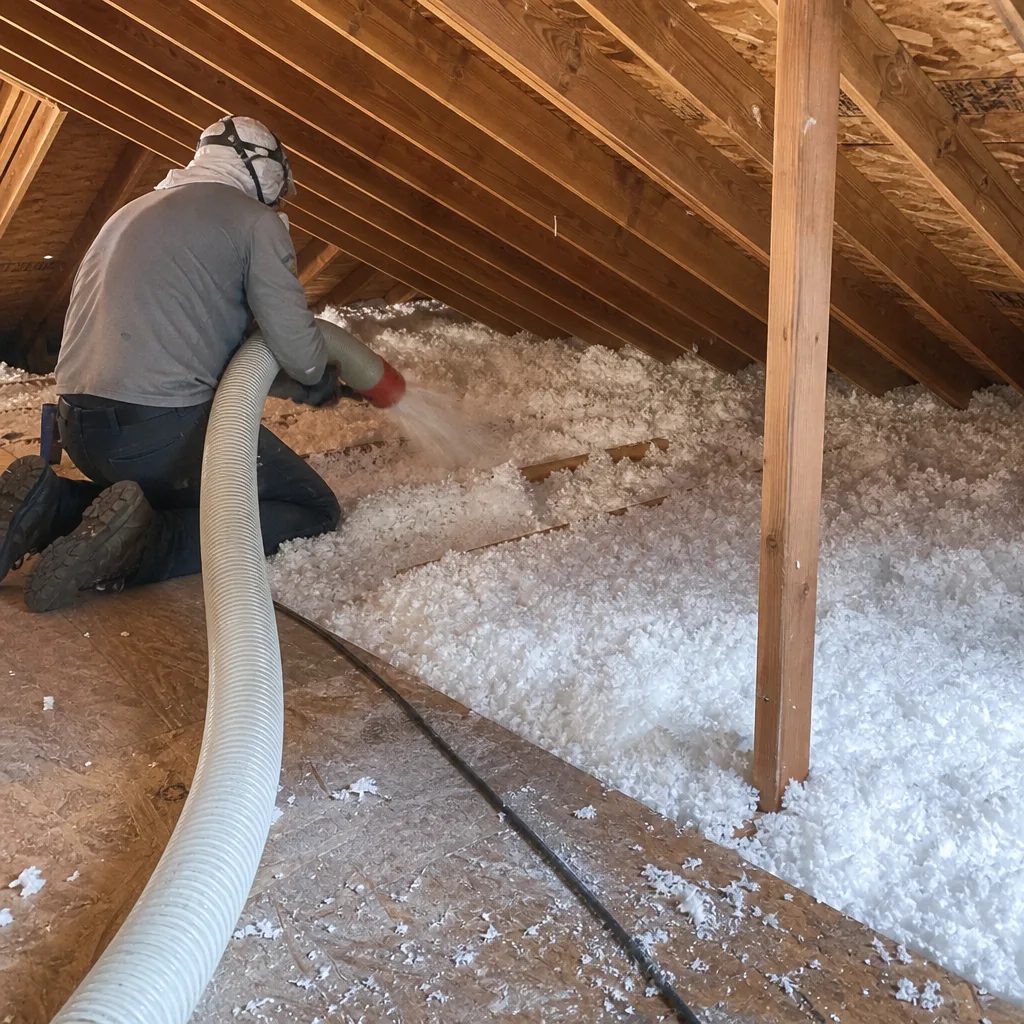 After
AfterReplacement Cost & What’s Included
| Scope | Price Range (Palmdale) |
|---|---|
| Remove and replace existing Rockwool, 1,000 sq ft, R-30 to R-38 | $2,400 - $3,800 |
| Remove and replace with full attic air sealing (top plates, penetrations, can lights) | $3,200 - $5,100 |
| Insulation removal only (contaminated/water-damaged) | $1.10 - $1.60/sq ft |
| Additive air sealing, no insulation replacement | $850 - $1,400 |
What drives the range: attic square footage, current R-value depth, accessibility (scuttle vs. pull-down stairs vs. no access), and whether we’re removing existing material or layering over. Every quote includes the written scope, the written warranty, and the Documented Photo Record. On jobs where air sealing is part of the scope, we run the blower-door test before and after, and you get the printed CFM50 readings. Under Haven Standard Clause 1, the price is flat and in writing before anyone lifts a tool.
DIY or Call Us?
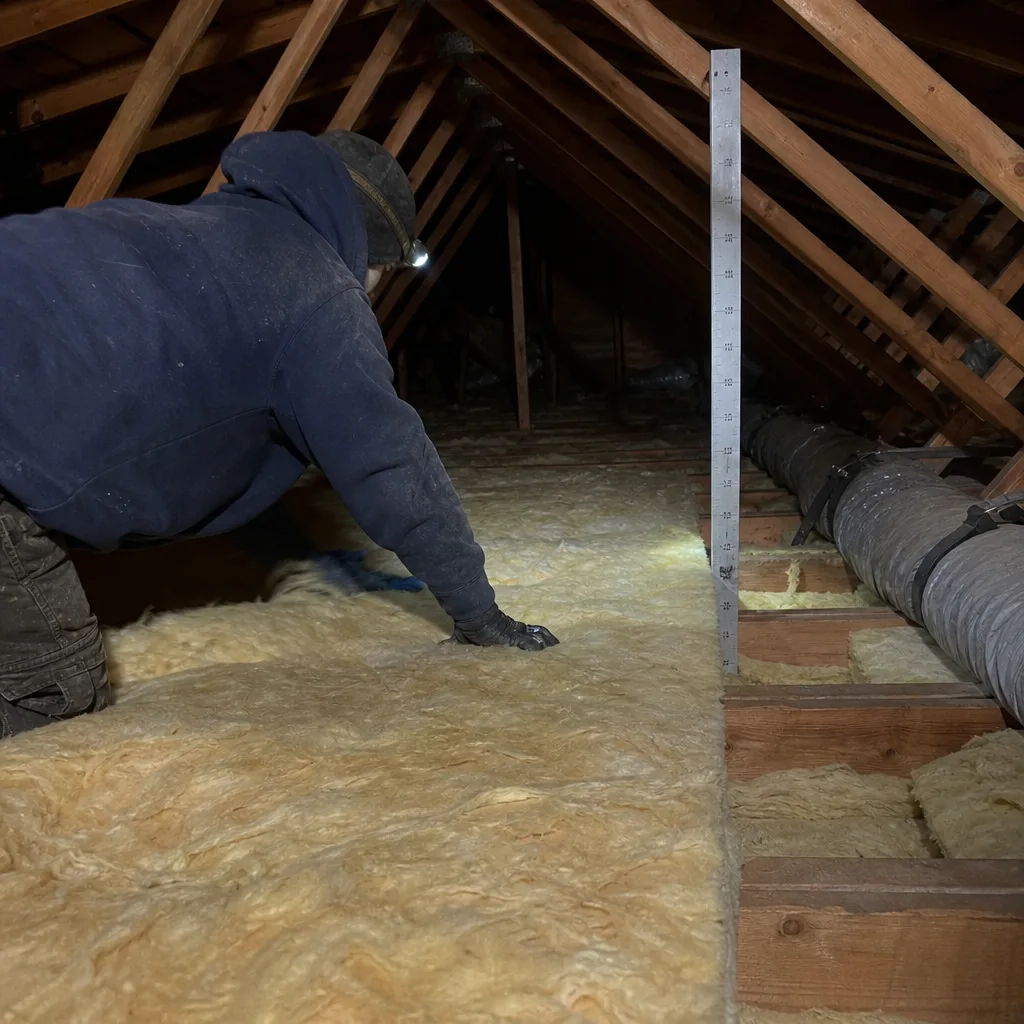
What you can safely check: measure your existing batt thickness against the labeled R-value (R-30 = 7.25 inches, R-38 = 9.25 inches for Rockwool), look for obvious gaps at the eaves or around fixtures, and photograph any staining or compression for reference. What goes wrong fast: Rockwool batts are heavier than fiberglass per square foot, and a full attic load is more than most homeowners estimate. More critically, disturbing old insulation without proper PPE and negative-air containment stirs up decades of dust, rodent waste, and possible asbestos if the original material predates 1990. We use HEPA-contained removal and full protective gear on every job.
And here’s what most skip: blowing new insulation over an unsealed attic floor is putting a blanket over a sieve. Seal the leaks first. The insulation is just the last step. Call (661) 403-4467 and we’ll measure, seal, and install with the numbers to prove it worked.
FAQs
Rockwool’s stone wool fibers don’t settle or degrade chemically, so the material itself is functionally permanent. In practice, we see performance drop after 15-25 years due to compression, water damage, or rodent activity - not fiber breakdown. Palmdale’s 140°F peak attic temperatures don’t phase the material, but they do accelerate binder fatigue if moisture gets in. Call (661) 403-4467 for an inspection if your installation is over 20 years old.
Localized damage can be patched with matching batts if the surrounding material is clean and at full thickness. We don’t patch over water-damaged or rodent-contaminated sections; the risk of trapped moisture or pathogens isn’t worth the savings. On most Palmdale jobs, we find that spot repairs cost nearly as much as full replacement once you factor in mobilization and containment setup. We give you both numbers in writing.
A standard remove-and-replace on a 1,200-square-foot attic, with air sealing, takes one full day: morning for removal and sealing, afternoon for installation and blower-door verification. Same-day completion is standard for us. You’ll get the photo record and the CFM50 report before we leave. Call (661) 403-4467 to book.
We stock Comfortbatt R-30 and R-38 in both standard widths on every truck, and we can source AFB or higher-density commercial batts within 24 hours. We don’t lock you into Rockwool; if a Johns Manville or Knauf product fits your assembly better, we’ll say so and price it. Bring us any written estimate and we’ll give you a free second opinion.
Written by Wes Okafor, Owner, Topside Attic Insulation Palmdale at Topside Attic Insulation Palmdale, serving Palmdale and nearby areas.