
How Much Does Blown-In Insulation Cost in Palmdale?
Blown-in insulation in Palmdale, CA typically costs between $1,800 and $4,200 for a standard attic job, with most single-story homes in the 1,400-2,200 sq ft range landing between $2,100 and $3,400 when air sealing is included. The wide range comes down to three things: how much insulation is already there (if any), whether the attic floor has been properly air-sealed first, and the current R-value target - which in Palmdale’s climate zone 8 runs to R-38 at minimum and R-49 to R-60 for most high-performance upgrades.
Blown-In Insulation Cost Breakdown (2026)
These ranges reflect what Envelope Insulation Co. sees on actual jobs in Palmdale and the surrounding Antelope Valley. Prices shift based on access, existing insulation depth, and whether air sealing is done before the blower runs - and at Envelope, air sealing is always done first, not offered as an add-on after the fact.
| Scope of Work | Typical Range (Palmdale, 2026) | Notes |
|---|---|---|
| Attic blown-in only (cellulose or fiberglass), 1,000-1,500 sq ft attic floor | $1,800 - $2,600 | Assumes existing insulation at R-11 or above; topping off to R-49 |
| Attic blown-in only, 1,500-2,500 sq ft attic floor | $2,400 - $3,600 | Typical for Palmdale tract homes built 1985-2010 |
| Attic air sealing + blown-in, 1,000-1,500 sq ft | $2,600 - $3,800 | Top plates, can lights, and penetrations sealed before insulation |
| Attic air sealing + blown-in, 1,500-2,500 sq ft | $3,200 - $4,800 | Full envelope treatment; includes before-and-after blower-door reading |
| Full removal (old batting or blown-in) + air seal + re-insulate | $4,500 - $7,500 | Common in Palmdale homes with rodent contamination or wet/compacted insulation |
| Blow-in to interior walls (retrofit), per 100 sq ft of wall | $350 - $650 | Dense-pack cellulose or fiberglass; pricing varies by siding and access method |
| Cellulose material cost (per bag, roughly 40 sq ft at R-38) | $18 - $28/bag | GreenFiber and similar; labor is the larger variable |
| Fiberglass blown-in material (per bag) | $22 - $34/bag | Owens Corning, Johns Manville, Knauf product lines |
What the Numbers Actually Mean
The single biggest pricing variable in Palmdale isn’t the material – it’s whether the attic floor is air-sealed before insulation goes in. An attic that has open top plates, recessed can lights without covers, and plumbing or wire penetrations going through the drywall is pushing conditioned air into the attic regardless of how deep the insulation sits on top. Adding R-49 of fiberglass over an unsealed floor is like stacking blankets over an open window. The blower-door numbers tell that story plainly: a typical Palmdale 2,000 sq ft tract home with unaddressed penetrations often reads 3,800 to 5,200 CFM50 before any work. After proper air sealing and blown-in insulation, that same home routinely reads 1,600 to 2,400 CFM50 – a reduction that shows up on the next utility bill, not just in a sales pitch.
At Envelope Insulation Co., air sealing is treated as a prerequisite, not an optional line item. Under Haven Standard Clause 1, you receive a written price and written scope before any work starts – so you know exactly what air sealing is included, what insulation depth you’re getting, and what the job ends with (a documented photo record and, on applicable jobs, before-and-after blower-door readings).
What Affects Blown-In Insulation Pricing in Palmdale
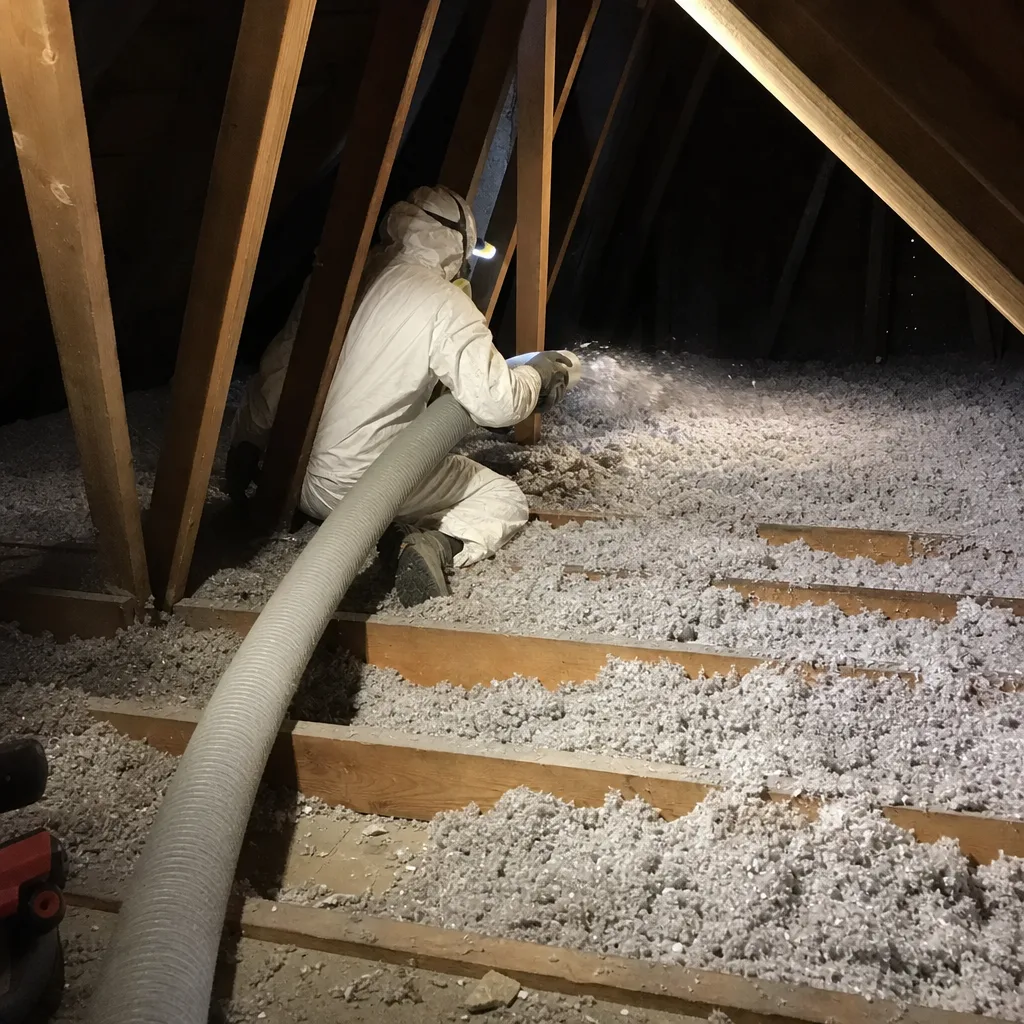
- Existing insulation depth and condition. Palmdale homes built before 1995 – particularly the tracts in Quartz Hill, West Palmdale near Avenue J, and the older developments off Sierra Highway – commonly have R-11 or R-19 batts that have compacted, shifted, or picked up moisture from past roof leaks. Topping off compacted batts without removing them often delivers poor thermal performance. If the existing material is contaminated or degraded, full removal adds $1,200 to $2,800 before the new material goes in.
- Attic access and clearance. Low-pitch rooflines – common in the flat-terrain tract builds in Shadow Hills and the neighborhoods around Rancho Vista – can make maneuvering hoses and equipment harder. Attics with less than 18 inches of clearance over a large portion of the floor take longer to insulate correctly and that time shows in the price. A difficult-access attic can add $300 to $700 to an otherwise standard job.
- Palmdale’s climate zone 8 R-value requirements. California’s Title 24 code for climate zone 8 requires R-38 minimum for attic insulation in new construction; most energy auditors recommend R-49 to R-60 for existing homes in Palmdale given the temperature swings the area sees – summer attic temperatures regularly exceed 140°F in July and August, and winter overnight lows in January can drop below freezing. Reaching R-60 from bare decking takes roughly 16 to 17 inches of cellulose, which means more material and more blower time than a code-minimum job.
- Material choice: cellulose vs. fiberglass blown-in. Cellulose (made from recycled paper, treated for fire and pest resistance) generally runs $0.50 to $0.80 per sq ft less in material cost than fiberglass blown-in for equivalent R-values. Fiberglass products from Owens Corning and Johns Manville settle less over time and perform better in the dry Antelope Valley air where static moisture isn’t a concern. Neither is universally “better” – the right choice depends on the attic’s thermal and air-movement characteristics, which is why a blower-door measurement before the work starts matters.
- Air sealing scope. A straightforward attic with 8 to 12 recessed can lights, a few plumbing stacks, and standard top plates takes two to three hours to air-seal properly using low-expansion foam and fire-rated caulk. An attic with 30+ can lights, HVAC penetrations, old pull-down stair bypasses, and misaligned top plates can take six or more hours. Air sealing scope is the most honest predictor of final cost, and it’s why we walk every attic before pricing it.
- Removal and disposal. Rodent activity is a recurring reality in Palmdale’s desert-adjacent neighborhoods, particularly in the Lancaster Road corridor and older developments near Palmdale Boulevard. Rodent-contaminated insulation can’t stay – it harbors hantavirus, degrades thermal performance, and introduces odor that blown-in won’t cover. Removal, HEPA vacuuming, decontamination, and disposal typically add $1,800 to $3,500 to a project depending on the extent of contamination and attic size.
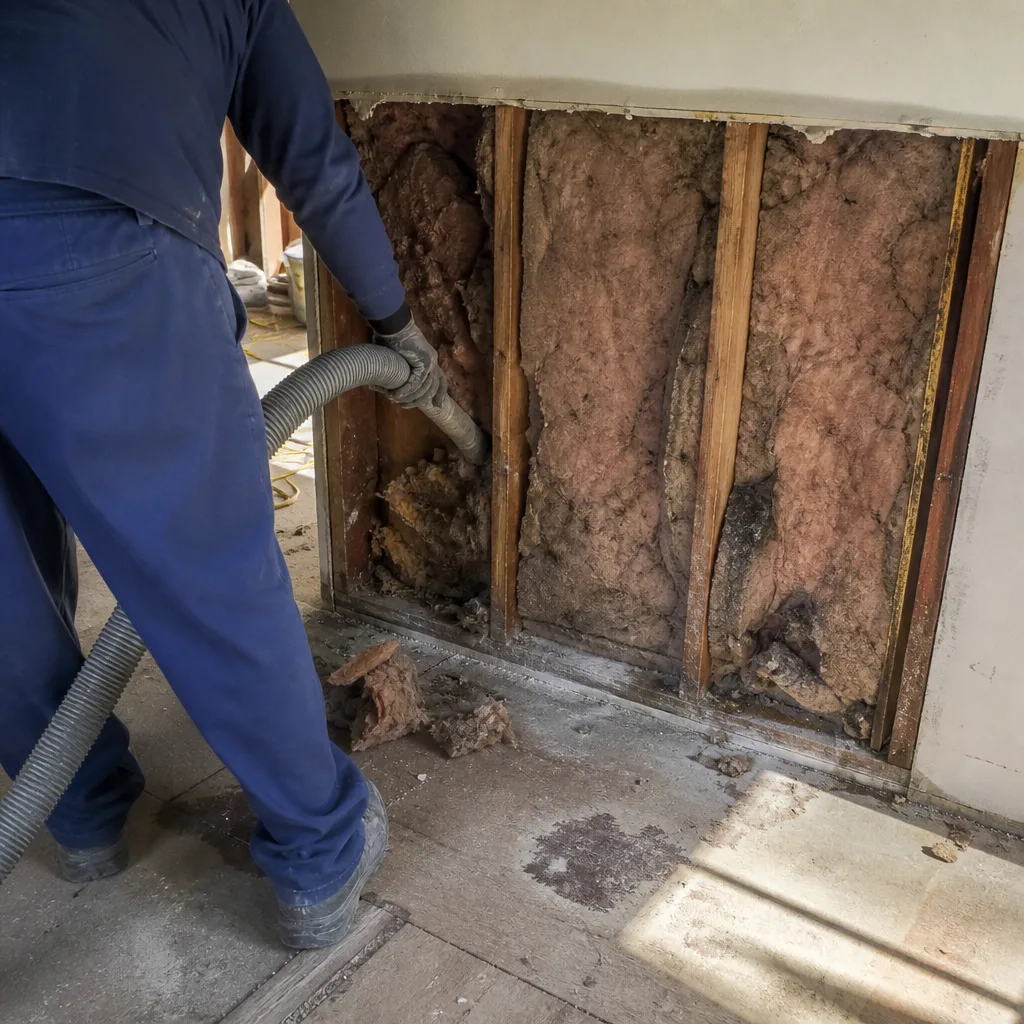 Before
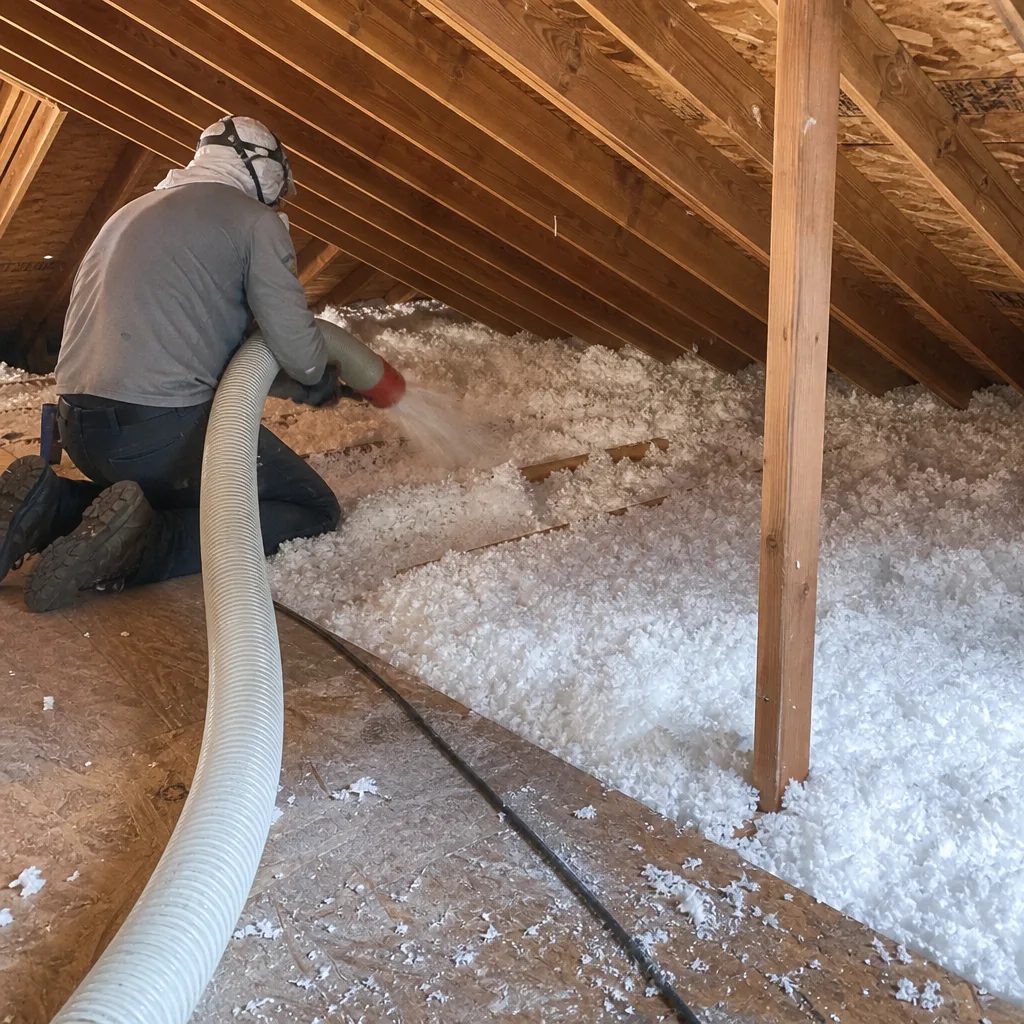 After
AfterCellulose vs. Fiberglass Blown-In: A Short Comparison
This comes up on most Palmdale estimates, so it’s worth laying out directly.
- Cellulose (GreenFiber, CertainTeed): Lower material cost, denser fill, better at blocking convective air movement within the insulation layer itself. Performs well in Palmdale’s dry climate. Can absorb moisture if there’s a future roof issue – worth noting if your home has had any past leak history.
- Fiberglass blown-in (Owens Corning, Johns Manville, Knauf): Doesn’t absorb moisture, lighter per bag, and slightly easier to depth-verify with the attic rulers we leave in place after every job. Costs $0.50 to $0.80 per sq ft more in material, but the labor difference is minimal.
Both materials are sourced from manufacturers we’ve used since 2016. Envelope doesn’t lock you into a proprietary product – if you have a preference or a competing quote specifying a different product line, bring it. We read competing quotes with you under our Free Second Opinion offer and price against the same scope, line by line.
How California Energy Incentives Can Lower Your Out-of-Pocket Cost in Palmdale
Palmdale homeowners have access to several legitimate cost-reduction paths worth understanding before committing to a price.
Federal Tax Credit (25C)
The Inflation Reduction Act’s 25C credit covers 30% of the cost of insulation materials (not labor) up to $1,200 per year for qualifying upgrades in your primary residence. For a Palmdale homeowner spending $3,000 on a blown-in attic job, that’s potentially $400 to $600 back at tax time, depending on how the invoice breaks out materials versus labor. Talk to your tax preparer – we provide itemized invoices that clearly separate material and labor costs so you have what you need at filing.
SoCalGas Energy Efficiency Rebates
SoCalGas periodically offers rebates for attic insulation upgrades in homes with gas heating – which covers most of Palmdale’s housing stock. Rebate amounts have ranged from $0.10 to $0.25 per square foot of insulation added, depending on the program cycle. These programs open and close, so confirm current availability directly with SoCalGas before assuming a rebate applies to your job.
LADWP or SCE Rebates
If your home is on LADWP or SCE service (both serve parts of Palmdale depending on the neighborhood), check their current home upgrade programs. Income-qualified households in the Antelope Valley have historically had access to subsidized insulation through the California Energy Commission’s HOMES program – some rebates have covered the full cost of materials and installation for qualifying households.
Home Energy Audit First
A home energy audit – a full building-envelope assessment that includes a blower-door test, thermal imaging, and written findings – gives you a documented baseline before any money is spent. It also positions you for better rebate documentation and shows exactly where the air and thermal losses are worst. Envelope Insulation Co. offers home energy audits as a standalone service; many Palmdale homeowners find that the audit findings change the scope of what they thought they needed, sometimes reducing the project cost and sometimes adding targeted work that the rebate programs cover.
How to Save on Blown-In Insulation in Palmdale
A few practical points that hold up in the Palmdale market specifically:
- Get air sealing and blown-in done in one visit. Scheduling them separately – attic air sealing one week, insulation the next – costs more in mobilization and often means two separate attic walkthroughs and two documentation sets. Combining them into one job saves $200 to $400 in most cases.
- Don’t skip the blower-door test. It sounds counterintuitive, but skipping the pre-work measurement often leads to under-sealing and leaving performance on the table. If you’re spending $3,000+ on blown-in, a before-and-after blower-door reading confirms whether the air sealing portion actually worked – and it’s included on applicable Envelope Insulation Co. jobs at no separate charge.
- Time the job outside of peak summer demand. August and September are the busiest months for Palmdale attic insulation work – every contractor is booked and pricing reflects demand. Scheduling in November through February, when the valley cools and call volume drops, often means faster scheduling and better crew attention to detail.
- Bring a competing written estimate. Under Envelope’s Free Second Opinion offer, we’ll read any written estimate with you line by line and price against the same scope. This isn’t a gimmick – it’s Haven Standard practice. You leave knowing what you’re actually comparing, not just which number is lower.
- Check your current R-value before committing to a scope. If your attic already has R-25 of intact, un-compacted insulation, you may need a top-off to R-49 rather than a full removal and replacement. An honest attic assessment before pricing means you’re not paying to remove material that didn’t need removing.
For a written price on your Palmdale home, call (661) 403-4467. No estimate requires any commitment – under Haven Standard, you receive a written price and written scope before any decision.
What the Job Looks Like, Start to Finish
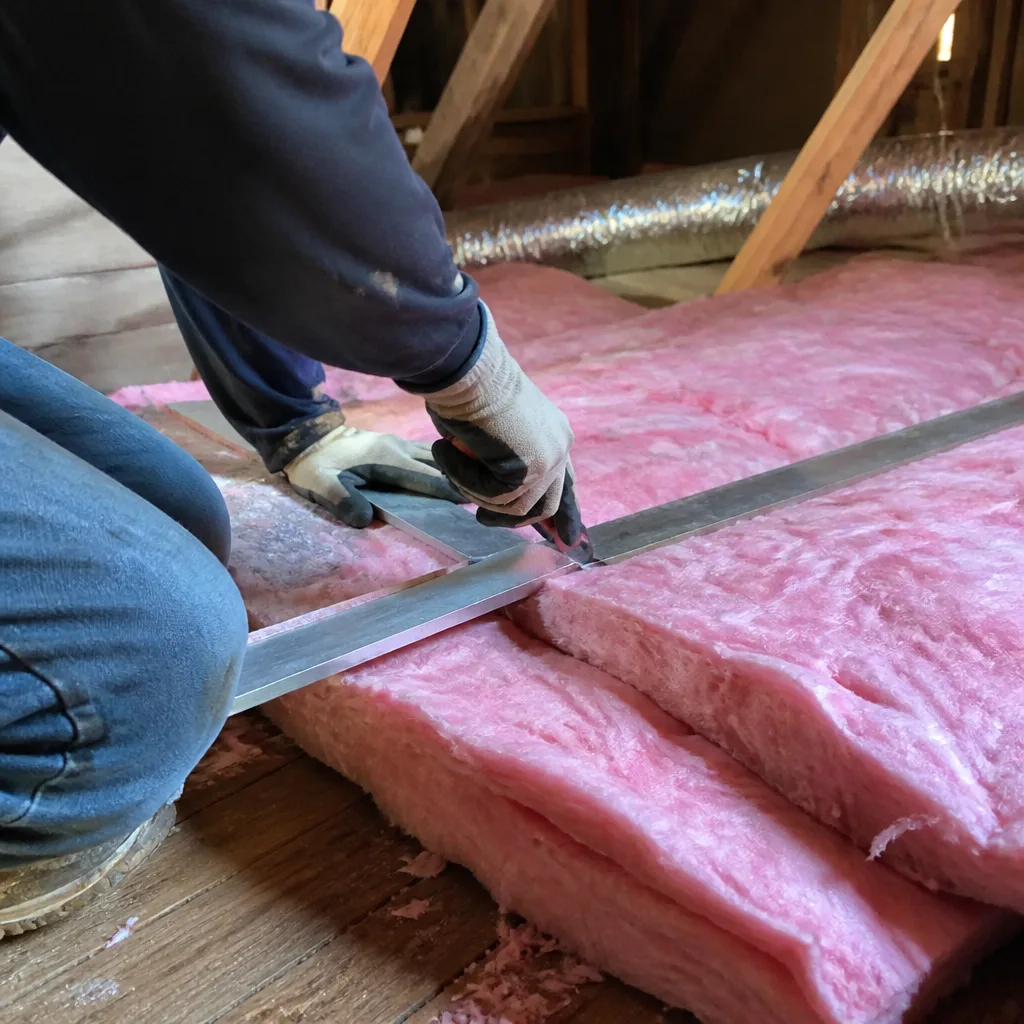
A lot of homeowners who contact Envelope Insulation Co. in Palmdale have had the experience of a contractor showing up, spending 10 minutes in the attic, and texting a number with no explanation of what it covers. Here’s what a properly documented Blown-In Insulation services job looks like from our end.
Step 1: Attic walkthrough and blower-door baseline
Before any pricing conversation, a technician walks the attic and documents conditions: existing insulation depth at multiple points, visible air bypasses (open top plates, unsealed penetrations, can lights without covers), signs of moisture or pest activity, and attic access quality. On jobs where air sealing is included, a blower-door test establishes the CFM50 baseline – the number that tells us, in one measurement, how much conditioned air the building envelope is losing before we touch anything.
Step 2: Written price, written scope, written warranty – before any work starts
Haven Standard Clause 1 isn’t a marketing phrase. The flat written price, the scope of work (which penetrations get sealed, what insulation depth you’re getting, what material is going in), and the written warranty are delivered before anyone lifts a tool. If the scope changes during the job – an unexpected number of can lights, say, or pest damage that wasn’t visible during the initial walk – you’re notified and a revised written price is provided before work continues.
Step 3: Air sealing, then insulation – in that order
Top plates, wire and plumbing penetrations, HVAC chases, attic hatch perimeters, and recessed light covers are sealed and fire-blocked first. The blown-in insulation goes in only after air sealing is complete and inspected. This sequence matters because insulation sitting over open bypasses doesn’t perform to its rated R-value – the air moves through the gaps and around the material, not through it.
Step 4: Depth verification and documentation
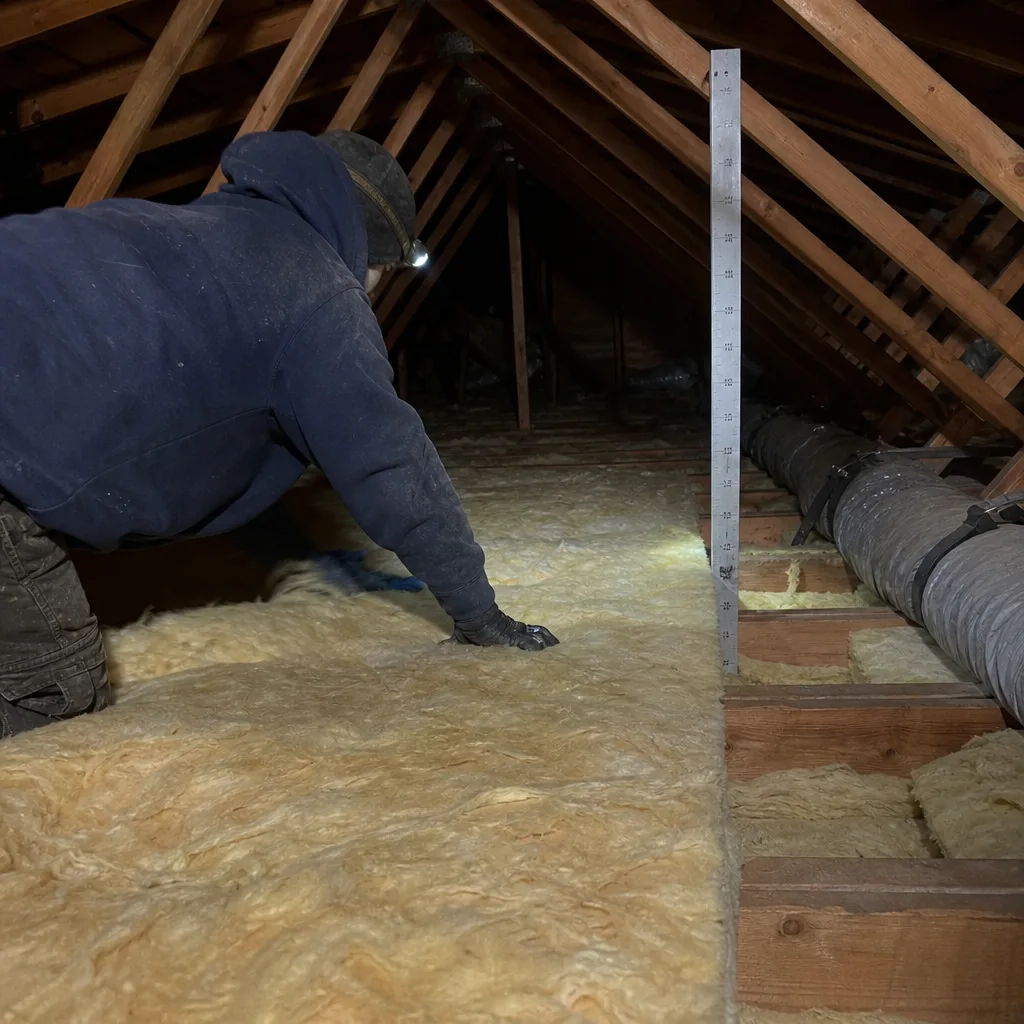
Depth rulers are placed at multiple points across the attic floor before the truck leaves. The crew photographs installed depths at each ruler location. The Documented Photo Record – photos of pre-work conditions, air sealing completion, and installed insulation depth – is included on every job, not available on request. On applicable jobs, a post-work blower-door reading is taken and both numbers (before and after) are provided to you in writing.
Step 5: 365-Day Done Right Promise
If anything isn’t right within 365 days of completion – settled insulation that didn’t reach the specified depth, a sealed penetration that needs revisiting – we make it right. That’s what the written scope and written warranty are for: not to hedge, but to define what “done right” means before the first bag is opened.
FAQs – Blown-In Insulation Cost in Palmdale
How much does blown-in insulation cost per square foot in Palmdale?
Blown-in insulation in Palmdale runs roughly $1.50 to $3.20 per square foot of attic floor, installed – that range covers material and labor for a standard depth (R-38 to R-49) on a accessible attic. If you’re adding air sealing, expect to add $0.60 to $1.20 per square foot on top of that. A 2,000 sq ft attic floor with air sealing included typically lands between $4,200 and $6,400 for a full envelope treatment, or $2,800 to $4,400 for insulation only (topping off from an existing R-11 to R-19 baseline). Call (661) 403-4467 for a written price on your specific home – the per-square-foot number shifts significantly based on what’s already up there.
Is blown-in insulation cheaper than batt insulation for an attic?
For attic floors, blown-in is almost always the more cost-effective choice in Palmdale. Batt insulation leaves gaps around joists, penetrations, and irregular framing that blown-in fills naturally. The labor cost for batts in a finished attic (getting them flat, cutting them around obstructions, getting full coverage at the perimeter) typically exceeds the labor for blown-in on the same floor area. Blown-in also achieves R-49 and R-60 depths more reliably. The one place batts sometimes make sense is on an attic hatch cover, where a rigid batt is easier to handle than loose fill.
How long does blown-in attic insulation last in Palmdale’s climate?
Fiberglass blown-in holds its R-value for decades with minimal settling in Palmdale’s dry desert climate – the low humidity is actually favorable compared to coastal California. Cellulose can settle 15 to 20% over the first few years, which is accounted for during installation by blowing in a slightly higher initial depth (the depth rulers we leave in place let you verify this). Neither material degrades meaningfully in Palmdale’s heat if the attic is properly ventilated. The main enemy is pest intrusion – rodents tunnel through blown-in and compress it – which is why the Documented Photo Record at the start of the job creates a useful baseline for future comparison.
Do I need a permit for blown-in insulation in Palmdale?
In most cases, a permit is not required for adding blown-in insulation to an existing attic in Palmdale under the City of Palmdale’s residential building code – it’s generally treated as a maintenance or improvement item, not a structural or mechanical change. Air sealing alone also doesn’t typically require a permit. If your project includes removing and replacing large sections of existing insulation combined with HVAC modifications, or if the property is a rental with local inspection requirements, that can change. We verify permit requirements for every job scope during the estimate walkthrough and document our findings in writing before any work starts.
Is it worth air sealing before blowing in insulation?
Yes – and the blower-door numbers explain why more clearly than any sales pitch. A Palmdale home in the West Palmdale tracts we service regularly reads 4,000 to 5,500 CFM50 before air sealing. After sealing top plates, can lights, and penetrations, that same home often reads 1,800 to 2,800 CFM50 – before a single bag of insulation goes in. That reduction in air leakage is what changes the utility bill; the insulation holds the conditioned air in place once it stops escaping through the bypasses. Insulation without air sealing is putting a sweater on with all the buttons undone. At Envelope Insulation Co., air sealing is treated as a prerequisite, not an upsell – it’s completed before any insulation is blown, and the before-and-after blower-door readings give you documented proof of what the sealing actually accomplished.
What’s included in Envelope Insulation Co.’s blown-in insulation service in Palmdale?
Every blown-in insulation job from Envelope Insulation Co. includes: a written price and written scope before any work starts (Haven Standard Clause 1); attic air sealing of top plates, penetrations, and can lights completed before insulation is added; insulation blown to the specified depth using materials from Owens Corning, Johns Manville, Knauf, GreenFiber, or CertainTeed depending on the scope; depth rulers left in place and photographed; a Documented Photo Record of pre-work conditions and completed work; and before-and-after blower-door readings on applicable jobs. The 365-Day Done Right Promise covers the completed work. For our full Blown-In Insulation in Palmdale service page, including scope details and what to expect on the day of the job, that page goes into more detail on each step.
Why the Sequence Matters More Than the Price Per Bag
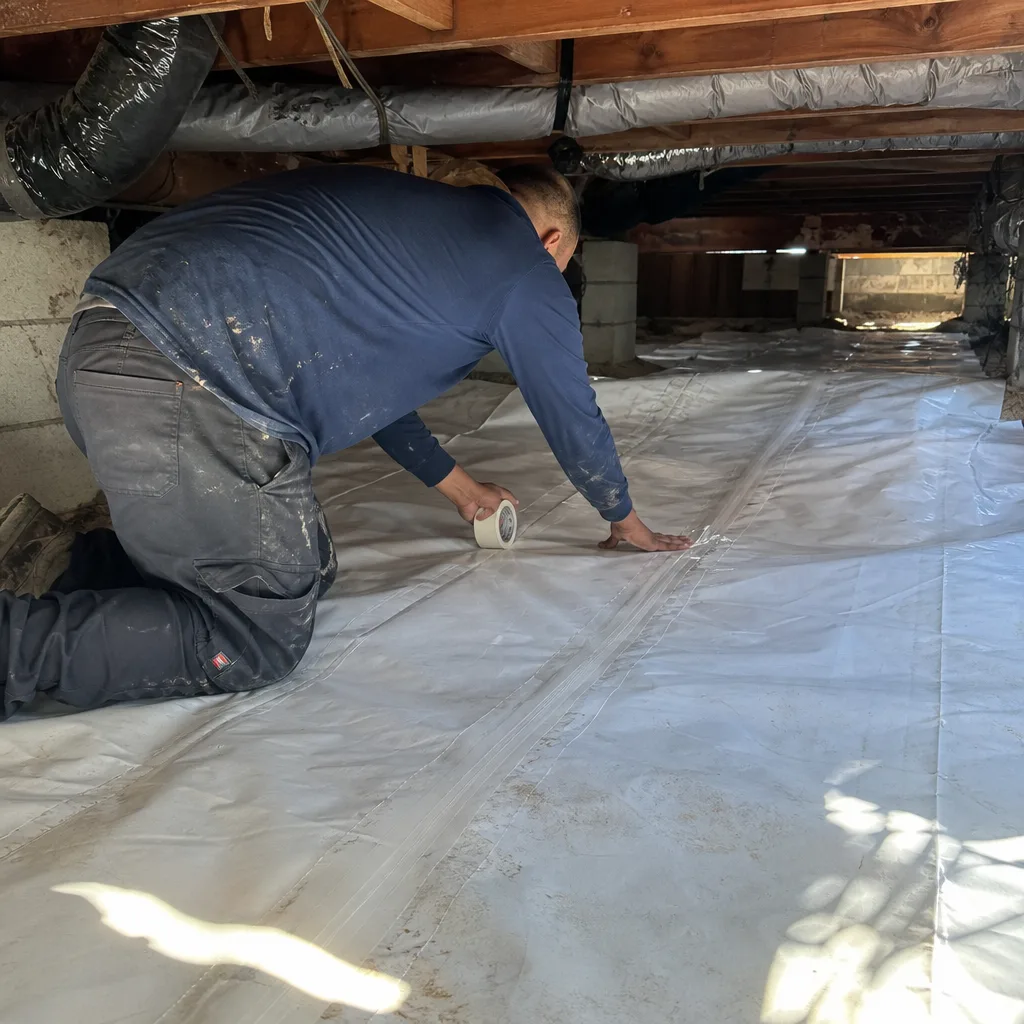
Palmdale’s attic insulation market has no shortage of contractors who will show up with a trailer and blow fiberglass in fast. The number that doesn’t get talked about is what happens to that insulation’s real-world performance when it’s sitting over an attic floor that was never air-sealed. The R-value on the bag is a lab measurement – it assumes no air movement through the insulation layer. Open bypasses at top plates and can lights create convective loops that short-circuit R-value completely in sections of the attic where the penetrations are concentrated.
Since 2016, Envelope Insulation Co. has completed more than 9,000 jobs with a written price before any work started and a documented record when the crew left. Every one of those jobs followed the same sequence: air seal first, then insulate. The before-and-after blower-door readings are the proof that the sequence worked – not a claim on a website, but a number on a page that the homeowner keeps.
Wes Okafor built the Haven Standard around that sequence because the alternative – blown-in insulation with no air sealing, no documentation, and no way to verify performance – is a job that looks finished but isn’t. Palmdale homeowners who’ve had that job done and then called us for a second opinion know exactly what that looks like on a blower-door test.
If you have a written estimate from another contractor, bring it. We’ll read it with you under our Free Second Opinion offer and show you what the scope includes and what it doesn’t. No charge, no pressure, no callback window measured in business days – a live person answers at (661) 403-4467.
Key Takeaways
- Blown-in insulation in Palmdale typically costs $1,800 to $4,200 for a standard attic job; full envelope treatment with air sealing runs $3,200 to $4,800 for most mid-size homes.
- Palmdale’s climate zone 8 means R-38 minimum, but R-49 to R-60 is the practical target given summer attic temperatures above 140°F.
- Air sealing before insulation is the step that actually changes utility bills – the blower-door number before and after proves it.
- Rodent contamination in Palmdale’s desert-adjacent neighborhoods frequently requires full removal first – budget $4,500 to $7,500 for removal plus re-insulation if pest activity is present.
- Federal 25C tax credits cover 30% of material costs (up to $1,200/year); SoCalGas and SCE/LADWP rebates may apply depending on your service provider and the program cycle.
- Every Envelope Insulation Co. job ends with a written price, Documented Photo Record, and 365-Day Done Right Promise – nothing starts without a signed, written scope.
Written by Wes Okafor, Owner at Envelope Insulation Co. / Topside Attic Insulation Palmdale, serving Palmdale since 2016.
Pricing reflects the Palmdale market as of 2026. Topside Attic Insulation Palmdale offers free estimates – call (661) 403-4467.
What Our Customers Say
"They air-sealed the attic floor before insulating and showed me the blower-door number before and after. The upstairs is finally the same temperature as downstairs."
- Marisol D."The winter gas bill dropped by about a third. They had estimated a quarter, so they under-promised."
- Genevieve R."Two other companies quoted to blow more insulation on top of what was there. These were the only ones who said the existing material had to come out first, and explained why."
- Clifford E.