
How Much Does Crawl Space Encapsulation & Vapor Barrier Cost in Palmdale?
Crawl space encapsulation in Palmdale, CA typically runs between $3,200 and $8,500 for a standard single-family home, with most projects landing around $4,500 to $6,000 when the space is in reasonable condition. A Crawl Space Vapor Barrier-only installation without full encapsulation is cheaper, usually $1,200 to $2,800 depending on square footage and access conditions. Palmdale’s desert climate - with wide temperature swings, seasonal humidity from monsoon moisture, and sandy soil that holds ground moisture differently than coastal areas - creates specific crawl space conditions that affect both what your crawl space needs and what the work costs.
Crawl Space Encapsulation & Vapor Barrier Cost Breakdown (2026)
These are real price ranges we see in the Palmdale market as of 2026. Costs shift based on crawl space size, condition, and what the space actually needs - not what a checklist says it should need.
| Service | Typical Cost Range | Notes |
|---|---|---|
| Vapor barrier only (6-mil poly sheeting) | $1,200 - $2,000 | Ground cover only; no wall lining, no sealing |
| Vapor barrier (20-mil reinforced liner) | $1,800 - $2,800 | Heavier material; better durability in sandy, rocky sub-grade soil |
| Full encapsulation (liner + wall lining + sealing) | $3,200 - $5,500 | Covers ground, walls, piers; air-seals all penetrations |
| Full encapsulation + insulation of floor joists | $4,500 - $8,500 | Adds R-19 to R-30 batts or spray foam between joists |
| Crawl space debris removal / prep work | $300 - $900 | Old insulation, rodent debris, standing material removal |
| Crawl space drainage or sump installation | $1,200 - $3,500 | Rare in Palmdale’s dry climate, but needed after monsoon flood events |
| Crawl space vent sealing | $400 - $900 | Closing existing foundation vents as part of encapsulation |
| Dehumidifier installation (crawl space rated) | $900 - $2,200 | More relevant in partially shaded, north-facing crawl spaces near Avenue M |
What Pushes the Final Number Up or Down
Square footage is the biggest lever. A crawl space under 800 square feet – typical under a 1,400 to 1,600 square foot ranch home in the West Palmdale tracts near 10th Street West – comes in at the lower end of those ranges. A 2,400 square foot two-story with a full footprint crawl, which we see more often in the newer Rancho Vista and Anaverde neighborhoods, pushes toward the high end of full encapsulation pricing.
Clearance matters just as much. Palmdale’s older homes – particularly those built in the 1960s and 1970s along Sierra Highway and in the older East Palmdale blocks – often have 18-inch clearance crawl spaces. At 18 inches, every foot of liner installation takes roughly twice as long as in a 36-inch crawl. That labor difference shows up in the quote. Homes built after 2000 in newer developments generally have better clearance, but they sometimes have more complex penetration layouts with multiple HVAC trunk lines running through the crawl.
Soil condition is specific to the Antelope Valley. Palmdale’s sandy, caliche-heavy sub-grade does not retain surface moisture the way clay-heavy coastal soils do, which means you typically don’t need aggressive drainage systems. But when monsoon runoff does collect under a home – especially in lower-lying lots in the Quartz Hill area or near the stormwater channels off Rancho Vista Boulevard – the remediation scope expands quickly. Old insulation removal, rodent damage cleanup, and pest treatment all add to the starting price before the liner even goes down.
What Affects Crawl Space Encapsulation & Vapor Barrier Pricing in Palmdale
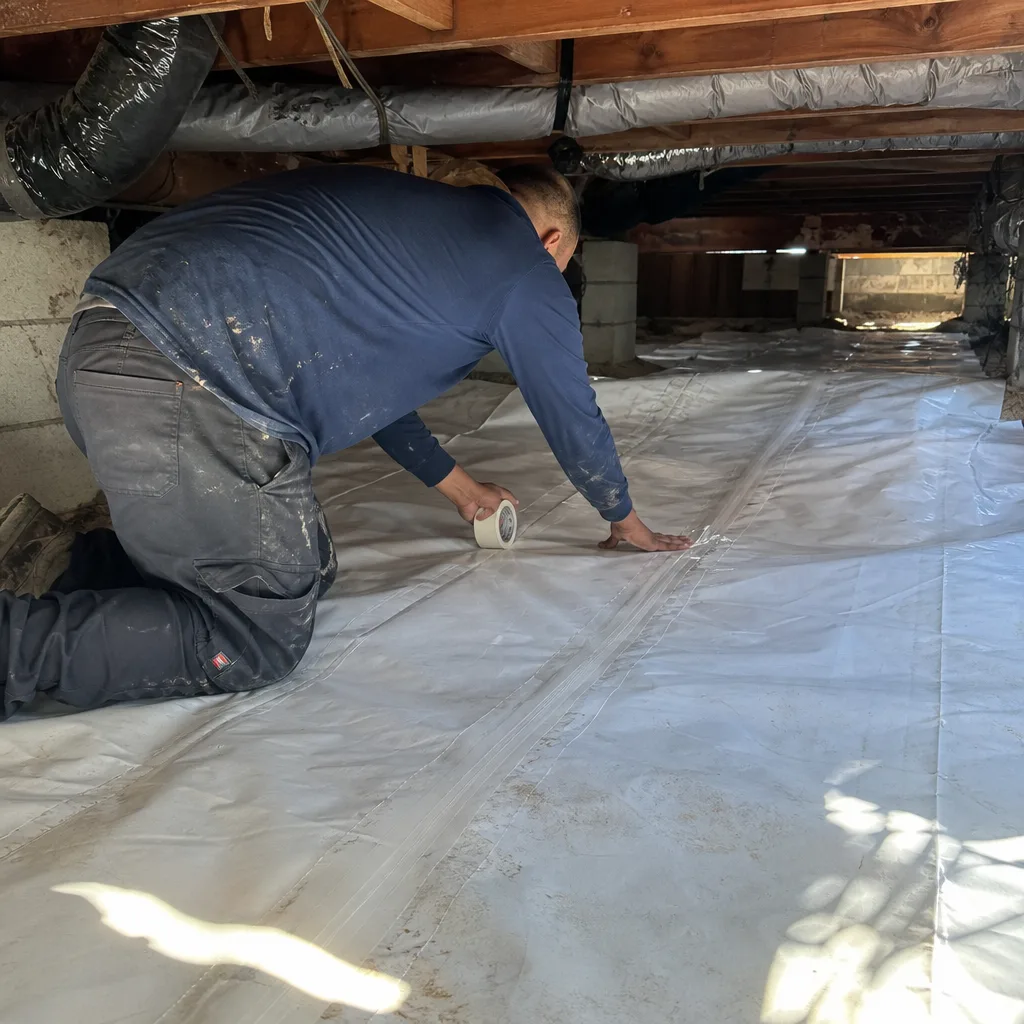
- Crawl space square footage: Most contractors price encapsulation per square foot – typically $3.50 to $7.50 per square foot for full encapsulation in the Palmdale market. A 1,200-square-foot footprint at $5 per foot is $6,000 before any add-ons. Get the actual square footage of your crawl, not the living area, before comparing quotes.
- Liner thickness and material: The difference between a 6-mil poly sheeting job and a 20-mil reinforced liner is roughly $0.80 to $1.50 per square foot in material cost alone. Thicker liners – particularly in rocky or sharp sub-grade soil common in parts of North Palmdale near Avenue P – hold up better and are worth the cost difference over a 10-year horizon.
- Access difficulty and crawl height: Homes in Palmdale’s older West Side tracts sometimes have access hatches that are interior-only, or access openings under 18 inches wide. That slows crew movement significantly and is reflected in labor cost. Exterior hatch installations (if one doesn’t exist) add $400 to $800 to the project.
- Existing moisture damage or pest activity: If a home inspector or pest operator has flagged subterranean termite activity or rodent nesting in the crawl – which we see regularly in homes near open desert lots in the Antelope Acres and Littlerock areas – that remediation work happens before the liner goes down. It’s a separate scope and a separate cost, but it’s not optional.
- Whether vents stay open or get sealed: Older building codes required foundation vents; newer energy-efficiency thinking favors sealed, conditioned crawl spaces. In Palmdale, homes permitted before 2010 typically have open vents. Deciding whether to seal them or leave them affects both the scope of work and whether you need supplemental mechanical ventilation. That decision changes the quote by $400 to $1,500.
- Insulation over the liner: If floor joists are currently uninsulated – or if the existing batt insulation has dropped, sagged, or been compromised by moisture – adding insulation to the crawl ceiling as part of the encapsulation project is far more cost-effective than returning later. In Palmdale’s climate, where summer slab-level temperatures can reach 110°F, uninsulated floors above an encapsulated crawl leave efficiency gains on the table. Adding R-19 fiberglass batts between joists typically adds $1.50 to $2.50 per square foot to the project total.
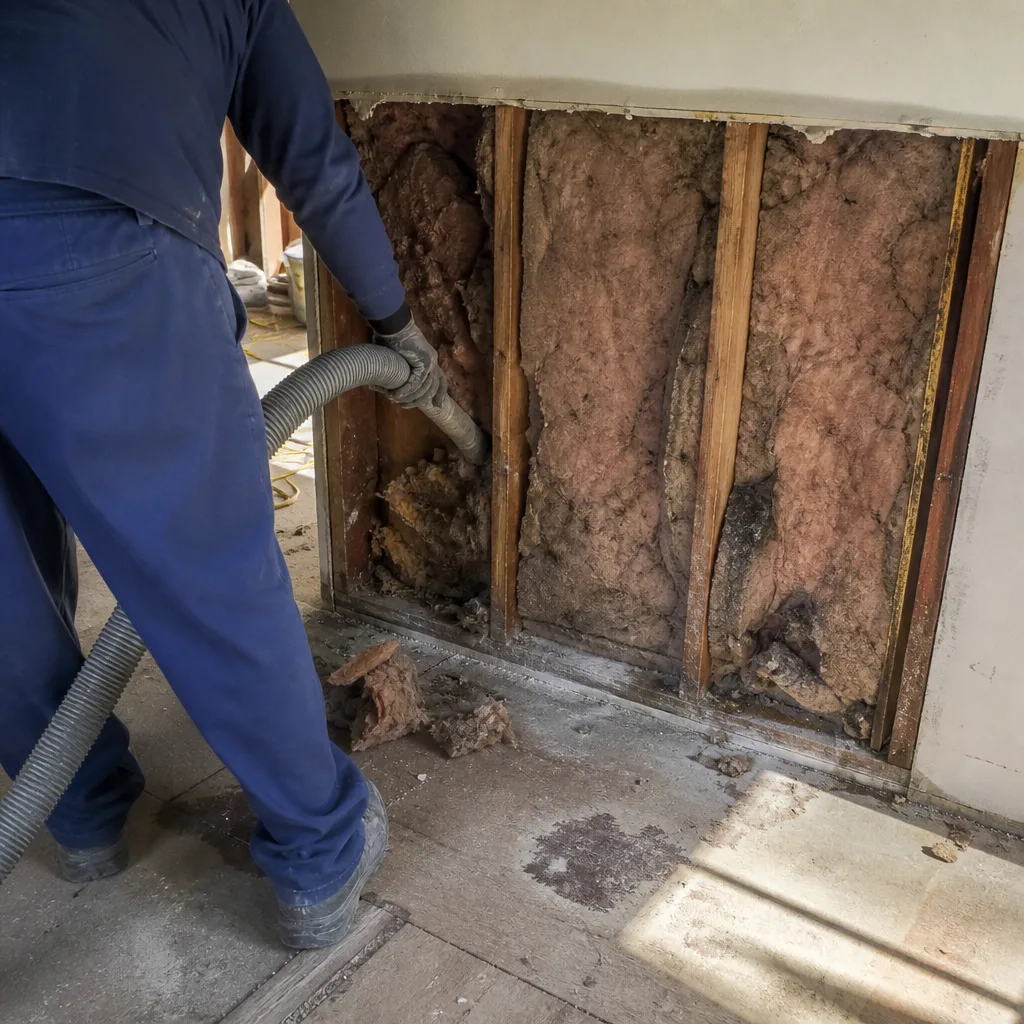 Before
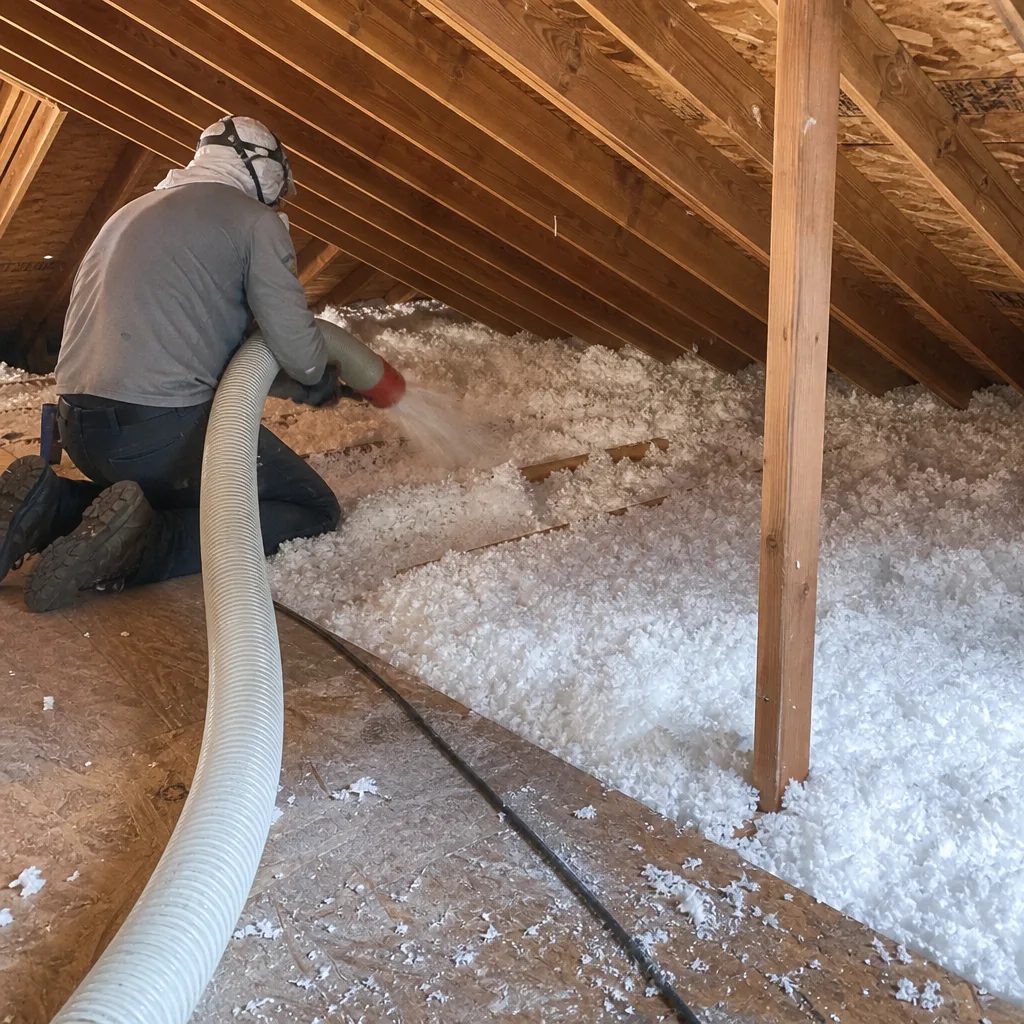 After
AfterHow to Save on Crawl Space Encapsulation & Vapor Barrier in Palmdale
Get a Scope in Writing Before You Accept Any Price
The single biggest source of cost overruns in crawl space work is a verbal quote followed by “we found additional issues once we got in there.” Under the Haven Standard, every job Envelope Insulation Co. quotes begins with a written price, a written scope, and a written warranty – before any work starts. That’s not a policy we tout as a selling point; it’s the only way to give a homeowner a real comparison between contractors. When you have two quotes and one is written and one is verbal, they’re not the same thing.
Combine the Crawl Space Work with Adjacent Envelope Work
If you’re already scheduling crawl space encapsulation, it costs less per square foot to address floor joist insulation at the same time than to return for a second mobilization. The same logic applies if your attic needs attention – crew is already at the home, materials are already staged, and setup costs are split across a larger scope. We regularly complete Crawl Space Encapsulation & Vapor Barrier in Palmdale alongside attic air sealing in the same visit, and the combined efficiency is real.
Check for Utility Rebates
Southern California Gas (SoCalGas) and Southern California Edison (SCE) both offer rebate programs for qualifying weatherization improvements, and Crawl Space Insulation and air sealing can sometimes qualify. The programs change year to year, so confirm current eligibility directly with each utility – but the rebate on a qualifying encapsulation project can offset $200 to $800 of the total cost. LA County also periodically runs weatherization assistance programs for income-qualifying households in the Antelope Valley; the local contact point is the Department of Public Social Services.
Don’t Over-Buy for Palmdale’s Climate
Palmdale is not a humid climate. It gets monsoon moisture intrusion in July and August and occasional cold-weather condensation under homes with poor drainage, but it does not have the chronic ground moisture of coastal or Pacific Northwest markets. A full-perimeter drainage system with a sump pump is rarely warranted here unless you’ve had visible water intrusion after a storm. Starting with a solid 20-mil liner and proper vent sealing, then adding a dehumidifier only if readings show it’s needed, is a more calibrated approach than buying the most expensive package by default.
Use Our Free Second Opinion
If you’ve already received a written estimate from another contractor, bring it to us. We’ll read it with you, tell you what the line items mean, and let you know if anything looks off – whether that’s an unnecessary add-on or a scope gap that would surface as a change order later. That review costs nothing. Call (661) 403-4467 to schedule it, or to request a free estimate on your Palmdale home. A written price before any work starts is the floor, not a feature.
FAQs – Crawl Space Encapsulation & Vapor Barrier Cost in Palmdale
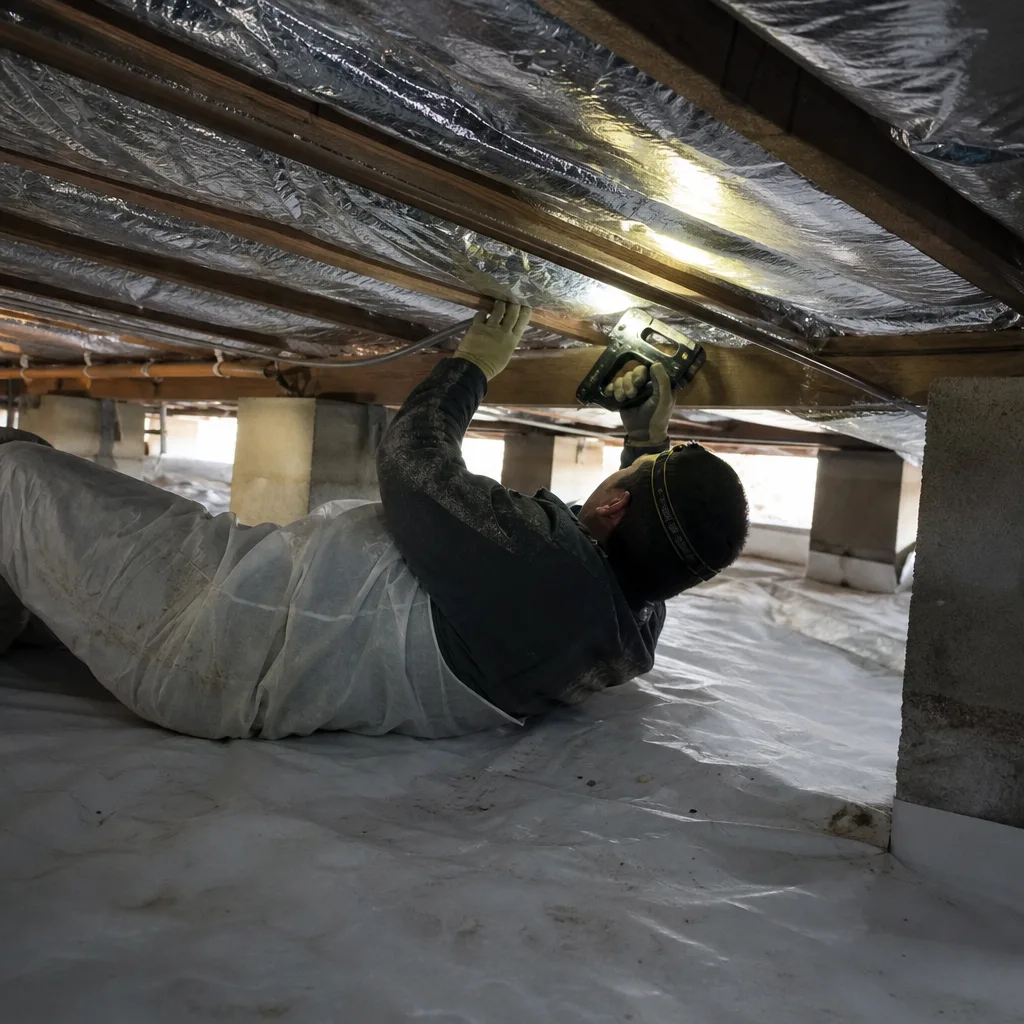
How much does crawl space encapsulation cost in Palmdale, CA in 2026?
Full crawl space encapsulation in Palmdale runs between $3,200 and $8,500 for most single-family homes, with the most common range landing at $4,500 to $6,000 for a home with 1,000 to 1,500 square feet of crawl space area in reasonable condition. Smaller crawl spaces or vapor-barrier-only jobs start lower, around $1,200 to $2,800. The cleanest way to get an accurate number for your specific home is a written estimate that reflects your crawl’s actual dimensions and current condition – call (661) 403-4467 and we’ll schedule a no-cost assessment.
Is a vapor barrier the same as full encapsulation, and does the price difference matter?
No, they’re different scopes. A vapor barrier is a poly liner laid over the ground surface – it blocks ground moisture from evaporating up into the crawl but leaves the walls, vents, and penetrations untouched. Full encapsulation adds liner to the foundation walls, seals all vents and penetrations, and creates a near-conditioned space. In Palmdale, a vapor barrier alone typically costs $1,200 to $2,800; full encapsulation runs $3,200 to $8,500. Whether the price difference is worth it depends on how much your crawl space is connected to your conditioned living area and what your heating and cooling bills look like. For homes with HVAC equipment or ductwork in the crawl, full encapsulation usually pays back faster.
Does Palmdale’s desert climate mean I don’t need crawl space encapsulation?
Not exactly. Palmdale averages under 9 inches of rainfall per year, so chronic ground saturation is uncommon. But monsoon-season humidity in July and August, irrigation runoff from neighboring properties, and cold-weather condensation on sub-grade surfaces all create real moisture events under homes in the Antelope Valley. We regularly find dropped batt insulation, mold growth on subfloor sheathing, and rodent-damaged vapor barriers under Palmdale homes that owners assumed were fine because the climate is “dry.” The desert heat is also a crawl space stressor – on 108°F days, an unencapsulated crawl becomes a heat sink that works against your cooling system. It’s worth a visual inspection before assuming no action is needed.
How long does crawl space encapsulation take in Palmdale?
Most residential encapsulation jobs in Palmdale complete in one to two days. A straightforward vapor barrier installation on a clean, accessible crawl can finish in a single day. Full encapsulation with vent sealing, wall liner, and joist insulation on a 1,500-square-foot crawl typically runs six to ten hours of crew time, often spread across two days if debris removal or pest remediation is part of the scope. We document the completed work with a photo record when the crew leaves, so you have a visual record of what was done and where, without having to crawl under the house yourself to verify it.
Is it cheaper to repair a damaged vapor barrier or replace it entirely?
It depends on the extent of the damage and the age of the existing liner. A 6-mil barrier that’s five years old with a few punctures from pest activity can often be patched and supplemented with seam tape for $300 to $600. A liner that’s torn across large sections, compressed under settled debris, or degraded from UV exposure near open vents is usually better replaced – a patchwork liner loses most of its effectiveness at the seams and damaged sections. If the existing liner is thinner than 10-mil, full replacement with a 20-mil liner is typically the more cost-effective long-term choice, even if the upfront cost is higher. We’ll assess your current liner and tell you what we actually found, not what generates a larger job.
Does crawl space encapsulation add value to a home in Palmdale?
It contributes to value, though it’s difficult to quantify as a direct dollar-for-dollar return. What encapsulation does in the Palmdale market is remove a category of concern from a home inspection report – moisture intrusion, pest damage, degraded subfloor sheathing, and missing or failed insulation all appear on inspection reports and can trigger repair requests or price reductions during a sale. A home with a documented, clean encapsulation – with a written scope and photo record showing the completed work – presents differently to a buyer’s inspector than one with an aging vapor barrier and visible mold. For homeowners who purchased through the 2020 to 2024 Palmdale market and plan to hold for five to ten years, encapsulation is more maintenance than upgrade, but it protects the underlying structure in a way that’s documentable and transferable.
Why Palmdale Crawl Spaces Have Specific Needs
The Antelope Valley’s geography creates conditions that don’t match the generic crawl space content you’ll find written for the broader Southern California market. Palmdale sits at roughly 2,700 feet elevation – significantly higher than the Los Angeles Basin – which means winter overnight temperatures regularly drop into the mid-20s in the coldest months. Under an unencapsulated crawl, those cold nights cause condensation on sub-grade surfaces and pipes, and the temperature differential between the cold crawl and the heated living space above means heat loss through uninsulated floor joists is real, not theoretical.
Summer works the opposite direction. When it’s 105°F to 110°F in Palmdale in July – which is a typical week, not an extreme event – an open crawl space with no thermal barrier between the hot exterior and the floor system forces your air conditioning system to work harder. We’ve seen homes in the Rancho Vista area where encapsulation and floor joist insulation reduced cooling loads measurably, visible in both blower-door readings and in the homeowners’ utility bills across the following summer.
Soil composition in North Palmdale near the desert transition zones contains more caliche – a hardened calcium carbonate layer – which affects drainage patterns and can channel surface water unexpectedly during heavy monsoon rain. Homes on lots that slope toward the foundation, or those near the flood channels in East Palmdale, see ground moisture events that homeowners in flat-lot suburban tracts don’t experience. Knowing which neighborhood and lot orientation you’re working with changes what the crawl space actually needs.
The building stock in Palmdale also spans a wide range. Homes built in the 1960s through 1980s on the older west side of town often have original fiberglass batt insulation hanging from the floor joists with wire hangers – or dropped to the ground entirely. Homes built in the 1990s and early 2000s in the Anaverde and West Palmdale master-planned areas tend to have better original insulation but sometimes have complex HVAC configurations with equipment staged in the crawl. Newer construction in the 2010s and 2020s near Lancaster Road and the Quartz Hill adjacent tracts is often built to Title 24 standards that assume encapsulation, but the quality of the original liner installation varies. None of these homes require the same scope or the same material choices.
What the Work Includes – and What You Receive When It’s Done
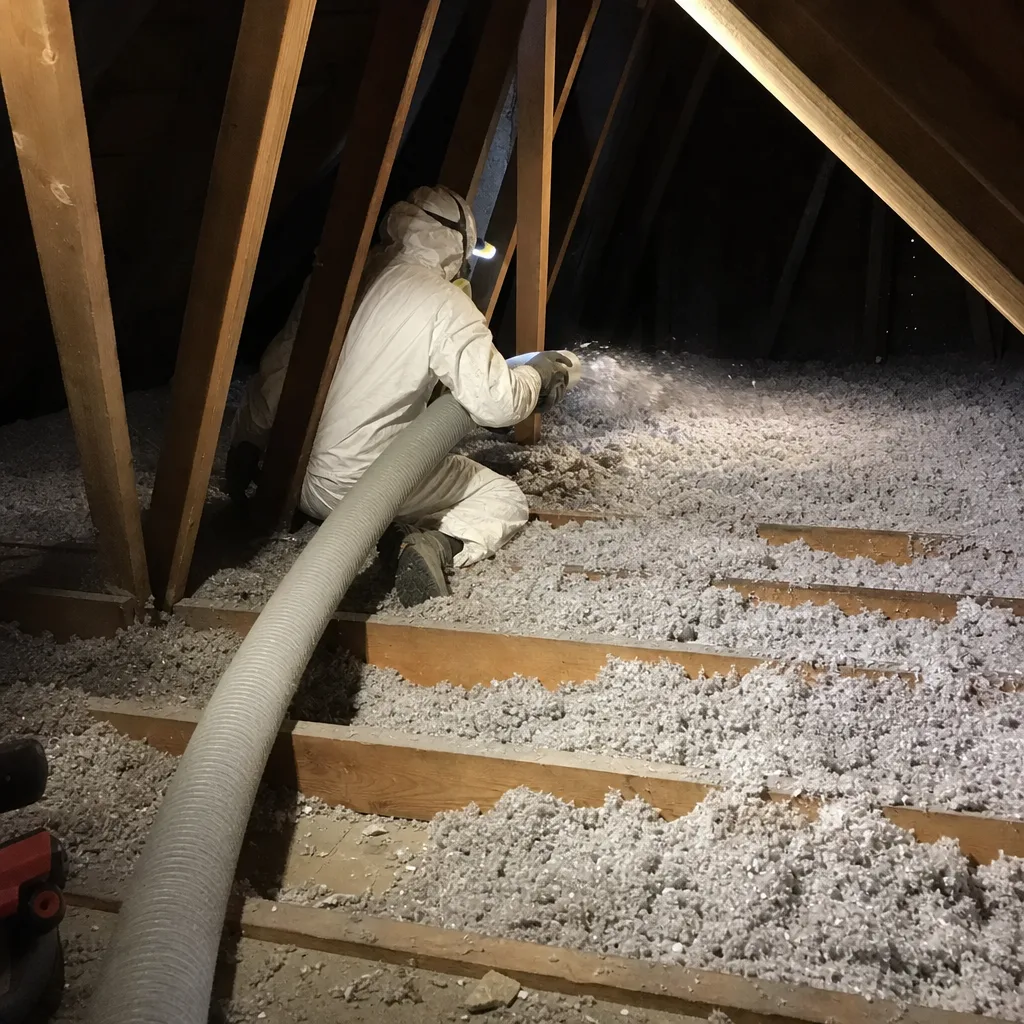
A crawl space encapsulation job from Envelope Insulation Co. starts with a written price and a written scope – before any work begins. That’s Haven Standard Clause 1, and it’s non-negotiable. The scope specifies liner thickness, wall coverage, which vents get sealed and how, what penetrations get addressed, and whether joist insulation is included. You know what you’re buying before anyone picks up a tool.
During the job, the crew seals the space in sequence: ground liner first, lapped up foundation walls and sealed at seams with tape rated for the material, then wall liner if included in the scope, then vent covers, then penetration sealing around pipes, conduit, and HVAC lines. On jobs where floor joist insulation is part of the scope, that goes in after the encapsulation is complete – not before. Sealed first, then insulated. That order matters because insulating over an unsealed crawl traps moisture between the liner and the subfloor, which defeats the purpose of both.
When the crew leaves, you receive a Documented Photo Record – images of the completed installation, the sealed vents, the penetrations, and the condition of the subfloor above. On applicable jobs, before-and-after blower-door readings – a pressurization measurement that shows, in a single number, how much conditioned air the building envelope was losing before and after the work – are included so you can verify the air-sealing result in a quantifiable way, not just take our word for it.
The 365-Day Done Right Promise covers all completed work. If something isn’t right – a seam that separated, a vent cover that failed, a section of liner that lifted – we make it right. That’s in writing before we start, not a verbal assurance offered at the end.
Envelope Insulation Co., operating as Topside Attic Insulation Palmdale, has completed this scope of work at over 9,000 homes since 2016. Every one of those jobs started with a written price and closed with a documented record. The Palmdale market is one where we’ve built enough specific experience – across the older West Side tracts, the newer master-planned communities, and the high-desert lots with their caliche soil and monsoon exposure – to give you a number that means something, not a range so wide it’s useless.
You can read more about what this service includes and what to expect from the project on our Crawl Space Encapsulation & Vapor Barrier in Palmdale page, or visit the home to see our full building-envelope service line.
Key Takeaways
- Vapor barrier only in Palmdale: $1,200 to $2,800
- Full encapsulation (liner, wall coverage, vent sealing): $3,200 to $5,500
- Full encapsulation plus floor joist insulation: $4,500 to $8,500
- Palmdale’s desert climate creates real crawl space risks – heat in summer, condensation in winter, and monsoon moisture in July and August
- Older homes on the West Side and near Sierra Highway often have sub-18-inch clearance, which adds labor cost
- Insulation should never go in before the crawl space is sealed – sealed first, insulated second
- Every quote from Envelope Insulation Co. is written before work starts; every completed job includes a photo record
- A Free Second Opinion on any written estimate is available – call (661) 403-4467
Ready to Get a Written Price for Your Palmdale Home?
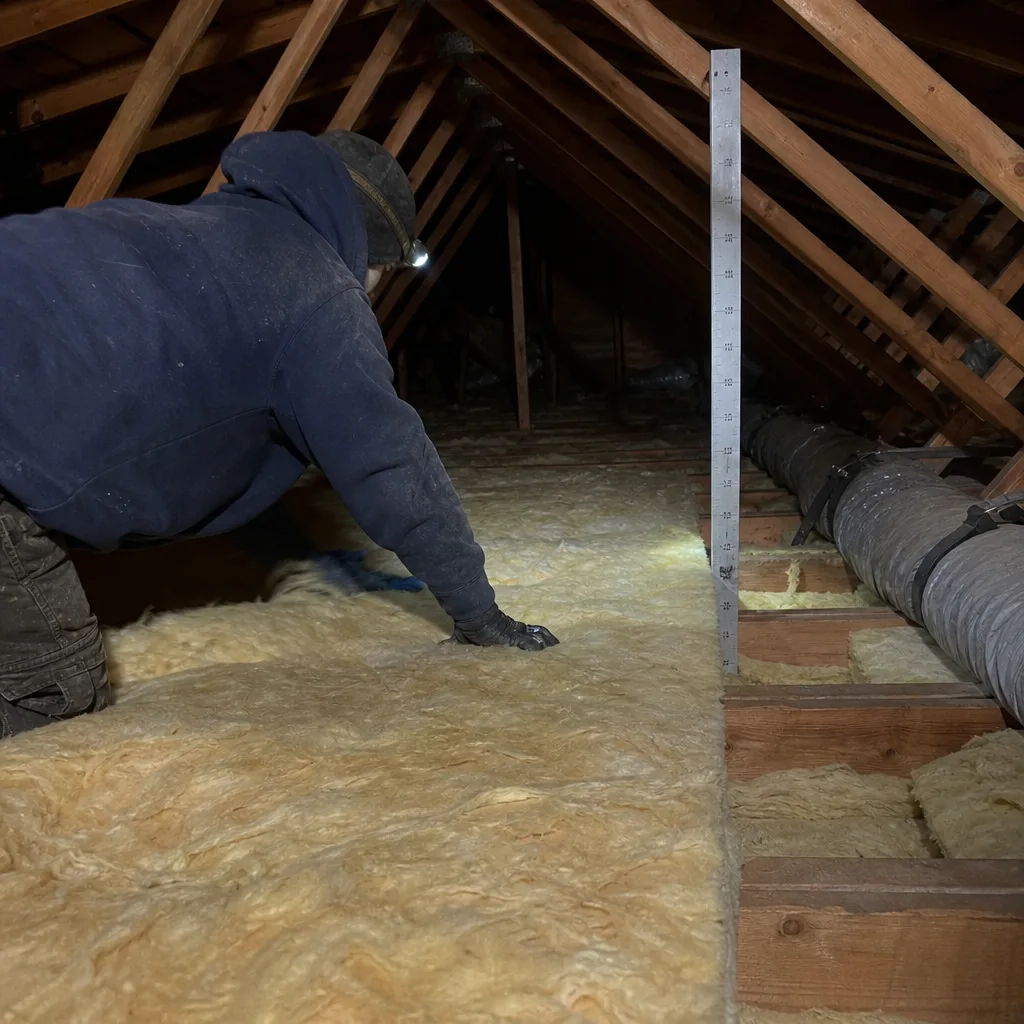
If you want to know what Crawl Space Encapsulation & Vapor Barrier services would cost for your specific home – with a written scope, a flat price, and no surprises when the crew shows up – call Topside Attic Insulation Palmdale at (661) 403-4467. We’ll schedule a no-cost assessment, give you a written price before any work starts, and answer any questions about what your crawl space actually needs versus what it might not. If you’ve already received a written estimate from another contractor, bring it. We’ll read it with you at no charge.
Written by Wes Okafor, Owner at Topside Attic Insulation Palmdale (Envelope Insulation Co.), serving Palmdale since 2016.
Pricing reflects the Palmdale market as of 2026. Topside Attic Insulation Palmdale offers free estimates – call (661) 403-4467.
What Our Customers Say
"They air-sealed the attic floor before insulating and showed me the blower-door number before and after. The upstairs is finally the same temperature as downstairs."
- Marisol D."The winter gas bill dropped by about a third. They had estimated a quarter, so they under-promised."
- Genevieve R."Two other companies quoted to blow more insulation on top of what was there. These were the only ones who said the existing material had to come out first, and explained why."
- Clifford E.