
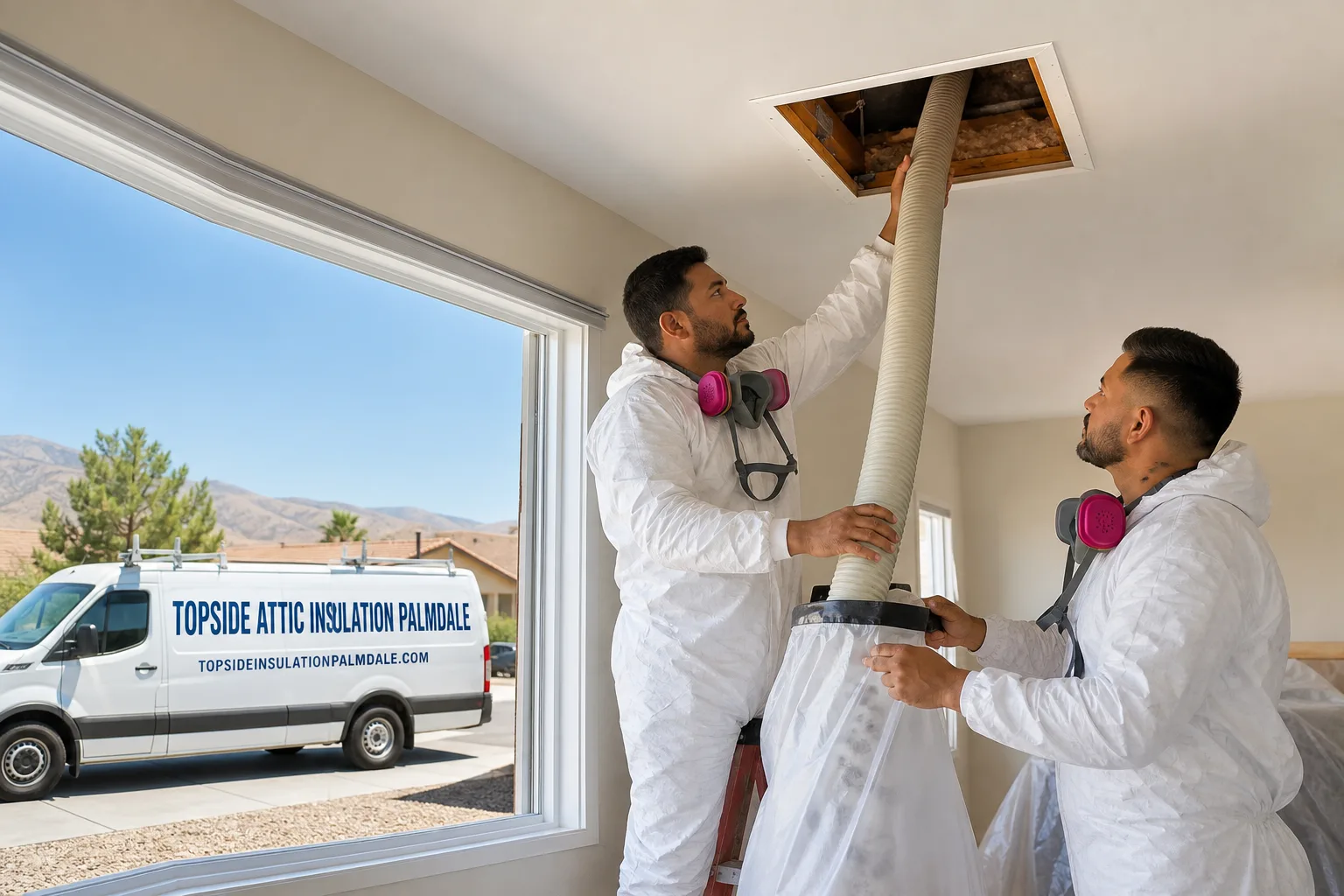
How Much Does Attic Insulation Cost in Palmdale, CA?
Attic Insulation Near Me in Palmdale, CA typically runs between $1,800 and $4,500 for a standard single-story home, with most jobs landing around $2,400 to $3,200 after air sealing and prep. That range covers blown-in fiberglass or cellulose installed to R-38 or R-49 – the two most common targets for the Antelope Valley’s desert climate – and assumes a 1,200 to 1,800 square-foot attic floor with no existing insulation removal required.
Attic Insulation Cost Breakdown (2026)
The table below reflects real Palmdale-market pricing from 2026 jobs. Costs vary based on attic square footage, material choice, and whether air sealing is completed first. At Envelope Insulation Co., air sealing of top plates, can lights, and attic penetrations is always completed before any insulation goes in – that work is scoped and priced in writing before anyone lifts a tool, per Haven Standard Clause 1.
| Service / Scope | Typical Palmdale Price Range |
|---|---|
| Air sealing only (top plates, penetrations, can lights) | $400 – $900 |
| Blown-in fiberglass to R-38 (1,000-1,500 sq ft attic) | $1,100 – $1,900 |
| Blown-in fiberglass to R-49 (1,000-1,500 sq ft attic) | $1,400 – $2,300 |
| Blown-in cellulose to R-38 (1,000-1,500 sq ft attic) | $1,000 – $1,700 |
| Blown-in cellulose to R-49 (1,000-1,500 sq ft attic) | $1,300 – $2,100 |
| Fiberglass batt installation (standard retrofit) | $1,200 – $2,400 |
| Open-cell spray foam (roof deck application) | $2,800 – $5,500 |
| Closed-cell spray foam (roof deck or hard-to-access areas) | $3,500 – $7,000+ |
| Radiant barrier foil (stapled to rafters) | $800 – $1,800 |
| Old insulation removal (per 1,000 sq ft) | $600 – $1,400 |
| Full job: air seal + blown-in to R-49 (1,500 sq ft attic) | $2,400 – $3,800 |
| Full job: removal + air seal + blown-in to R-49 | $3,200 – $5,200 |
What Pushes the Price Up
Palmdale homes built before 1990 – many of which sit in older tracts around East Palmdale, Rancho Vista, and the neighborhoods south of Avenue S – frequently have recessed can lights that were never air-sealed at the factory. Each unboxed can light is a direct hole in your thermal envelope. Sealing 15 to 25 of those before insulating adds real labor time and moves the project toward the higher end of the range above.
Attic access also matters more here than contractors from outside the Antelope Valley sometimes account for. Homes in West Palmdale and the neighborhoods near Quartz Hill often have low-pitch rooflines that compress attic headroom to 18 inches or less in the outer bays – which slows machine positioning, hose routing, and cleanup considerably. That headroom constraint can add $200 to $500 to a blown-in job compared to a home with a standard cathedral or gable pitch.
Desert heat matters too. Palmdale’s summer attic temperatures regularly exceed 150°F by early July. That heat load pushes many homeowners – and code-conscious contractors – toward R-49 rather than the minimum R-38, because the additional depth pays back in reduced cooling hours and longer HVAC equipment life. If your system is running 10 or more hours a day through August, the cost difference between R-38 and R-49 typically recovers within two to three cooling seasons.
What Pulls the Price Down
New construction or post-renovation attics with clean, unobstructed floors and no existing material to remove land at the lower end of every range above. A 1,200 square-foot attic with good access, standard 2×6 truss framing, and no recessed fixtures can be air-sealed and insulated to R-49 in a single crew day – and that is reflected in the price.
Combining work also helps. When a radiant barrier installation and blown-in insulation are scheduled together, the mobilization and setup costs are shared across both scopes. That is a real savings compared to scheduling them as two separate visits.
What Affects Attic Insulation Pricing in Palmdale
- Attic square footage and geometry. Price scales roughly linearly with floor area, but attics with complex geometry – multiple roof pitches, knee walls, HVAC units sitting on the floor – take longer to prep and insulate accurately. In Palmdale’s newer master-planned communities like Anaverde and Legends, open-span attics tend to be straightforward. Older custom homes on large lots near Rancho Vista often are not.
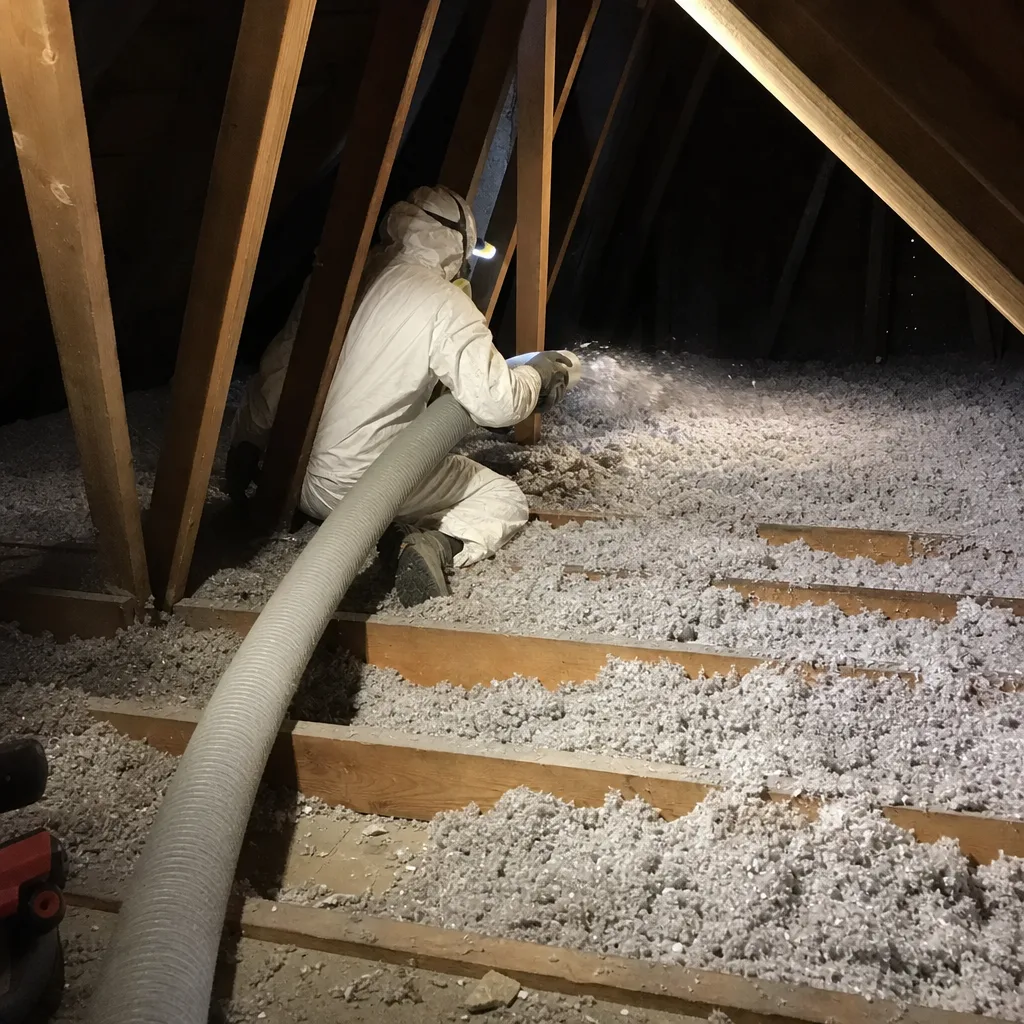
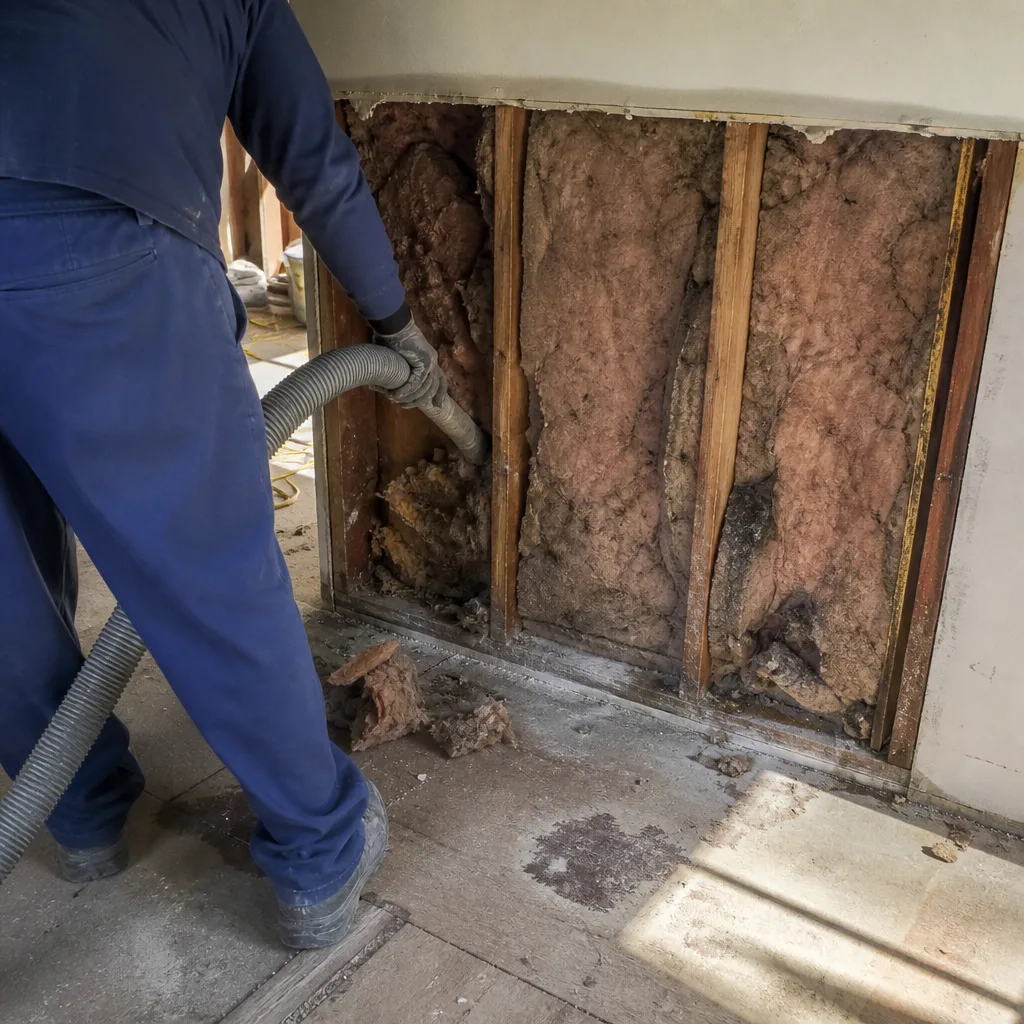
- Existing insulation condition. If old fiberglass batts are compressed, rodent-contaminated, or damaged by past roof leaks, removal is not optional – it is required before accurate R-value installation can happen. Contaminated material is bagged, HEPA-vacuumed out, and hauled off, which adds cost but protects air quality and ensures the new insulation performs to spec.
- Air sealing scope (always first, never skipped). The number of penetrations – top plates, electrical chases, plumbing stacks, recessed lights, attic hatch perimeter – determines how much air-sealing labor is required before the first cubic foot of insulation goes in. A 1970s tract home in East Palmdale with original can lights can have 40 or more penetrations that need two-part foam or mastic before any blowing begins. We will not install insulation over an unsealed attic floor; the written scope documents exactly what gets sealed.
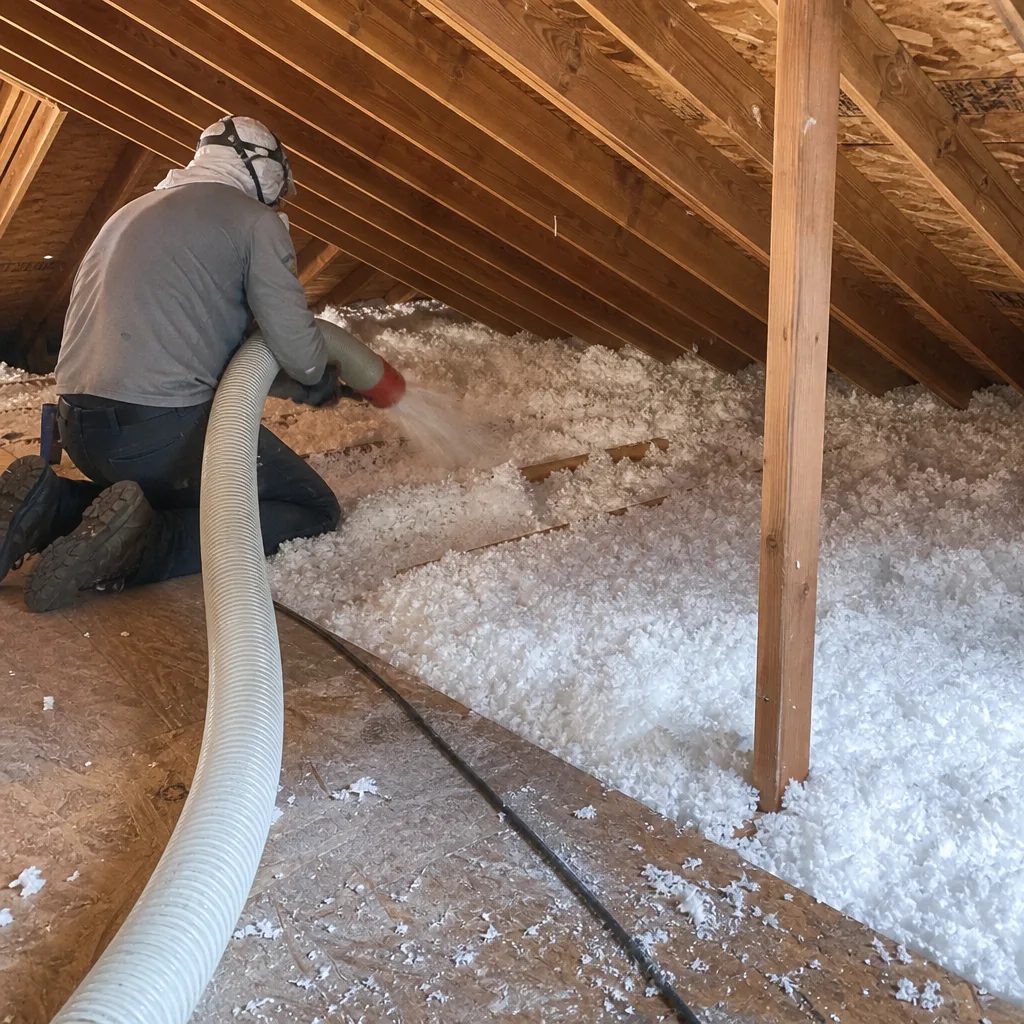
- Material choice and R-value target. Blown-in fiberglass and cellulose are the most cost-effective paths to R-38 or R-49 on an attic floor. Spray foam at the roof deck costs significantly more but creates a conditioned attic – the right call when HVAC ducts run through the attic space and duct leakage is a major energy loss point. The choice changes the cost, the scope, and the performance outcome, and your written estimate will show all three.
- Climate and code requirements for Palmdale’s CEC climate zone. Palmdale sits in California Energy Commission Climate Zone 14 – one of the hotter inland zones – where Title 24 and local energy code generally require a minimum of R-38 for attic floors in conditioned spaces. Many energy auditors and utility rebate programs push for R-49 or higher given the extreme cooling load. If you are pulling a permit for a full HVAC replacement or an addition, the insulation scope may need to meet current Title 24 standards, which affects both material selection and documentation requirements.
- Radiant barrier pairing. Palmdale’s intense solar exposure – roughly 284 sunny days per year – makes a reflective radiant barrier on the underside of the roof sheathing one of the more defensible add-ons in this market. Pairing it with blown-in insulation on the same visit reduces the total installed cost relative to two separate mobilizations, and the combined performance data shows up in the blower-door record we provide at job close.
 Before
 After
AfterHow to Save on Attic Insulation in Palmdale
Start With a Blower-Door Reading, Not a Sales Visit
The single most useful piece of information before you spend a dollar on insulation is a blower-door test – a pressurization reading, measured in CFM50 (cubic feet per minute at 50 pascals of pressure), that shows exactly how much conditioned air your building envelope is losing. If that number is high, air sealing will return more dollars per year than additional insulation depth alone. If it is already low, you may need less insulation than you expected. Going in with data instead of a sales pitch means you spend on what actually moves the needle.
Under the Haven Standard, every applicable job at Envelope Insulation Co. includes before-and-after blower-door readings so you can see – in a single number – what changed. A home in West Palmdale we worked on in 2025 read 3,800 CFM50 before sealing and 1,950 CFM50 after. That kind of shift is what justifies the air-sealing line item on the invoice.
Stack Available Utility Rebates
Southern California Gas and Southern California Edison both offer rebates for qualifying insulation upgrades in Palmdale. The SCE Energy Upgrade California program has offered rebates in the $150 to $750 range for attic insulation projects that meet specific R-value minimums and installation documentation requirements. SCG rebates for wall and attic insulation have run in similar bands. These programs change annually, so confirm current figures directly with your utility – but a qualifying R-49 blown-in job on a 1,500 square-foot attic can offset a meaningful portion of the material cost when rebates are stacked properly.
Federal tax credits under the Inflation Reduction Act’s Section 25C have allowed homeowners to claim up to 30% of qualified insulation and air sealing costs, capped at $1,200 per year for insulation materials. That cap resets annually, which means a homeowner who stages work across two tax years can potentially claim $2,400 in total credits. Confirm eligibility with a tax professional – we document the work and provide the itemized invoice you need to support the claim.
Bundle Air Sealing and Insulation Into One Visit
Mobilization costs are real. Scheduling air sealing and insulation as a single job rather than two separate visits saves on truck time, crew setup, and machine cleaning – typically $150 to $350 depending on distance and job complexity. Because we never install insulation without completing air sealing first, the two scopes are always bundled at Envelope Insulation Co. That is not an upsell – it is how the job has to be done to actually perform.
Get a Second Opinion on Any Written Estimate
If you have a written quote from another contractor, bring it to us. We offer a free second opinion on any written estimate, and we will read it with you line by line – comparing scope, R-value targets, material specs, and what is and is not included. Palmdale homeowners regularly discover that low-bid proposals exclude air sealing, use lower-density blown-in material that settles faster, or skip the attic hatch perimeter entirely. Those omissions are not visible in a total price; they show up as performance gaps two summers later.
To request a written estimate or a second-opinion review, call (661) 403-4467. A live person answers – no voicemail loops, no callback window measured in business days.
Time the Job for Off-Peak Scheduling
Attic insulation demand in Palmdale spikes in late spring – typically April through June – as homeowners prepare for the summer heat load before it arrives. January through March tends to have more scheduling flexibility, and some contractors (including us) can move faster on scope review and installation during that window. The savings are modest – this is not urgency theatre – but if your schedule is flexible and the attic is not an emergency, the quieter months are worth considering.
Palmdale-Specific Factors You Won’t See on Generic Cost Guides
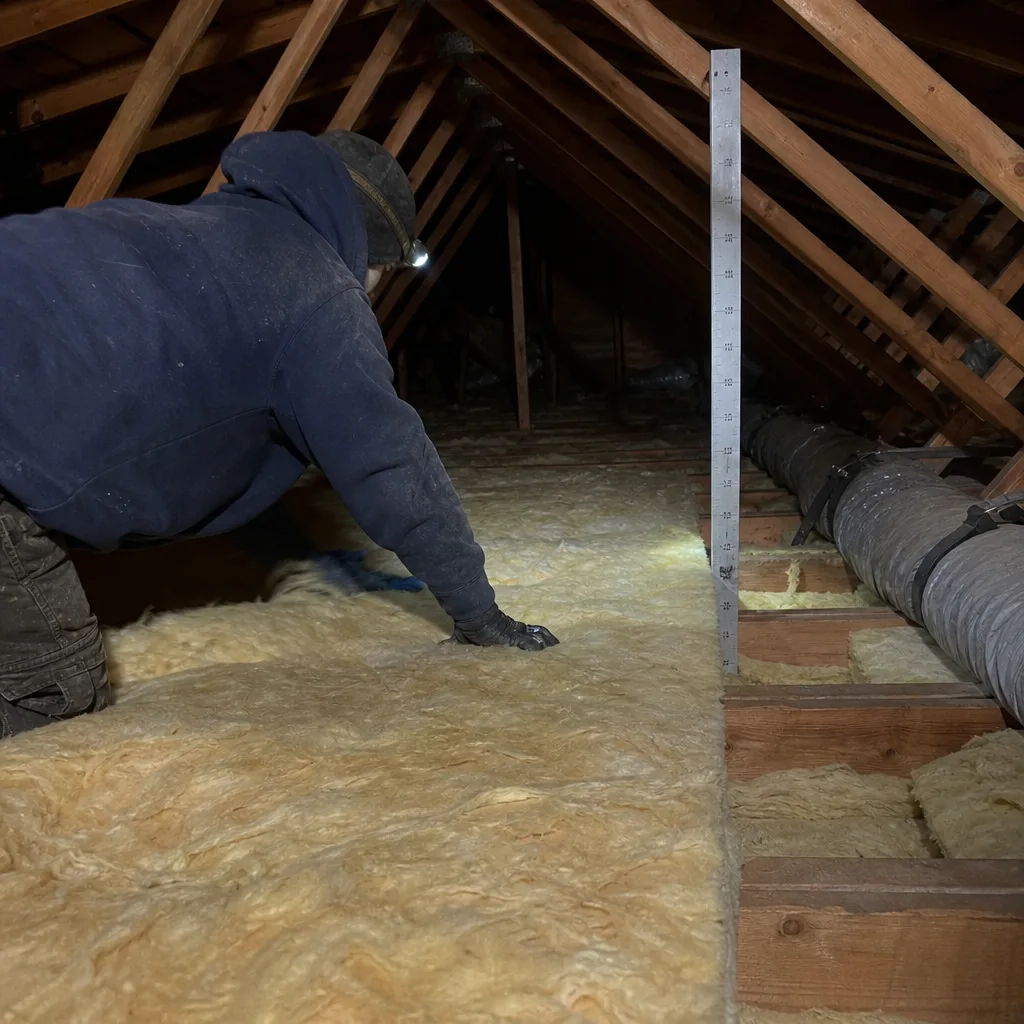
Climate Zone 14 and the R-49 Case
Most national cost guides publish R-38 as the standard target for inland California. That figure reflects minimum code compliance, not optimal performance for Palmdale’s actual climate. Climate Zone 14 – which covers Palmdale, Lancaster, and the broader Antelope Valley – carries design cooling temperatures above 100°F and a temperature differential between inside and outside that can exceed 40 degrees on a July afternoon. At that differential, the marginal performance gain from R-49 versus R-38 is large enough to change cooling runtime by 15 to 25 minutes per hour on peak days. The cost difference between the two depths – roughly $0.20 to $0.35 per square foot in additional material – typically recovers in two to four cooling seasons for a home running central air.
Rodent Pressure in Antelope Valley Attics
Palmdale’s desert edge location – backing up to open terrain across large portions of the city, especially north of Avenue P and in the hillside neighborhoods near Leona Valley Road – creates consistent rodent pressure in attics. Roof rats and mice compress and contaminate fiberglass batts, and their nesting material voids R-value in localized areas that are invisible from below. If a previous infestation left behind debris or contaminated material, Attic Insulation Replacement is the only way to ensure the new product performs to spec and does not create an ongoing air-quality issue. That removal scope will be in your written estimate before any work starts.
HVAC Ducts in the Attic – A Palmdale Cost Multiplier
A high percentage of Palmdale homes built in the 1980s and 1990s have their HVAC ductwork running through the unconditioned attic space. When you insulate the attic floor without addressing duct leakage, you can actually worsen the system’s performance – the ducts are now even more isolated from the conditioned space, and any leakage dumps cooled air directly into the attic. A blower-door test combined with a duct leakage test (measured in CFM25 at 25 pascals) before insulation goes in is the right diagnostic sequence. We document both numbers before and after on applicable jobs so you know exactly what changed and why.
Permit Requirements for Palmdale Insulation Work
Palmdale’s building department, under the City of Palmdale Community Development Department, generally does not require a standalone permit for like-for-like insulation replacement or for adding insulation depth in an existing attic. However, if the insulation scope is bundled with HVAC replacement, an addition, or an ADU conversion, a building permit may be required and the insulation must be documented to meet current Title 24 energy standards. If your project touches any of those scopes, confirm permit requirements before scheduling – and make sure your contractor can provide the documentation the inspector will ask to see. Our Documented Photo Record and written scope are built for exactly that situation.
Insulation Materials: What We Use and Why
Envelope Insulation Co. sources materials from Owens Corning, Johns Manville, Knauf, Rockwool, CertainTeed, Icynene, Demilec, and GreenFiber. The material choice for a given job depends on the attic geometry, the application method, the R-value target, and whether the scope calls for an attic-floor approach or a conditioned-attic (roof-deck) approach. There is no proprietary product lock-in here – the spec is written to the job, not to a supplier agreement.
- Blown-in fiberglass (Owens Corning ProPink, Johns Manville, Knauf): The most common choice for Palmdale attic floors. Installs fast, does not settle significantly, and achieves R-49 in roughly 16 to 18 inches of depth. Non-combustible, moisture-resistant, and compatible with California’s fire-risk requirements.
- Blown-in cellulose (GreenFiber): Dense-pack cellulose is an alternative that achieves similar R-values at comparable cost. It has a higher recycled content and can be the right call in attics with irregular geometry where a denser material conforms better to the floor. It is more moisture-sensitive than fiberglass, which matters in attics with any history of roof leaks.
- Open-cell spray foam (Icynene, Demilec): Applied to the underside of the roof deck to create a conditioned attic space. The right call when HVAC ducts run in the attic and duct leakage is a confirmed energy loss source. More expensive per square foot than blown-in, but it eliminates the duct-in-unconditioned-space performance penalty entirely.
- Closed-cell spray foam (Icynene, Demilec): Higher R-value per inch (approximately R-6.5 per inch versus R-3.7 for open-cell), a vapor retarder, and structural reinforcement properties. Used in hard-to-reach areas, low-pitch roof assemblies, and applications where moisture control is a priority. Cost per square foot is the highest of any insulation type we install.
- Radiant barrier foil: Stapled to the underside of the rafters to reflect solar radiant heat before it conducts into the attic air mass. In Palmdale’s Climate Zone 14, a quality radiant barrier can reduce attic air temperature by 20 to 30 degrees on a peak summer day – which directly reduces the cooling load on HVAC equipment. It works best in combination with adequate blown-in insulation on the attic floor, not as a standalone substitute.
The Air-Sealing Step: Why It Changes the Math
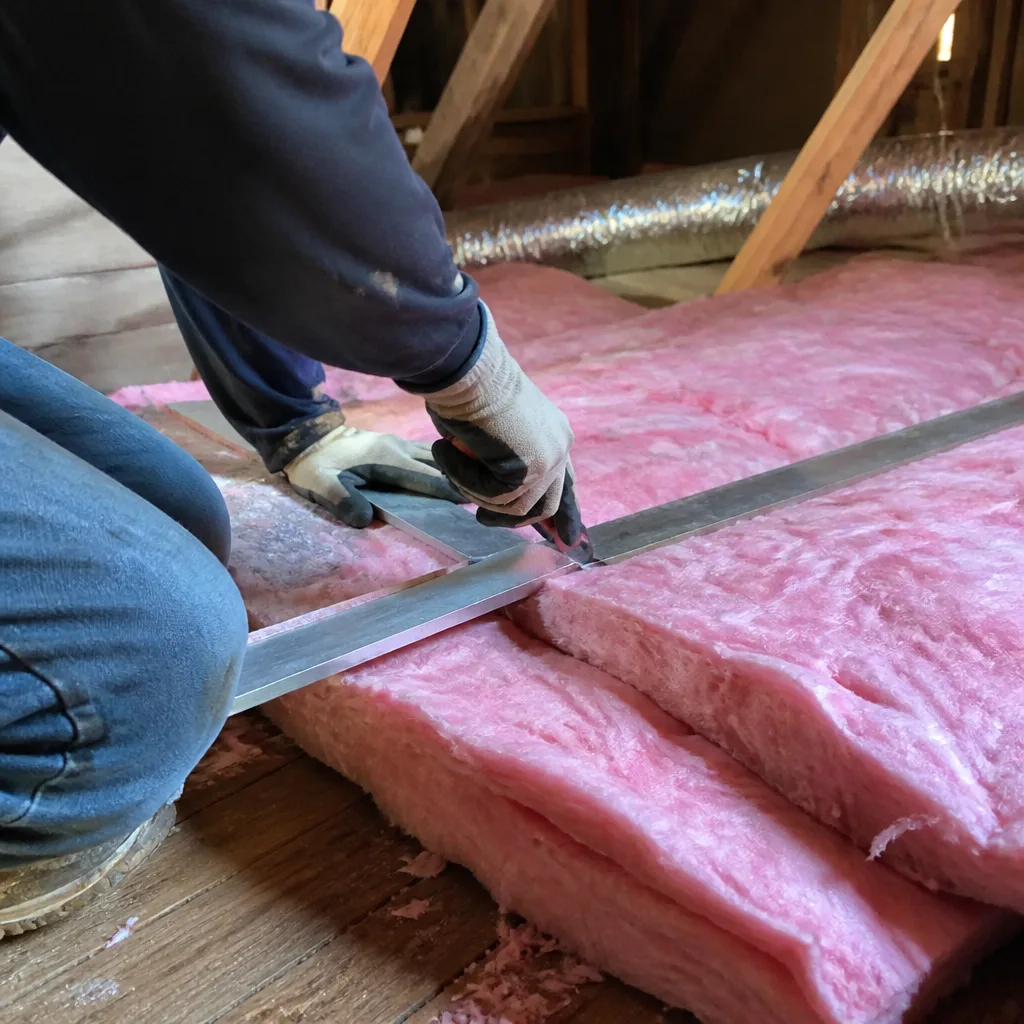
This is the part that most cost guides skip, and it is the part that most affects whether your insulation project actually changes your utility bills.
Insulation slows conductive heat transfer – the heat that moves through solid material. Air sealing stops convective heat transfer – the conditioned air that leaks out through gaps around top plates, electrical boxes, recessed lights, plumbing penetrations, and the attic hatch frame. In a typical Palmdale home built before 2000, the air leakage losses are larger than the conductive losses. That means adding more insulation without sealing the penetrations first produces a fraction of the expected energy savings.
Every job Envelope Insulation Co. does begins with air sealing. Top plates, can-light housings, plumbing stacks, electrical chases – all sealed with two-part spray foam or appropriate mastic before the first pound of insulation goes in. That step is scoped and priced in the written estimate you receive before any work starts. It is not an add-on you have to ask for.
And after the job is done, the blower-door reading tells you whether it worked. A reading of 4,200 CFM50 before and 2,100 CFM50 after is not a feeling – it is a number, in writing, in your Documented Photo Record. That is what leaving looks like when the work is done right.
You can learn more about the full scope of what we do for Palmdale homeowners on our Attic Insulation in Palmdale service page.
FAQs: Attic Insulation Cost in Palmdale
How much does attic insulation cost in Palmdale, CA in 2026?
Most our Attic Insulation services in Palmdale run between $1,800 and $4,500, with the majority of standard single-story homes landing in the $2,400 to $3,200 range for air sealing plus blown-in insulation to R-49. Removal of old material, spray foam applications, or complex attic geometry push costs toward the higher end. Call (661) 403-4467 for a written estimate specific to your home’s attic size and current insulation condition – estimates are free and come with a flat price in writing before any work starts.
Is R-38 or R-49 the right target for Palmdale?
R-38 is the minimum code threshold for most Palmdale applications under Title 24, but R-49 is the practical performance target given Palmdale’s Climate Zone 14 designation and summer attic temperatures that regularly exceed 150°F. The cost difference between R-38 and R-49 in blown-in fiberglass is roughly $0.20 to $0.35 per square foot – typically $250 to $500 on a standard attic. For most homes running central air through a Palmdale summer, that additional depth pays back in reduced cooling hours within two to three seasons.
Does attic insulation require a permit in Palmdale?
A standalone attic insulation project – adding depth to an existing attic or replacing old material – generally does not require a permit from the City of Palmdale. If the insulation work is part of an HVAC replacement, an addition, or an ADU conversion, a building permit is typically required and the insulation must meet current Title 24 documentation standards. When in doubt, confirm directly with the Palmdale Community Development Department before scheduling. We provide the written scope and Documented Photo Record that inspection-required projects need.
Is it cheaper to repair or replace old attic insulation?
If existing insulation is structurally intact – not compressed below 50% of original depth, not contaminated by rodents or moisture, and covering an air-sealed attic floor – topping it off with additional blown-in material through Attic Insulation Top-Up is significantly cheaper than full removal and replacement. Topping off a 1,500 square-foot attic from R-19 to R-49 typically costs $900 to $1,600. Full removal plus air sealing plus new insulation to R-49 runs $3,200 to $5,200 for the same footprint. The condition of the existing material determines which path is defensible – that assessment is part of every written estimate we provide.
Can I combine a radiant barrier with blown-in insulation in the same visit?
Yes, and it is the most cost-effective way to do it. A radiant barrier installed to the underside of the roof rafters combined with blown-in insulation on the attic floor in a single visit typically costs $2,600 to $4,500 for a 1,200 to 1,800 square-foot attic in Palmdale. Scheduling them separately adds mobilization cost to the second visit – usually $150 to $350. In Palmdale’s desert climate, the combination addresses both radiant heat (the barrier) and conductive heat transfer (the insulation depth), which is the right pairing for a home that runs air conditioning through a 100-plus-degree August. Call (661) 403-4467 to get a written price on the combined scope before committing to either piece separately.
How long does attic insulation last in Palmdale’s climate?
Blown-in fiberglass insulation installed at the correct density for the product – typically 0.5 to 0.6 pounds per cubic foot – does not have a defined expiration date and does not significantly settle when installed correctly. In Palmdale’s dry desert climate, moisture degradation is rarely the issue; the more common cause of premature performance loss is rodent activity, which compresses and contaminates material in localized areas over time. A visual attic inspection every five to seven years is reasonable for homes in areas with documented rodent pressure. Our Documented Photo Record from your installation gives you a baseline to compare against in future inspections.
Key Takeaways
- Attic insulation in Palmdale typically costs $1,800 to $4,500, with most jobs landing between $2,400 and $3,200 for air sealing plus blown-in to R-49.
- Palmdale’s Climate Zone 14 and summer attic temperatures above 150°F make R-49 the practical performance target, not just the code minimum of R-38.
- Air sealing of top plates, can lights, and penetrations must be completed before any insulation goes in – skipping that step leaves the majority of heat transfer unaddressed.
- Before-and-after blower-door readings document the air-sealing result in a single number – that record is included on every applicable job.
- SCE and SCG rebates plus Section 25C federal tax credits can offset a meaningful portion of project cost for qualifying jobs.
- Every job starts with a written price before any work begins – Haven Standard Clause 1, no exceptions.
- The 365-Day Done Right Promise applies to all completed work – if it is not right, we make it right.
Get a Written Estimate for Your Palmdale Home
If your attic has not been inspected or insulated in the last ten years, there is a reasonable chance it is losing conditioned air through unsealed penetrations and under-performing insulation. The only way to know for certain is a blower-door test and a physical attic assessment – both of which are part of every estimate we write.
Wes Okafor and the Envelope Insulation Co. team have completed work in more than 9,000 homes since 2016, every one with a written price before the job started and a Documented Photo Record when the crew left. We serve Palmdale and the broader Antelope Valley, and a live person answers calls around the clock – no voicemail, no callback window measured in business days.
Call (661) 403-4467 to schedule your free attic assessment and receive a written estimate with a flat price, a written scope, and a written warranty – before anyone arrives at your home. If you have a competing written estimate, bring it. We offer a free second opinion on any written quote, and we will read it with you line by line.
You can also visit our home page to see the full range of building-envelope services we provide across Southern California.
Written by Wes Okafor, Owner at Envelope Insulation Co., serving Palmdale since 2016.
Pricing reflects the Palmdale market as of 2026. Topside Attic Insulation Palmdale offers free estimates – call (661) 403-4467.
What Our Customers Say
"They air-sealed the attic floor before insulating and showed me the blower-door number before and after. The upstairs is finally the same temperature as downstairs."
- Marisol D."The winter gas bill dropped by about a third. They had estimated a quarter, so they under-promised."
- Genevieve R."Two other companies quoted to blow more insulation on top of what was there. These were the only ones who said the existing material had to come out first, and explained why."
- Clifford E.