
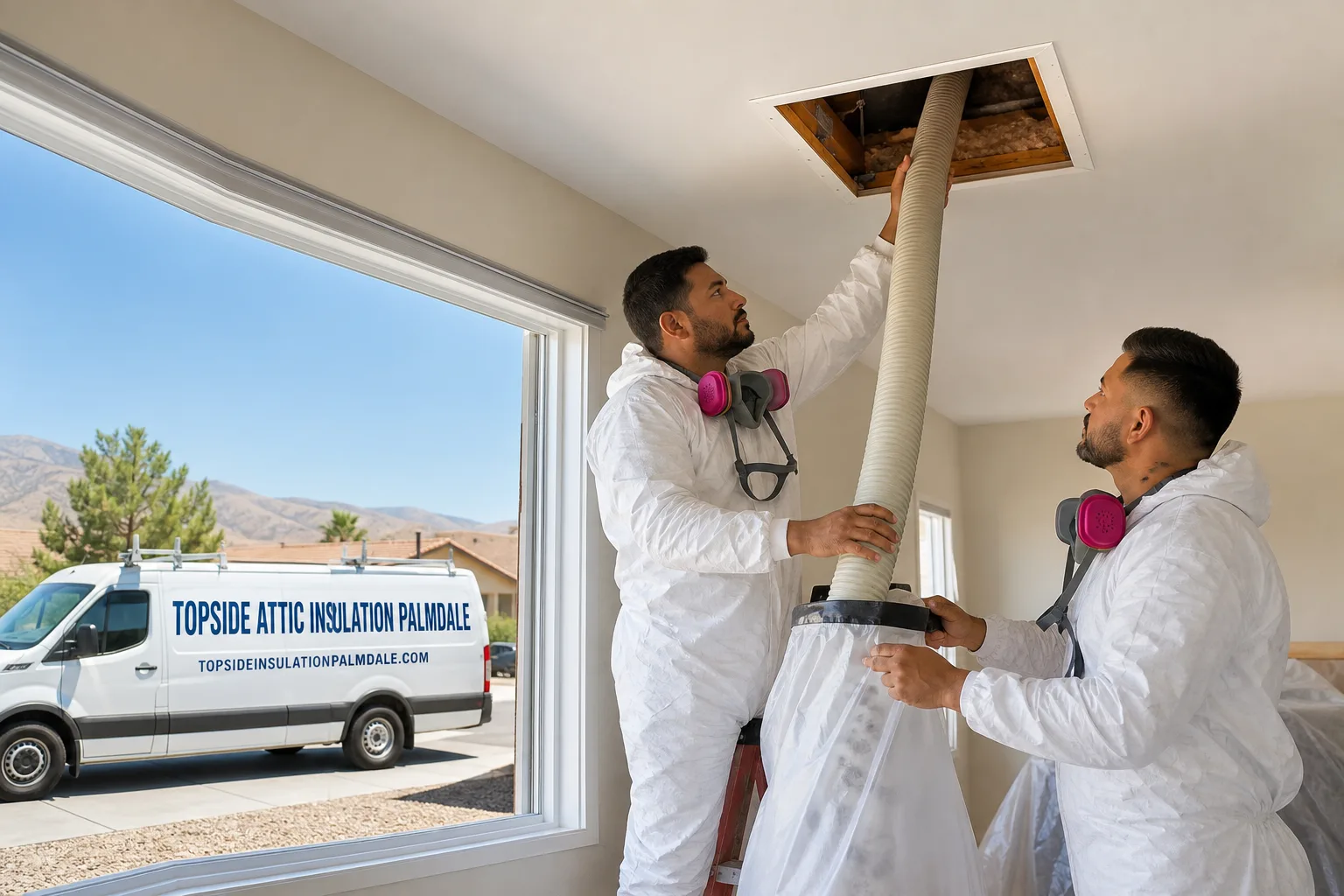
Fast, Reliable Blown-In Insulation Across Glendale
Blown-in insulation in Glendale typically runs $2.80 to $5.40 per square foot of attic floor, with most single-family jobs falling between $2,400 and $4,800 depending on whether air sealing, abatement, or Chapter 7A fire-compliant materials are needed. We’re usually on-site in Glendale within 24 to 48 hours of your call, and dispatch is coordinated from our Los Angeles office with crews who know the difference between a flatland ranch near Brand Boulevard and a hillside Spanish Colonial up in Verdugo Woodlands. Call (661) 403-4467 for a written price before any work starts.
Glendale’s housing stock doesn’t forgive guesswork. The 1920s Craftsman in Adams Hill with knob-and-tube wiring still live in the walls. The 1930s stucco bungalow in Rossmoyne with gray granular vermiculite scattered across the attic joists. The mid-century apartment building off Brand Boulevard with original fiberglass batts compressed to half their labeled R-value. Each needs a different approach, and each needs someone who’ll look before blowing.
Why Topside Attic Insulation Palmdale Is Glendale’s Preferred Blown-In Insulation Company
We’ve sealed and insulated more than 9,000 homes since 2016, and a growing share of those have been in Glendale’s dense, pre-WWII core and its Verdugo-facing hillside neighborhoods. Our Glendale customers leave reviews that mention the same things: the crew showed up on time, the price on the invoice matched the written estimate exactly, and the photo documentation showed what was actually in their attic before anyone touched it. We’re not chasing stars; we’re chasing repeat calls from neighbors who checked our three-star reviews first and still picked up the phone.
Response time to Glendale runs same-day to next-day for most blown-in insulation assessments, with emergency calls answered by a live person 24/7. Our technicians are background-checked, uniformed, and carry the equipment to test for asbestos-containing vermiculite on the spot rather than scheduling a second visit. That’s not a perk. In Glendale, it’s a necessity.
Local knowledge matters here because Glendale isn’t uniform. A crew that treats a Montecito Hills hillside job like a Burbank flatland retrofit will miss the Chapter 7A ignition-resistant requirements, skip the proper vent baffling, and leave the homeowner with a failed inspection. We don’t send crews to Glendale who haven’t walked these specific conditions.
Our Blown-In Insulation Services in Glendale
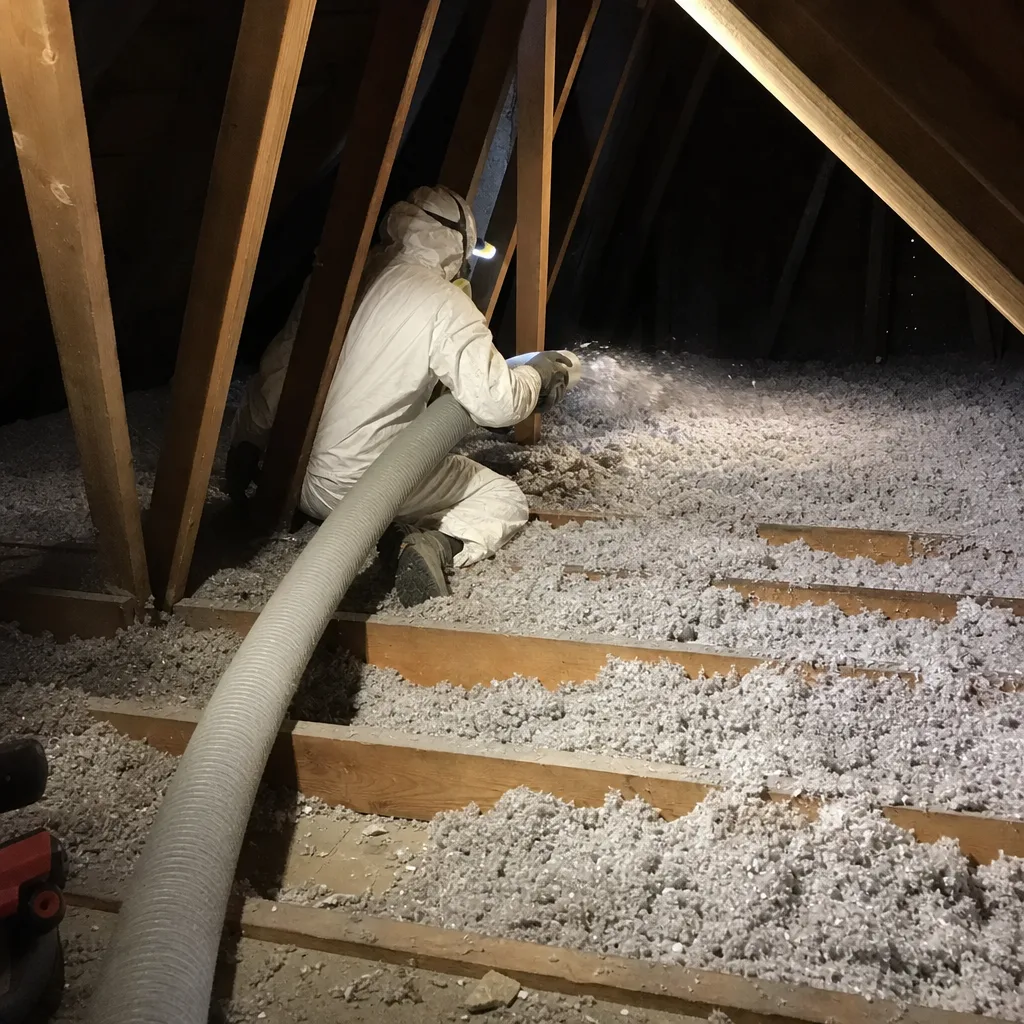
Blown-In Cellulose
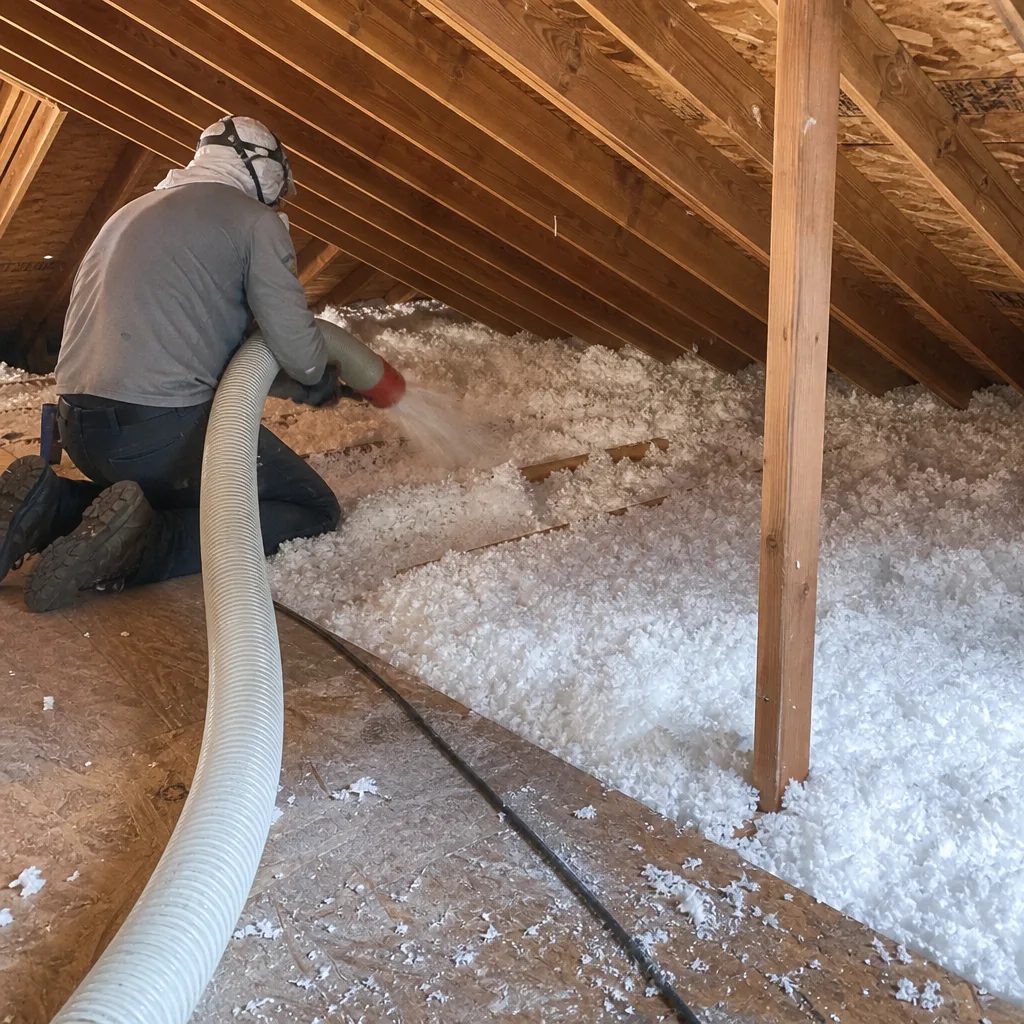
We blow GreenFiber cellulose in most Glendale attics, dense-packed to the R-value specified in your written scope. Cellulose performs well in Glendale’s extreme heat cycles, where Diablo and Santa Ana wind events can spike attic temperatures past 150°F on Verdugo-facing slopes. The treated borate content resists fire and pests, which matters in hillside zones where ignition-resistant standards apply. We never blow cellulose over unsealed top plates, can lights, or plumbing penetrations; our Blown-In Insulation crew seals first, then insulates. That’s the order.
Blown-In Fiberglass
Blown-in fiberglass from Johns Manville or CertainTeed works well in newer Glendale construction with standard truss spacing and no hazmat concerns. It doesn’t settle as aggressively as cellulose, which can matter in attics with complex geometry or limited access hatches. We specify fiberglass when the attic is clean, the air sealing is straightforward, and the homeowner wants the higher recycled-glass content some brands offer. Price runs comparable to cellulose in Glendale, sometimes slightly higher depending on current material availability.
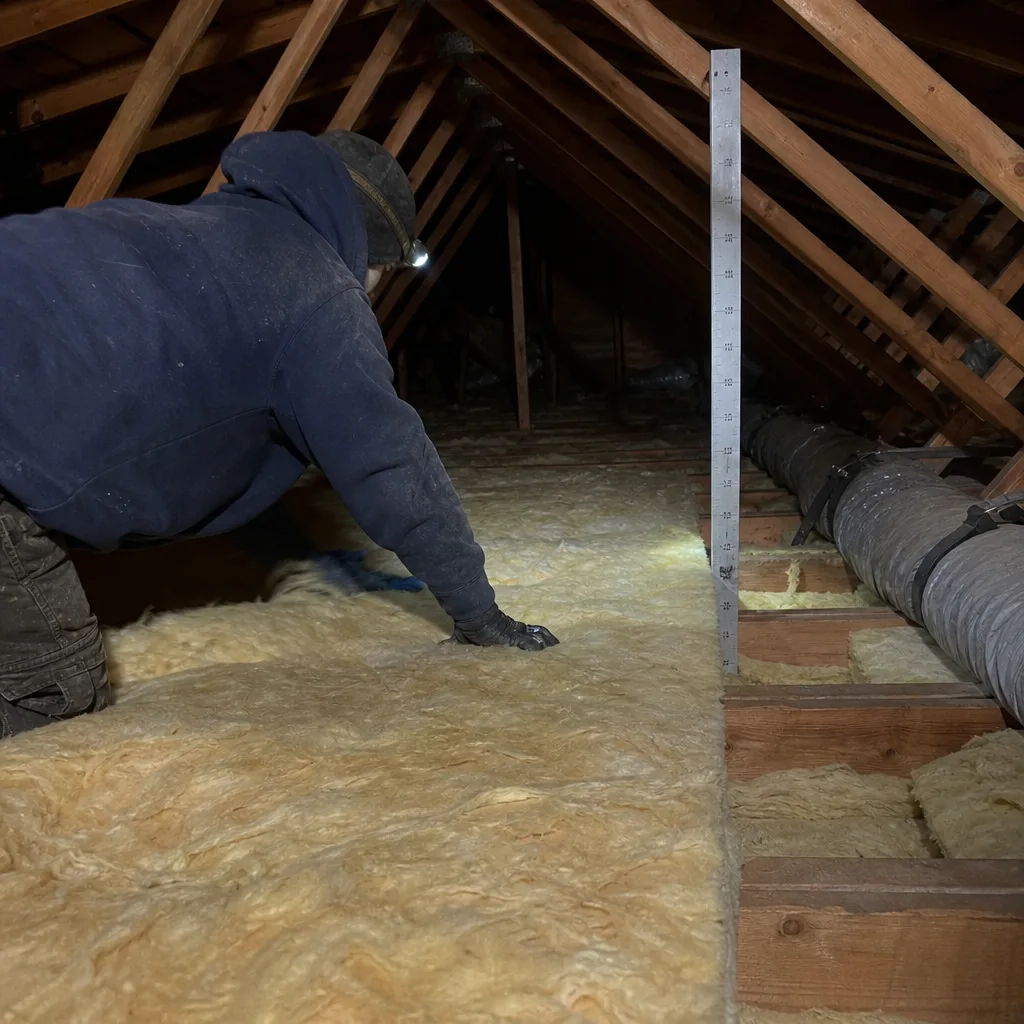
Dense-Pack Wall Insulation
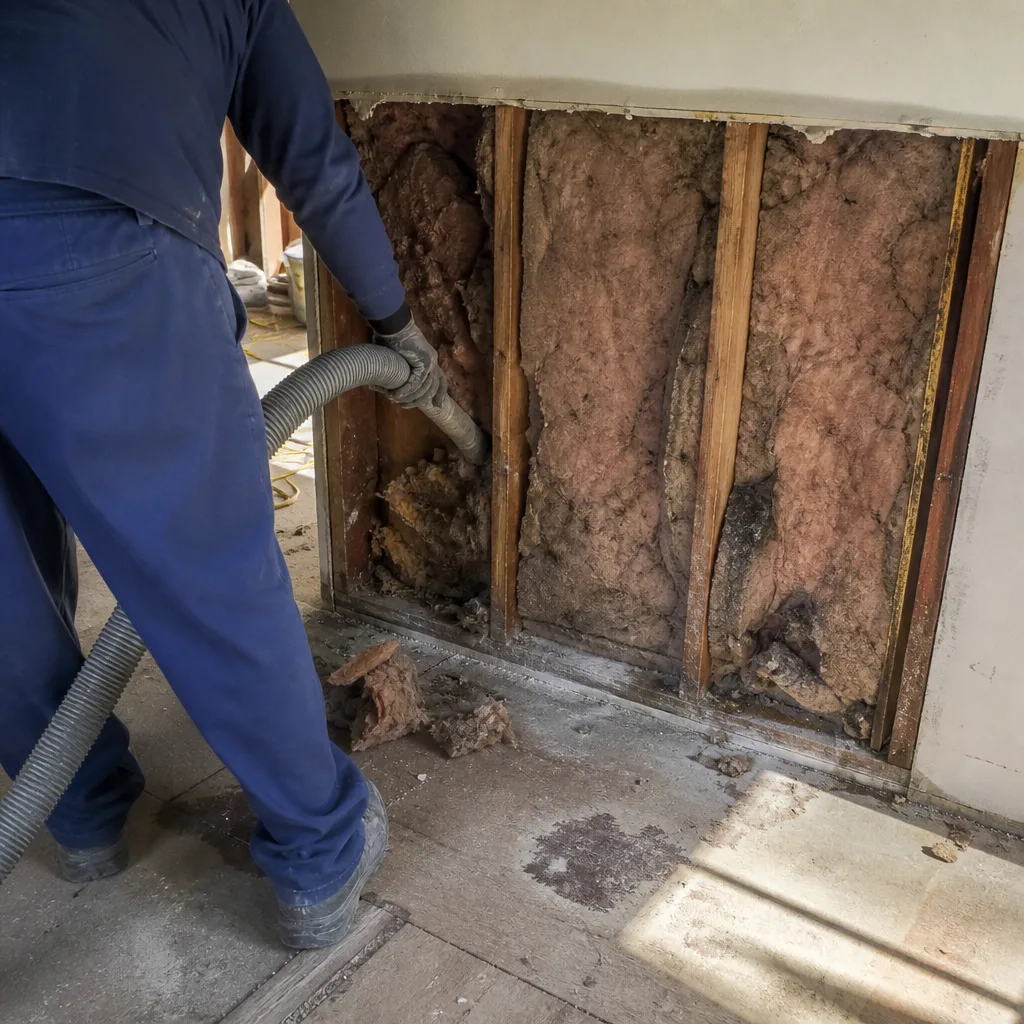
Glendale’s 1920s-1940s Spanish Colonial and Craftsman homes were built with empty stud cavities, no wall insulation, and plaster-and-lath interior finishes that make retrofitting tricky. Dense-pack cellulose, blown at 3.5 pounds per cubic foot through drilled access points, fills those cavities without removing interior walls. We use this method regularly in Rossmoyne and Adams Hill, where homeowners want thermal performance without gutting original plaster. The technique requires knowing where knob-and-tube wiring runs, where structural fire blocks interrupt the cavity, and when to stop and call an electrician. Our crews have that map in their heads.
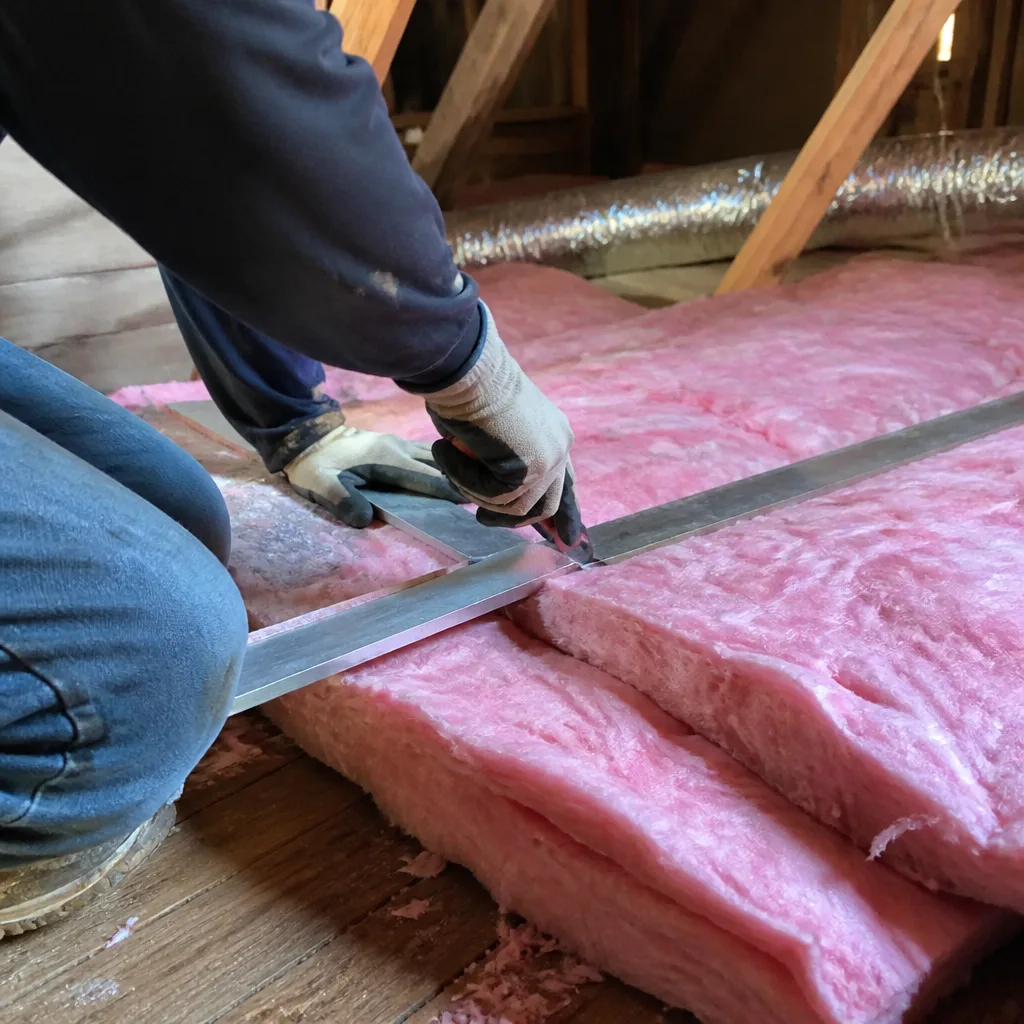
Blown-In Top-Up
Many Glendale attics have some existing insulation, compressed or displaced by decades of work, rodent activity, or simple gravity. A blown-in top-up adds R-value without full removal, provided the existing material is clean and the attic floor is sealed. We see this most in post-war ranch homes near the Glendale Freeway corridor and in upper-floor units of Brand Boulevard apartment buildings where original batts have thinned to nothing. The homeowner gets improved performance at lower cost, with the same written price and documented photo record as a full install. If we find vermiculite or asbestos-wrapped pipes during the assessment, we stop and give you the abatement path before any top-up proceeds.
What happens when you call
- 1
A real person answersNo phone trees - you reach a local pro.
- 2
You get an upfront price rangeHonest numbers before anyone is dispatched.
- 3
A background-checked tech heads outLicensed & insured, dispatched right away.
- 4
You approve before work beginsNothing starts until you say go.
 Before
 After
AfterTrusted Brands We Service in Glendale
We stock and install blown-in products from Owens Corning, Johns Manville, Knauf, Rockwool, and CertainTeed, with no proprietary lock-in that limits your options. For Glendale’s hillside homes in the VHFHSZ, we specify Rockwool or CertainTeed products that carry the ignition-resistant ratings required under CA Building Code Chapter 7A. Material selection happens during your assessment, not as a surprise upcharge, and we keep common Glendale configurations in regional supply so turnaround stays short. You’ll see the brand, the product number, and the per-bag price on your written estimate before anyone orders material.
Common Blown-In Insulation Problems We See in Glendale Homes
- Vermiculite and asbestos-wrapped pipes in pre-WWII attics. We pull attic hatches in Rossmoyne and Adams Hill to find gray, granular material with disturbing regularity. It’s often Libby-origin vermiculite, EPA NESHAP-regulated, and it stops the job until licensed abatement clears it. Experienced Glendale crews budget for this phase; inexperienced ones blow right over it.
- Live knob-and-tube wiring in 1920s-1930s walls and attics. California electrical code prohibits blown insulation from contacting active knob-and-tube. We find it still energized in maybe one in four central Glendale homes from this era. Remediation by a licensed electrician comes first. Then we insulate.
- Missing or failed attic vent baffling on hillside homes. Standard plastic baffles melt or deform in Glendale’s 150°F-plus summer attics, especially on Verdugo-facing slopes. Worse, non-ignition-resistant baffles in VHFHSZ zones fail inspection. We install Chapter 7A-compliant metal or high-temp polymer baffling as part of the sealed-first sequence.
- Compressed or displaced original fiberglass in mid-century apartments. Buildings along Brand Boulevard and the eastern corridors often have batts walked flat by maintenance crews, pushed aside by ductwork retrofits, or saturated from old roof leaks. A top-up without addressing the compression layer wastes money; we assess what’s there and document it before adding anything.
Pricing for Blown-In Insulation in Glendale, CA
A typical blown-in cellulose attic job in Glendale runs $2,400 to $4,200 for a 1,200 to 2,000 square foot home with standard access and no abatement needs. Dense-pack wall insulation in a pre-WWII Craftsman adds $3,200 to $5,800 depending on cavity count, plaster condition, and whether electrical remediation is required. Blown-in top-ups start around $1,400 when the existing material is clean and the attic floor is already sealed.
Hillside homes in Verdugo Woodlands or Montecito Hills with Chapter 7A requirements typically add $800 to $1,600 for ignition-resistant materials, compliant baffling, and the additional inspection documentation. Vermiculite or asbestos abatement is priced separately by licensed contractors; we coordinate the sequence but don’t markup their work.
Every estimate includes the written scope, the material specifications, the blower-door target if air sealing is involved, and the 365-Day Done Right Promise. No work starts without the written price. Bring us any competing written estimate and we’ll give you a free second opinion, line by line.
We Also Serve Cities Near Glendale
Our crews work Blown-In Insulation in Glendale regularly and also handle jobs in Altadena, San Fernando, Palmdale, and Santa Clarita. Scheduling and dispatch run from our Los Angeles office, with route optimization that keeps Glendale appointments punctual and follow-up visits tight.
Serving Glendale, CA - Our Local Coverage Area
We’re based in the Glendale area and know this community well. Use the map below to see our service coverage - if you’re nearby, we can almost certainly help.
FAQs - Blown-In Insulation in Glendale
Yes. Homes in Verdugo Woodlands, Montecito Hills, and Glenoaks Canyon fall within California’s Very High Fire Hazard Severity Zone and must use ignition-resistant insulation materials and compliant attic vent baffling under CA Building Code Chapter 7A. We specify Rockwool or CertainTeed products with the required ratings and install metal or high-temp polymer baffles that won’t deform in 150°F attic conditions. Standard products used in flatland Burbank or central LA jobs won’t pass inspection here. Call (661) 403-4467 and we’ll confirm your property’s VHFHSZ status during the assessment.
Not until the material is tested and, if confirmed as asbestos-containing vermiculite, abated by a licensed California contractor under EPA NESHAP protocol. We find this material in Glendale’s pre-WWII housing stock with enough frequency that we carry test kits on every assessment visit. If it’s clean, we proceed. If not, we stop, document with photos, connect you with abatement, and schedule the insulation work for clearance. The homeowner from our 1938 Rossmoyne job went through exactly this sequence and ended up with dense-packed walls and blown cellulose that dropped his second-floor temperature measurably. Call (661) 403-4467 for a free assessment.
No. California electrical code prohibits blown insulation from contacting active knob-and-tube wiring, and we encounter it still energized in roughly one in four central Glendale homes built before 1940. Our crew identifies it during the pre-work inspection, stops, and documents the finding. A licensed electrician must remediate before we return. We won’t sign off on work that creates a code violation and a fire hazard. The written scope you receive before any work starts includes a clause for this contingency. Call (661) 403-4467 to schedule an assessment.
Blown-in cellulose, specifically GreenFiber treated with borate fire retardant, handles Glendale’s extreme attic temperatures well and meets ignition-resistant requirements where they apply. For VHFHSZ hillside homes, we pair it with Rockwool or CertainTeed products rated for the higher exposure. The key isn’t just the material; it’s the air sealing done before the blower runs. A well-sealed attic with cellulose at R-38 to R-60 performs better than a poorly sealed attic with any product at any R-value. We prove this with before-and-after blower-door numbers on every applicable job. Call (661) 403-4467 for your written scope and performance targets.
Yes. We work with property managers and HOA boards on mid-century apartment buildings where original fiberglass batts have degraded, compressed, or been displaced by decades of maintenance and HVAC retrofits. Each unit gets a written price, a documented photo record, and coordination with building management on access and scheduling. Dense-pack wall work and blown-in top-ups are both options depending on the building’s construction type and current insulation condition. Call (661) 403-4467 to walk a Brand Boulevard property with us.
Ready to see what’s actually in your attic? Call (661) 403-4467 for a free assessment with a written price before any work starts. We’ll bring the test kit, the camera, and the blower-door if air sealing is part of your scope. Every job closes with a Documented Photo Record and, where applicable, before-and-after pressurization readings you can hold in your hand. Under Haven Standard: Have it in writing, have it documented, have it done right.
Written by Wes Okafor, Owner at Topside Attic Insulation Palmdale, serving Glendale since 2016.